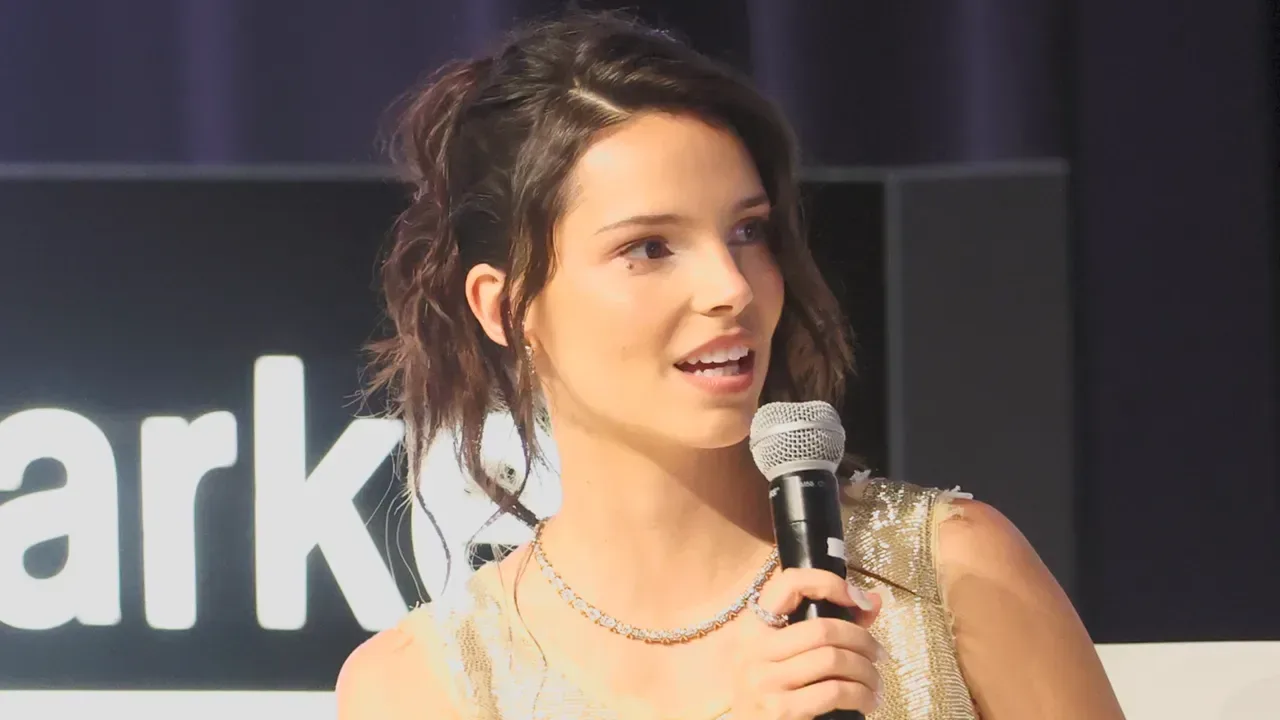
A year can be a very long time in cinema, especially when a Midnight Madness breakout turns into a global phenomenon and its central character starts living a second life in reaction images, edits and online jokes. At the Toronto International Film Festival, Inde Navarrette and Curry Barker returned to the event that premiered Obsession to discuss the whirlwind that followed—and the unusual feeling of watching a character become communal internet property.
The conversation, titled DIALOGUES The ‘Obsession’ Obsession with Curry Barker & Inde Navarrette, was held Friday at the John Bassett Theatre as part of TIFF: The Market, the festival’s industry-focused hub. It drew an especially large crowd, with attendees queuing through the Metro Toronto Convention Centre well ahead of the event.
For a site that spends plenty of time on the way fandom converts art into collectibles, mythology and shared language, the story of Obsession is striking. This was not merely a successful movie with a healthy theatrical run. It became a piece of pop-culture shorthand at a remarkable speed. The transformation has put Navarrette, Barker and the film’s fans in a complicated but recognizably modern relationship: the creators made the work, while the audience found new ways to remake its meaning in public.
From TIFF premiere to worldwide phenomenon
Obsession first screened in TIFF’s Midnight Madness program on September 7, 2025. Two days later, Focus Features offered to acquire the film’s rights in a deal reported at $14 million to $15 million. The picture was subsequently released the following May and grossed more than $500 million worldwide against a reported $750,000 budget.
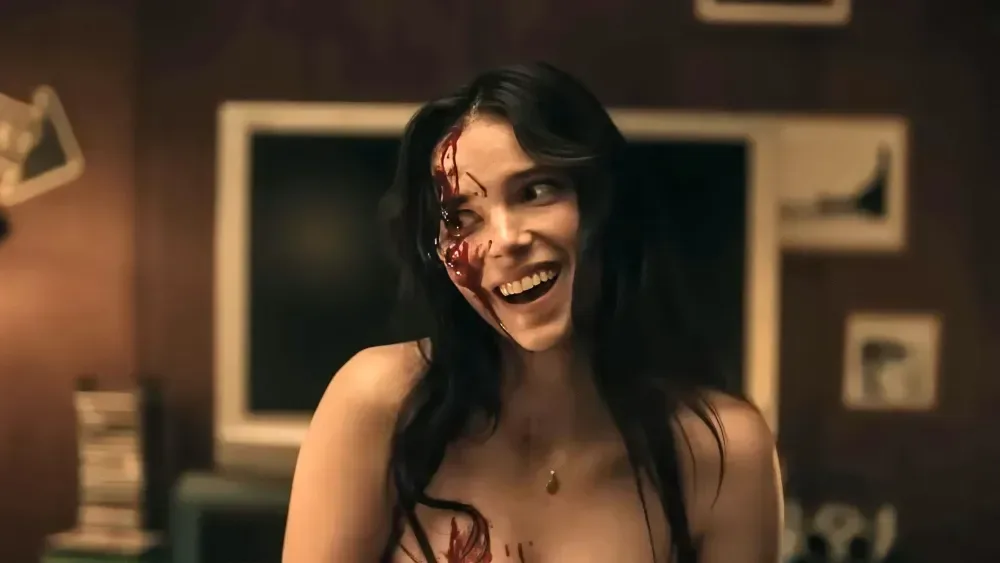
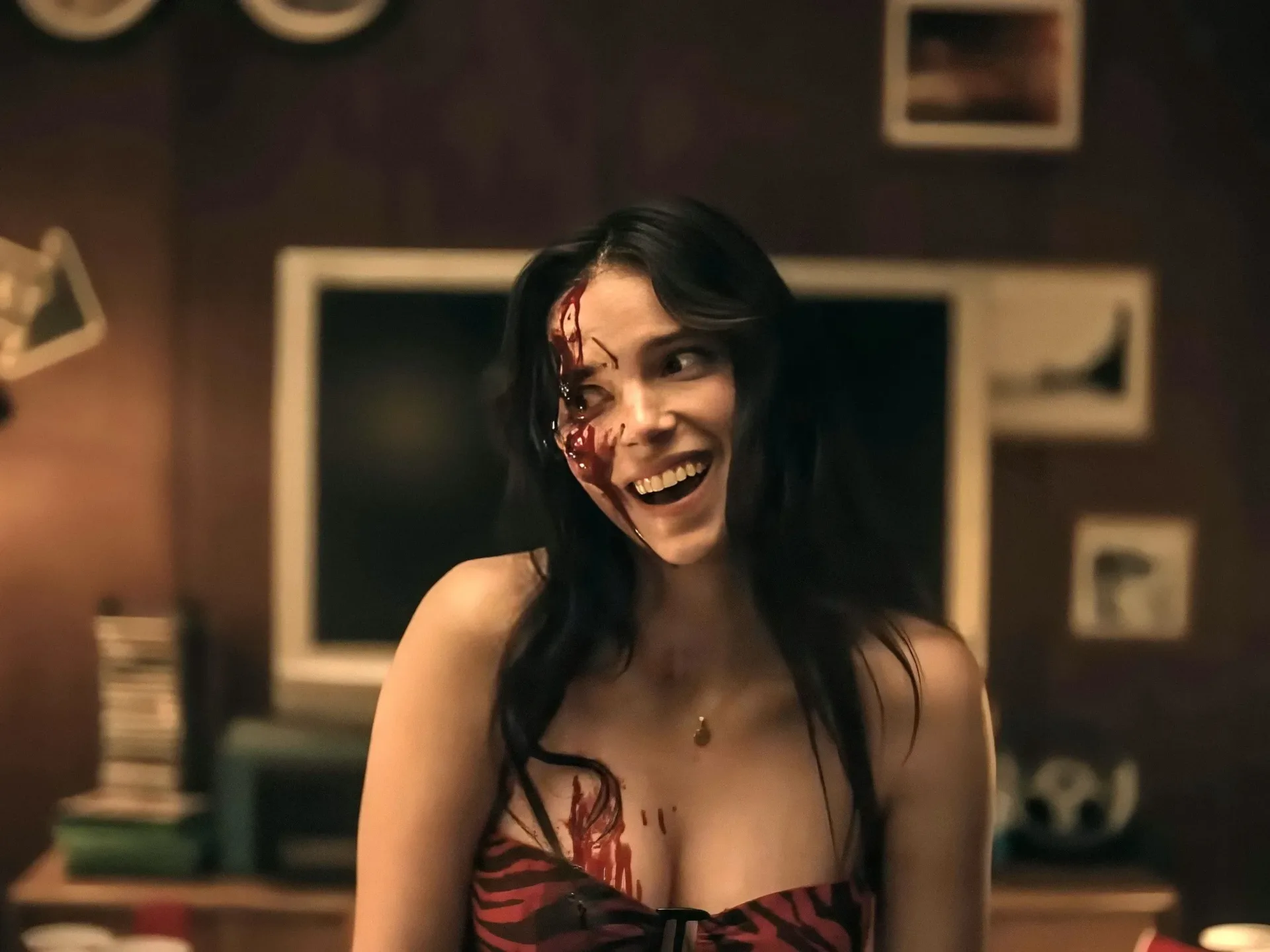
The premise is built for escalation. Michael Johnston plays Bear, a record-store employee stuck in the friend zone. Bear uses a mystical toy to force Nikki, played by Navarrette, to become deeply and dangerously infatuated with him. That combination of desire, horror, comedy and an easily recognizable central dynamic gave viewers plenty to seize on after the credits rolled.
The commercial result also changed the professional circumstances around its leads. Barker, then 26, went from a creator known for acting and directing YouTube videos to a filmmaker with an eight-figure deal involving Universal and Blumhouse for his third feature. Navarrette, 25, was cast as Rogue in Marvel’s forthcoming X-Men reboot.
Still, their TIFF discussion was less a victory lap than an account of how much creative and personal adjustment can sit behind the headline numbers. Festival moderator Peter Kuplowsky emphasized the scale of the difference from the previous year. The pair, meanwhile, spoke about where Obsession began and how the huge response has altered its ownership in the public imagination.
When the memes belong to everyone else
Navarrette addressed the online meme culture surrounding Nikki with a measured answer. Rather than trying to decode every interpretation, she suggested that it is not entirely hers to assess. In her view, people grow up experiencing creations made by others; now, viewers are having their own experience with the character she helped build.
Related coverage includes Inde Navarrette Reflects on ‘Obsession’ Memes and a Transformative TIFF Return.
“It’s not really for me to analyze one way or the other,” Navarrette said. “It’s kind of for you guys and I love that.”
That is a notably generous response to an environment where viral attention can be both affectionate and flattening. A meme can preserve a performance’s energy, introduce a film to people who have not watched it and sustain a fan community. It can also detach a line, look or gesture from the layered circumstances that made it effective in the first place. The performer has to contend with a version of the role that is recognizable everywhere but no longer fully controllable.
Barker described a comparable sensation from the filmmaker’s side, saying the movie eventually starts to feel as though it is no longer his. It is a familiar threshold for cult and genre cinema: audiences do not just consume a film, they quote it, ritualize it, make it social and carry it into spaces the original makers never designed.
That long tail is particularly relevant to festival breakouts. Toronto has repeatedly served as a launchpad for movies that build passionate followings beyond conventional studio expectations, as explored in our coverage of another Toronto festival arrival. In Obsession’s case, the online circulation became part of the movie’s broader cultural footprint.
Navarrette helped turn Nikki into a person Bear would fixate on
One of the key insights from the discussion was that Nikki was not simply a fixed character delivered from screenplay to screen. Navarrette came to the project looking for a sharp contrast to her earlier television work in 13 Reasons Why and Superman & Lois. She said she wanted a role that let her demonstrate a different range.
Her initial self-tape, however, left her convinced she had failed. Barker saw something he wanted to pursue, and later chemistry reads with Johnston gave her more confidence in her understanding of Nikki. The first day of filming then put that developing confidence under immediate pressure: it involved the bedroom scene in which Nikki reacts intensely while kissing Bear.
Navarrette asked Barker not to reveal her preparation for the scene to Johnston. She characterized herself as shy despite the boldness of the on-screen choices, and said the decision allowed Johnston’s surprise to be genuine. That approach speaks to the delicate balance in a movie such as Obsession. A scene can be carefully planned by the team while still requiring an actor to create an unpredictable emotional event for a scene partner and the camera.
Her influence extended into Nikki’s characterization. Barker had initially written Nikki more conventionally as a girl-next-door figure. Navarrette proposed details that made the dynamic more playfully charged, including having Nikki call Bear “babe” and treating him with a flirtier energy. Barker was open to those ideas.
The adjustment was central to the narrative, not just an actor’s embellishment. Since viewers experience much of the story through Bear’s perspective, Navarrette wanted the audience to understand what he believed he was seeing and why he would make such a catastrophic wish. Nikki’s laughter, attention and perceived enticement had to be vivid enough to communicate Bear’s warped justification without excusing his actions.
That distinction matters. The film’s engine is Bear’s obsession, not Nikki’s responsibility for it. Yet a character in Nikki’s position needs texture and agency to prevent the story from collapsing into an abstraction. The collaborative choices discussed at TIFF appear to have supplied some of that texture—giving audiences a performance capable of inspiring fascination, debate and, eventually, countless memes.
Barker’s move behind the camera
Barker also reflected on choosing not to act in Obsession, unlike much of his previous work. His earlier rise involved both performing and directing in YouTube videos, but this film represented an intentional step toward concentrating on storytelling as a director.
That choice now looks consequential in hindsight. The project’s reported financial trajectory—from an independently budgeted $750,000 production to more than $500 million in worldwide box office—has positioned Barker as one of the industry’s major new genre success stories. But the creative point is more useful than the scale alone: he made room to direct performers like Navarrette and Johnston without simultaneously managing a role in front of the camera.
It also provides an example of why breakout successes can be creatively significant beyond their business impact. Genre filmmaking often depends on clarity of tone, meticulous perspective and a willingness to let performers make bold choices. Barker’s willingness to accommodate Navarrette’s ideas for Nikki suggests that Obsession found its form through collaboration rather than treating its first draft as immovable.
A new set of ambitions after Midnight Madness
Navarrette’s comments at TIFF made clear that the effects of the film reach beyond the next acting job. She cited Léon: The Professional as an early inspiration, particularly because it showed her that young people could act. Charlize Theron’s Oscar-winning turn as Aileen Wuornos in Monster also influenced Navarrette’s interest in physically transforming for roles.
Now, after the breakthrough of Obsession, she is looking toward a more expansive role in filmmaking. Navarrette said she has begun pitching projects of her own and hopes to produce and direct. Midnight Madness, she said, reignited a deep enthusiasm for cinema and the process of making it.
Her account is grounded by a useful note of caution: she is taking the changes day by day. That may be the sanest approach to a year defined by a breakout film, a viral character, a major franchise casting and a dramatically enlarged set of opportunities. Obsession may have escaped the complete control of its makers online, but Navarrette and Barker’s TIFF return showed that both still understand exactly how personal the journey to that point has been.