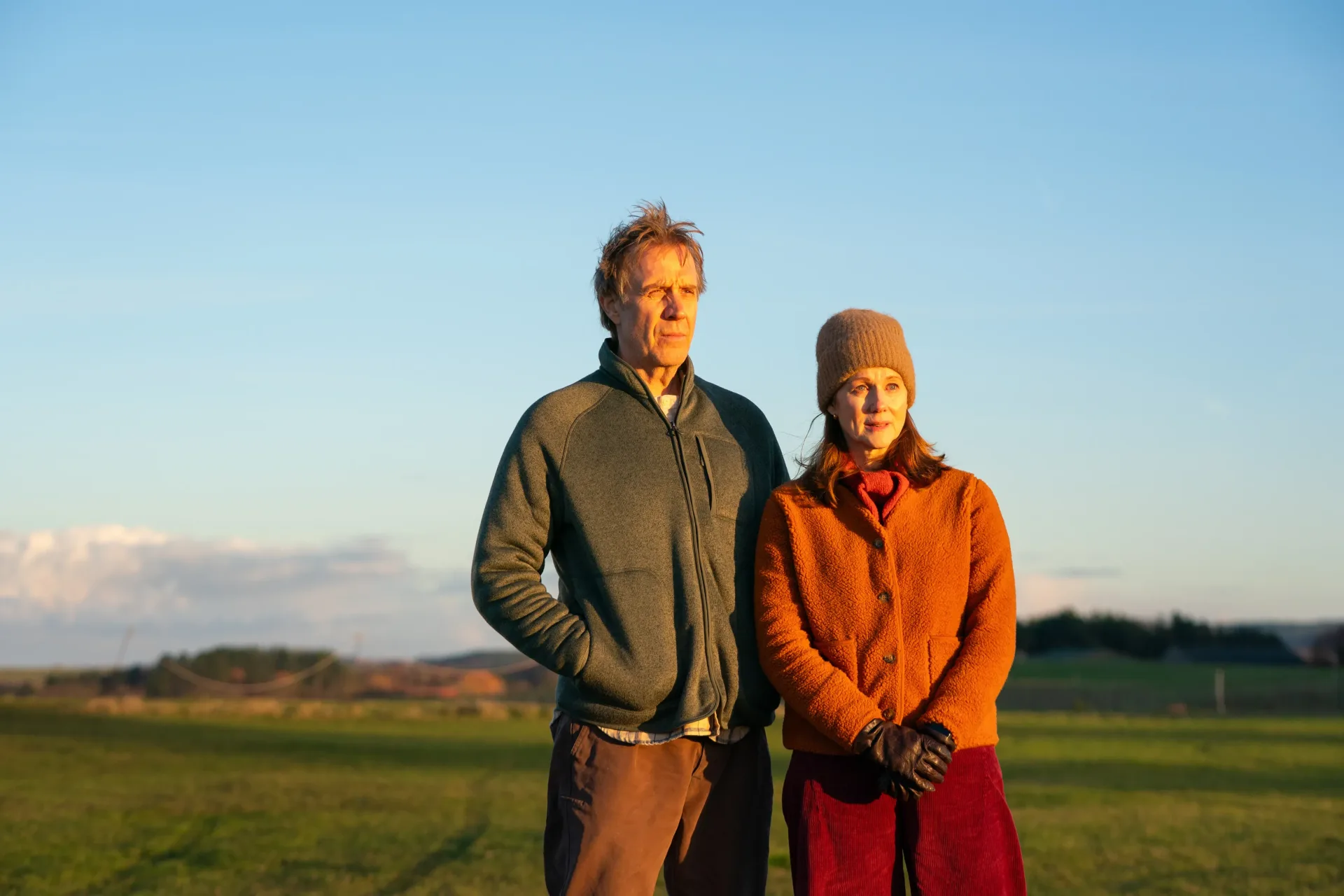
John Madden is returning to the Toronto International Film Festival with Onwards and Sideways, a character-driven drama built around coincidence, chronic illness, love and the daunting business of carrying on when life refuses to follow the original screenplay.
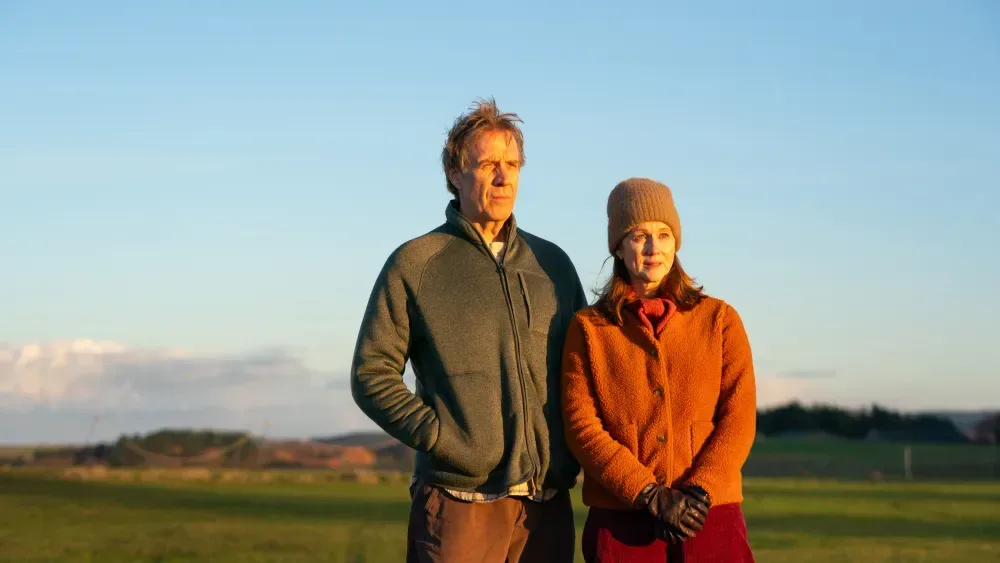
The film, which Madden is bringing to Toronto for buyers as well as festival audiences, stars Rhys Ifans as Tony and Laura Linney as Emma. Its starting point is startlingly simple: two strangers receive Parkinson’s diagnoses on the same morning at the same hospital. That shared shock becomes the hinge for a larger story about connection, changing expectations and what people choose to do with the time they believe they have.
It is Madden’s first return to TIFF in 16 years. He previously brought Proof and The Debt to the festival, but this new project arrives with a particularly intimate subject and a production challenge that goes well beyond landing two performers with enough chemistry to make a romance believable.
A premise that grew beyond a conventional romance
Onwards and Sideways originated with a script by Paul Mayhew-Archer, drawing on his experience of living with Parkinson’s disease. Madden saw potential in the material when he first encountered it, even though the screenplay needed development. Across nearly a decade, the project changed substantially.
What began in the territory of a straightforward boy-meets-girl tale developed into something more layered once the shared diagnosis became the inciting event. The relationship between Tony and Emma is therefore not detached from their illness; it is formed in the immediate aftermath of bad news and evolves alongside the practical, emotional and physical effects of that reality.
In the film, Tony is a composer and Emma is a teacher. Their neurologist gives them a stark assessment, telling them they have only five good years left. The story follows them through five chapters as they grow closer and alter one another’s lives. A Parkinson’s ballet class becomes one major point of movement for the pair, with Tony joining only after Emma urges him to do so.
The premise has room for the kind of odd-couple friction that can power a romance, but the subject matter makes it clear that this is not simply a meet-cute with a medical detail attached. The diagnosis reshapes how each character sees independence, their bodies, the future and the possibility of intimacy. The title itself suggests a life that does not move in a neat forward line.
Parkinson’s representation required exacting work
Parkinson’s is a progressive nervous-system disorder that can affect movement and become more pronounced over time. Its cause remains unknown. More than 10 million people are estimated to be living with Parkinson’s worldwide, a scale that helps explain why Madden regards the condition as closer to many people’s lives than they might initially assume.
Related coverage includes John Madden Returns to Toronto With Parkinson’s Drama ‘Onwards and Sideways’.
That broad familiarity does not make screen portrayal easy. Symptoms vary between individuals and can differ in type, timing and severity. For a film following two people across multiple stages of their lives, the depiction has to remain specific while also showing change over time. It cannot rely on one generalized performance shorthand.
Two consultants worked closely with the production to help make the portrayal authentic. That guidance was especially important because Ifans and Linney play characters whose symptoms are not identical. Rather than asking the actors to present Parkinson’s as a single uniform experience, the film’s approach recognizes the individual nature of the condition.
Madden has indicated that the physical work had to be calibrated carefully from moment to moment. That is a demanding task under any circumstances, and filmmaking brings an extra complication: scenes are commonly shot out of chronological order. Actors may need to move from one point in a character’s disease progression to another without the linear momentum an audience will later experience.
For Ifans and Linney, that meant keeping track of emotional development, relationship development and physical details simultaneously. A gesture, posture, vocal rhythm or moment of hesitation has to belong to the precise stage of a character’s journey being filmed that day. The aim, Madden has explained, was for that effort to become instinctive rather than visibly mechanical.
Ifans and Linney at the center
Madden worked separately with Ifans and Linney before bringing them together for rehearsals. Their connection registered as natural once they began playing scenes opposite each other, an encouraging sign for a film that depends on the audience accepting Tony and Emma’s growing bond.
That relationship has to carry several different weights. Tony and Emma are strangers connected by a chance encounter. They are people receiving difficult information from a doctor. They are adults discovering that someone else may understand an experience that friends and family cannot fully inhabit. And eventually, they are romantic partners whose affection does not erase illness or uncertainty.
The ballet-class element also points to a key tonal possibility within the project. Parkinson’s drama need not be defined only by solemnity. A reluctant composer heading into a ballet class at the suggestion of a teacher has the makings of discomfort, humor and vulnerability, while movement itself carries obvious significance for people dealing with a disorder that restricts it.
Madden’s comments on Mayhew-Archer emphasize defiance rather than self-pity. Mayhew-Archer, a BAFTA nominee, has spoken of Parkinson’s in unexpectedly positive terms, even calling it one of the best things that happened to him. That does not turn the condition into an uncomplicated gift, nor does it settle the experience for everyone living with it. But it suggests an authorial perspective interested in adaptation, wit and the refusal to let a diagnosis become a person’s entire identity.
A Toronto return with a different kind of festival moment
For Madden, taking Onwards and Sideways to Toronto is also a return to a festival environment after a long gap. The screening context matters to him. He has long argued that some films need to be experienced collectively, where the reaction of a full room becomes part of the event rather than an afterthought.
That belief was central to the release plan for 1998’s Shakespeare in Love, the film that earned Madden a directing Oscar nomination and went on to win Best Picture. It did not take the festival route because its distributor, Miramax, wanted it in theaters before the end of that year. Instead, Madden pushed for an audience screening at New York’s Paris Theater rather than allowing the film to be evaluated only in small private rooms.
The strategy behind Onwards and Sideways is plainly different. Madden is traveling to Toronto with the film, where it will be shown to buyers and audiences in the festival setting. Yet the underlying principle is similar: a crowd can reveal how a work lands. Laughter, silences, discomfort and emotional responses are not substitutes for a film’s craft, but they can be meaningful feedback for a project designed around shared human experience.
Toronto has often provided that kind of public proving ground for films seeking attention, distribution conversations or simply the charge of a large premiere. In a broader pop-culture landscape where projects about memory and difficult personal histories continue to find space, the festival’s appetite for serious character work is also reflected by films such as Back to Buenos Aires.
What the film’s setup promises—and what remains unknown
The confirmed ingredients of Onwards and Sideways offer a clear idea of its dramatic foundation: Madden directing Mayhew-Archer’s Parkinson’s-informed screenplay; Ifans and Linney playing Tony and Emma; a five-chapter structure; a chance hospital encounter; and a relationship transformed by diagnosis, ballet and time.
There are also important limits to what has been established. No public release date, distributor, wider cast list, review score or audience reaction has been confirmed here. The Toronto showing is framed as a presentation to buyers, not as evidence of a completed distribution arrangement. Its eventual release plans and broader availability remain uncertain.
What is already distinct is the attempt to make a love story without separating it from the less tidy realities that love can involve. Tony and Emma do not meet at a moment when both lives are wide open and uncomplicated. They meet when the future has suddenly become harder to picture. Onwards and Sideways will ask whether a connection born in that moment can become more than consolation—and how two people might move onward even when the path keeps shifting sideways.