Marco Bechis returns to feature filmmaking after a decade away with Back to Buenos Aires, a drama built around a survivor being forced to confront a past he has spent years refusing to name. The 104-minute Italy-Brazil production, also known by its original title Ritorno a Buenos Aires, places its central character between contemporary Argentina and memories of the 1970s military dictatorship. It is material with personal and artistic weight for the Chilean-Italian filmmaker, whose earlier 1999 film Garage Olimpo took its title from the detention center at the heart of this newer story.
The new film is not presented as a simple revisit of that earlier work. Where Garage Olimpo was more immediate and visceral in its treatment of state terror, Back to Buenos Aires approaches the aftermath through unease, fractured recollection and the difficult mechanics of testimony. Its core question is not merely what happened inside a prison. It is what survival does to someone decades later, particularly when survival is tangled with coercion, shame and the knowledge that others did not make it out.
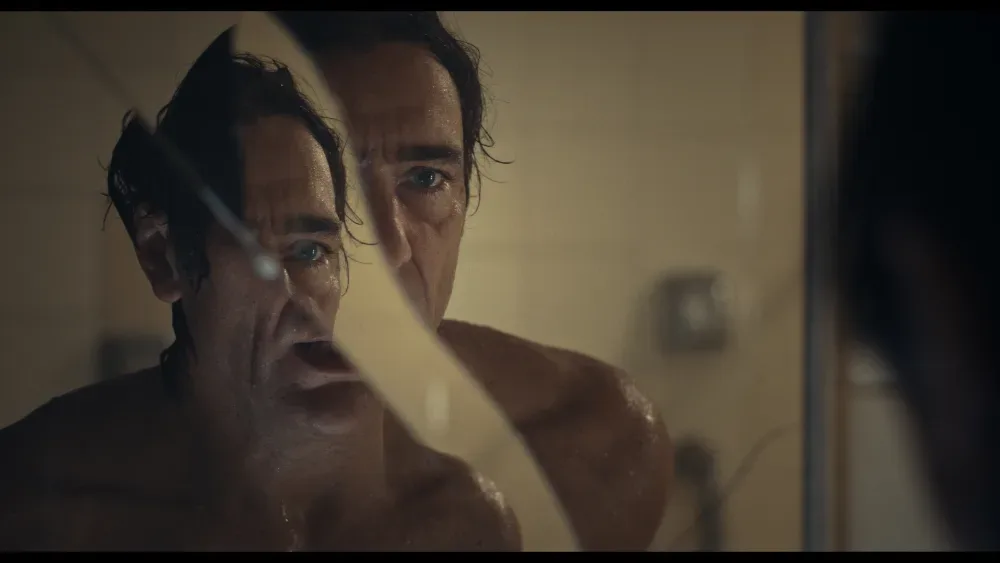
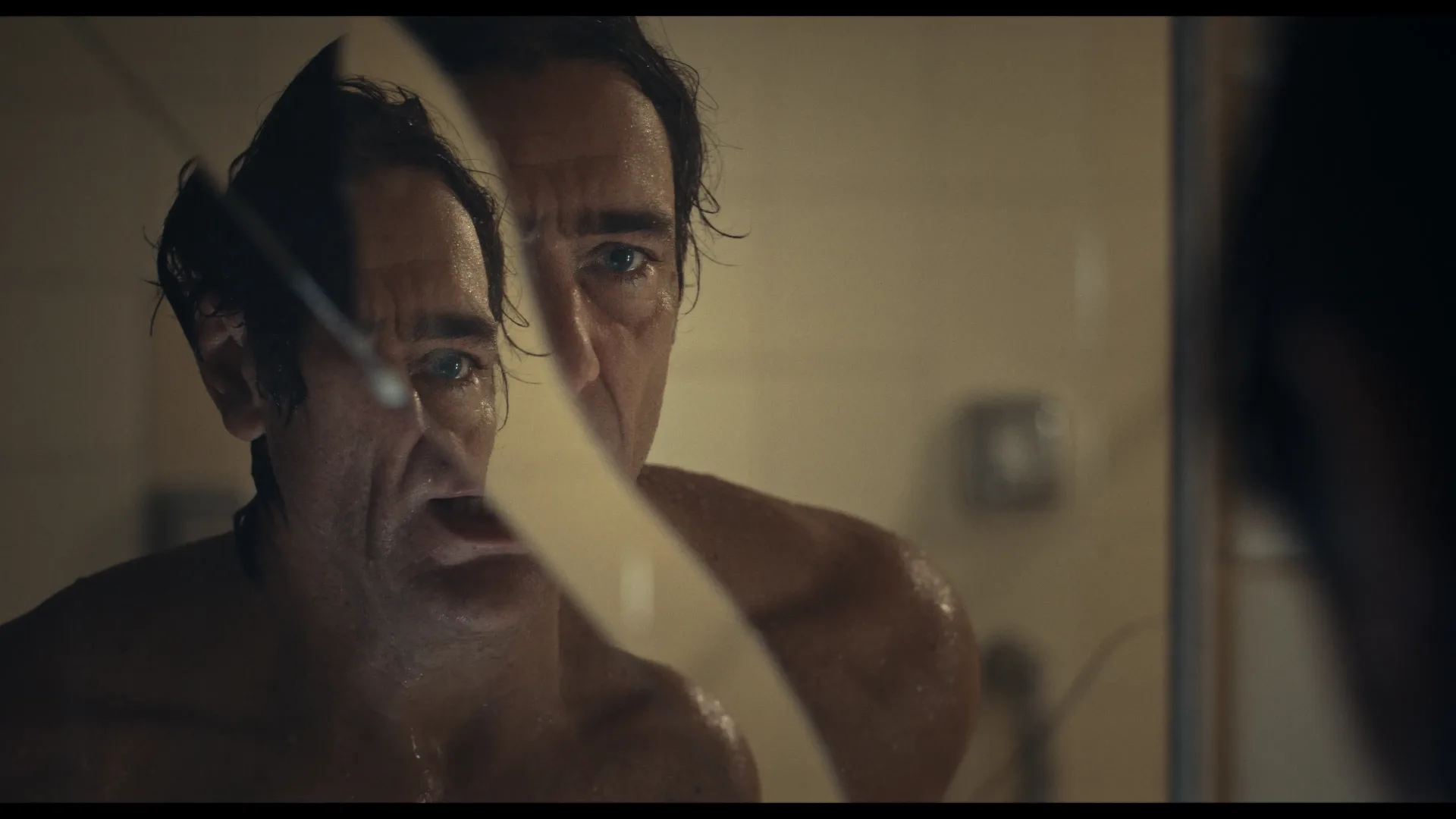
That premise gives the film considerable gravity. Yet its methods appear deliberately unsettled: a drama of historical reckoning that borrows visual signals from horror and film noir, with vacant passageways, heavy quiet, blinds throwing shadows across rooms and characters often isolated in enclosed spaces. The result has striking individual passages, even as the larger emotional and narrative construction does not always seem to lock together.
A doctor summoned back to a past he has avoided
Adriano Giannini plays Mariano Guerra, an Italian doctor who was once involved in the Argentine resistance as a medical student. During the dictatorship, Mariano was imprisoned for more than three years at Garage Olimpo. In the present-day sections, he is living in Italy and allowing messages asking him to return to Buenos Aires and testify to accumulate on his answering machine.
His resistance is immediate and revealing. Mariano is not simply reluctant to take a painful trip; he appears incapable of placing his experience into a public record. The eventual journey to Argentina becomes a pressure chamber. A notably effective sequence follows his flight from the perspective of his seat, using the physical act of travel to make a return to the country feel less like transit than a crossing into the territory of trauma.
After arriving, Mariano is placed with other prospective witnesses. They ride together, eat together and stay in what resembles an aging conference facility, yet recognition among them does not produce easy fellowship. Conversation is scarce. That silence is central to the film’s design, reflecting both private wounds and the much broader silence that enabled perpetrators to remain in ordinary life long after the dictatorship.
The courtroom process is therefore never only procedural. It becomes a demand that people who have protected themselves through withdrawal acknowledge not just violence done to them, but the agonizing choices and compromises made under captivity. Mariano’s dread suggests that his history at Garage Olimpo includes collaboration forced from him by his captors. The film’s interest lies in the residue of that coercion rather than a neat moral verdict.
Two timelines, one unresolved disappearance
The narrative moves regularly between the present and the 1970s. In the past, a younger Mariano, played by Eduardo Hoy, works in the resistance alongside Muñeca, played by Olivia Nuss. The present-day thread brings him face-to-face with Evelyn, portrayed by Veronica Gerez, who is Muñeca’s daughter. Evelyn wants information about her mother, one of the people disappeared during the dictatorship.
That request is a direct challenge to Mariano’s strategy of refusal. He brushes Evelyn off, and he also resists when the lawyer assisting the witnesses, played by Marcelo Chaparro, shows him photographs of people connected to Garage Olimpo. Mariano claims he does not recognize anyone. But the film makes clear that his body is giving away what his words will not: he is severely shaken and unable to keep the past at a convincing distance.
One of the more powerful stretches involves Muñeca being taken away. The film’s ability to blend past and present in this moment gives the disappearance an echoing quality; it is not contained by the historical flashback, because its consequences continue to shape Evelyn’s life and Mariano’s panic in the present. This cross-cutting structure creates a meaningful conversation between the two eras, even if some other transitions and dramatic elements feel less fully integrated.
For readers interested in films that take a patient, haunting approach to political history and inherited trauma, there is a thematic overlap with this look at Let Us Through, Dear Ancestors and its colonial reckoning. The historical contexts are entirely different, but both works use the past as a living force rather than a sealed-off backdrop.
Dr. K and the terror of recognition
Mariano’s most destabilizing discovery comes around the courthouse. He notices a short, balding man leaving the building and follows him, increasingly agitated, to the hospital where he works. The man is Dr. K, played by Adrian Fondari. At Garage Olimpo, Dr. K was Mariano’s principal tormentor, the person who broke him down until he became a passive collaborator while many other prisoners were killed.
The discovery is unsurprising in plot terms, but it is potent in what it represents. A figure associated with systematic brutality has continued into civilian life, now practicing medicine. Mariano, meanwhile, is also a doctor, but one struggling to stay composed in any setting that requires him to remember. The pairing adds a sharp irony to the film: the survivor and the tormentor occupy parallel professional identities, though only one carries visible spiritual collapse.
Bechis frames institutional locations—the lodging facility, courthouse and hospital—with an oppressive flatness. Their lighting and architecture make them feel drained rather than safe. Exterior scenes offer a contrast, but not necessarily relief. The open city can become equally threatening when it allows Mariano to glimpse a man he hoped had vanished into the past.
A testimony that steadies the film
Ana Celentano’s Amalia Mendez provides an important counterweight to Mariano’s tremulous perspective. When Amalia recounts the sexual violence she survived, she does so with an unbowed dignity. Her testimony supplies the story with a clear, articulate moral presence at a point where Mariano’s increasingly exposed turmoil can make the drama feel unsteady.
This contrast matters. Mariano’s trauma is portrayed so close to the surface that viewers may question how he has managed to function for years as a physician. Amalia, without minimizing the damage done to her, demonstrates another register of survival: the ability to speak with precision and presence in a public forum. The film gains force when it permits her account to stand as more than a mechanism for Mariano’s emotional journey.
Not every character around Mariano receives equivalent depth. Evelyn’s role, despite its crucial connection to Muñeca and the disappeared, is more thinly developed. Her scenes are necessary to the plot’s push toward disclosure, but the writing does not always grant her the complexity that the situation demands. That imbalance contributes to the sense that the film has compelling components without always achieving a unified emotional impact.
Atmosphere versus dramatic cohesion
Back to Buenos Aires is clearly reaching for an atmosphere of haunted consciousness. Its corridors, cigarettes, shadows and prolonged quiet place it near genre imagery without turning it into a conventional horror story. The noir influence similarly emphasizes concealment, compromised people and old crimes refusing to remain buried. Flashbacks are rendered with a pronounced brown-toned palette, a familiar visual shorthand for the 1970s.
These choices give Bechis’ return a distinctive surface, and at their best they intensify the feeling that Mariano is trapped in spaces built by memory. At the same time, the fusion of styles can feel uneasy. The heightened visual language and the film’s sober historical subject sometimes pull in different directions. The drama is strongest when it lets a particular encounter, a testimony or a merged past-present image carry the weight, rather than pressing its ideas toward an overly obvious promise of redemption through confession.
Still, the film’s fundamental subject remains formidable. There is no easy closure in the legacy of disappearance, torture and coerced complicity. By centering the decades-long cost of silence, Bechis examines testimony as a painful act with consequences, not as a magic ritual that resolves guilt. Even where the film proves fitful, its strongest scenes point toward the enduring necessity of confronting crimes that have been allowed to fade into the background.
Cast and production details
- Director: Marco Bechis
- Screenplay: Marco Bechis, in collaboration with Vijaya Bechis Boll
- Cast: Adriano Giannini, Ana Celentano, Veronica Gerez, Olivia Nuss, Adrian Fondari, Marcelo Chaparro, Eduardo Hoy, Paula Cohen, Vijaya Bechis Boll, Marcela Serli and Maria Layla Fernandez
- Cinematography: Fabrizio La Palombara
- Editors: Jacopo Quadri and Nicolò Tettamani
- Music: Guglielmo Diana
- Languages: Italian and Spanish
- Running time: 104 minutes
- Production: An Italy-Brazil co-production involving Fandango, 39Films, Karta Film, Rai Cinema and 34 Filmes
Back to Buenos Aires was screened in competition at the Venice Film Festival, with a Rome screening dated August 27, 2026. It marks a return to defining concerns for Bechis: Argentina’s dictatorship, the structure of imprisonment and the burden borne by those who remain alive to tell what happened.