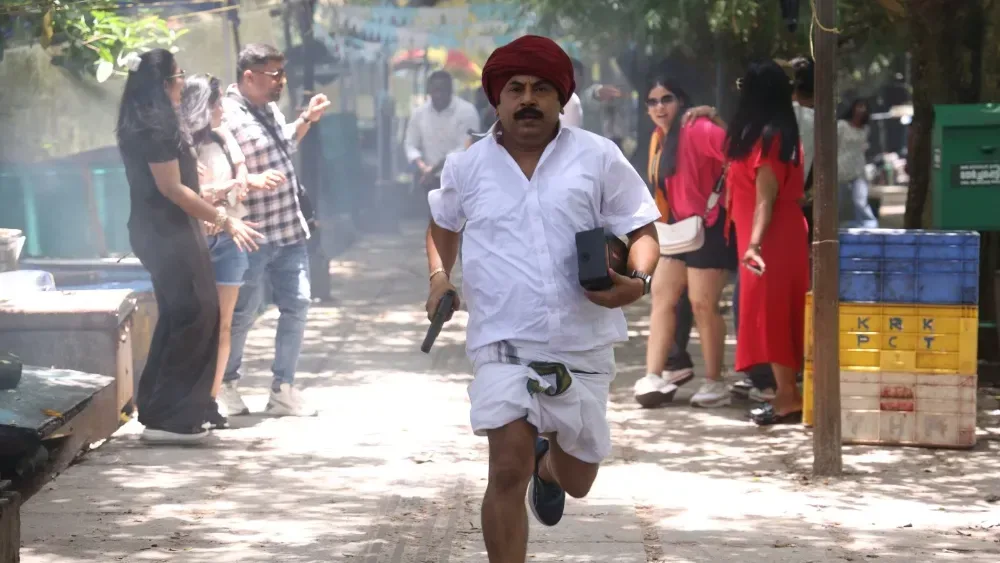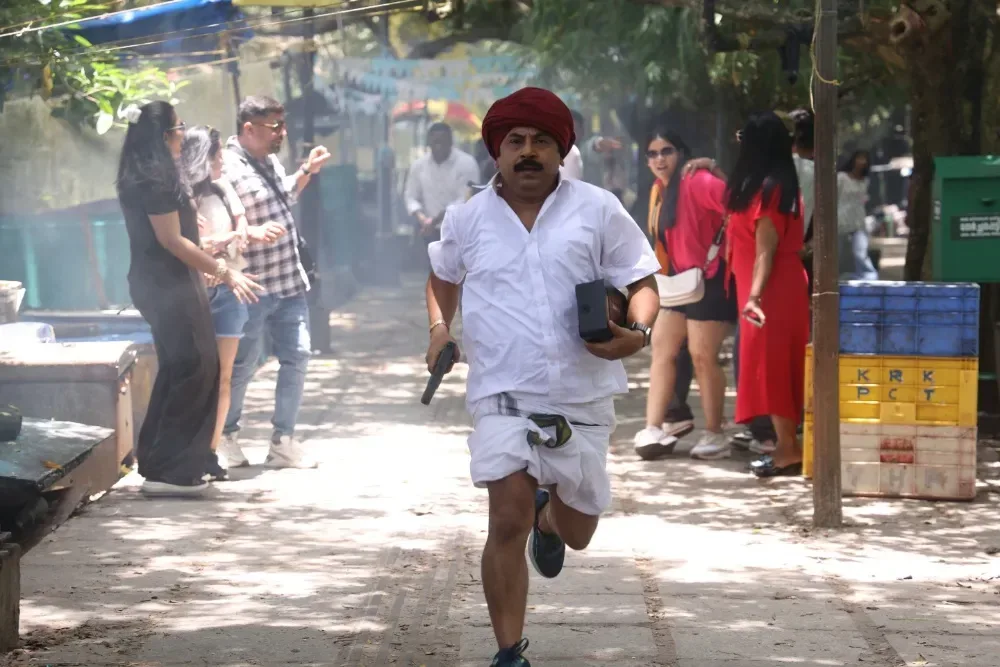
Hoichoi is marking its 10th year with a Bengali-language slate of more than 25 series, films and television titles. The lineup reaches in several directions at once: a film centered on Satyajit Ray’s path to making Goopy Gyne Bagha Byne; fresh mysteries involving Feluda and Eken Babu; franchise continuations; new thrillers and dramas; television programming; and the platform’s first animated series.
The range matters because it presents a broad definition of what a language-first streaming platform can be. Hoichoi is not framing its next phase around a single genre or a single returning property. Instead, the announced projects combine canon-adjacent cultural material, established detective characters, original stories, historical settings, supernatural premises and animation. It is a substantial programming mix for a service whose library is already described as containing more than 600 Bengali films and over 200 original series.
Its audience extends across India, Bangladesh and overseas markets. The programming announcement also comes alongside a wider account of the company’s business: subscriptions remain part of the model, but licensing, branded content, theatrical releases and distribution deals are also in the mix. That emphasis on multiple routes for a story to reach audiences reflects a broader entertainment landscape in which platforms are looking beyond a single subscription window; the same questions about ownership, distribution and creative ecosystems sit behind major entertainment-business debates, including those surrounding the approved Paramount-Warner Bros. deal.
Srijit Mukherji’s Ray film leads the slate
At the center is Maharaja Tomare Selam, directed by Srijit Mukherji. The film follows Satyajit Ray after he agrees to his son’s request to make a children’s film. Ray then faces financial difficulties, resistance from the industry and the burden attached to his own reputation as he moves toward the project that became Goopy Gyne Bagha Byne, described here as a classic of Indian cinema.
Jeetu Kamal, Ritwik Bhowmik, Rudranil Ghosh, Sairity Banerjee, Shatakshy Nandy and Arijit Dutta star. The setup places creative decision-making under pressure rather than treating a major filmmaker’s career as an uncomplicated march toward a celebrated result. That is a useful dramatic frame for a film about production itself: the stakes are not simply whether a picture gets made, but how family, money, institutional resistance and artistic expectations can collide around a filmmaker.
The planned Hoichoi Studio films also include The Eken: Kerala-e Kurukshetra, directed by Joydeep Mukherjee. In that mystery, Eken Babu is drawn into a case in Kerala after a secret mission goes wrong. The cast includes Anirban Chakrabarti, Ritwick Chakraborty, Raima Sen, Somak Ghosh, Suhotra Mukhopadhyay, Ambarish Bhattacharya, Arna Mukhopadhyay, Subrat Dutta and Kamaleswar Mukherjee.
Two further announced films take different dramatic paths. Parambrata Chatterjee directs and appears in Jononi, in which a college professor searches for her housekeeper’s missing teenage daughter and uncovers secrets nearer to her own life. Koel Mallick, Koneenica Banerjee and Joy Sengupta also star. Debaloy Bhattacharya’s Bhugun, starring Abhishek Banerjee and Parno Mittra, concerns a wealthy Bengali family that turns to a tantric in an effort to recover its fortunes, only to invite a lethal curse.
“Tantric” in these project descriptions refers to a practitioner associated with tantra, a term encompassing varied religious and spiritual traditions. In Bhugun, it signals the story’s supernatural horror framework rather than a business or technological use of the word. Likewise, the announced slate uses folklore, religious imagery and historical settings as story elements, but the projects cover multiple genres rather than one unified supernatural category.
Detectives return, with Feluda and Eken Babu on new cases
Mystery is one of the clearest through-lines. Kamaleswar Mukherjee directs the series Feludar Goyendagiri: Baksho Rawhoshyo, where Feluda investigates the secret of a box switched during a train journey. Tota Roy Choudhury, Kalpan Mitra and Subhadip Chakrabarti star.
Feluda’s presence makes this more than a newly invented detective premise. A recurring fictional detective gives a platform an identifiable point of return for viewers: audiences understand the basic promise of a case-solving adventure, while each story can bring a distinct object, location or crime into focus. Here, the swapped box supplies the central mystery mechanism. The series does not need to explain a sprawling new world before it can begin raising questions about who switched the item, why it mattered and what it conceals.
Eken Babu serves a similarly practical role in the film slate, though The Eken: Kerala-e Kurukshetra moves the character into a Kerala-set mystery stemming from a failed covert operation. Taken together, the two titles show Hoichoi leaning on recognizable detective figures while separating their cases by format and setting: a train-based secret for Feluda in a series, and a mission-gone-wrong mystery for Eken Babu in a feature film.
Another mystery on the list is Detective Tarinicharan, starring Sabyasachi Chowdhury. Its murder case is set in colonial Darjeeling. The setting supplies a different backdrop from the present-day premise outlined for Eken Babu and the train journey associated with Feluda. Hoichoi’s detective offerings therefore appear designed to provide variety within a familiar broad genre, rather than relying on a single investigator or one kind of crime story.
Original series move from ritual-horror imagery to family drama
Among the newly announced series, Pratim D. Gupta’s Chaalchitro: The Ekchala Murders has one of the most immediately stark premises. A serial killer leaves female victims posed as goddesses in the period leading up to Durga Puja. Tota Roy Choudhury, Anirban Chakrabarti, Chanchal Chowdhury and Sweta Mishra star.
Durga Puja is a major festival associated with the goddess Durga, and its use as a backdrop in the series establishes a pointed contrast between sacred iconography and a murder investigation. The available description does not reveal the killer’s motive, the investigators’ methods or the final form of the threat, so those details remain unknown. What is clear is that the project uses a festival-season setting and goddess imagery as integral components of its crime premise, not merely visual decoration.
Other new series are described more sparingly but add to the slate’s tonal range. Raima Sen leads Kumari, created by Sahana Dutta. Ayan Chakraborti’s Shrimoti Not Out, starring Ananya Chatterjee and Joy Sengupta, follows a 48-year-old woman who discovers she is pregnant as her son prepares to marry. Mimi Chakraborty headlines Aditi Roy’s Uttoron: Charulata.
The premise of Shrimoti Not Out is especially rooted in an abrupt change to family expectations. It places its protagonist’s pregnancy alongside her son’s approaching marriage, two developments that could reshape relationships across generations. The announcement establishes the dramatic situation, but does not specify whether the series approaches it as comedy, melodrama or a combination of tones. It is better read, at this stage, as a family-centered premise built around an unexpected life event.
The slate also includes Debipokkho, Kauriburir Mandir, Mangolik, Konya, Shoti, Jujuma and Kanamachhi. No plot specifics were provided for these titles, so their genres and casts should not be assumed from their names alone.
Returning titles build continuity without defining the entire slate
Several returning franchises are planned: Birangana 2, Kuheli 2, Thakumar Jhuli 2, Tansener Tanpura: Mohonbashi with Vikram Chatterjee, and Choddobeshi 2, created by and starring Parambrata Chatterjee. Sequels and continuing installments can be important for streaming services because they give existing viewers a clear reason to return while allowing the overall lineup to take risks elsewhere. The announcement, however, does not provide release timing or episode counts for these productions.
Parambrata Chatterjee also directs Agambagish: Drolmar Khorgo, starring Saswata Chatterjee. Set in 17th-century Bengal, it follows the tantric saint Krishnananda Agambagish as he confronts ghostly dacoits. A dacoit is a term historically used in South Asia for an armed robber or bandit. In this case, the description specifies supernatural bandits, combining a period setting with ghostly antagonists.
This blend of returning labels and stand-alone projects is strategically legible. A familiar title can lower the barrier for an audience member deciding what to watch, whereas a new property has to make its own case through premise, cast and creative team. Hoichoi’s slate uses both approaches: it supplies more adventures for known detectives and continuations for existing series, while also introducing projects such as Chaalchitro, Shrimoti Not Out and Detective Tarinicharan.
First animation and projects beyond conventional streaming series
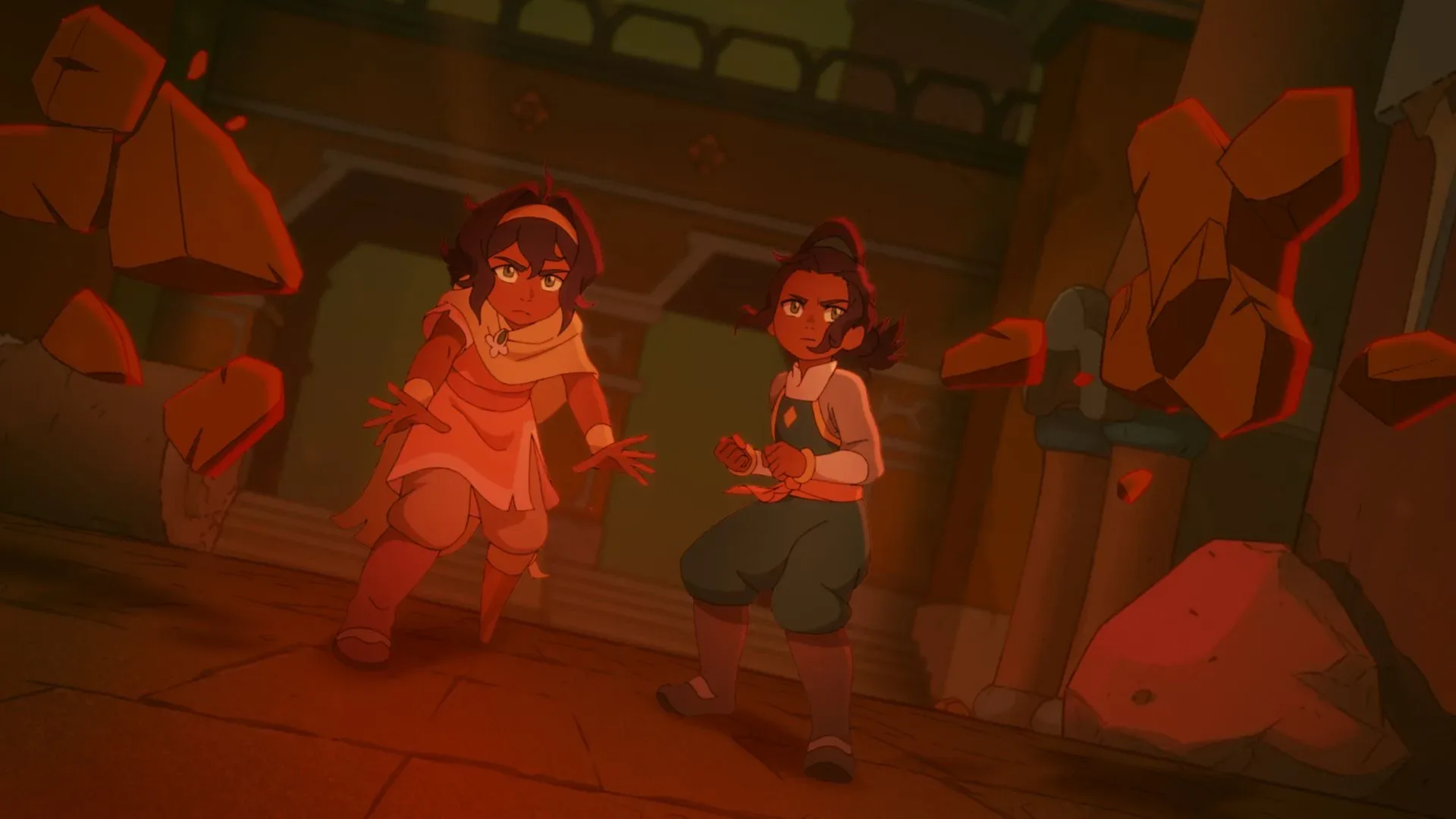
The platform’s first animated series is Shri Ramkrishna, directed by Sanglap Bhowmick. The show traces the life of spiritual master Ramakrishna Paramahansa. Animation is a meaningful addition to the slate because it establishes a format Hoichoi had not previously presented as part of its original offering. The announcement does not state its visual style, episode structure or intended age range, so those details cannot yet be inferred.
On the television side, Madhumita Sarcar and Arjun Chakrabarty star in Katha-Amrito, while Trina Saha stars in Sholaka Rawhoshyo. Hoichoi also says it will continue supporting Bangladeshi creators and productions, reinforcing that Bengali storytelling in this strategy is not restricted to a single national production base.
Outside screen fiction, the company is expanding into audio and short-form initiatives. Hoichoi FM houses original audio fiction within the app. Audio fiction means stories designed to be heard rather than watched, using voice performance and sound as their primary storytelling tools. Sooper is a microdrama venture operating across languages and markets. A microdrama generally refers to short-form serialized drama, though no episode length or release pattern has been specified for Sooper here.
Hoichoi is also testing artificial-intelligence tools for development and production through LoglineAI. Development is the stage in which a project’s concept, script and package are shaped before filming or final production; production refers to the work of making the project. The announcement says the tools are being tested, not that they have replaced writers, performers or other creative workers. That distinction is important: experimentation with AI tools describes a process initiative, while the stated slate remains defined by named directors, performers and story concepts.
A larger platform strategy, anchored in Bengali stories
Soumya Mukherjee, Hoichoi’s COO, characterized the company’s decade in terms of stories, characters and creators becoming part of Bengali popular culture. He said the original ambition was to build a home for Bengali stories and that the next possibilities include adaptations, licensing, theatrical activity, partnerships and new formats, with stories travelling beyond Bengal and beyond language.
Vishnu Mohta, co-founder of Hoichoi and LoglineAI, similarly framed the first decade as proof that a language-first platform could become a meaningful global business. The next phase, he said, is about broadening what the platform can be while retaining the cultural instinct and storytelling sensibility that shaped it.
The 10th-year slate gives that ambition a concrete form. The projects range from a film about Ray’s effort to make a children’s movie to contemporary and historical mysteries, family drama, horror, returning franchises, animation, television and audio fiction. The important caveat is that the announcement outlines a slate, not a release calendar: dates, rollout order and fuller details for many titles have not been provided. Still, the list clearly signals that Hoichoi’s next chapter is intended to broaden formats and business avenues without moving away from Bengali-language storytelling as its center.