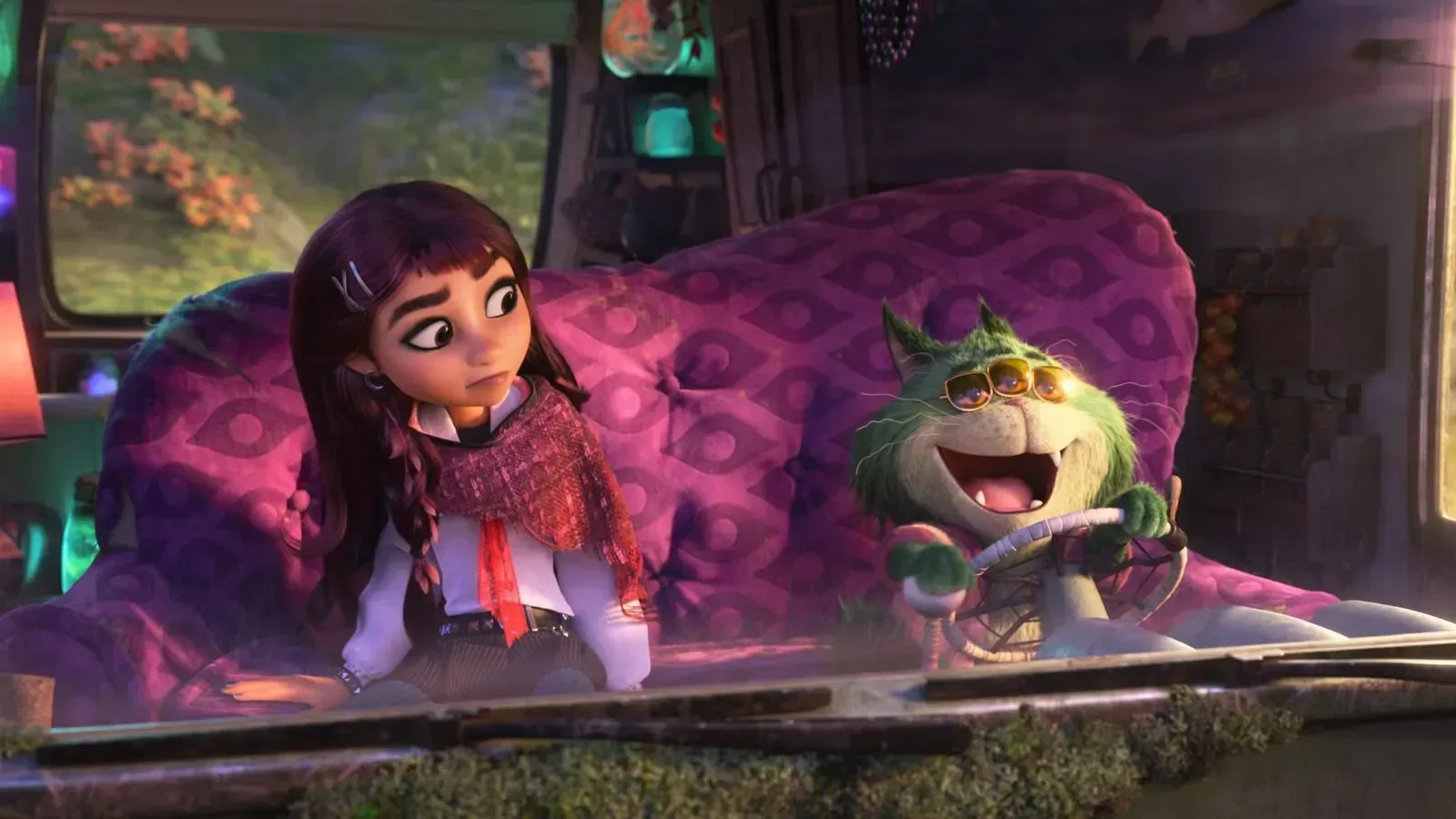
Hexed is a cheerful, family-oriented animated fantasy with a clean central pitch: a teenager discovers that the magic her mother tried to suppress is real, inherited and considerably more powerful than anyone expected. Its 102-minute journey from modern-day Ohio to the witch realm of Hexe has lively color, an accomplished voice cast and an accessible PG rating. Yet the film’s biggest hurdle is its familiarity. The pieces are pleasant in isolation, but the adventure reportedly feels assembled from well-known coming-of-age and portal-fantasy patterns rather than driven by a distinctive new idea.
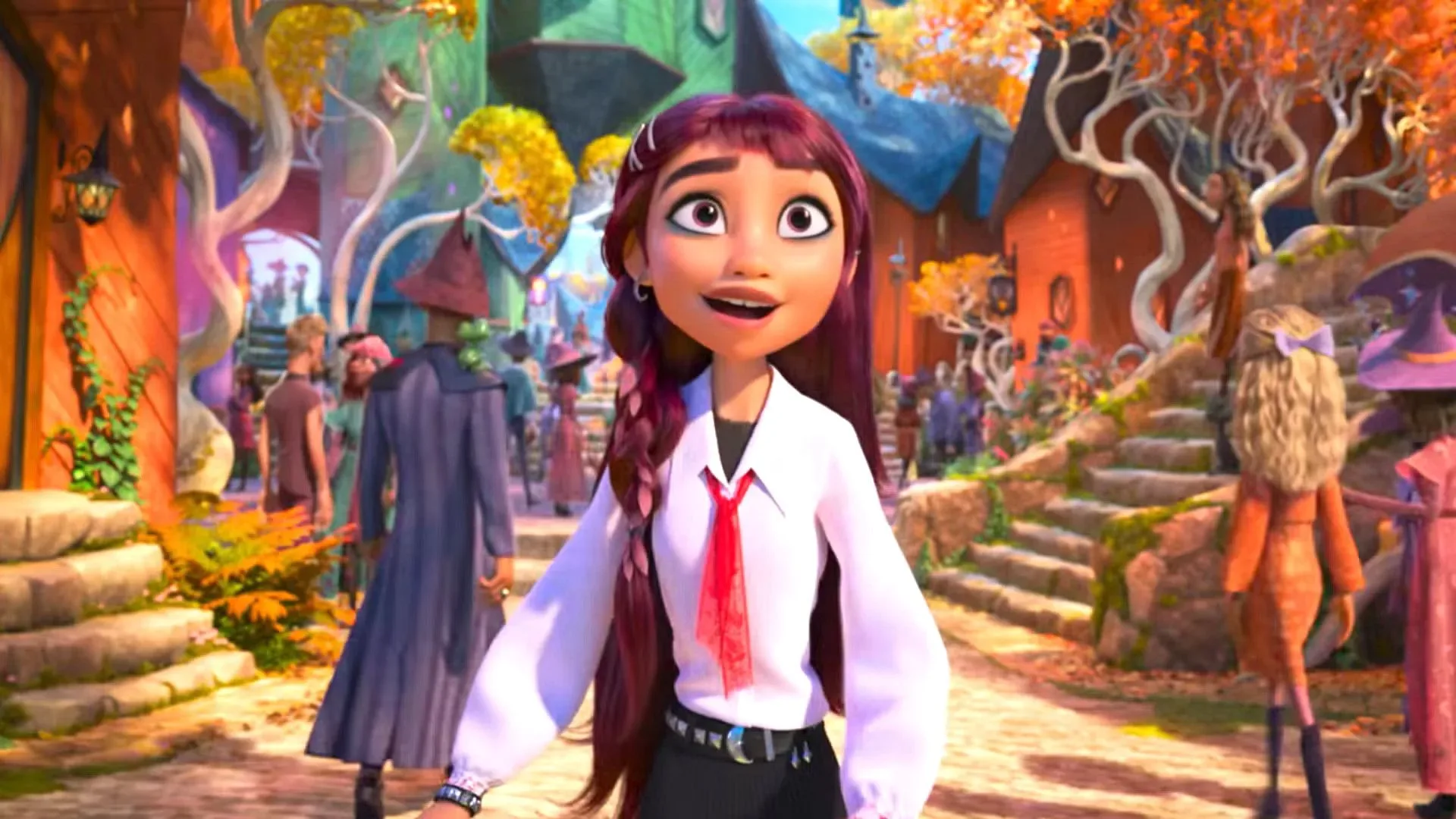
Directed by Fawn Veerasunthorn and Jason Hand, with Josie Trinidad credited as co-director, Hexed centers on Billie, voiced by Hailee Steinfeld. Billie begins as a restless high-school student who does not know why her mother Alice, voiced by Rashida Jones, is so determined to keep her close and under control. The answer is magical: Billie was born with witchcraft, and Alice has spent years trying to contain it with an ordinary-looking bracelet.
When Billie removes that bracelet after being expelled from school, she is pulled through to Hexe, an enchanted realm where her abilities quickly become impossible to hide. Flying, an unusual talent in that world, makes her a particular concern for Queen Celeste, the elegant but cruel ruler voiced by Jodie Foster. Alice follows Billie into Hexe, and the mother-daughter conflict becomes inseparable from a larger struggle over power in the queendom.
A portal fantasy built around a family secret
The film’s structure is easy to recognize. A protagonist in an ordinary setting discovers a concealed supernatural identity, crosses into another world and finds that a family history has shaped the danger waiting there. That is not inherently a weakness. Familiar structures can make a children’s film legible and comforting, particularly when it is balancing a fantasy mythology with an emotional story about a parent and child.
What matters is the specific character perspective placed inside that structure. Billie’s position offers a potentially appealing twist on the premise: she is not only learning who she is, but confronting the fact that Alice has actively withheld that identity from her. The bracelet is therefore more than a magical prop. It is a visible expression of Alice’s fear and control, and removing it marks Billie’s abrupt break from the limits her mother imposed.
Hexed reportedly establishes this conflict early. As a baby in Salem, Billie manifests lightning-like magic from her hands and nearly opens an otherworldly portal. Alice responds by neutralizing the child’s powers and moving them to Blahville, Ohio. Roughly 16 years later, Billie has no understanding of that past, only the experience of living with a mother whose protectiveness feels overbearing.
That makes the mother-daughter material the story’s most grounded dramatic engine. Alice’s decisions may be controlling, but the plot gives them a basis in a real magical threat. Billie’s frustration, meanwhile, comes from being denied autonomy without being told the reason. The film has the ingredients for a meaningful conflict about trust: a mother who believes secrecy protects her child, and a daughter who sees secrecy as a refusal to let her grow.
Hexe gives the film its visual playground
The move from suburban Ohio to Hexe is meant to deliver the release that the domestic setup withholds. The realm is ruled by witches and comes with its own power struggles, ravens and magical creatures. Its palette is described as rich in violet and jade, while the opening uses jagged, collage-like animation to explain a fairy-tale history of a witch queendom and lost or displaced magic.
In animation, a portal fantasy is a story built around a threshold between a familiar world and an unfamiliar one. The portal is useful dramatically because it changes the rules around the lead character. Billie can be treated as disruptive or troublesome at school, then become extraordinary the moment she reaches Hexe. Her talents, especially flight, carry a new political weight there.
The challenge is that a new realm needs rules that feel specific enough to invite curiosity. The information available points to a setting filled with recognizable genre signals: an imperiled queendom, a threatening monarch, inherited magic and ominous ravens. Those elements can provide fast visual shorthand for younger viewers. But they also leave a film vulnerable to the sense that audiences have visited this sort of place before.
That is the central criticism surrounding Hexed: it has an appealing surface without enough narrative surprise beneath it. A bright magical dimension is not automatically fresh simply because it is colorful. Likewise, a magical lineage is only as compelling as the complicated choices it forces its characters to make. Billie, Alice and Celeste have a strong setup for that kind of collision, but the larger plot is said to proceed predictably.
Jodie Foster, Walton Goggins and the supporting cast
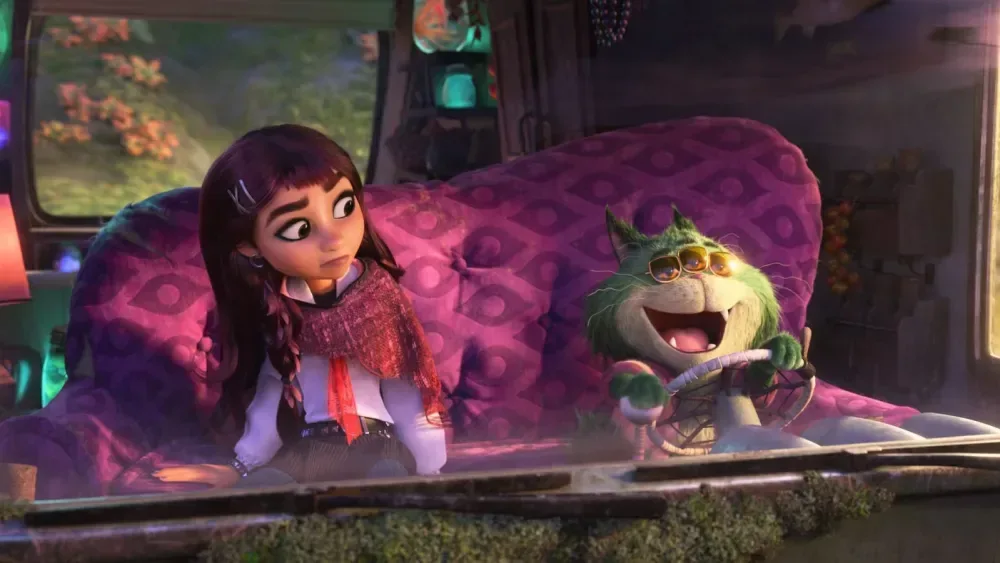
The film has an unusually deep voice lineup. In addition to Steinfeld, Jones and Foster, the credited cast includes Walton Goggins, Henry Winkler, Dan Stevens, Brett Gelman, Tracey Ullman and Stephen Fry. The material specifically highlights Goggins as Beef Roger Crummchuck, a three-eyed feline familiar with a Southern drawl.
A familiar in witch and fantasy fiction is an animal companion tied to a magic user, often serving as a guide, helper or comic counterweight. Beef Roger appears to fill much of the movie’s comedy role. His eccentric name, extra eye and forceful vocal style make him a notably stranger figure than the heroine or the royal villain, and that contrast appears to give the film some needed texture.
There is also a living, four-legged cauldron with a puppy-like manner. It sounds like an immediately readable piece of animation design: a traditional witchcraft object reimagined as an eager creature. Yet the character apparently recedes from the story around the halfway point. That is a small but telling issue in a crowded fantasy adventure. A memorable visual gag or sidekick needs a continuing function, whether that means building the world, helping the heroes or reflecting the emotional stakes. Otherwise it can feel like a promising concept introduced and left behind.
Celeste serves the more conventional opposing role. Billie’s capacity to fly threatens the queen’s position, so the heroine’s self-discovery rapidly becomes a contest for Hexe’s future. Foster’s voice performance is described as smooth and controlled, which sounds well-suited to a monarch whose cruelty is presented with polish rather than chaotic menace.
Pop songs shape the film’s modern Disney approach
One of the most notable creative choices is musical. Rather than presenting original songs, Hexed uses existing pop music, including Demi Lovato’s “Confident” and Dua Lipa’s “Levitating,” which appears twice. Kris Bowers composed the score.
This distinction matters. In a traditional animated musical, original songs can perform narrative work: they reveal a character’s wish, clarify a turning point or give the audience a phrase that belongs uniquely to the film. A soundtrack built around established songs instead brings immediate recognition and a contemporary pop energy. It can suit a brisk adventure, especially one aimed at families and younger viewers, but it cannot create the same kind of story-specific musical identity by itself.
Here, the absence of original songs contributes to the view that the movie plays things safe. That does not mean pop tracks are automatically an artistic shortcut. A carefully chosen licensed song can sharpen a sequence’s attitude or create a funny mismatch with what is onscreen. The concern is more about overall texture: when a story is already built from familiar fantasy components, recognizable music may reinforce the sense that the film is relying on accessible ingredients instead of making a bolder signature choice.
The finale reportedly pushes this tension to the surface, combining a fast chase with “Confident” and Bowers’ active orchestration. That can be energizing, but it also risks sonic overcrowding if song and score compete for attention rather than supporting each other. For a climactic magical showdown, the soundscape should ideally make the stakes clearer, not merely louder.
Who Hexed is likely to enchant
The clearest audience for Hexed is younger children and families seeking a colorful, non-threatening seasonal outing. Its PG rating, buoyant attitude toward magic and uncomplicated heroine make it more welcoming than a genuinely scary witch story. Billie is not tortured by being different; she discovers she enjoys being magical. That is a straightforward, affirming message for its intended crowd.
Older viewers and adults who have absorbed many modern fantasy stories may be less persuaded by its formula. The movie’s ideas—a hidden heritage, a protective parent, a magical monarchy and an inevitable showdown—sound as though they arrive with few major detours. Its mother-daughter relationship gives the film more emotional potential than a routine good-versus-evil plot alone, but the surrounding adventure does not appear to consistently elevate that material.
For families interested in handcrafted animation with a more Halloween-adjacent flavor, Joking Joystick has also looked at how Shaun the Sheep turned Halloween ideas into stop-motion comedy. The comparison is not about matching stories, but it underlines how much personality a family-friendly spooky premise can gain when visual choices and comic concepts feel strongly tied to one another.
The practical takeaway
Hexed looks positioned as an easygoing magical adventure rather than an instant animated landmark. Its strongest selling points are a capable cast, an energetic central heroine, bright fantasy imagery and a story that places a mother-daughter reconciliation inside a kid-friendly magical conflict. Walton Goggins’ eccentric cat familiar seems to supply its most distinctive comic note, while Steinfeld, Jones and Foster carry the primary family and power dynamics.
Its limitations come down to originality and follow-through. The visual world, plot mechanics and musical choices are all accessible, but accessibility is not the same as memorability. Families looking for a breezy witch tale may find plenty to enjoy in Billie’s discovery of Hexe and her own abilities. Viewers hoping for a stranger, sharper or more inventive spell may find that the film’s ingredients are familiar long before the final chase arrives.
Hexed at a glance
- Rating: PG
- Running time: 102 minutes
- Directors: Fawn Veerasunthorn and Jason Hand
- Co-director: Josie Trinidad
- Screenplay: Jared Bush and Dana Ledoux Miller
- Story: Jared Bush, Josie Trinidad and Phil Johnston
- Music: Kris Bowers
- Lead voices: Hailee Steinfeld, Rashida Jones, Jodie Foster and Walton Goggins