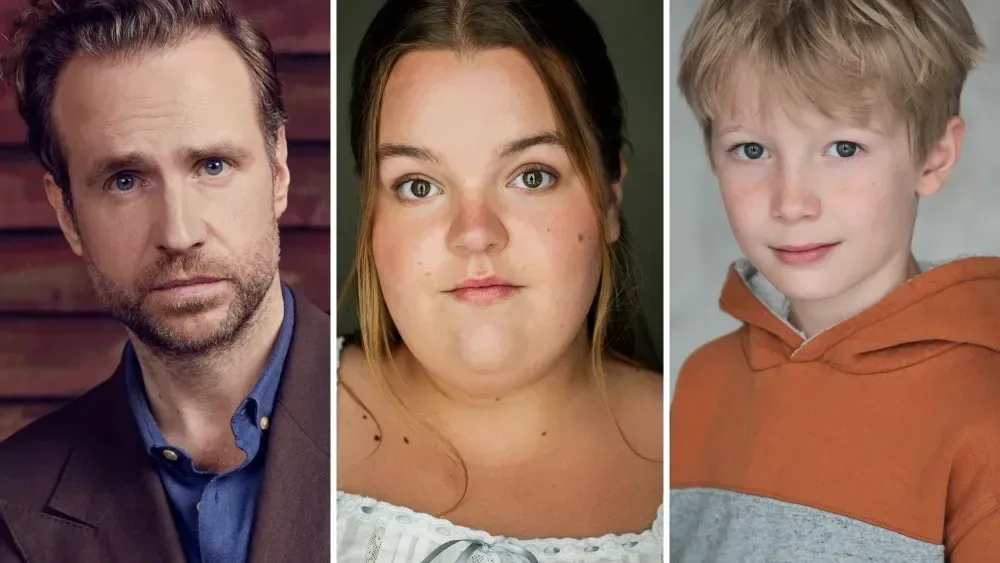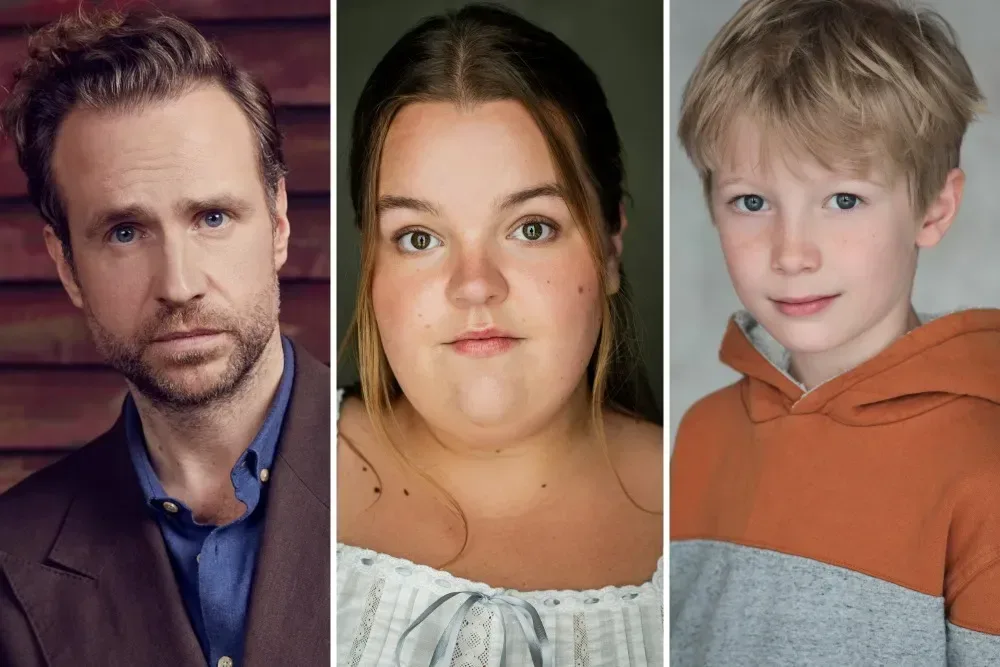
HBO’s Harry Potter series has added three more names to its growing wizarding-world ensemble: Rafe Spall will play Arthur Weasley, Molly Hewitt-Richards has been cast as Moaning Myrtle, and Jasper Ambrose will portray Colin Creevey.
The roles are set to appear in the show’s second season, which will adapt Harry Potter and the Chamber of Secrets. Each character brings a markedly different piece of that story’s world into focus: Arthur is an important connection to the Weasley family beyond Ron; Myrtle is a ghostly Hogwarts presence tied to a key location; and Colin is an enthusiastic new student whose admiration for Harry gives the school a fresh outside perspective.
These appointments also continue a pattern in the television adaptation’s casting: the series is building not only around its central trio, but around the teachers, family members, students, officials and magical beings that make Hogwarts feel like a functioning community rather than merely a backdrop.
The new additions at a glance
- Rafe Spall as Arthur Weasley: the Weasley family patriarch and father of Ron, Harry’s close friend.
- Molly Hewitt-Richards as Moaning Myrtle: a ghost and former Hogwarts pupil who haunts one of the school’s girls’ bathrooms.
- Jasper Ambrose as Colin Creevey: a first-year Hogwarts student known for his interest in photography and for being a major Harry admirer.
Spall’s previous screen work includes Trying and Life of Pi. Hewitt-Richards has appeared in Code of Silence and Casualty, while Ambrose’s credits include Bridget Jones: Mad About the Boy and The Sheep Detectives.
Why Arthur Weasley matters to the series
Arthur Weasley is a supporting character, but “supporting” should not be mistaken for incidental. He is the adult face of the Weasley household, a family that becomes central to Harry’s life. Ron’s friendship with Harry is one of the foundational relationships of the story, so Arthur’s arrival broadens the audience’s sense of the family and its place in the larger magical world.
That makes the casting of Spall significant in a practical dramatic sense. Arthur must help establish the Weasleys as more than a collection of school-age characters. He belongs to the adult world, yet is closely connected to the children at the heart of the narrative. In an episodic television format, characters with that dual function can be especially useful: they help link domestic, school and wider-wizarding settings without shifting the show’s emotional centre away from Harry, Ron and Hermione.
Arthur was played by Mark Williams in the film series. The HBO production is a new adaptation rather than an extension of those films, so the new cast should be understood as creating its own versions of the roles. Comparisons will be inevitable for longtime viewers, but they are not a measure of whether this take will simply repeat its predecessor. A serialised adaptation has room to decide how much time it gives family dynamics, conversations and transitions between major plot events.
Moaning Myrtle and the importance of Hogwarts spaces
Hewitt-Richards joins as Moaning Myrtle, the ghost of a former Hogwarts student. Myrtle haunts a girls’ bathroom at the school, an unusually specific and memorable setting that becomes important in the Chamber of Secrets storyline.
Myrtle’s casting is a reminder that Hogwarts is populated by more than living pupils and staff. Ghosts are part of the school’s everyday texture, while also carrying their own histories. That combination gives Myrtle a distinct narrative role. She can contribute comedy, unease and information, depending on the scene and the interpretation. A haunting is not automatically the same thing as a horror element; in this world, ghosts can be conversational presences with personalities, grudges and routines.
For viewers new to the story, the term “haunts” here describes where Myrtle remains as a ghost, not a claim that the series is turning the setting into a conventional haunted-house drama. Her presence instead reinforces one of the franchise’s recurring ideas: the magical school has layers of history embedded in its corridors, classrooms and overlooked rooms.
The bathroom location matters because the best mysteries often make ordinary locations feel newly consequential. A place students might otherwise pass without a thought can become a clue, a refuge or a source of revelations. Television is well placed to linger on that atmosphere if the adaptation chooses, using recurring settings to make the school feel navigable and lived in.
Colin Creevey brings a first-year’s view of Harry
Ambrose will play Colin Creevey, a first-year Hogwarts student with a passion for photography and a particularly intense appreciation for Harry. Colin’s point of view is valuable because it reflects a side of Harry’s life that the central trio cannot always articulate: Harry is not just another student to everyone else.
Harry’s reputation precedes him in the wizarding world, and Colin’s admiration is one way the story explores that reality. For Harry, attention can be uncomfortable, intrusive or burdensome. For Colin, Harry is someone extraordinary. That mismatch creates room for character comedy and for a clearer look at the pressures that fame can place on a young person.
Colin’s camera is also an immediately recognisable character detail. It helps define him without requiring elaborate explanation, and it fits a school story in which students have sharply individual habits and interests. In narrative terms, a concrete prop like a camera can quickly communicate enthusiasm, curiosity and the desire to document extraordinary moments. It does not mean the adaptation has confirmed any particular staging or use of photography beyond the character’s established interest; it simply gives Colin a strong identity from the outset.
Hugh Mitchell played Colin in the films. As with Arthur and Myrtle, Ambrose will be taking on a role already familiar to audiences while working inside a newly assembled screen ensemble.
How the Chamber of Secrets season is taking shape
The three castings join several previously announced second-season additions. Kit Harington will play Gilderoy Lockhart, Bonnie Hill has been cast as Ginny Weasley, Lenny Rush will play Dobby, and Billy Barratt will portray Tom Riddle.
Collectively, those names indicate the range of characters required for a Chamber of Secrets adaptation. Lockhart is a prominent adult figure within Hogwarts; Ginny extends the Weasley presence among the younger students; Dobby represents the magical world beyond the school’s human population; and Tom Riddle is another key part of the story’s mystery. Arthur, Myrtle and Colin fill out still more of the social and institutional space around the central plot.
It is worth distinguishing between a confirmed casting list and confirmed storytelling detail. Casting tells audiences which characters are expected to be part of the season. It does not by itself establish episode counts, scene allocations, departures from the book, visual design, or the exact point at which an actor’s character will appear. Those are separate production and creative decisions that have not been detailed here.
The wider cast already confirmed
The series is led by Dominic McLaughlin as Harry Potter, Arabella Stanton as Hermione Granger and Alastair Stout as Ron Weasley. The adult cast includes John Lithgow as Albus Dumbledore, Janet McTeer as Minerva McGonagall, Paapa Essiedu as Severus Snape, Nick Frost as Rubeus Hagrid and Warwick Davis as Filius Flitwick.
Other announced roles include Rory Wilmot as Neville Longbottom, Lox Pratt as Draco Malfoy, Leo Earley as Seamus Finnigan, Elijah Oshin as Dean Thomas, Tristan Harland and Gabriel Harland as Fred and George Weasley, and Ruari Spooner as Percy Weasley. Katherine Parkinson plays Molly Weasley, while Gracie Cochrane has been announced as Ginny Weasley in the broader series cast.
Hogwarts staff and associated figures include Sirine Saba as Pomona Sprout, Paul Whitehouse as Argus Filch, Richard Durden as Cuthbert Binns, Louise Brealey as Rolanda Hooch, Bríd Brennan as Poppy Pomfrey, Leigh Gill as Griphook and Anton Lesser as Garrick Ollivander. The Dursley family is represented by Daniel Rigby as Vernon, Bel Powley as Petunia and Amos Kitson as Dudley.
Johnny Flynn has been cast as Lucius Malfoy, Bertie Carvel as Cornelius Fudge and Luke Thallon as Quirinus Quirrell. The announced ensemble also includes Alessia Leoni as Parvati Patil, Sienna Moosah as Lavender Brown, Finn Stephens as Vincent Crabbe and William Nash as Gregory Goyle.
Release and creative team
Harry Potter is scheduled to debut on HBO and HBO Max on December 25. Francesca Gardiner writes and executive produces the first season. Mark Mylod will executive produce and direct multiple episodes.
The project is produced for HBO in association with Brontë Film and TV and Warner Bros. Television. Executive producers include J.K. Rowling, Neil Blair and Ruth Kenley-Letts of Brontë Film and TV, alongside David Heyman of Heyday Films.
As TV franchises continue to become major cultural events, casting news often becomes part of the audience’s first encounter with a new interpretation. For another recent example of how television’s high-profile moments can involve careful planning behind the scenes, see this look at an Emmys surprise built around Taylor Swift.
For now, the clearest takeaway is straightforward: the second season’s Hogwarts roster is expanding in ways that point directly to the particular people, spaces and mysteries of Harry Potter and the Chamber of Secrets. Spall, Hewitt-Richards and Ambrose each have a defined role in making that world feel fuller—from the Weasley home life to a haunted school bathroom and the experience of arriving at Hogwarts as a star-struck first-year.