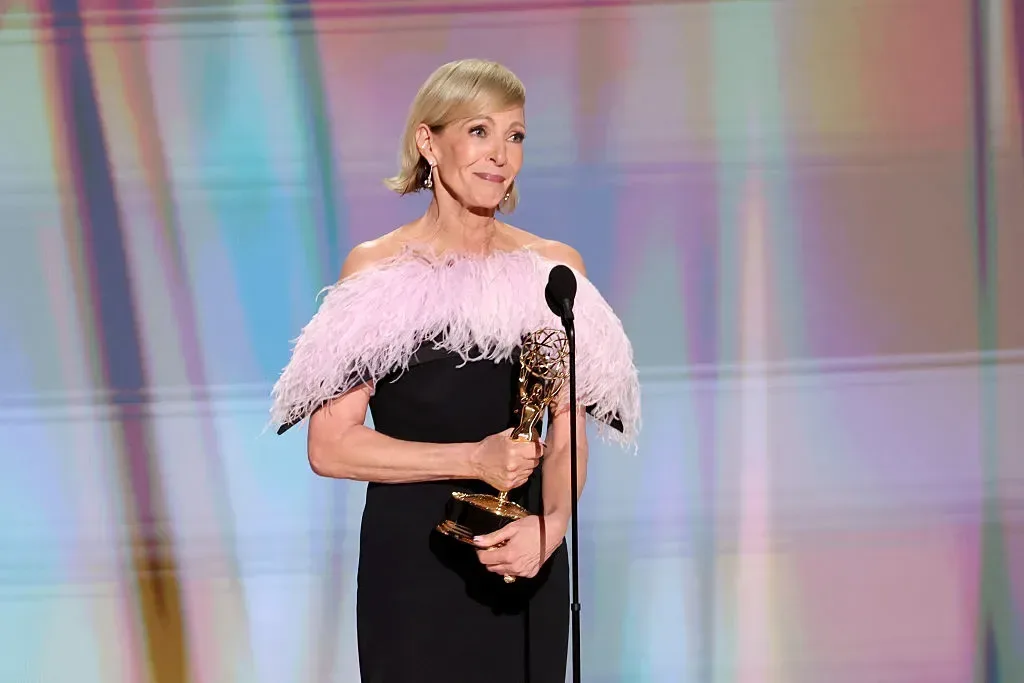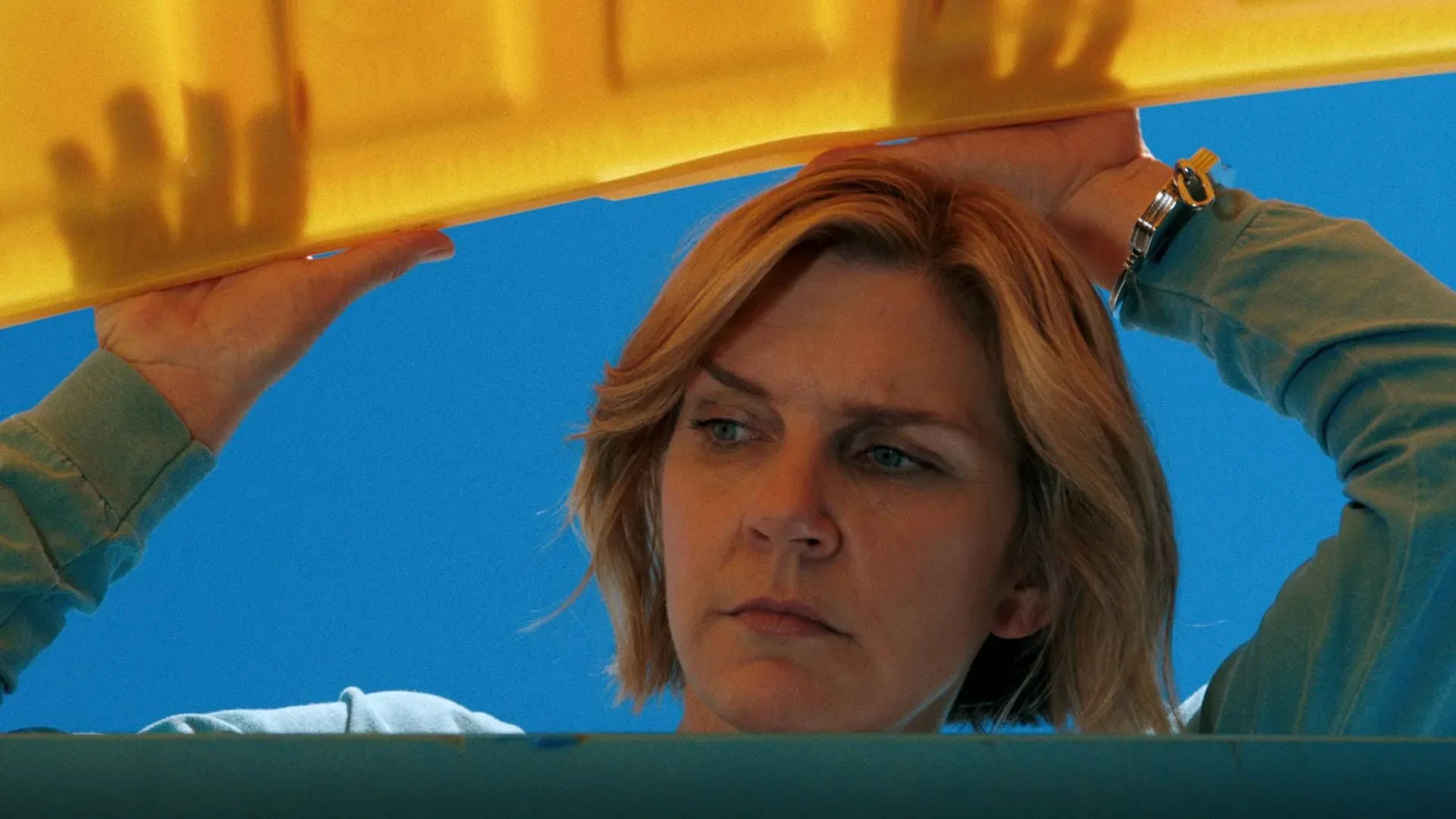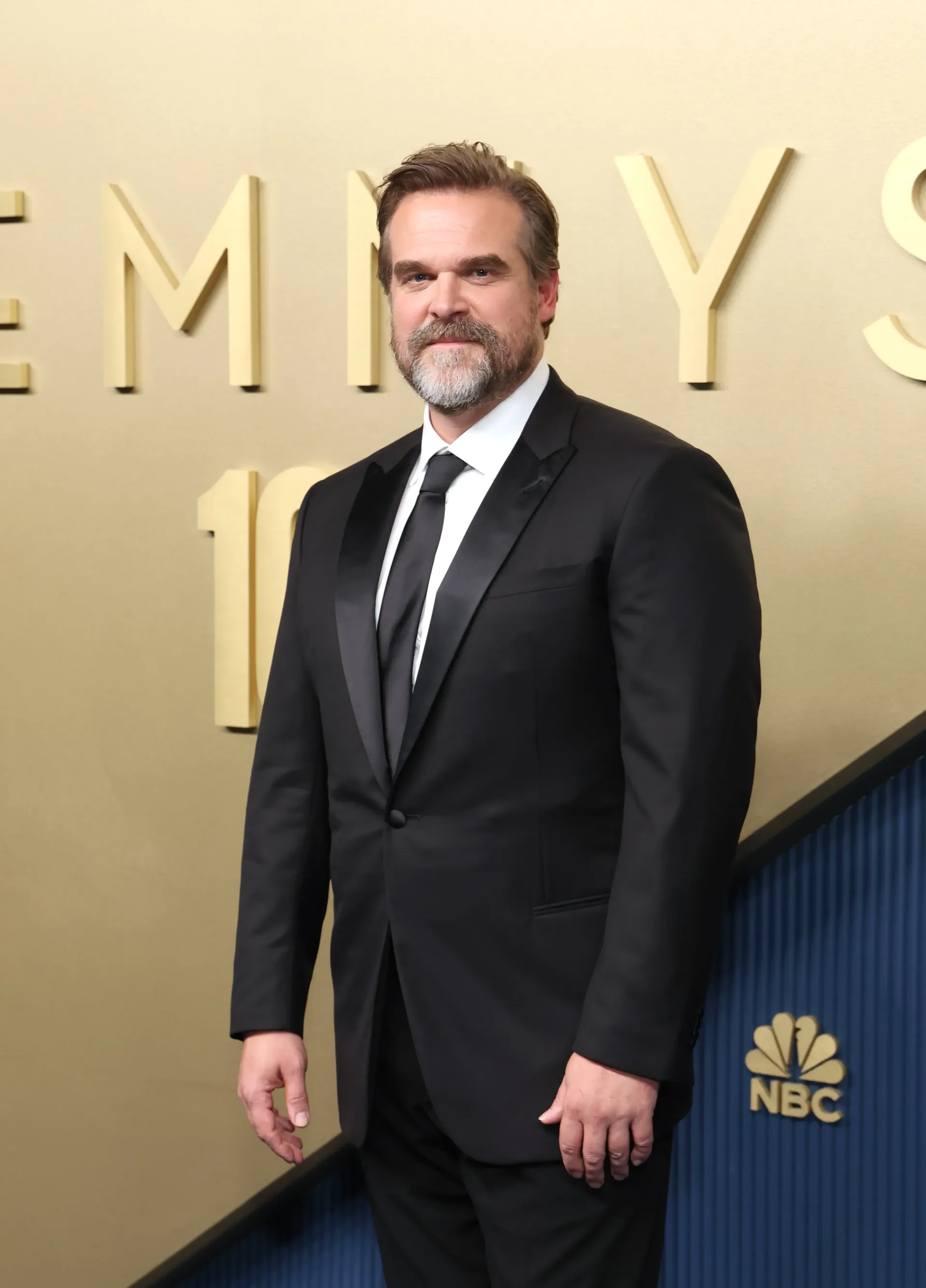
Mariska Hargitay’s Emmy hosting stint was built around a simple production advantage: the person at the center of the telecast was willing to do the work, knew exactly what audiences would expect from her, and had the relationships to turn a familiar Law & Order: SVU reference into an actual surprise.
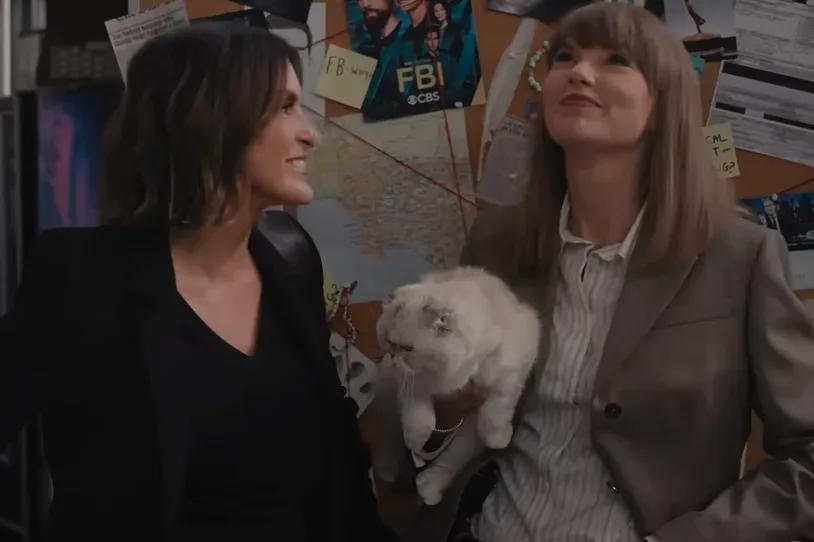
The biggest reveal was Taylor Swift’s appearance in a pre-recorded SVU parody. Rather than treating Swift as a split-second celebrity sighting, the sketch gave her a substantial role as a detective helping the squad interpret clues about whether she might attend the Emmys. The premise was knowingly circular in the best way: a surprise guest appeared in a sketch about the possibility of that same surprise guest appearing.
For Hargitay, who has played Olivia Benson on SVU, the segment also let the broadcast use its host’s defining television role without merely repeating a catchphrase or dropping in the series’ recognizable sound effect. The joke had a setting, a procedural-style premise and an on-screen partner who had a real connection to Hargitay. It was fan service with a reason to exist.
A cameo designed as a sketch, not an interruption
Hargitay and a writing team led by Ariel Dumas began discussing possibilities for Swift early in the process. The SVU concept was one that Swift embraced, and the production incorporated her feedback. Her principal concern was the sketch’s Easter eggs: the small coded references and visual or verbal hints that reward viewers familiar with the subject. Producers said she wanted them to be official and accurate.
For more context, explore Nintendo 64 Unlocked: Backup Stations, Flash Carts and a New Homebrew Era.
That detail matters because it explains why the segment could land with two groups at once. For casual viewers, Swift playing a detective in an SVU setup is the headline joke. For viewers inclined to inspect every clue, the material was intended to hold up as deliberate rather than approximate. An Easter egg is not simply random background detail; in this context, it is a purposeful signal to fans that extends the joke beyond its first viewing.
Swift’s history with the franchise provided a natural bridge. She has long been a Hargitay fan, has watched nearly every episode of SVU, and named her cat Olivia Benson. The sketch’s final image brought the two Olivias together: Hargitay’s Captain Benson and Swift’s actual cat, Olivia Benson. Producers said adding the cat was Swift’s idea the night before the scene was filmed.
That last-minute contribution sounds minor, but it sharpened the bit’s payoff. Celebrity cameos can sometimes feel detachable, as though a guest has been inserted into an existing sketch solely to generate a reaction. Here, the cat tied the guest, the host and the television character into one image. It transformed a piece of personal fandom into a visual gag that did not require a lengthy explanation.
Why secrecy was part of the payoff
The parody was filmed on the SVU set in late August with a deliberately small group and tight security. In awards-show production, a pre-tape is a segment filmed before the live broadcast and played during the show. That format gives a team more control over staging, editing and location work than a live segment, but it creates a separate challenge: preserving the surprise from the shoot through the night it airs.
Producers described the secrecy as a promise made to Swift. That approach was practical as well as courteous. A cameo that becomes public before broadcast loses much of the momentum it was meant to create. The segment’s entire premise depended on viewers not knowing whether Swift would be part of the show, so a leak would have turned the mystery into confirmation.
Hargitay’s familiarity with the set also helped. The location was effectively home territory for the host, and the team emphasized that she made Swift comfortable there. That point is easy to overlook amid the celebrity headlines, yet it is central to a successful pre-tape. A guest can agree to appear, but a performance still depends on the environment, the clarity of the material and enough trust for the guest to participate fully. Swift did more than wave hello; she appeared throughout a sizable portion of the sketch.
The production also used Hargitay’s broader circle in the cold open, where New York Knicks player Jalen Brunson appeared. Together, Brunson and Swift illustrated the value of shaping cameo ideas around the host rather than assembling a random set of famous names. The guests connected to Hargitay, and the material was constructed to make participation feel comfortable once they had agreed.
Hargitay’s work went well beyond an SVU gag
The Swift segment may have been the evening’s most closely guarded element, but it was only one piece of a host-driven show. Hargitay prepared for singing in the broadcast, including the opening parody “I Love TV Screens,” based on “I Love Rock ’n’ Roll.” She worked with a vocal coach, recorded vocal sessions in New York and continued work in Los Angeles to refine the performance.
The opening itself required one scene in New York and two full shooting days in Los Angeles. One Los Angeles session began around 2 p.m. and ran until after midnight. Those details help distinguish a polished awards-show opening from a simple monologue: the finished few minutes can represent separate locations, recording sessions, choreography or camera planning, and long shooting days.
Hargitay was also continuing to shoot SVU while preparing the Emmys. The writers were based out of an SVU office for the preceding months, creating an unusually direct overlap between her day job and her hosting assignment. That proximity was useful creatively, since the show could work in an authentic environment, but it also meant the host was balancing two active productions rather than setting aside her series work.
Her preparation reflects a broader hosting strategy: play to a performer’s recognisable identity, then broaden the picture. Viewers know Hargitay as Olivia Benson. The Emmys used that expectation as an entry point, then gave her comedy, singing and dancing to demonstrate range outside the role. Producers said those were abilities she specifically wanted to bring to the broadcast.
Music and memorial moments carried intentional weight
The telecast’s emotional sections were placed with care rather than stacked immediately after the opening’s comic spectacle. Producers wanted room for levity first, then space for an honor for Michael J. Fox, an In Memoriam segment and a Dolly Parton tribute. This is less about reducing emotion to a formula than recognizing that pacing affects how a live audience and viewers at home receive a show with sharply different tones.
Noah Kahan performed for the In Memoriam segment after working with the production team on a pre-taped appearance for the Macy’s Fourth of July Fireworks special earlier in the summer. The producers considered him the right voice for the moment. The choice suggests continuity in live-event work: a performer who has already completed one assignment successfully can become a trusted collaborator when another event needs a particular tone.
Reba McEntire selected Parton’s “Appalachian Memories” for her tribute and wore Parton’s butterfly ring on stage. The ring had been lent by Parton’s family, giving the performance a specific personal connection beyond song selection. In a broadcast filled with elaborate sketches and wardrobe transformations, that small physical detail carried meaning precisely because it was purposeful, not ornamental.
The emotional material was not presented as a separate, solemn block detached from the rest of the night. Producers pointed to the way remembrance and humor could coexist in speeches, including those from Macaulay and Dan for Catherine. That balance is difficult to script from the control room, because acceptance speeches belong to the people on stage. What the production can do is give such moments the time and placement to breathe.
The hidden mechanics of a live awards show
Behind the scenes, the telecast relied on unusually exact planning. Hargitay’s wardrobe changes were mapped in a document that paired each outfit with its intended hairstyle. One transition from long hair to short hair had exactly 19 minutes built into the show. That means scheduling was not just about award categories and commercial breaks; it was also designed around the physical reality of getting a host from one camera-ready look to the next.
This is what producers mean when they talk about constructing a live show. The rundown is a detailed operating plan that tracks every segment, transition and contingency. It must accommodate acceptance speeches of varying length, performers, presenters, movement backstage and unexpected delays. In Hargitay’s case, it also had to make transformations in appearance possible without making the audience feel as though the broadcast had paused for logistics.
The show ran four to five minutes ahead for much of the evening, giving the team a helpful cushion. Being ahead of schedule meant winners did not have to be rushed offstage and Hargitay had more opportunity to play within moments rather than sprint to the next one. The producers also had Woody Harrelson and Matthew McConaughey available late in the broadcast as presenters who could stretch if needed. An early rundown had included a DNA-test idea for the pair, but it did not make the aired show.
Contingencies extended to the awards themselves. The team was prepared for multiple winners in the variety series category, though only The Late Show With Stephen Colbert won. Live television requires that kind of branching plan because the personnel, music cues and stage traffic can change if a category ends in a tie.
One other established device returned: nominees could submit thank-you lists to appear at the bottom of the screen while they delivered their speech. It is not a technique for forcing speeches shorter. Instead, it gives winners an optional safeguard against leaving out names they hoped to acknowledge. Some submit a list and some do not; the on-screen text complements the speech rather than replacing it.
A family-broadcast line still exists
The evening had one bleep, prompted by John Mulaney’s joke about DJ Khaled. Mulaney rehearsed his segment and the production knew the bulk of the planned material, but the gag that drew the censor was apparently not among what they anticipated.
The response from the broadcast team was straightforward: standards and practices rules apply to a family-friendly network telecast. Standards and practices, often shortened to S&P, is the part of broadcast oversight that evaluates content against a network’s policies and applicable rules. Its effect can be heard in real time as a bleep when language crosses a line for the broadcast.
That moment is a reminder that “live” does not mean “unplanned.” Much of a major awards show is intensely planned, rehearsed and timed, while its electricity comes from the pieces that cannot be perfectly controlled: acceptance speeches, audience reactions, a comedian going off-script, or two presenters capable of filling time in unpredictable ways.
Hargitay’s Emmys used both sides of that equation. The Swift appearance succeeded because it was developed carefully, guarded closely and rooted in a genuine connection to SVU. The rest of the broadcast worked because musical preparation, wardrobe math, memorial placement and contingency planning made room for the night’s less controllable moments. That is the real trick behind a surprise cameo: it may look effortless on television, but the ease is the result of everyone knowing exactly how much work it took to make it feel unexpected.