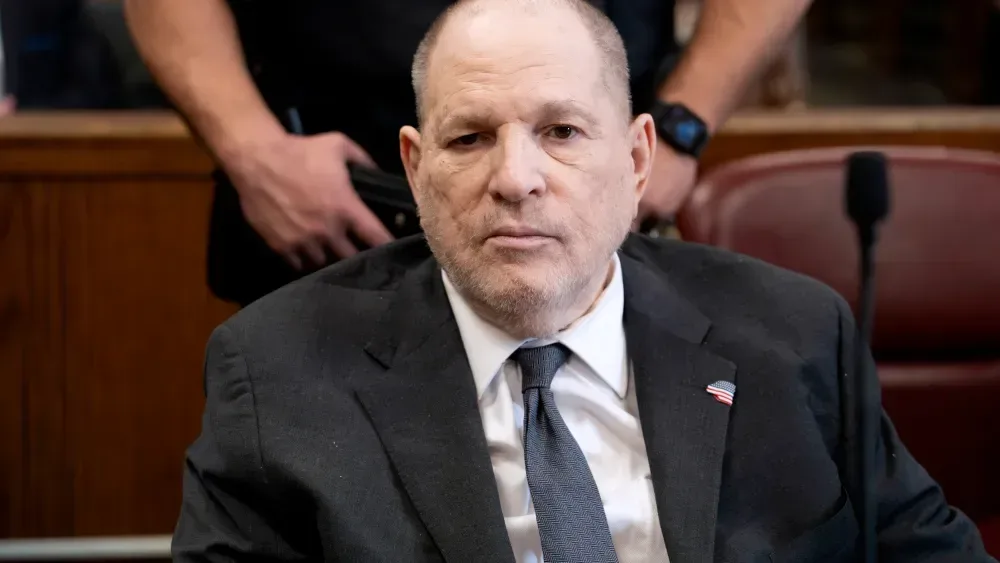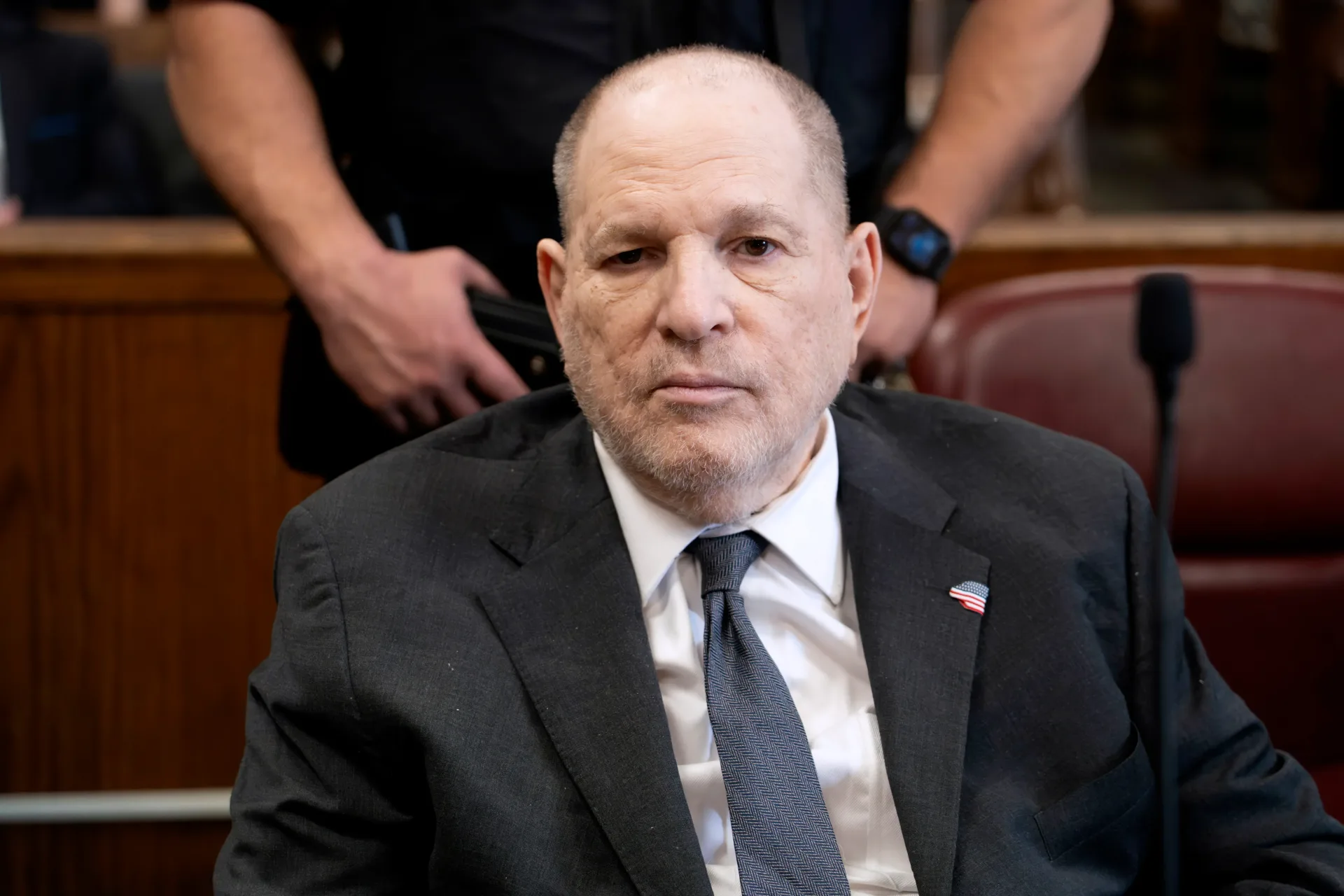
Harvey Weinstein has been sentenced to 15 years in prison in New York after a jury found him guilty of a first-degree criminal sexual act involving former production assistant Miriam Haley. The conviction concerns an assault Haley said occurred at Weinstein’s SoHo apartment on July 10, 2006.
The sentence is a significant development in a New York case that has taken multiple turns since Weinstein’s original 2020 conviction. That conviction was overturned four years later, and Haley subsequently returned to testify at the 2025 retrial. With the new sentence imposed, Weinstein will remain incarcerated unless a further appeal succeeds.
The ruling does not resolve every criminal proceeding connected to Weinstein. He is also due to be resentenced in California in a separate case involving the rape and sexual assault of Italian model and actor Evgeniya Chernyshova at a Los Angeles hotel in 2013. No date for that resentencing has been set.
What the New York sentence covers
Weinstein, 74, was convicted of committing a first-degree criminal sexual act against Haley. In this context, the jury’s guilty verdict concerned Haley’s account that Weinstein forcibly performed oral sex on her in 2006.
Haley had been a central witness in both the original New York trial and the later retrial. Her testimony was first part of the case that led to Weinstein’s 2020 conviction. After that conviction was overturned in 2024, she again took the stand in 2025, recounting the assault and the effect of the long legal process.
At sentencing, Haley described the experience of participating in the proceedings as exhausting and deeply difficult. She said that testifying had brought aggressive cross-examination as well as online harassment and threats. Her statement emphasized a reality often obscured by the procedural language of criminal cases: a retrial can require a witness to publicly revisit an alleged assault and answer challenges to their account all over again.
“It has often felt like I was the one on trial,” Haley said in her victim impact statement.
Her remarks also reflected the extended timeline of this case. Haley said she did not expect to be back in court six years after the first conviction and hoped the latest sentencing would be her final appearance in the matter.
Why the case returned to court
An overturned conviction is not the same thing as an acquittal. When a conviction is overturned on appeal, the appellate court determines that a legal issue affected the earlier trial or verdict. Depending on the circumstances, prosecutors may then pursue a new trial. That is what happened in the New York proceedings involving Weinstein.
The later trial produced a fresh jury verdict on the criminal sexual act charge involving Haley. The 15-year prison term follows that verdict, rather than simply reinstating the punishment from the earlier case.
The source material describes two mistrials following the overturned conviction. A mistrial means a trial ends without a final verdict on the relevant charge or charges. It does not itself establish guilt or innocence, but it can leave prosecutors with the option to retry a case where legally permitted.
The distinction matters because the current sentence rests on the conviction reached at the retrial. The result offers a major endpoint in the New York chapter of proceedings that have lasted for years, although the possibility of another appeal remains.
The prosecution’s sentencing request
Assistant District Attorney Nicole Blumberg asked Judge Curtis Farber to impose a 20-year sentence followed by five years of post-release supervision. Post-release supervision is a period of oversight after a person leaves prison, with conditions set by the court or supervising authority.
Blumberg argued for the longer term by pointing to what she characterized as Weinstein’s lack of remorse and continued public attacks on victims. She referenced a 2025 podcast interview with Candace Owens and described comments from that appearance as containing conspiratorial claims and victim shaming.
Judge Farber imposed 15 years. The supplied information does not detail the court’s full sentencing rationale beyond the sentence itself, so it would be inappropriate to infer why the judge selected that length rather than the 20 years requested by the prosecution.
California resentencing remains unresolved
Separate California proceedings still await Weinstein. He is set to be resentenced for the rape and sexual assault of Chernyshova in Los Angeles in 2013. The timing has not been announced.
A key question will be whether any California sentence is concurrent or consecutive with the New York term. Concurrent sentences are served at the same time. Consecutive sentences are served one after another. Judge Farber said that decision belongs to the state of California.
That distinction has major practical consequences. A concurrent term generally does not add its full length after another prison sentence, while a consecutive term can extend the total time in custody. Because California has not yet resentenced Weinstein, and because it has not determined how its sentence would relate to the New York term, the ultimate structure of his incarceration is not settled in the supplied record.
Health and age in the context of the sentence
Weinstein has reportedly experienced serious health problems in recent years, including chronic myeloid leukemia, diabetes and substantial mobility issues. Given his age and the 15-year New York prison sentence, the term makes it highly likely that he will spend the rest of his life incarcerated, absent a successful appeal or a later legal change.
Those health issues do not alter the jury’s verdict or erase the sentence. They are relevant only to understanding why a 15-year term carries especially grave practical weight for a 74-year-old defendant.
A case with consequences beyond one courtroom
The allegations against Weinstein helped propel the global #MeToo movement, bringing sustained public attention to sexual harassment, sexual assault, abuse of power and accountability in entertainment and other workplaces. The New York proceedings have therefore carried a visibility far beyond the particular charge at issue in Haley’s case.
Yet the sentencing also illustrates how public significance and legal process operate on separate tracks. A widely discussed case can still involve reversals, retrials, disputed legal questions and years of additional testimony. For Haley, the path from the first trial to the current sentence meant appearing in court twice and enduring renewed scrutiny after the original conviction did not stand.
For entertainment coverage, the development closes neither the broader cultural discussion around workplace power nor Weinstein’s outstanding California matter. It does, however, establish a new 15-year New York sentence following the 2025 retrial conviction involving Haley.
For more entertainment news, see Jean Smart joining The Families Stone as the Christmas sequel prepares to film.