Levan Koguashvili’s Guria builds its comedy out of bad timing, stubborn pride and the small absurdities that become unavoidable when money is short and every plan can go sideways. Set in rural western Georgia during the 1990s, after the country’s civil war, the Georgian-language film is a black-and-white tragicomedy about people trying to move forward without much evidence that the wider world is ready to help them.
Its title points to both a place and a social ecosystem. Guria is presented as a town with its own routines, feuds, songs, gossip and workarounds for scarcity. A beauty contest whose grand prize is a food processor plus its instruction booklet establishes the scale of the economic squeeze with a joke that is funny precisely because the need beneath it is real. The town has achieved political stability of a kind, but prosperity has not arrived in any meaningful way.
At the center is Zuriko, played by Kakhaber Tcholadze: a widowed father in his forties, perpetually stubbled and visibly worn down by the difficulty of making a living. He grows hazelnuts and insists their quality deserves a fair price. His confidence in the crop is wonderfully elastic—first most of the nuts are sound, then the estimate quietly drops in conversation with his friend Gela—but the larger point is serious. Zuriko has a product, labor and conviction, yet no buyer who will pay what he believes it is worth.
That modest commercial problem sets a plot in motion, but Guria is less interested in a clean, single-minded journey than in the knots of community life. It uses Zuriko’s attempt to sell the hazelnuts as a route through friendship, remarriage, teenage rivalry, banditry, drinking, local institutions and the fragile codes people use to get through the day.
A tragicomedy where the joke does not erase the hardship
The useful term here is tragicomedy: a story in which comic and painful material are not kept in separate boxes. The film’s humor is deadpan, meaning that outrageous developments are often met with restrained expressions and matter-of-fact behavior rather than obvious punchlines. A road robbery, an exchange of shotgun fire and injuries could push a film into grimness; here, their clumsy execution also makes them darkly funny. That does not make the violence inconsequential. It shows a community where misfortune can be ridiculous and dangerous at the same time.
Koguashvili’s approach appears deliberately unsparing about the practical failures surrounding the town. Electricity falters at the clinic. The school conducts grenade drills. In the mayor’s office, a goat can appear as an unexplained visual oddity before the narrative later supplies the explanation. These details give the movie an observational rhythm: the audience is asked to notice the strange thing first and understand its local logic afterward.
That timing matters. Rather than treating rural life as a quaint collection of eccentricities, the film roots each absurd image in systems that are barely functioning. The goat is amusing, but it is also part of a place where public and private spheres have become porous, improvised and chaotic. The laughs come from recognition of that instability, not from the suggestion that people living with it are foolish.
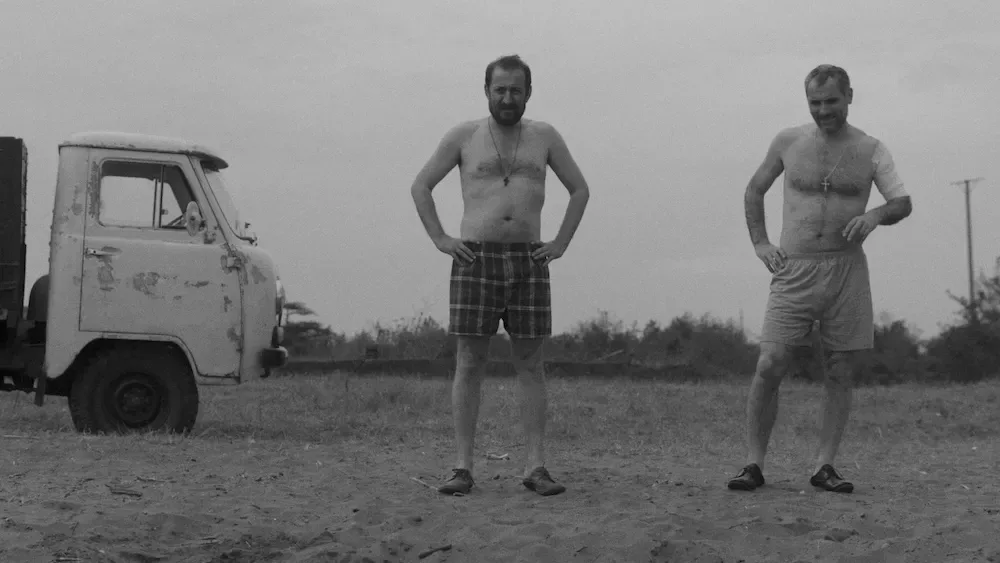
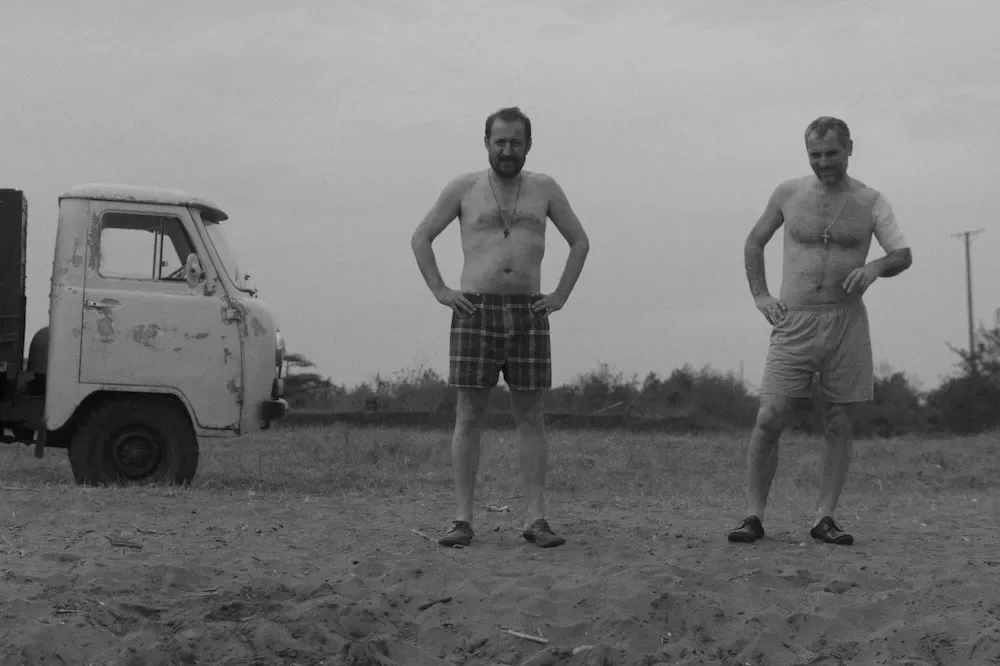
The black-and-white photography by Gigi Samsonadze and Giorgi Shvelidze supports the same balance. Black and white is not simply an old-fashioned look; it removes the immediate distraction of color and puts emphasis on faces, textures, weather, interiors and contrast. In Guria, the visual choice suits a story described through shades rather than absolutes. Zuriko and his neighbors can be selfish, combative or ridiculous, but they are not reduced to villains. The town is impoverished without being portrayed as devoid of beauty or vitality.
Hazelnuts, a marriage plan and a friendship that takes the hits
Zuriko learns of a potential buyer in a neighboring village who may offer five rubles for his hazelnuts. He leaves behind Irma, a potential new wife who has traveled to meet him, to pursue the sale with Gela. The decision immediately captures Zuriko’s priorities and his shortcomings. He is a man squeezed by economic pressure, but he is also capable of treating a consequential personal commitment as something he can pause for a business errand.
Irma, played by Eka Sharikhadze, arrives polished, sunglassed and manicured, and she can sing beautifully. Those qualifications do little to impress Veriko, Zuriko’s former mother-in-law, who judges her inability to pluck a chicken much more harshly. The scenario exposes how domestic expectations become a form of gatekeeping. Zuriko’s prospective remarriage is supposedly his decision, yet the village—especially his late wife’s mother—has an active stake in deciding what kind of woman can be accepted into its arrangements.
Then Maia, the town’s newly arrived singing teacher, enters Zuriko’s orbit. Natia Nikolaishvili’s Maia gives the movie one of its clearer sparks of romantic possibility. Zuriko’s courtship is characteristically inarticulate and stone-faced; Maia’s response is shy but receptive. A beach scene, in which she reacts to Zuriko flirting with other women by marching away and then returning to kick sand at him, gives her a sharp comic presence rather than presenting her as merely an object of his attention.
Still, the film’s emotional anchor is not the romance. It is Zuriko and Gela’s friendship. Vamekh Jangidze plays Gela as the companion who absorbs a remarkable amount of punishment—sometimes literal punches administered in the name of settling arguments he did not create. Their bond is loyal, unglamorous and remarkably durable. In a setting where honor codes and masculine bravado make ordinary disagreements larger than they should be, Gela’s willingness to stand by Zuriko becomes the story’s most dependable expression of affection.
That friendship also clarifies the film’s view of masculinity. The men posture, threaten, trade insults and rely on chacha, the local alcoholic drink, to lubricate reconciliation or intensify a dispute. Yet their toughness repeatedly looks futile. The gunfight is inept; negotiated peace can involve a punch; grand codes of honor offer little protection from poverty, bad luck or a wounded ego. Guria finds them funny without giving their behavior a free pass.
A community story, not just a hazelnut-selling mission
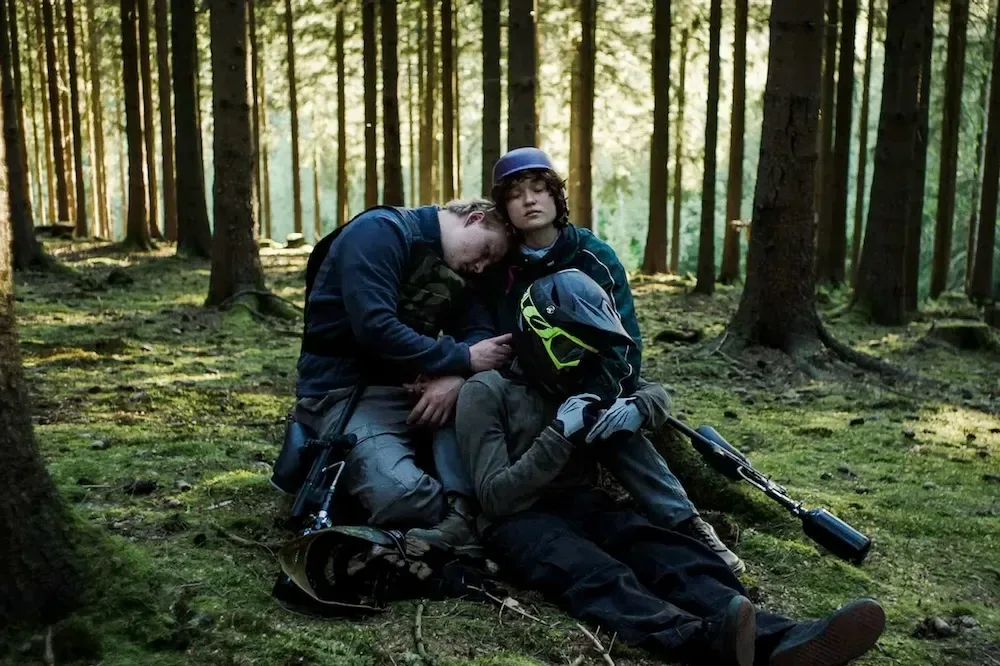
The highway robbery expands the plot beyond Zuriko’s immediate problems. Kakucha, the injured leader of the robbers, has a teenage son, Beso. Beso is competing with Zuriko’s son Achi for Eka, their classmate. The adult conflict and the boys’ rivalry begin to echo each other, connecting small-time crime, parental example and adolescent behavior without reducing the younger characters to simple copies of their fathers.
The screenplay is credited to Koguashvili, Boris Frumin and Georgi Kekelidze, and it is deliberately full of side paths. At 118 minutes, the film can feel busy, with enough incidents to make a more streamlined story seem possible. But the digressions are part of its method. Choir rehearsals, clinic troubles, school drills and municipal strangeness furnish a sense that the characters inhabit a whole town rather than a plot built only around a sale and a courtship.
The harmonic singing tradition of the region is especially important to that texture. The film opens with an example of the singing and returns to songs throughout. Music becomes a counterweight to deprivation: not a magical solution, but evidence of a shared practice that persists even when institutions and incomes fail. Craggy local faces producing sweet, closely blended harmonies carry an inherent contrast that aligns with the entire movie’s tonal design.
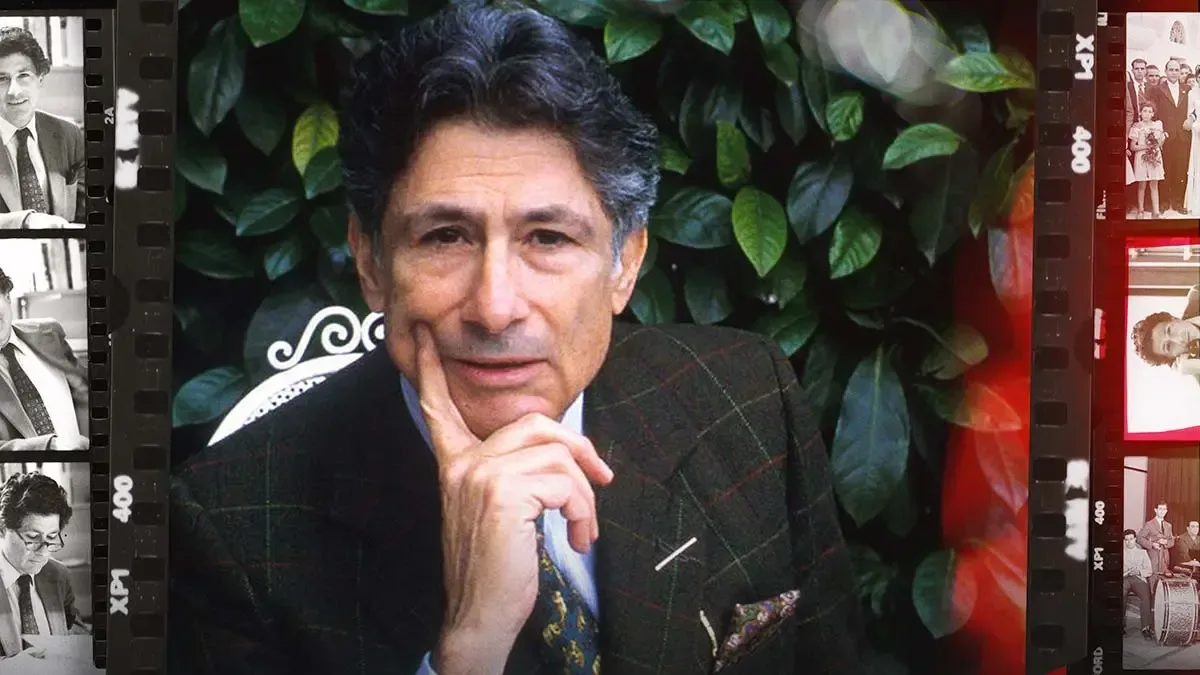
For viewers interested in films where cultural memory, local detail and personal testimony shape the meaning of a story, there is a useful thematic companion in this look at a documentary constructed through an archive. The two works are very different in form, but both point toward the value of letting a place’s particular materials and voices carry more weight than a generic backdrop ever could.
Where the film’s compassion appears uneven
Guria is attentive to the pressures placed on its male characters, but it is less consistently generous in its treatment of women. Maia emerges as the most fully felt female presence, in no small part because Nikolaishvili gives her humor, pride and an ability to answer Zuriko’s behavior with visible irritation. Elsewhere, the women appear to have less room to develop beyond the functions assigned to them by the men and the community.
That issue becomes more acute around Eka and a bride-kidnapping incident that drives the latter half of the film. The event is presented as a serious expression of patriarchal pressure, not an innocent romantic convention. Yet the imbalance in characterization complicates the film’s critique: it can identify the cruelty of a social order while giving the women most harmed by it less inner life than the men who sustain, evade or bungle that order.
This is not a small qualification because the movie is otherwise so invested in complexity. Zuriko gets to be exasperating, decent, foolish, determined and vulnerable. Gela gets to be both battered and indispensable. The town’s men are granted contradictions. When the women receive fewer such contradictions, the portrait loses some of the breadth it reaches for elsewhere.
What makes ‘Guria’ distinctive
Even with that limitation, Guria stands out for its refusal to turn social hardship into either pure misery or inspirational uplift. It does not suggest that poverty is secretly charming. It instead finds charm in character: in a friend who keeps showing up, in a choir that turns collective practice into beauty, in a man’s wildly fluctuating faith in his own hazelnuts, and in the delayed explanation for an animal in an official office.
The film premiered in the Spotlight sidebar at the Venice Film Festival and is Georgia’s submission for the Best International Feature Oscar. It is Koguashvili’s fourth feature, following Brighton 4th, which received top honors at Tribeca in 2021. Its multinational production involves partners from Georgia, Switzerland, Luxembourg, Bulgaria, Türkiye, Norway and Saudi Arabia, while its story remains closely focused on one small Georgian community.
That focus is the strength of the film. Rather than announcing a sweeping political thesis at every turn, Guria lets the aftermath of conflict and economic strain show up in the price of a harvest, a failing light at a clinic, an impractical prize at a pageant and an argument that ends with liquor or a fist. Its people keep attempting ordinary life amid conditions that make ordinary life astonishingly difficult. The result is a mournful, mischievous portrait of endurance—one in which the funniest moments are never far from the reasons they are needed.
Key film details
- Director: Levan Koguashvili
- Screenplay: Boris Frumin, Levan Koguashvili and Georgi Kekelidze
- Running time: 118 minutes
- Language: Georgian
- Principal cast: Kakhaber Tcholadze, Natia Nikolaishvili, Vamekh Jangidze, Davit Natsvaladze, Anamaria Kamladze and Sergi Kviloria
- Editor: Pia Dumont
- Music: Giorgi Gordeladze