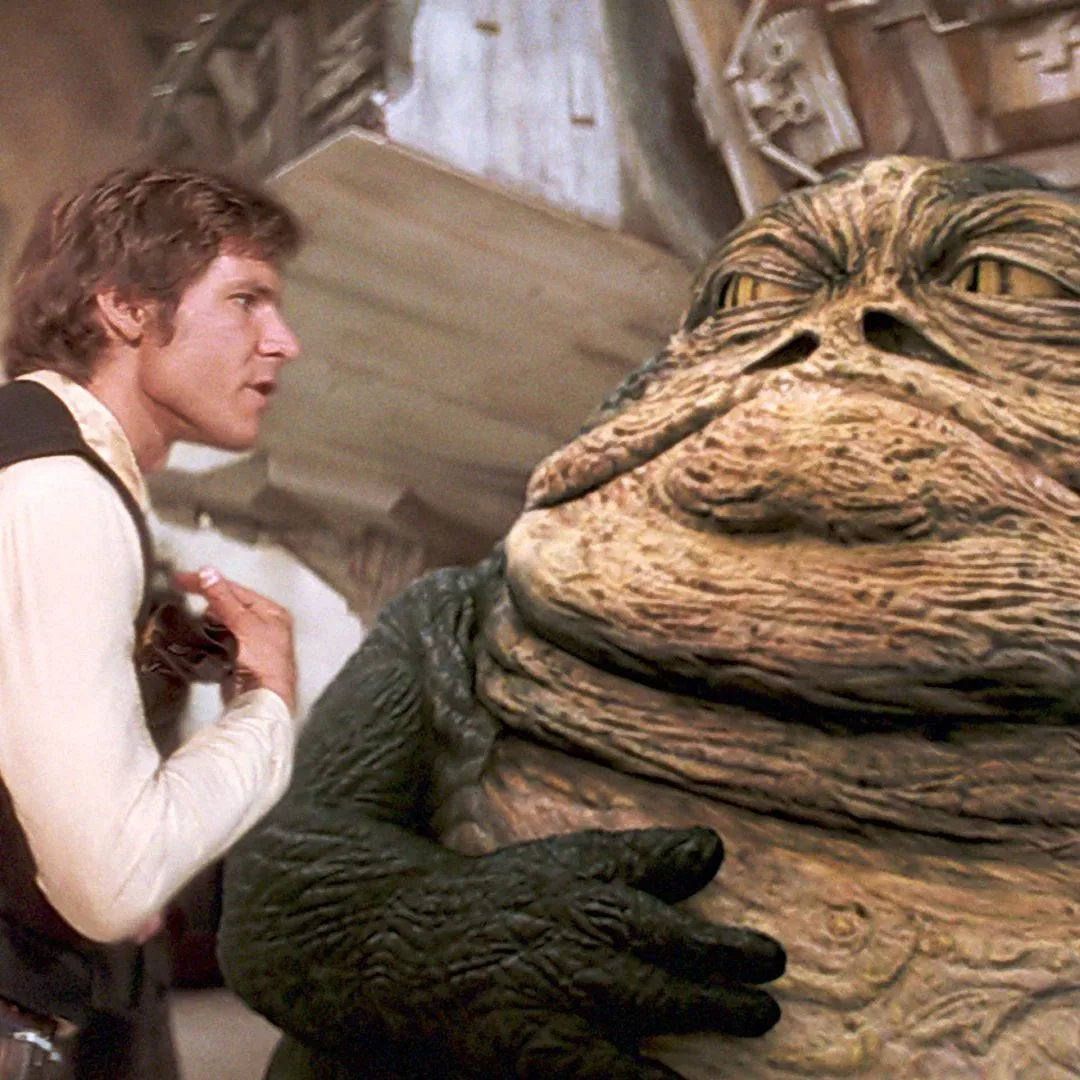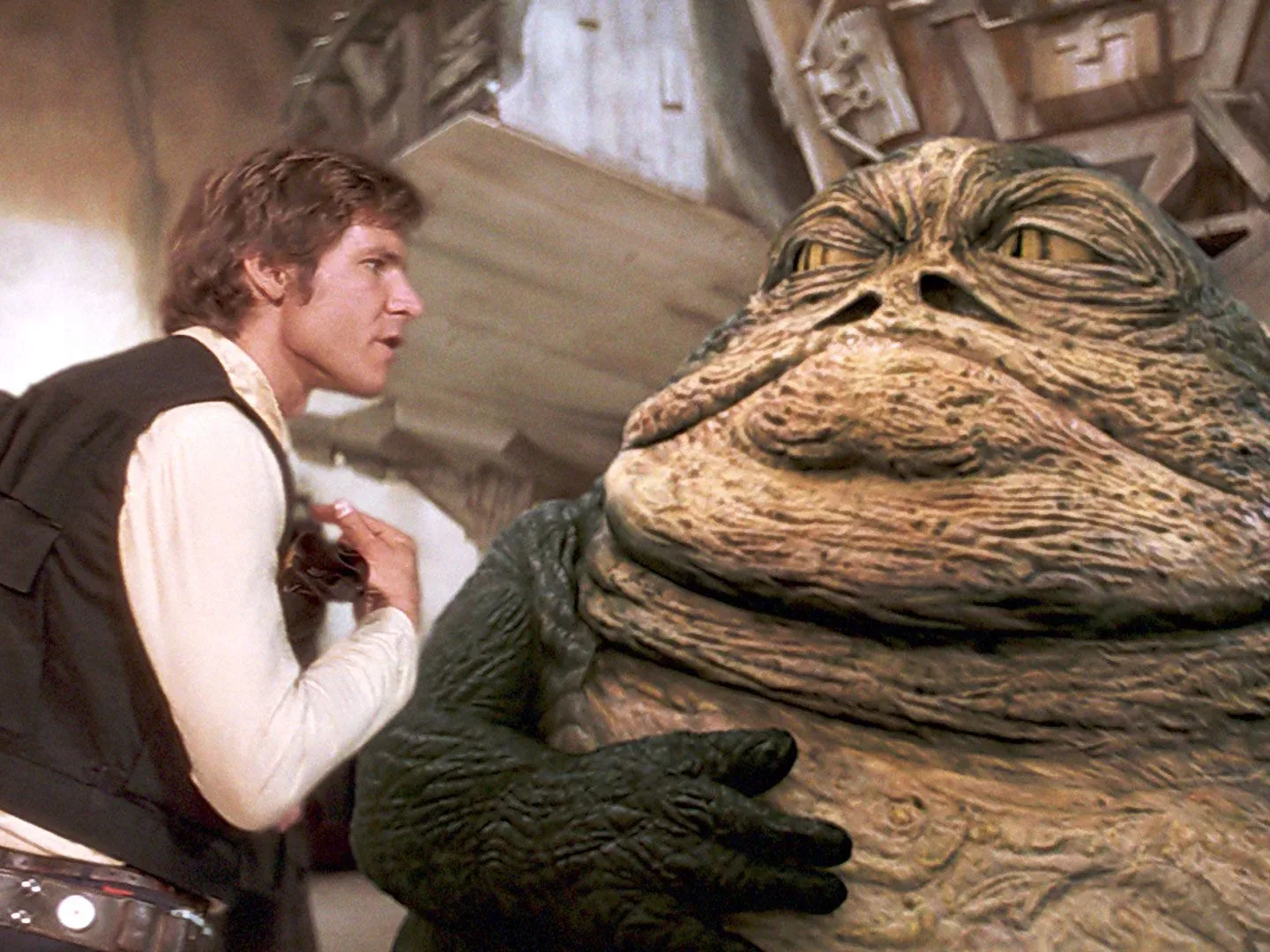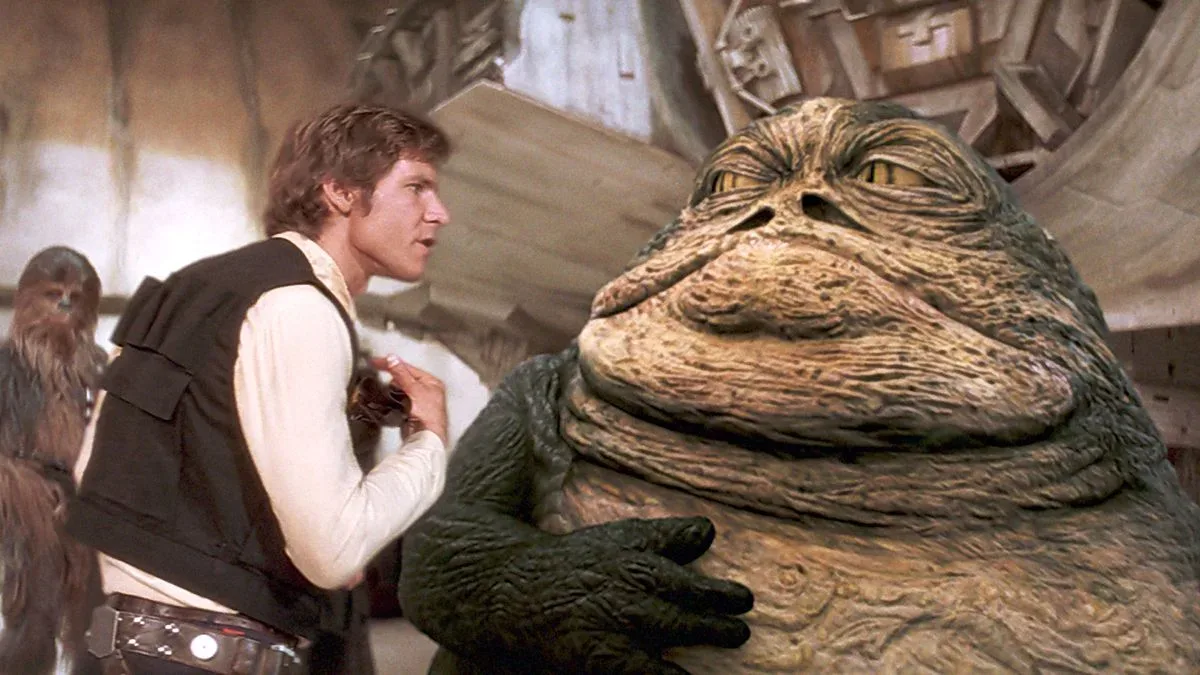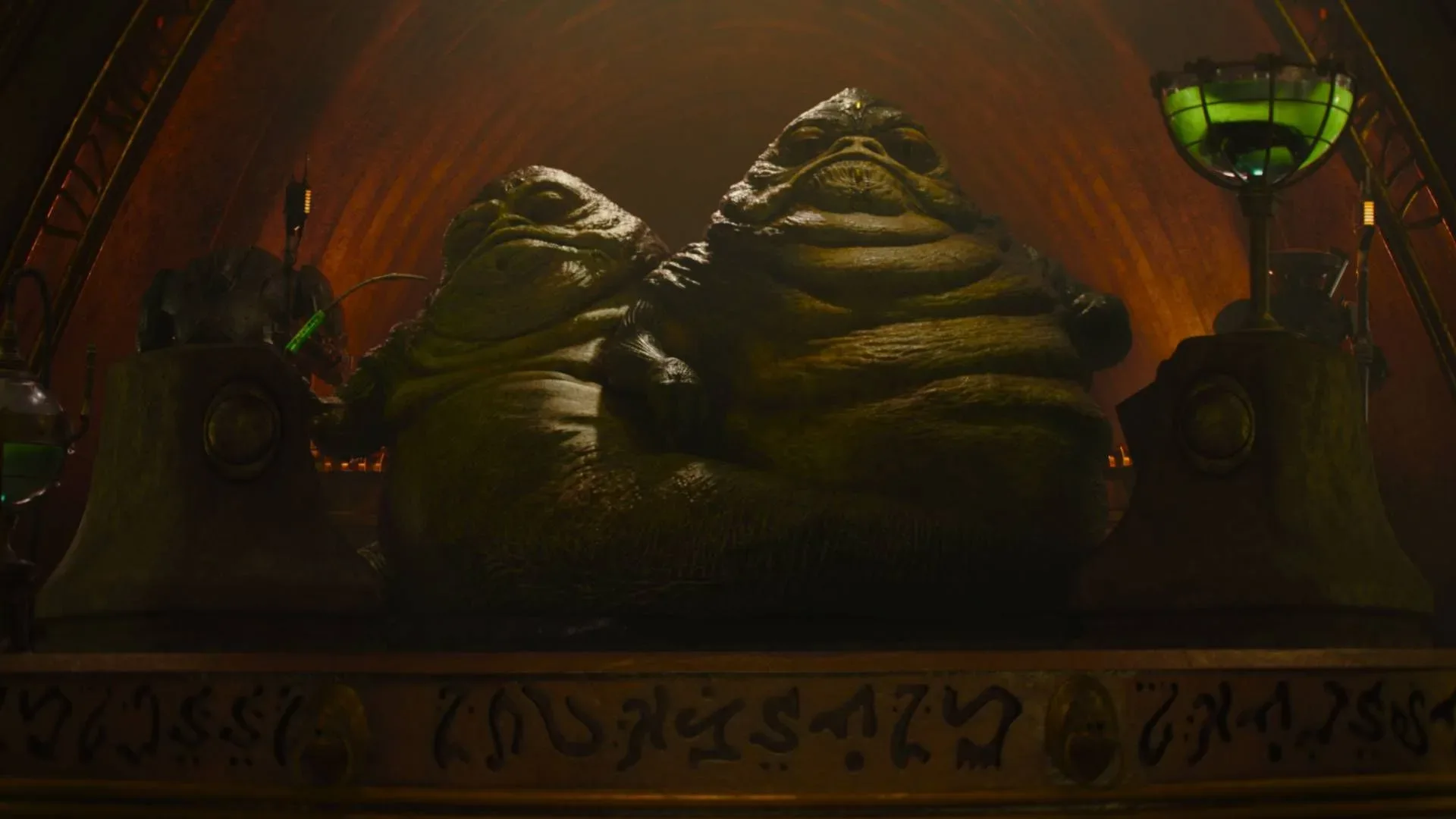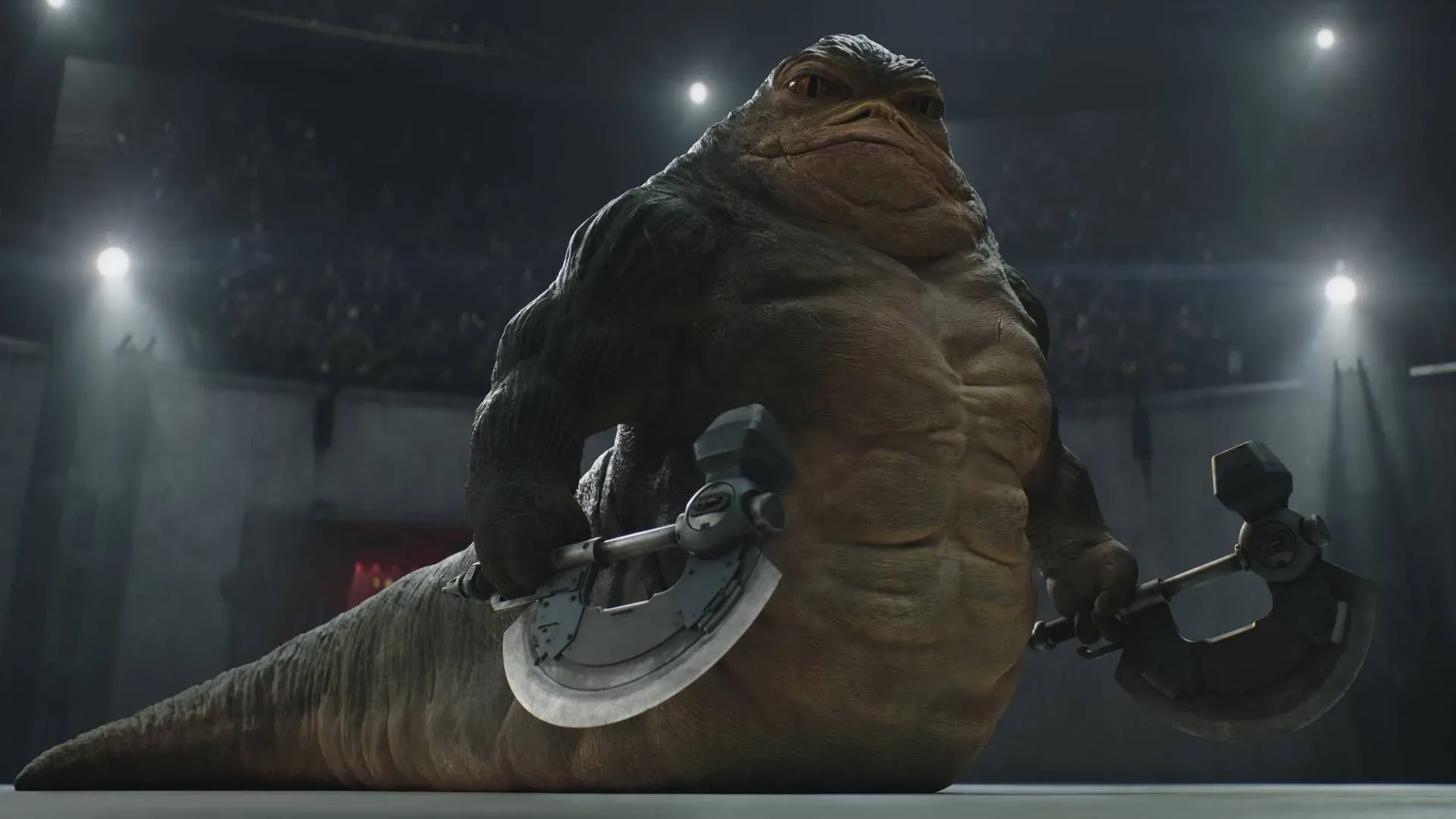
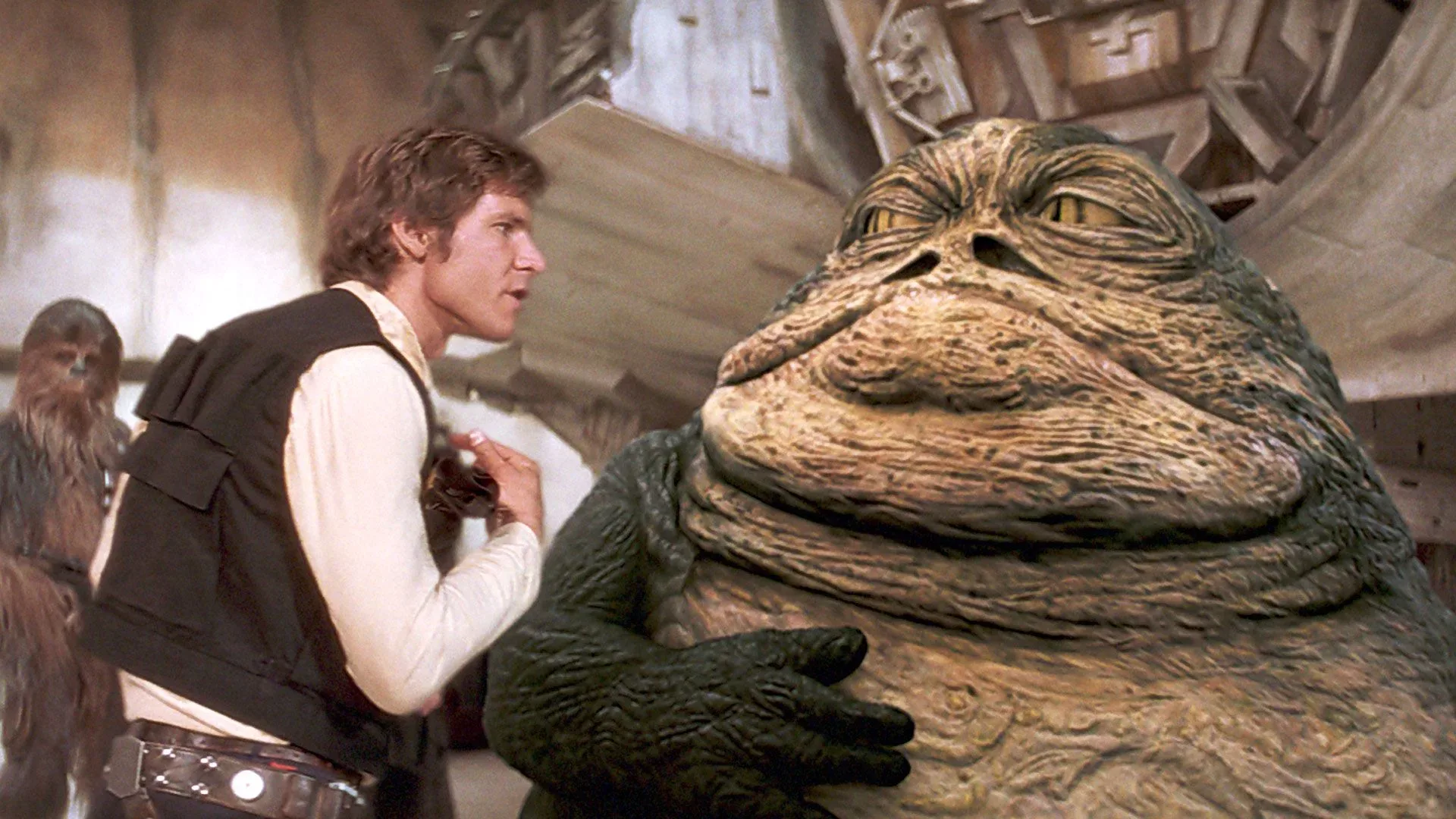
Guillermo del Toro’s long-discussed Star Wars detour appears to have gone considerably further than an intriguing pitch. The filmmaker has said that he and screenwriter David S. Goyer completed a script for a movie called The Rise and Fall of Jabba the Hutt, while development also produced artwork and sculptures.
That confirmation gives a clearer shape to one of the more tantalizing unrealized projects connected to the galaxy far, far away. This was not simply an idea to put Jabba in a larger supporting role. Del Toro’s stated concept was a rise-to-power crime epic focused on how the Hutt crime lord obtained control, with organized crime, internal betrayal and a major coup at its center.
“[David S. Goyer] and I did write the script and I even developed some art and sculptures,” del Toro said, confirming the project’s title as The Rise and Fall of Jabba the Hutt.
A Star Wars underworld story with Jabba at the center
Jabba is already one of Star Wars’ most recognizable villains: a crime lord whose power is communicated through his court, his palace and the fear surrounding him. But del Toro’s proposed movie would have shifted the viewpoint. Instead of treating Jabba as an obstacle for other heroes to outsmart, the film would have explored the path that made him powerful enough to control a criminal empire.
Del Toro described that broad idea in 2015 as a “Godfather” saga, using the comparison to signal a story about the construction and preservation of power rather than a conventional adventure led by Jedi or rebels. He also spoke enthusiastically about the possibility of a Hutt mafia and a complex coup, suggesting a political and criminal drama built around rivalries within Jabba’s world.
The word coup generally refers to the sudden removal or takeover of leadership by an opposing faction. In the context del Toro described, it implies that Jabba’s ascent would not simply be a matter of accumulating wealth or winning territory. It would likely have been shaped by unstable alliances and a struggle for control inside an underworld hierarchy. That is a premise Star Wars can support, but it is meaningfully different from using criminals as colorful background figures in an adventure story.
The pitch also makes sense as a vehicle for del Toro’s interests in expressive creature design and fully realized fantasy environments. His confirmation that art and sculptures were developed is notable because those materials point to more than early screenplay work. Sculpture work can help a production team define creature anatomy, proportions, textures and physical presence before those designs are adapted for practical effects, digital work or both. It does not tell us how the finished movie would have looked, but it shows the team was giving Jabba’s setting a tangible visual identity.
What “finished script” does—and does not—mean
The completed screenplay is the biggest new detail, but it is important not to treat it as evidence that the movie was ever guaranteed to shoot. A script is the written blueprint for a film: it establishes scenes, dialogue, characters and story structure. A finished draft means the creators had moved past the earliest idea stage. It does not, by itself, establish a production start, casting, a release plan or an approved budget.
Related coverage includes Guillermo del Toro Says His Unmade Jabba the Hutt Film Had a Finished Script.
In fact, del Toro had already explained in 2023 that the project had been shelved. He recalled being “super happy” with the story’s rise-and-fall approach and said the team had been doing substantial work. He also emphasized the fundamental limitation that can stop any franchise project: the property and financing were not his to control.
“It’s not my property, it’s not my money,” del Toro said while reflecting on how the script became one of the projects that went away.
That distinction matters for fans tempted to read a completed script as a hidden promise of eventual release. Major franchise storytelling is collaborative in the broadest sense, but it is also controlled by the company that owns the characters and determines which projects advance. A filmmaker can have a developed story, designs and a creative team ready to explore a world, yet still have no authority to decide whether cameras roll.
Del Toro described the loss with understandable mixed feelings, admitting that he is sometimes bitter about abandoned work. At the same time, he characterized the effort as valuable practice for the team: they designed a world, made strong material and learned from it. That is an unusually useful reminder that an unrealized movie is not necessarily an empty exercise. The specific screenplay may remain unseen, but the artists and craftspeople involved still developed ideas and skills through the process.
Why Jabba was a particularly unusual lead
A Jabba-led feature would have been unusual precisely because the character is so far from the familiar Star Wars protagonist model. He is not presented as a virtuous hero or a redeemable rogue. He is a feared ruler of a criminal court. Turning that figure into the subject of a full rise-and-fall narrative would require the audience to follow his ambition and his world without necessarily asking them to approve of him.
That is where the “rise and fall” framing becomes more revealing than the simple idea of a Jabba origin story. It points toward an arc with two directions: the attainment of dominance and the consequences of that dominance. The known material does not reveal plot details, supporting characters or where the story would sit within Star Wars continuity. Still, the title itself suggests a complete tragic-gangster structure, rather than an open-ended prequel designed only to explain a villain’s past.
Del Toro’s old comments also make clear that the attraction was personal as well as structural. He said Jabba was the Star Wars character who looked most like him, and he repeatedly stressed that he loved the character. The humor in that observation should not obscure the larger creative point: the project seems to have come from a filmmaker who saw potential in a character others might regard as a grotesque supporting antagonist.
That instinct—taking the strange, monstrous or marginalized figure seriously as a dramatic subject—is a natural fit for a story about a Hutt crime family. The available details do not justify claims about the film’s tone, plot twists or effects methods. They do establish, however, that the project was conceived as more than a novelty built around a famous slug-like villain. It had a title, a completed script, an explicit crime-saga framework and visual development work.
Shelved is not the same as revived
There remains a small but important opening for future collaboration. Jon Favreau, director of The Mandalorian and Grogu, said this year that he believes del Toro will collaborate on something someday. That is encouraging in the general sense, but it is not confirmation that The Rise and Fall of Jabba the Hutt has returned to active development.
Fans should therefore separate three ideas that can easily blur together:
- The original project existed: del Toro says a script was written with Goyer, alongside art and sculptures.
- The original project was shelved: del Toro said as much in 2023.
- A future collaboration is possible: Favreau’s recent comment leaves room for that possibility, without identifying a project or committing to this specific film.
That middle point is especially important. A collaboration between del Toro and Star Wars at some later date could take any form. It would not automatically mean that the finished Jabba screenplay is being reopened, filmed as written or adapted into another medium. Until a concrete plan is publicly confirmed, The Rise and Fall of Jabba the Hutt remains an unmade work.
Its status nevertheless gives it a special place among abandoned franchise concepts. There is now a firm record of how far it reached creatively: not just a director’s fondness for Jabba, but a full script co-written with Goyer and a visual-development effort that included sculptures. For readers thinking about how difficult it can be for ambitious follow-ups to clear the path from concept to screen, the debate around franchise stakes and sequel expectations offers a different example of how much creative planning audiences can bring to major shared universes.
For now, del Toro’s Jabba story belongs to the vast category of films that were written and creatively explored but never made. It is an especially vivid example because its premise is so easy to picture: Star Wars through the lens of a crime dynasty, with one of its most infamous monsters not at the edge of the frame, but at the center of the empire he built.