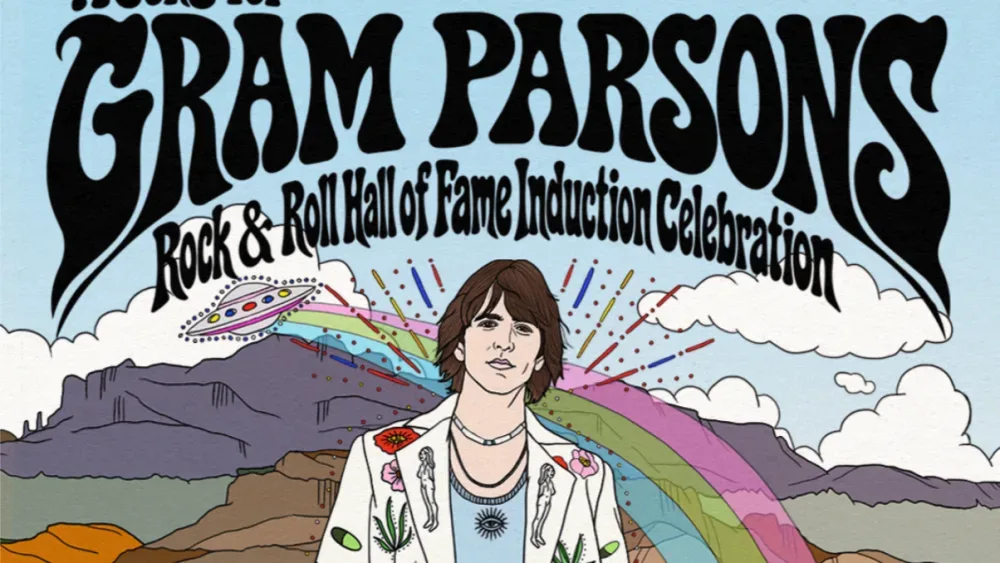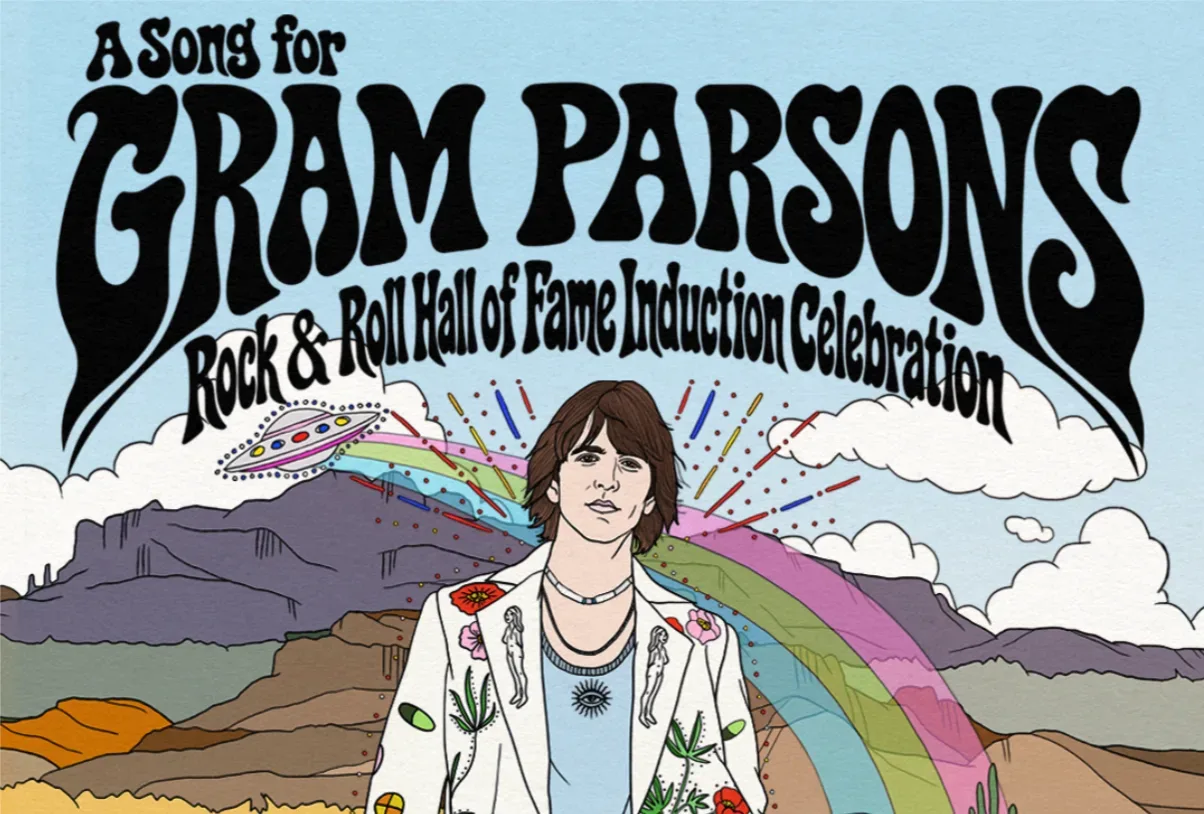
Gram Parsons will be celebrated at the Troubadour on Nov. 11 with an all-star concert timed just ahead of the country-rock pioneer's induction into the Rock & Roll Hall of Fame. The event, formally titled A Song for Gram: Celebrating Gram Parsons’ Induction into the Rock & Roll Hall of Fame, arrives three nights before the induction ceremony and less than a week after what would have been Parsons’ 80th birthday on Nov. 5.
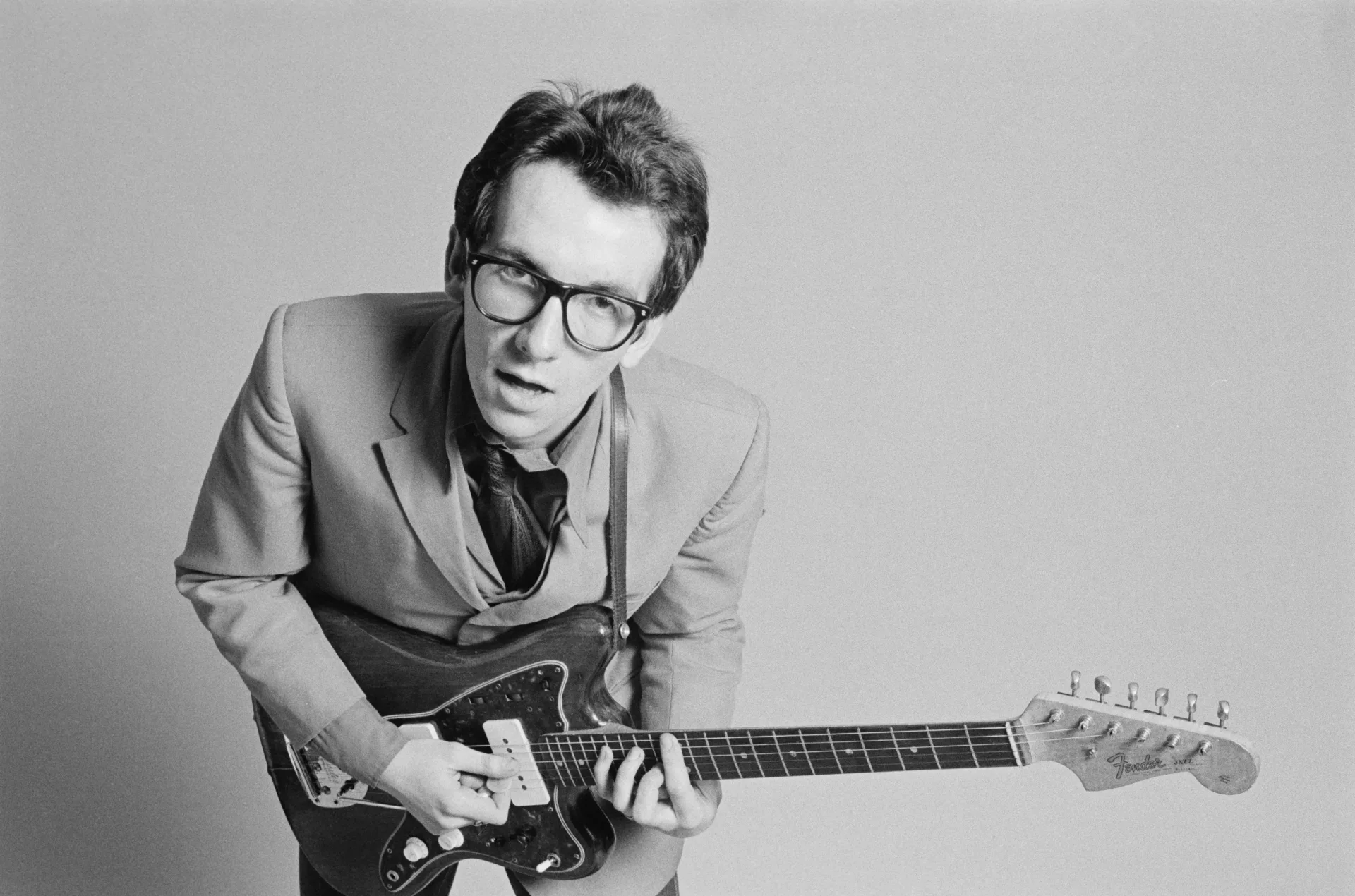
The lineup is led by Emmylou Harris, one of Parsons’ essential artistic collaborators, and Elvis Costello, a longtime advocate for his work who recorded Parsons songs in the early 1980s. The bill also includes the Black Crowes, Margo Price, Grace Potter, Jesse Welles, the Head and the Heart, Madison Cunningham, Jim Lauderdale, Harper Simon and Grahame Lush. Los Angeles favorites the Beachwood Sparks will act as the evening’s house band, described in the event artwork as its “cosmic accompaniment.”
A milestone celebration in a venue tied to Parsons’ story
The choice of the Troubadour is central to the occasion, not merely decorative. Parsons played the storied Los Angeles room multiple times, making the smaller venue a meaningful setting for an artist whose influence has continually exceeded the size of his original commercial footprint. Polly Parsons, Gram’s daughter, has emphasized that presenting the show somewhere legendary and connected to his career mattered to the organizers.
That decision also means this will be an intimate event rather than a sprawling arena-scale production. With the combination of the venue, the guest list and the Rock Hall occasion, demand may be far greater than the room can accommodate. Tickets are due to go on sale Thursday at 10 a.m. PT through AXS.
The concert is co-produced by Polly Parsons, Vector Management and Shirley Halperin, working with the Gram Parsons Estate and the Rock & Roll Hall of Fame. Its proceeds will benefit Friendly House Foundation and Backline, two Los Angeles-area organizations focused on addiction and mental-health support.
Why the Emmylou Harris appearance carries particular weight
Harris’ participation gives the tribute an especially direct connection to the music being honored. Her work with Parsons remains a defining part of his legacy, and Polly Parsons has described having Harris present as personally meaningful. Harris was unable to attend the major Parsons tribute staged in 2004, so this concert creates a different kind of opportunity to recognize their shared musical history in person.
That connection is also useful context for readers who know Parsons more by reputation than by catalogue. His standing is frequently linked to the way his music moved between country and rock traditions without treating either as a costume. The phrase “country-rock pioneer” describes that cross-pollination: music drawing from country forms and sensibilities while working within rock’s broader songwriting, band and audience ecosystem. Parsons’ impact, as reflected by this lineup, is not restricted to one narrowly defined genre or generation.
Costello’s presence reinforces the same point from another angle. He helped introduce Parsons’ songs to listeners in the early 1980s through his recordings, while his own vocal collaborations with Harris make the pairing feel particularly apt. Meanwhile, the Black Crowes’ inclusion recognizes the long-running support Chris Robinson and the group have shown for Parsons’ music.
A bill built across generations
The artists announced for A Song for Gram span established names and younger performers, a choice that reflects the continuing life of Parsons’ music rather than framing it as a sealed-off historical artifact. Polly Parsons has said that newer musicians were eager to join, and she views the continuing enthusiasm as a generational passing of the torch.
That is an important distinction for a tribute concert. A legacy event can simply replay a past era, or it can show how an artist’s work continues to matter to performers with their own musical identities. The announced lineup suggests the latter ambition: artists associated with Americana, rock, roots-oriented songwriting and adjacent sounds gathering around a catalog that has remained a reference point for listeners seeking what Polly Parsons calls authentic music.
The Beachwood Sparks’ role as house band may be equally significant in practical terms. A dedicated backing group gives a multi-artist program continuity, enabling individual guests to step into songs without requiring every performer to bring a separate ensemble. It can make a tribute feel like a communal concert rather than a disconnected sequence of guest spots—particularly fitting for a night meant to honor collaborative musical relationships.
From Return to Sin City to a new chapter
This is not the first substantial celebration of Parsons’ catalog overseen by his daughter. In 2004, she spearheaded Return to Sin City, a two-night tribute presented at the Universal Amphitheatre and Santa Barbara Bowl. That event featured Keith Richards, Lucinda Williams, Steve Earle and Norah Jones, among others, and was later preserved on DVD.
The new show differs in scale and setting, but it follows the same core idea: bringing artists with genuine connections to Parsons’ songs and influence together for a live commemoration. Polly Parsons has said she hopes further concerts may follow if there is enough support, potentially in larger venues, including the possibility of another Santa Barbara Bowl anniversary event in coming years.
For now, the Troubadour date is deliberately positioned as a one-night occasion. Its timing concentrates several milestones in one week: Parsons’ 80th birthday, the Nov. 11 tribute and the Rock Hall induction three days later. That makes it more than a routine anniversary concert. It is an acknowledgment of an artist receiving a major institutional honor while his musical community is still actively expanding his audience.
What the Rock Hall induction represents
Parsons’ induction follows a focused campaign undertaken during the past several years. Polly Parsons has described building a passionate team around her father’s work and receiving support from his wider musical family in the push for recognition. The result is a long-sought milestone for an artist whose influence has often been discussed with unusual intensity by fellow musicians and devoted fans.
Induction into the Rock & Roll Hall of Fame does not change the recordings themselves, but it can materially reshape how a catalog is encountered. It creates a new public moment for reassessment, gives audiences a reason to explore work they may only know indirectly, and can encourage performers to revisit songs in new contexts. In Parsons’ case, a bill that ranges from Harris and Costello to Price, Welles and Cunningham is evidence that the reassessment is already musical, not merely ceremonial.
Polly Parsons is also pursuing a publishing move intended to reinvigorate her father’s music and catalog. Music publishing concerns the administration and use of compositions—the songs as written works—rather than simply the recordings of those songs. A meaningful publishing arrangement can support the careful stewardship, licensing and continued circulation of a songwriter’s material. Specific details of the move have not been announced, but the stated aim is to revitalize the catalog while protecting the larger legacy.
Legacy stewardship and the benefit mission
The concert’s charitable component connects the event to work Polly Parsons describes as central to her own life: helping men and women in recovery navigate addiction. Friendly House Foundation and Backline will receive the benefit proceeds, placing support for addiction and mental-health concerns alongside the musical celebration.
That pairing makes the night’s purpose broader than commemoration. It gives ticket buyers a direct connection to local organizations doing support work, while honoring an artist whose legacy is being actively managed for his family and audience. Polly Parsons has characterized running a healthy musical estate as a matter of discernment as much as opportunity—being selective about what is approved, protected and developed.
For fans, Nov. 11 offers a rare convergence: Harris revisiting the orbit of one of her most important collaborators; Costello and the Black Crowes joining a community of champions; newer artists signaling that the material remains alive; and a historic Los Angeles venue hosting the gathering shortly before Rock Hall recognition. It is a compact, carefully chosen tribute for an artist whose songs continue to travel well beyond the era in which they were made.
Readers interested in another recent music-legacy story can also explore Lil Jon’s memoir and its exploration of family, grief and the crunk era.