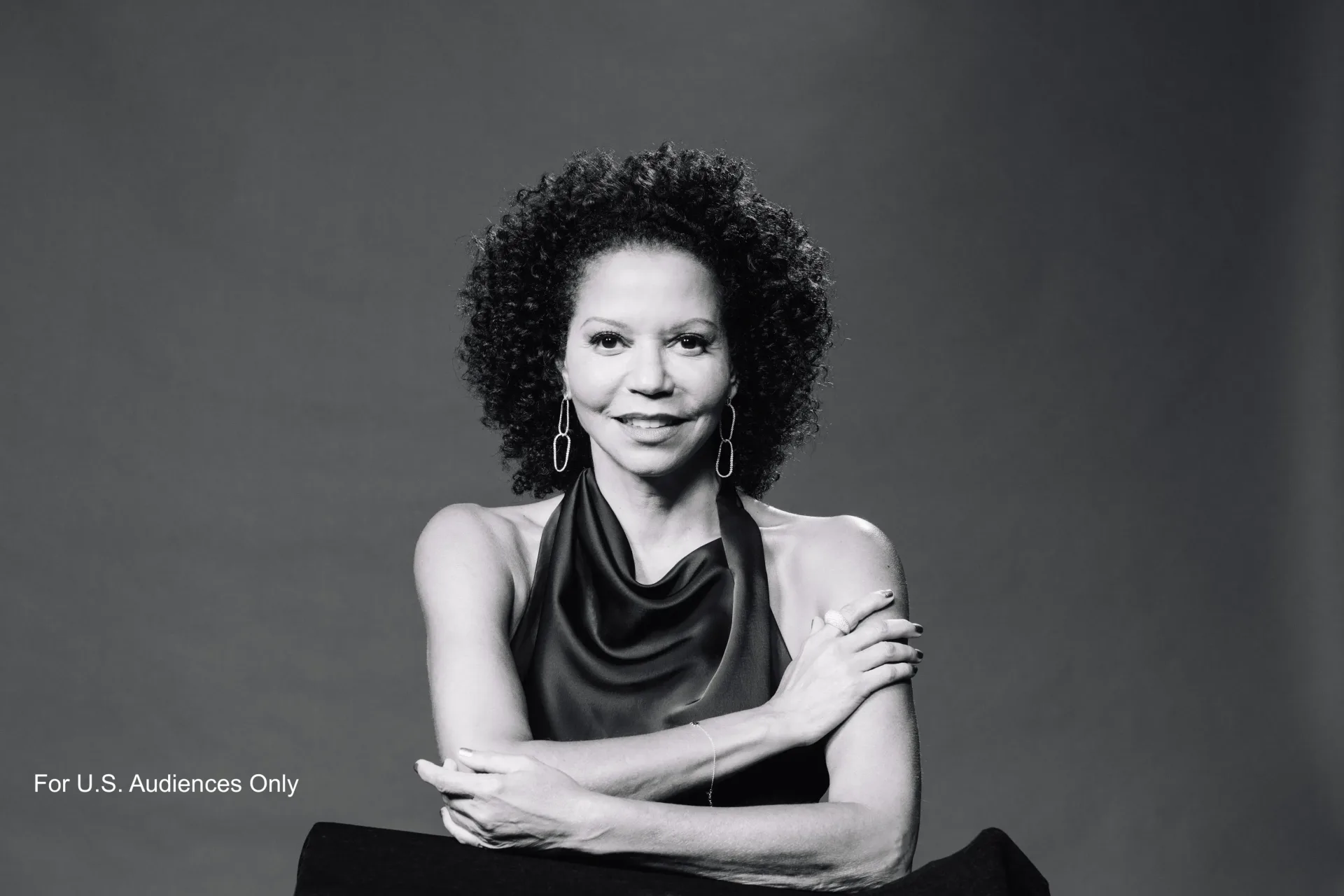
Gloria Reuben’s newest public conversation is not about a role, a setlist or a character playlist. It is about menopause, the disruptive reality of moderate to severe hot flashes, and the decision to ask for medical help rather than quietly organize a life around symptoms.
The actor and musician describes a period in which hot flashes affected travel, wardrobe choices, sleep and her ability to feel present while working with scene partners. The issue was not simply an uncomfortable moment of warmth. It was the uncertainty: planning ahead for an episode that could arrive during a flight, a fitting, a day on set or a night out.
“I felt like I didn’t know my body anymore,” Reuben says, characterizing the experience as unsettling. Her account puts useful detail around a subject that is often reduced to a punchline or treated as a private inconvenience. For someone whose work relies on concentration, emotional connection and performance, the anticipation of symptoms could become its own burden.
Reuben’s message is straightforward: menopause is not a personal failure to endure alone, and questions for a healthcare provider are part of self-advocacy, not an admission of weakness.
What menopause and vasomotor symptoms mean
Menopause is a natural life stage defined as 12 consecutive months without a menstrual period. Hot flashes are among its commonly reported symptoms. In medical language, they are often called vasomotor symptoms: sudden feelings of heat, frequently involving the face, neck and chest, sometimes accompanied by sweating. When they occur during sleep, they are commonly described as night sweats.
The supplied information notes that nearly half of women undergoing menopause may experience moderate to severe hot flashes and that symptoms can continue for 10 years or longer for some people. It also says Black and Hispanic women can experience more frequent and more bothersome menopause-related hot flashes and night sweats.
Those points matter because “menopause” does not describe one uniform experience. The frequency, intensity, timing and day-to-day consequences of hot flashes can differ greatly. Reuben repeatedly emphasizes that every body is different, which is why a conversation with a clinician has to be more than a generic checklist.
For Reuben, nighttime symptoms meant disrupted rest, while daytime episodes introduced an extra layer of vigilance into work and social life. That combination makes the impact easier to understand: a symptom can interrupt a moment, but fear of the next interruption can occupy much more of the day.
A creative career, and a new subject for her voice
Reuben’s creative life has moved through several forms. She began learning classical piano as a child, sang lead in a rock band as a teenager, and moved from Toronto to Los Angeles in her early 20s. There, she waited tables while taking acting classes before landing a television commercial and making the transition to acting full time.
Music remains, in her words, the enduring element of that journey. She continues to perform jazz while working across television and film. More recently, she has written the book My Brothers’ Keeper: Two Brothers. Loved. and Lost. and says she has written her first play. She also journals and builds playlists for the characters she plays.
That background is relevant to this story because it explains what Reuben felt was at stake. Her description of being mentally pulled away from scene partners is about more than productivity. Being available to a scene, a performance or a collaboration is central to the work. As she sought ways to address her symptoms, she says she was able to devote more attention to the things that matter most to her.
Creative workers are often asked to maintain a polished exterior regardless of what is happening off camera. Reuben’s account pushes back on the expectation that bodily change should be hidden to preserve that image. It also sits alongside wider conversations about artists protecting their agency in their work, a subject explored in George Lucas’ comments on creative control and unfinished films. The situations are plainly different, but the broader idea of having a voice in decisions that shape one’s life and work has resonance here.
Reuben’s treatment experience is personal, not universal
Reuben says she discussed her menopause-related hot flashes with her doctor after seeing a television commercial for VEOZAH, the brand name for fezolinetant. She was looking for an FDA-approved, hormone-free option and says the discussion included possible benefits and side effects. Her doctor performed liver blood testing before treatment and follow-up tests afterward.
VEOZAH is a prescription medicine used to reduce moderate to severe vasomotor symptoms due to menopause. It is not a hormone. The supplied medication information says it works by blocking the binding of NKB, a brain chemical associated with triggering hot flashes during menopause, in the brain’s temperature-control center.
Reuben says she noticed a reduction in her hot flashes, during both day and night, in around a week. That is her individual experience. It should not be read as a guaranteed timetable or outcome for another person: results can vary, and a clinician is the appropriate person to discuss whether any treatment is suitable.
The supplied information describes VEOZAH as FDA-approved for moderate to severe hot flashes due to menopause and identifies it as the most prescribed hormone-free treatment in this setting, citing prescription data from May 2023 through June 2026. The same information says clinical studies measured reductions in the number and severity of hot flashes across 24 hours at four and 12 weeks. Those facts help explain why it became part of Reuben’s medical discussion, but they do not turn one person’s result into general medical advice.
The safety discussion cannot be skipped
A treatment conversation is incomplete without its risks, contraindications and monitoring requirements. The supplied prescribing information carries a boxed warning for serious liver problems. It says liver blood testing is required before beginning VEOZAH, monthly during the first three months of treatment, and again at months six and nine. Testing may also be needed if symptoms suggest liver problems.
People taking VEOZAH are instructed to stop the medicine and contact a healthcare provider immediately if they experience possible signs of liver trouble, including unusual tiredness, reduced appetite, nausea, vomiting, itching, yellowing of the eyes or skin, pale stool, dark urine or abdominal pain.
The supplied information also says VEOZAH should not be used by people with cirrhosis, severe kidney problems or kidney failure, or by people taking CYP1A2 inhibitors. CYP1A2 is an enzyme involved in processing certain medicines; an inhibitor can affect how another drug is handled in the body. That is why an accurate conversation about all prescriptions, over-the-counter medicines, vitamins and herbal supplements is important.
Listed common side effects include abdominal pain, diarrhea, insomnia, back pain and hot flashes or hot flushes. These are not a complete list of potential effects. Anyone considering or taking a prescription treatment should review the full prescribing and patient information and ask a qualified healthcare provider about their own medical history, current medications and symptoms.
Advocacy can begin with specific questions
The strongest practical part of Reuben’s message is not a claim that one option fits everyone. It is the insistence that people bring the subject into the open. She says she had internalized pressure to handle everything herself, but came to see asking for help and asking questions as essential.
For a person preparing for a healthcare appointment about hot flashes, that can mean clearly describing what is happening rather than minimizing it. Useful points to raise include:
- how often episodes occur and whether they happen in the day, at night or both;
- whether sleep disruption is affecting concentration, mood, work or daily routines;
- how symptoms affect travel, clothing, exercise, social life or professional responsibilities;
- all prescription and nonprescription medicines, supplements and relevant medical conditions; and
- questions about possible treatment options, expected benefits, risks, side effects and follow-up needs.
This is not a diagnostic checklist, and it is not a substitute for medical care. Its value is in giving a patient a concrete starting point for a more useful conversation. Reuben’s experience underscores how easily someone can normalize a symptom’s impact until that impact is spelling out the contours of a day.
From shame to a wider definition of strength
Reuben says she carried embarrassment and shame around her symptoms without fully recognizing it at first. That observation is a reminder that silence can make a natural health transition feel isolating. It can also make it harder to distinguish between “something I should put up with” and “something I should discuss with a professional.”
Her framing is notably forward-looking. Rather than describing menopause as an ending, Reuben calls it a chance to reconnect with her body and participate in her own healing process. She calls it “not just a new chapter” but “a new volume.”
That language avoids pretending the transition is easy. It recognizes the real disruptions she described while refusing the notion that aging diminishes autonomy, creativity or joy. Reuben says this period of her life has brought an unexpected sense of freedom and openness.
Her experience with VEOZAH is one individual treatment story, and the medical decision behind it involved monitoring and ongoing communication with her provider. The broader takeaway is more widely applicable: people experiencing menopause-related symptoms deserve information, room to speak candidly and care that takes their everyday lives seriously. Asking for that care is not suffering in silence; it is an active step toward being heard.