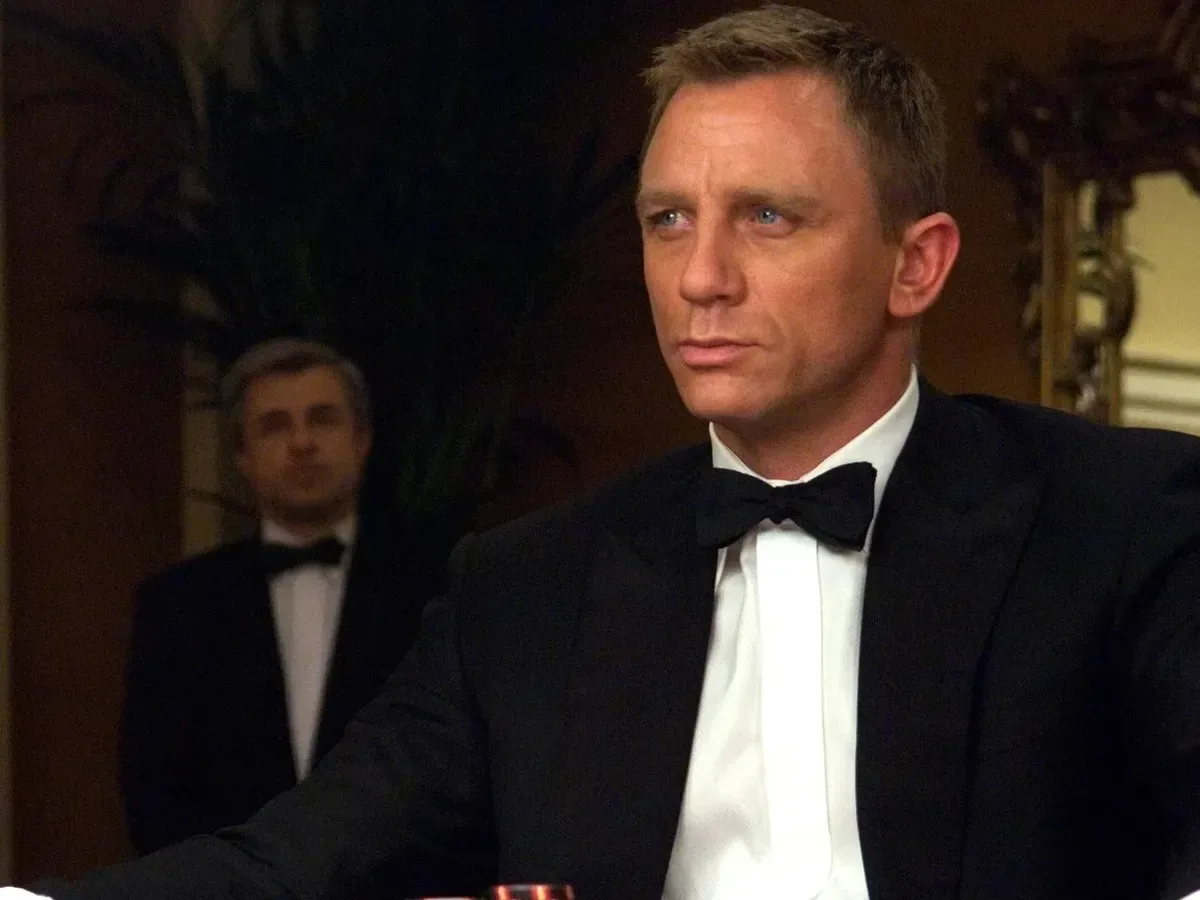
The search for cinema’s next James Bond may be approaching its decisive stage. Final screen tests are reportedly being conducted this week for the actor who will succeed Daniel Craig as 007, with Jack Lowden and Callum Turner repeatedly named among the small group still being considered. Josh O’Connor is also reported to be in contention.
That wording matters. A screen test is not a casting confirmation, and the public shortlist is not necessarily a complete one. One additional performer is rumored to remain involved, but that person has not been identified. Jack O’Connell is not believed to be that fourth candidate, while Jacob Elordi is reportedly not testing despite previous speculation attaching him to the role.
For now, the clearest takeaway is simple: the Bond search appears to have narrowed considerably, but no actor has been formally named. Until that happens, every name should be treated as a reported contender rather than the new 007.
What the final tests are expected to assess
The reported testing process is expected to examine stunts, dialogue and camera presence. Those categories offer a useful outline of what the production needs from its lead, particularly for a role in which performance, physicality and screen image must work together.
For more context, explore LEGO Confirms Daft Punk Set Based on the Duo’s Alive 2007 Stage Production.
Stunt testing does not necessarily mean candidates are being asked to perform full-scale action sequences. It indicates that the casting process is considering how credibly an actor moves, reacts and carries physical set pieces. Bond has long been an action role, and the demands of modern franchise filmmaking make physical readiness a practical concern alongside acting ability.
Dialogue testing is equally important. Bond’s lines need to support several tones at once: authority, tension, dry humor, persuasion and emotional restraint. A candidate may be asked to play scenes that reveal whether their interpretation can make the character feel controlled without becoming distant or overly formal.
Camera presence is the least mechanical of the three categories, but perhaps the most central. It describes the quality of commanding attention on screen: how an actor occupies a frame, responds in close-up, and creates a recognisable center of gravity in a scene. For Bond, this quality has to hold in quiet conversations as well as in large action moments.
These tests are therefore not just about finding someone who can wear a tuxedo or deliver a famous codename. They are part of determining whether a performer can carry a major film across tonal shifts, physical set pieces and the intense scrutiny that comes with one of film’s most enduring lead roles.
The reported shortlist
Lowden, Turner and O’Connor are the three names with the strongest reported connection to this late stage of the process. Each remains a possibility, not a certainty.
- Jack Lowden has emerged as a prominent fan favorite in the wider discussion around the part.
- Callum Turner is also reportedly among the actors undertaking final consideration.
- Josh O’Connor is said to be in the mix as well, a notable development after Daniel Craig previously said he was rooting for O’Connor and jokingly suggested he had started speculation around the actor.
- A fourth candidate may still be involved, though the identity remains unclear.
The fourth-slot uncertainty is a reminder that franchise casting stories often contain a mixture of well-supported reporting, incomplete information and rumor. The reported exclusions are helpful only in a limited sense: they narrow some of the public chatter, but they do not reveal the complete decision-making process or establish a final choice.
A new Bond, but not necessarily a younger Bond
Earlier talk around the next Bond suggested that the filmmakers might seek a younger version of the character. The three publicly named candidates, however, are all 36. That puts them only two years below Craig’s age when he first played Bond in Casino Royale.
It does not prove that the plan has changed. It does show why the phrase “younger Bond” can be misleading when used without more detail. It could refer to a new actor relative to Craig at the end of his run, a different career stage for the character, or simply an intention to create room for several films. It does not automatically mean a substantially younger performer or another first-mission story.
An origin story also appears far from guaranteed. Casino Royale already used a fresh-start approach effectively, while 007 First Light gave the property another recent variation on Bond’s early days. The next film could instead introduce a new interpretation without retracing every step of the character’s beginnings. No creative direction has been confirmed, so this remains analysis rather than a stated plan.
The age question has a practical dimension beyond storytelling. Craig’s time as Bond lasted 15 years, and his tenure involved numerous injuries as the action work became more demanding. If the next lead is expected to remain in the role for a similarly long period, physical sustainability could be a significant casting consideration. On the other hand, the production may not be planning another 15-year run. There is no confirmed answer yet.
Denis Villeneuve’s role and what is still unknown
Denis Villeneuve is set to direct the next Bond film after the release of Dune Part 3. The project already has a script, but it does not have a release date. The immediate task appears to be putting the remaining pieces together, starting with its leading actor.
Villeneuve’s involvement naturally invites assumptions about the eventual tone. Craig’s Bond films were comparatively grounded and serious, qualities that could appear compatible with Villeneuve’s filmmaking sensibility. Compatibility, though, is not confirmation. A director’s earlier work does not reveal the final tone, story structure or characterization of an unreleased Bond film.
That distinction is worth keeping in view. “Grounded” generally means a story emphasizes physical consequences, emotional realism and a world that feels less exaggerated. It does not mean action disappears, nor does it dictate how much humor, spectacle or espionage intrigue the finished film will contain. Until the creative team discusses the movie directly, the new Bond’s direction remains open.
When could the casting be announced?
If the reported final tests are indeed taking place now, an announcement in November or December is possible. That remains an expectation rather than a schedule set by the production. High-profile casting can take longer than anticipated, and a screen test is one stage in a broader decision that may involve contracts, long-term franchise planning and production timing.
The film itself is described as Villeneuve’s next project following Dune Part 3. If production begins next year, a late-2028 release has been suggested as a possibility, but it is not an announced date. Fans should view that window as a provisional projection, not a calendar commitment.
For the moment, the most concrete development is the reported emphasis on final testing. The contenders will be judged on skills that go beyond a single reading or a recognizable name: action capability, command of the dialogue and the harder-to-define ability to make Bond feel convincing on camera. Whichever actor ultimately wins the part will inherit a role with enormous expectations, but also the chance to establish a distinct version of 007.
Until the formal announcement arrives, the reported shortlist provides a clearer picture of where the search stands—while leaving the identity of James Bond’s next screen incarnation unresolved.