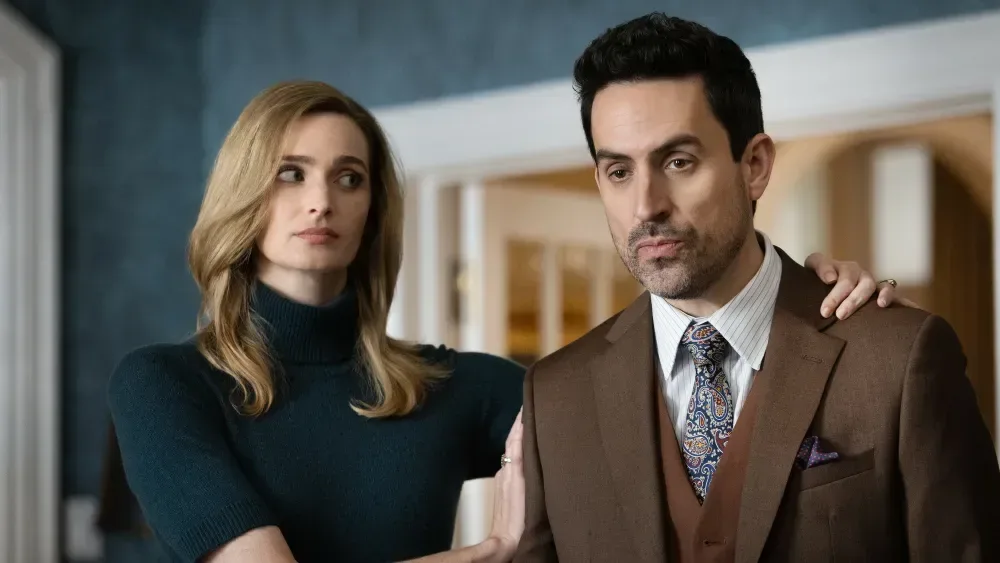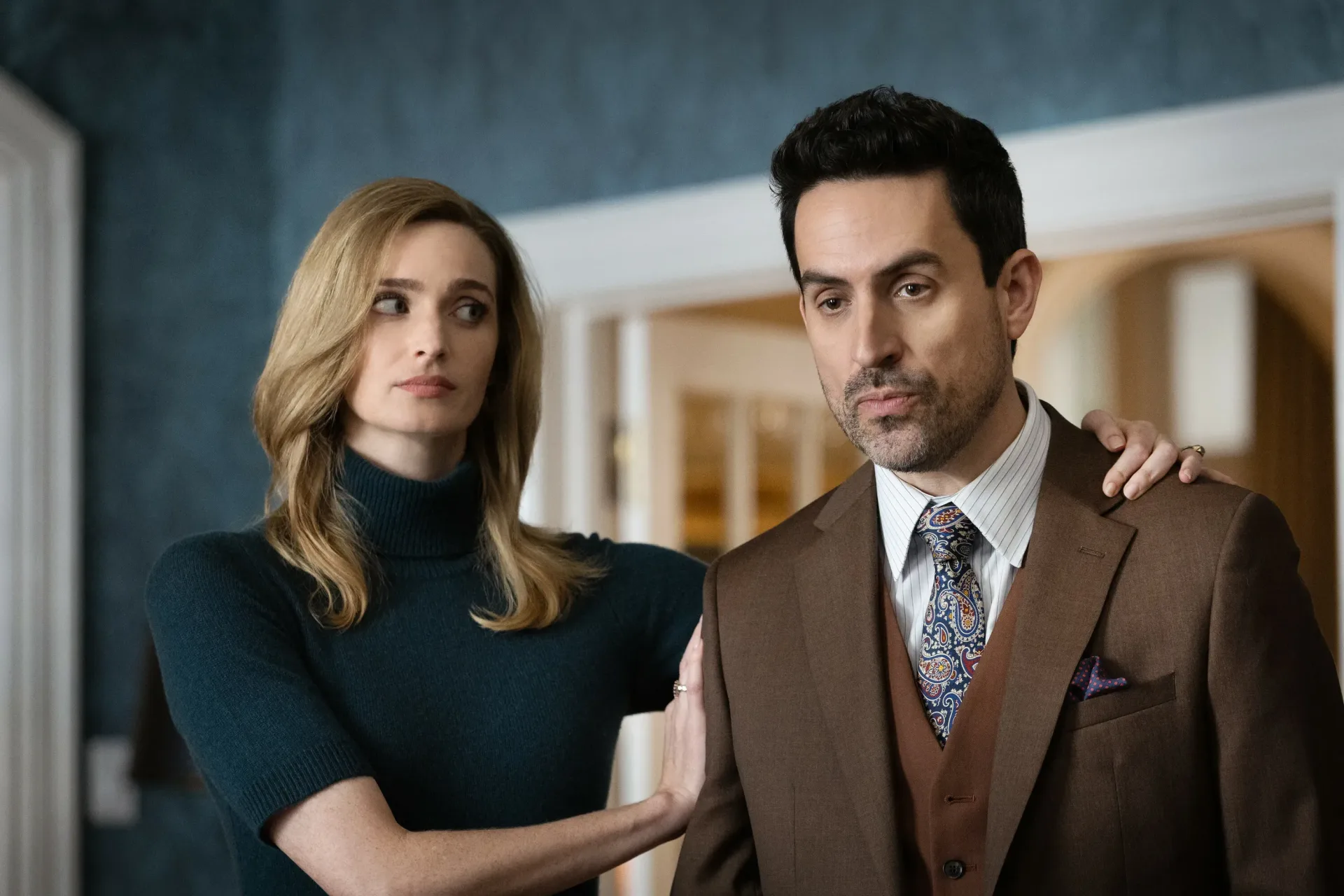
Eternally Yours arrives with an extremely legible premise: take a household full of immortals, add centuries of baggage, and let contemporary domestic frustrations collide with supernatural rules. Created by Joe Port and Joe Weisman, the team behind the U.S. version of Ghosts, CBS’ new sitcom exchanges dead roommates for vampires. That makes it easy to understand, easy to market, and potentially difficult to distinguish from both Ghosts and the many vampire comedies that came before it.
Based on the single 22-minute episode made available for review, the show is a genial, joke-ready broadcast comedy rather than a radical reinvention of vampire television. There are appealing pieces in place: a long-married immortal couple who are tired of each other, a human spouse repeatedly subjected to memory wipes, half-vampire teenagers, and a human newcomer gradually realizing that meeting his girlfriend’s parents is going to be considerably more complicated than expected. The issue is not a lack of material. It is that the pilot has yet to make its particular version of eternal life feel fully singular.
A familiar supernatural-household setup
Eternally Yours is not officially a Ghosts spinoff. Port and Weisman had conceived and pitched this vampire concept before the American Ghosts reached screens. Nevertheless, the overlap is obvious in the finished show: supernatural cohabitants from radically different periods occupy one shared home, and their unusual circumstances generate the comedy.
The key distinction is practical as well as mythological. Ghosts, by their nature, have limited ways to affect the physical world. Vampires have bodies, can handle objects, engage directly with humans, form families, and make a much more immediate mess of daily life. That gives Eternally Yours a broader set of possible story engines. Its immortals are not merely watching the living; they are living alongside them, maintaining marriages, hiding identities, raising children, and apparently making dubious choices about medical and magical consent.
That premise places the series in an established TV-comedy tradition: the supernatural roommate comedy. The pilot also invites comparison with What We Do in the Shadows, another vampire cohabitation series. But the comparison explains as much about the new show’s format as its genre. Where Shadows used a mockumentary structure and handheld-camera absurdity, Eternally Yours is more conventionally constructed as a network sitcom. Its rhythm, perspective and delivery are built for a broad half-hour audience.
That isn’t a flaw by itself. A familiar framework can be an advantage when a show’s characters are sharp enough to carry it. The early challenge for Eternally Yours is whether its vampires can become memorable as people, not simply as recognizable sitcom roles wearing fangs.
Charles and Liz have 500 years of marital complaints
At the center of the household are Charles, played by Ed Weeks, and Liz, played by Allegra Edwards. They have been together since Charles turned Liz into a vampire 500 years ago. Immortality has not made their relationship wiser or more romantic. Instead, it has allowed ordinary irritations to calcify for half a millennium. Something Liz once regarded as an endearing habit—Charles clearing his throat—has become intolerable.
It is a good comic premise because it makes the phrase “long-term relationship” hilariously literal. Most sitcom couples have to work through years of resentment. Charles and Liz have had centuries to catalogue every grievance. The pilot gets mileage from Charles’ deeply exhausted view of eternal existence, including the uncomfortable honesty of telling a human that the person will, eventually, get to die.
That trait gives Weeks a useful angle beyond generic vampire hauteur. Charles is not simply a suave immortal; he is someone for whom endless life can feel like endless disappointment. The show’s best route to a stronger identity may lie in following through on that idea. Immortality is not just a mechanism for historical flashbacks or antique jokes. It can alter how characters understand change, romance, responsibility and boredom.
The pilot does use history for a sharply placed gag: Charles and Liz once attended couples therapy with Sigmund Freud. The joke works because it compresses centuries of marital dysfunction into one recognizable image. More jokes of that kind—ones that treat time as a genuine source of character pressure rather than simply a costume opportunity—would help the series develop its own voice.
The coven’s supporting players broaden the comic options
Charles and Liz live in Seattle with other members of their coven. The Pacific Northwest setting supplies an obvious vampire rationale: plenty of cloud cover. The characters even acknowledge that another famous vampire story had the weather part right, while expressing less faith in the ideal of staying together forever.
Parker Young plays Jesse, a personal trainer who appears to have been pulled directly out of the 1980s. His solution to the vampire mirror problem is a spray tan, an absurdly vain workaround that signals the show’s willingness to make supernatural lore serve small, visual character jokes. Jesse’s wife Phyllis, played by Rose Abdoo, is human. Her memory has been damaged by repeated mind wipes, described as leaving it like Swiss cheese.
That setup has a darker edge than the show’s otherwise breezy tone. Memory wipes are a familiar fantasy device, but their presence raises a real narrative question: what does consent look like when one partner can erase the other’s recollection? The pilot uses the idea for comedy, and the relationship has produced two teenage half-vampire sons. Still, it is an element the series will need to handle carefully if it wants viewers to remain invested in Jesse and Phyllis as a couple rather than dwell on the troubling implication.
The sons also open a promising lane. Superpowered adolescence can generate a reliable set of family-comedy problems, but the premise is more specific than a standard teen sitcom: these are young people whose abilities and identities emerge within a secretive vampire household. The show does not need to overexplain every biological detail of its mythology to make that material work. In fact, the pilot indicates that rigid internal logic is not its priority. What matters more is whether the rules are consistent enough to support the jokes and stakes of a given story.
Max and Emma provide the human entry point
Jaren Lewison plays Max, a human whose relationship with Emma, played by Helen J. Shen, brings him into the orbit of Charles and Liz. Emma is their adopted daughter. Max’s dawning alarm at what her family actually is gives the pilot a more conventional audience surrogate: the ordinary person realizing he has walked into an extraordinary household.
The series presents Max’s perspective through voiceover, a device reminiscent of the framing used in How I Met Your Mother. It is another sign that Eternally Yours is embracing an accessible sitcom grammar rather than the faux-documentary approach associated with some vampire comedy. The voiceover can provide a bridge for viewers entering a world with mind control, mirrors, hybrid children and centuries-old domestic grudges. Whether it becomes essential to the show’s storytelling is less clear after one episode.
Emma’s family relationship also gives the premise emotional structure. The introduction of a boyfriend to parents is a familiar sitcom situation; making those parents vampires turns a recognizable anxiety into a genre setup. The strongest version of the show may come from that balance: human concerns made stranger, not supernatural concepts made needlessly complicated.
Why the Ghosts comparison will linger
For better and worse, Ghosts will remain the first comparison point. The shared creative leadership and the communal-supernatural-household format make that unavoidable. Fans who enjoy watching personalities from disparate eras bounce off one another may find exactly what they want here. The change from ghosts to vampires gives the writers more freedom to put their immortals into direct contact with the outside world, which could make future plots feel less contained.
But “more direct contact” is not the same as “more distinctive.” The pilot’s task is mostly introduction: establish the coven, the human connections, the marital conflict and basic vampire rules. A single episode is not enough to declare whether the show has separated itself from its most obvious creative cousin. It is enough to identify the pressure point. Eternally Yours needs to decide what its vampires reveal about relationships that ghosts, werewolves or ordinary sitcom neighbors could not.
There is room for it to do so. Charles’ despairing take on forever, Liz’s accumulated frustration, Jesse and Phyllis’ ethically uneasy arrangement, and Max’s terror at joining this family all point toward a comedy about commitment when time has ceased to be a meaningful limit. If the show leans into that thematic angle while continuing to find clean, character-specific gags, it could earn more than the label of a vampire-flavored Ghosts.
For viewers interested in the wider overlap between games and screen storytelling, Joking Joystick has also covered Xbox’s effort to expand game worlds into film, television and events. Eternally Yours, however, is a straightforward original television comedy: its immediate question is simply whether its ensemble can turn a recognizable supernatural setup into a weekly reason to return.
Eternally Yours premieres October 8 at 8:30 p.m. ET on CBS and Paramount+.