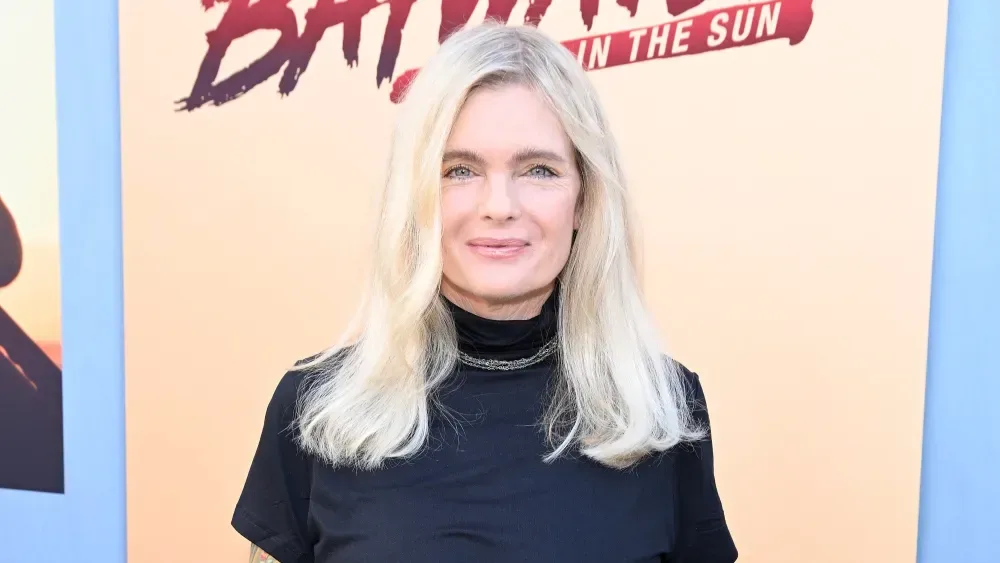
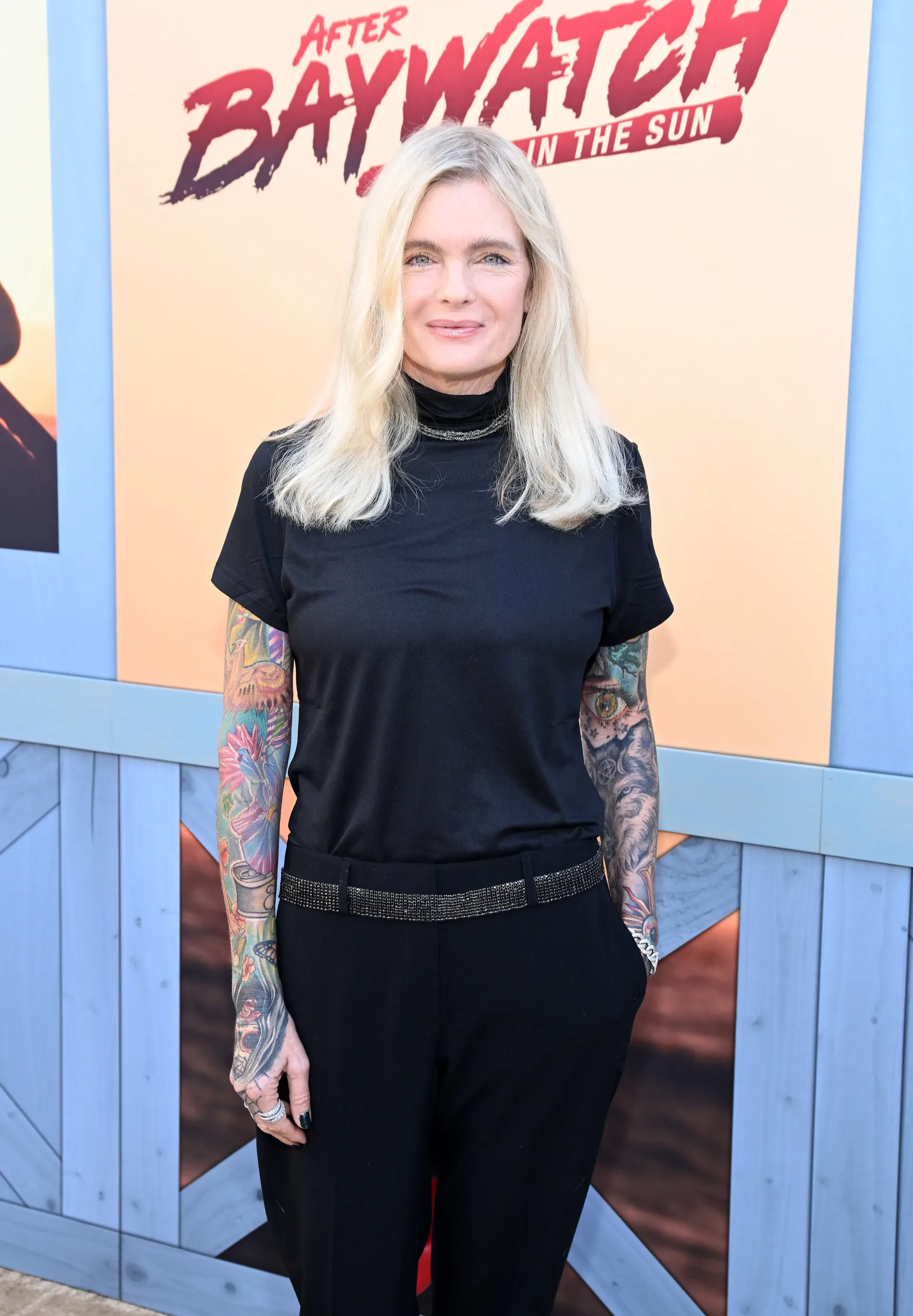
Erika Eleniak says a new direct-to-fan income stream helped her through an acute financial crisis. The actor, known for playing lifeguard Shauni McClain on Baywatch from 1989 to 1992, discussed opening an OnlyFans account at age 56 and said the earnings enabled her to clear debt connected to an eviction notice within a couple of months.
Speaking on Rachel Uchitel’s Miss Understood podcast, Eleniak described a period in which acting work had become harder to secure and the pressure of recurring living costs had become overwhelming. Her account was created in August. She characterized the choice not simply as a way to earn money, but as a move that restored a sense of agency at a point when conventional career opportunities were not meeting her needs.
“I feel like I’m the one that is calling the shots,” Eleniak said, describing the platform as empowering.
A direct-to-fan option during a difficult stretch
Eleniak’s account of the situation is candid about a financial reality that can be obscured by long-running screen recognition. Familiarity from a major television role does not necessarily mean steady present-day acting employment, and she said she was no longer acting regularly. The central problem, as she described it, was not a reluctance to accept certain jobs; it was that available work did not produce enough income to cover her existing overhead.
That distinction matters. “Overhead” is a broad term for recurring costs that must be paid regardless of whether a new acting role arrives—rent and other ongoing obligations, for example. When those costs outpace irregular income, the issue is less about career prestige than cash flow: whether enough money arrives on time to meet immediate bills.
Before opening the account, Eleniak had received an eviction notice. She said the people overseeing her rental situation worked with her, giving her room to address the debt. She then said that the revenue from her new venture allowed her to pay it off in only a couple of months.
Her remarks do not establish a universal outcome for people using subscription platforms, nor do they disclose the account’s earnings, fees, or the full details of her financial obligations. What they do establish is Eleniak’s own view of the account’s impact: it gave her a means to resolve a pressing debt during a period she described as exhausting and frightening.
What “direct to fan” means here
OnlyFans is a platform through which creators can interact with paying followers. In Eleniak’s case, the appeal was partly financial and partly relational. She said she wanted to see whether people who had followed her career would support her in that format, and said they had.
Related coverage includes Erika Eleniak Says OnlyFans Helped Resolve Eviction Debt.
That is the key difference between a conventional acting job and a direct-to-fan platform. A television or film role generally depends on being cast by a production. A subscription-based creator account instead lets the performer decide to make an offering available and communicate with an audience without first being hired for a screen project. It does not eliminate the work involved in maintaining an audience or creating material, but it changes who controls the starting point.
Eleniak emphasized that control in her comments. For her, “calling the shots” meant having more influence over a part of her professional life at a time when auditions and roles were not providing a dependable answer. She also said that interacting with fans was a major part of the appeal, suggesting the account is not being framed solely as a transactional stopgap.
The broader lesson is not that direct-to-fan work is interchangeable with acting. They are different types of work with different structures. But Eleniak’s experience illustrates why a creator-operated platform can be attractive to an established performer whose public recognition remains meaningful even when screen opportunities have slowed.
Fan loyalty and a changing celebrity-business model
Eleniak said she has had a diverse career and that many followers have stayed with her over the years. That history gave her a reason to test a new way of reaching them. Her story centers on a practical question shared by many public figures: can an audience built through one medium support work in another?
In this instance, she said the answer was yes. The significance is not that every fan relationship automatically translates into paid support, but that durable recognition can create room for performers to experiment with more personal, audience-facing formats. The value is not merely name recognition; it is the willingness of followers to remain engaged when the format changes.
Other actors have also opened OnlyFans accounts in the past year, including Lily Allen, Shannon Elizabeth, Donna Mills and Jaime Pressly. Pressly has described the service as a way to connect with her audience on her own terms, pointing to the appeal of direct interaction familiar from convention appearances.
That shared framing is notable. The platform is often discussed narrowly, but the accounts described here are also being presented as channels for audience access and creator control. Eleniak’s circumstances add a more urgent dimension: direct access to an audience was not only creatively appealing, but financially consequential.
Shauni McClain’s reported return
Eleniak’s renewed visibility also comes as Shauni McClain is expected to return in a new Baywatch project. A report in April said she would reprise the role in a Fox reboot due in January. The announced cast includes Shay Mitchell, Brooks Nader, Hassie Harrison, Livvy Dunne, Noah Beck, David Chokachi and Thaddeus LaGrone.
That planned return connects a defining role from Eleniak’s past to a contemporary revival, though it should not be confused with the independent income story she told on the podcast. Her description of opening the account was rooted in the period before that reported reboot arrives: a response to unstable work and an eviction-related debt that needed to be resolved.
Revival casting remains a prominent part of entertainment culture, especially when familiar characters are brought back alongside new ensembles. It is a different kind of continuity from fan subscriptions, but both rely on lasting audience memory. Another recent casting discussion, involving the possibility of a new Aragorn performer, shows how closely audiences follow questions of legacy roles and successor casts in major franchises: Jamie Dornan says he has not spoken directly with Viggo Mortensen about taking over Aragorn.
The practical point behind Eleniak’s comments
It would be easy to reduce Eleniak’s comments to a headline about a celebrity joining a social platform. Her own explanation is more specific. She described financial stress, the embarrassment that can accompany it, the challenge of maintaining a fixed level of expenses, and the relief of finding a route to meet an urgent obligation.
She also credited the people responsible for her rental arrangement with working with her while she found a solution. That detail underscores the timeline: the account was part of a resolution that depended both on new income and on time to pay what was owed.
For Eleniak, the result has been a combination of debt relief, audience interaction and a stronger feeling of professional control. Her experience is personal rather than a guarantee of what the platform can deliver for other creators. Still, it offers a clear example of why performers with established audiences may look beyond traditional screen roles when work becomes inconsistent: the ability to reach supporters directly can turn long-standing recognition into a more immediate source of stability.