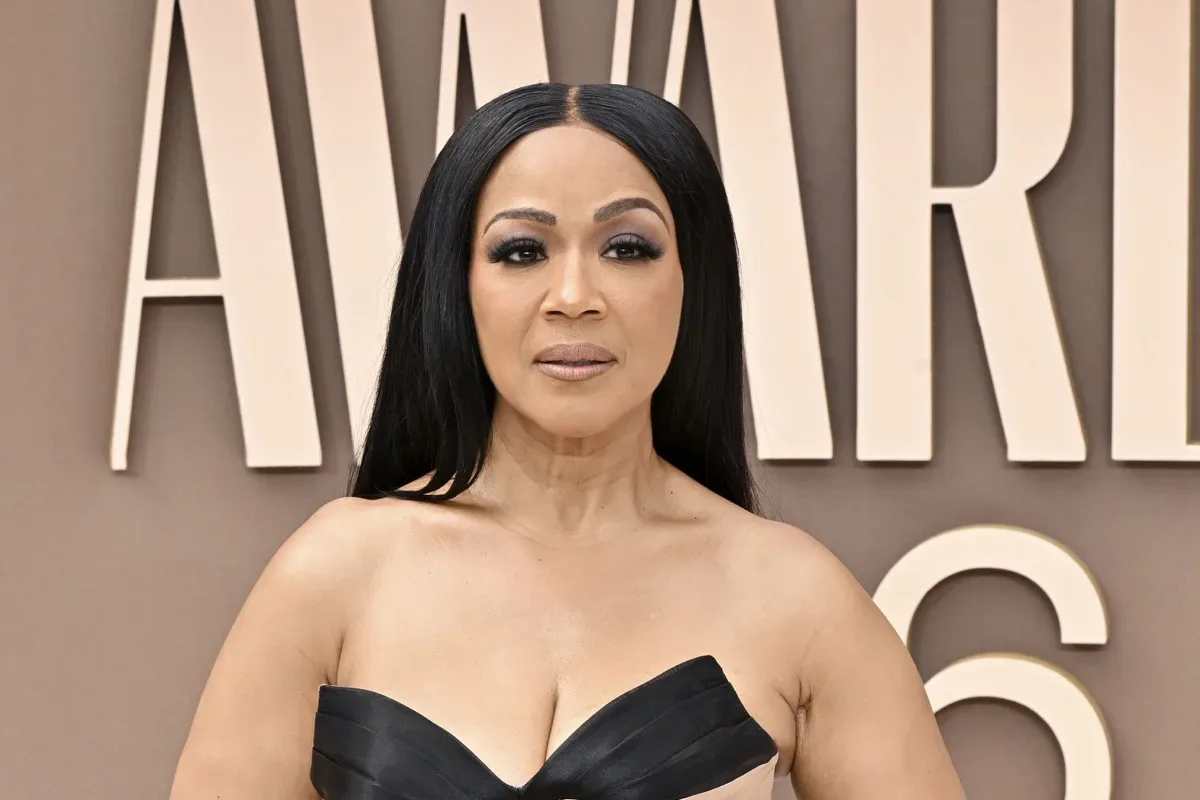
Erica Campbell says her family has added private security after repeated unwanted visits to their home, describing an escalating situation that she says has prompted multiple contacts with the Los Angeles Police Department.
The singer, known both for her work in Mary Mary and a substantial solo catalog, shared footage and an account of encounters around the family home. In one account, Campbell said her daughter contacted her over FaceTime to report that a woman was in the backyard. Campbell said the same visitor had been to the home previously.
The material Campbell shared also described encounters at the entrance to the property, including a woman attempting to communicate through a window. Campbell had earlier told her church congregation that someone allegedly slashed the family’s tires. The available information does not establish who was responsible for the reported tire damage, and Campbell’s statements should be understood as her account of the incidents.
“I’m covered and protected, but I ain’t got no reason to lie to nobody for nothing,” Campbell wrote in an Instagram caption. She has characterized the situation as neither a joke nor a game, and said she has pursued help through mental-health channels as well as contacting authorities.
For more context, explore Wuthering Waves Version 4.0 Sets December 22, 2026 Launch, With Seven Resonators Teased for 2027 Arc.
What Campbell says has changed
The most concrete step Campbell has identified is the addition of private security. That decision follows what she describes as a pattern rather than a single isolated doorstep encounter: repeat appearances, an alleged backyard presence, attempted communication at the home, and the prior allegation involving the family’s tires.
Private security is not the same thing as a criminal case, a protective order, or a finding by law enforcement. In this context, it is a practical protective measure a household can use to monitor a property, document concerning activity, and provide an additional point of contact if another incident occurs. Campbell has said that the LAPD has been contacted several times, but no further details about any police response, investigation, or case outcome were provided.
That distinction matters. Public figures can share alarming experiences in real time, but social-media documentation does not answer every question about events, identities, motive, or legal status. The reported facts here are limited to Campbell’s statements, the footage she shared, and the description of the encounters. It is not appropriate to assign intent or criminal responsibility beyond those details.
For people watching the situation unfold online, there is a straightforward line between concern and speculation. Amplifying unverified claims about a person’s identity, whereabouts, health, or motivation can intensify a volatile situation. Campbell’s own comments center on safety, reports to police, security, and seeking mental-health assistance—not on publicly resolving unanswered questions herself.
Why repeated unwanted visits are treated differently
An unexpected knock at a door can be ordinary. A repeated pattern of unwanted appearances, especially around a family residence, carries different safety implications. Campbell’s account includes a reported appearance in the backyard, which she learned about through her daughter, along with the visitor’s prior presence at the house. That is why the family’s response has moved beyond a single interaction.
Documentation is an important part of responding to recurring unwanted contact. Video, time-stamped records, reports to authorities, and accounts from people present can create a clearer record of what happened and when. Campbell’s shared videos appear to serve that documenting function as well as communicate the seriousness of her concern to the public.
Still, video clips are only one portion of a larger record. A clip may show that someone was at a door or window, but it does not independently prove every surrounding allegation. Likewise, a statement that tires were slashed conveys a serious allegation without identifying a responsible party. Keeping those boundaries clear protects the accuracy of the discussion and avoids turning a family safety issue into online detective work.
Campbell’s decision to describe efforts through mental-health channels is also notable. Seeking a mental-health response does not establish a diagnosis or explain another person’s conduct. It does, however, reflect an attempt to pursue intervention beyond direct confrontation. In situations involving repeated unwanted contact, a combination of safety planning, documentation, professional assistance, and appropriate official reporting may be more constructive than escalation on social platforms.
A career that extends well beyond Mary Mary
The home-security situation arrives amid a long career that has placed Campbell at the intersection of gospel, R&B, and rap. Alongside her sister Tina Campbell, she broke through as one half of Mary Mary. The duo’s Thankful arrived in 2000 and helped establish a sound that brought gospel music into a broader contemporary conversation.
Campbell later expanded that work as a solo artist. Her album Help debuted at the top of the Top Gospel Albums chart and reached No. 6 on the Billboard 200, an uncommon crossover result that speaks to the reach of her material beyond a single format. Before the album’s arrival, her first solo single, “A Little More Jesus,” received a Grammy nomination. The song also earned writing nominations for Tina Campbell and Warryn Campbell.
That creative connection has remained close to home. Campbell and producer Warryn Campbell married in 2001, and the nomination recognition for “A Little More Jesus” underscored the family partnership behind her move into solo work. Her career has not been defined solely by her own projects, either: she has continued to appear in collaborations that bring her gospel perspective into music built from rap and R&B traditions.
More recently, Campbell appeared on Skilla Baby’s “Strength in Numbers,” from The Price of Fame. The track addresses poverty and violence. The album arrived in August and also included Nas, Chris Brown, and Bryson Tiller. Skilla Baby has discussed making the project while working through personal struggles after surviving a shooting.
Campbell has also been named among the collaborators on David Banner’s The God Box 2, alongside Anthony Hamilton, Raheem DeVaughn, and Eric Bellinger. The guest appearances illustrate why Campbell’s role in contemporary music cannot be reduced to one group, one genre boundary, or one era of her career.
The practical issue at the center of the story
This remains, first and foremost, a safety story rather than a music-release story. Campbell says the family is protected and has taken steps intended to keep it that way. The reported use of security, the LAPD contacts, and her effort to seek mental-health help point to a response focused on reducing risk and building a record rather than treating the unwanted visits as a trivial nuisance.
For public-facing musicians and entertainers, attention can blur the usual boundary between audience access and private life. But a person’s profile does not make a residence a public venue, nor does it make repeated unwanted visits acceptable. The details Campbell has shared bring that line into focus: a home, a family, a reported backyard encounter, and a decision to add protection.
Readers can follow the developing account while resisting the impulse to identify or confront anyone connected to it. The useful takeaway is the one Campbell has stressed herself: she does not regard the matter as a game. Her family has responded with security and requests for assistance, while the publicly available information leaves important details unresolved.
For continuing coverage of the situation, Campbell’s reported account of the repeated unwanted visits remains centered on the safety measures her family says it has taken.