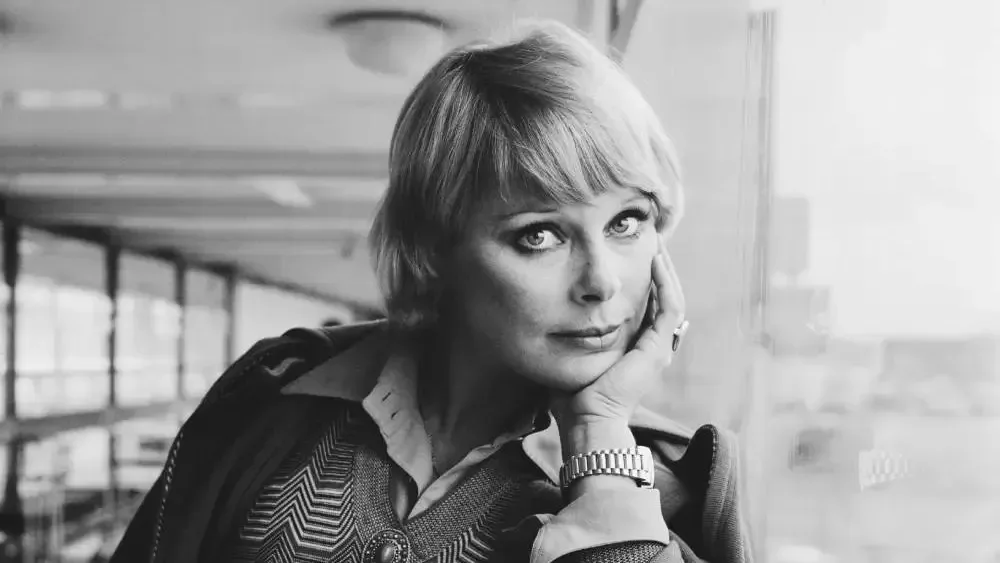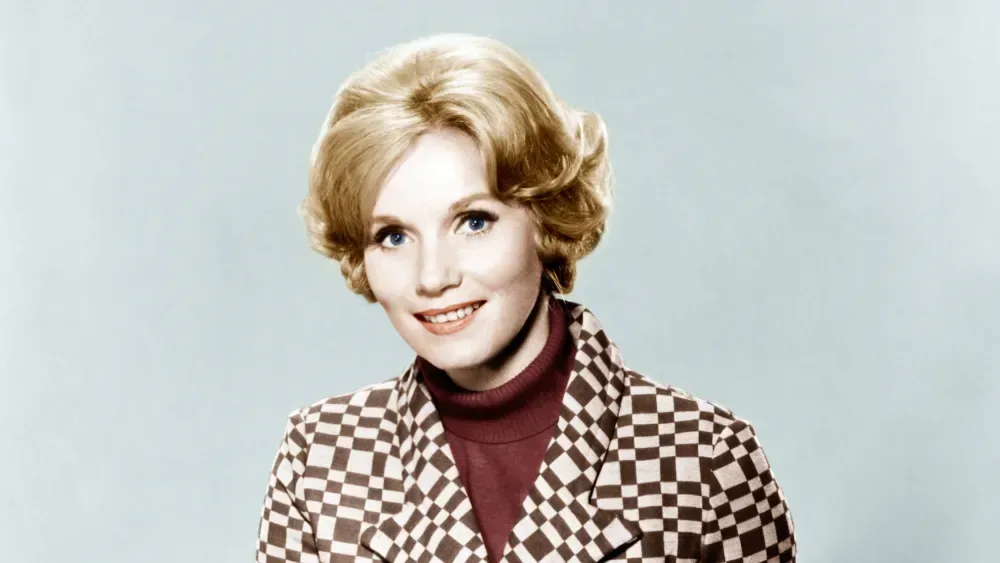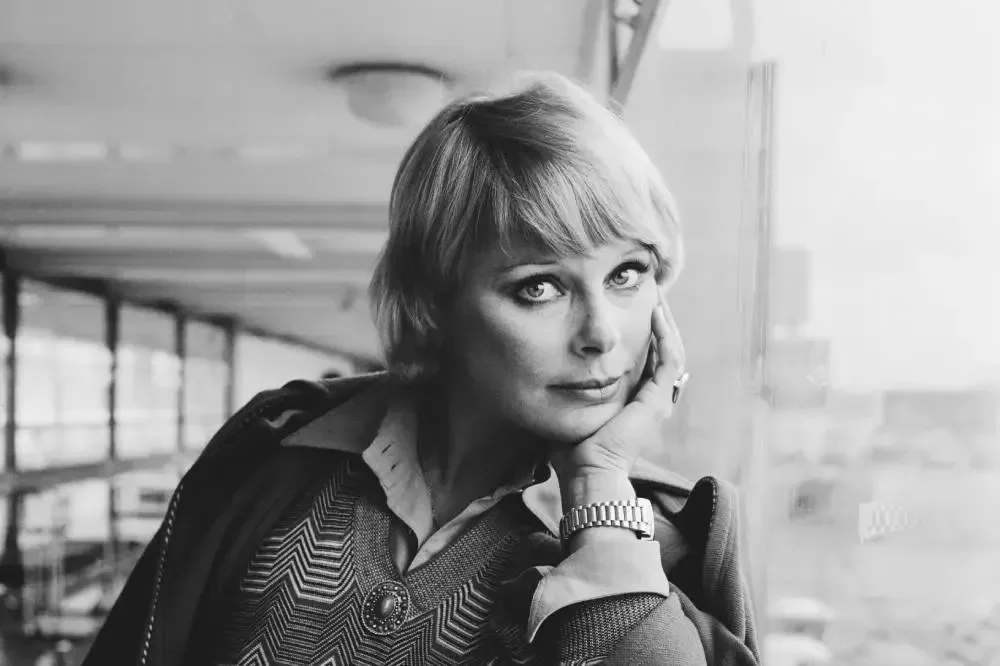
Elke Sommer, the German-born actor whose wide-ranging film career took her from European discovery to high-profile Hollywood features of the 1960s and 1970s, has died at 85.
Sommer died at her Los Angeles home on Wednesday. Her stepson, Sebastian Walther, confirmed her death. It came three months after the death of her husband, Wolf Walther, from cancer.
“Now she can finally be with her beloved husband again,” Sebastian Walther said.
For audiences of classic Hollywood comedy, mystery, adventure and horror, Sommer remains particularly associated with an unusually broad set of credits. Her films include The Prize, the Pink Panther follow-up A Shot in the Dark, The Art of Love, The Oscar, Boy, Did I Get a Wrong Number!, Deadlier Than the Male, The Wrecking Crew and The Wicked Dreams of Paula Schultz. Her later work included Zeppelin, Ten Little Indians, Baron Blood, Lisa and the Devil and the British comedy Carry On Behind.
From wartime Berlin to an international screen career
Sommer was born in Berlin on November 5, 1940, during the Nazi occupation. Her family left the German capital during World War II and relocated to the small town of Niederndorf.
In 1957, she moved to London, where she worked as an au pair for the family of actor Vicki Michelle. A holiday in Italy proved pivotal: director Vittorio De Sica noticed Sommer, and she soon began appearing in films. That path eventually led her to Hollywood in the early 1960s, where she also became a popular pin-up model.
The details matter because they underline the international nature of Sommer’s rise. She did not emerge through a single studio-built persona or one defining franchise. Instead, her screen identity developed across countries and genres before she became a recognizable Hollywood presence. Her filmography places her alongside stars including Paul Newman, Peter Sellers, James Garner, Dick Van Dyke, Stephen Boyd, Bob Hope, Dean Martin, Sharon Tate and Michael York.
A key role in a classic comic mystery
Among her best-known films is A Shot in the Dark, the sequel to The Pink Panther starring Peter Sellers. The film is important to the broader comic legacy of Sellers’ Inspector Clouseau: it helped establish a character and style that would become central to the wider series. Sommer’s appearance means her work continues to be encountered by viewers discovering the Clouseau films long after their original release.
A sequel is not simply a repeat of an earlier movie. In practical terms, it returns to an established world, character or premise and has to balance familiarity with a fresh plot. A Shot in the Dark paired that returning comic setting with a murder-mystery framework, putting Sommer in a film whose reputation reaches beyond a conventional star vehicle.
That durability is also a reminder of how varied a performer’s legacy can be. A single role may be the most broadly remembered, but it does not account for the full scope of a career. Sommer worked in romantic comedy, mystery, adventure, crime-oriented stories, literary adaptation, supernatural horror and British farce. The available credits show an actor moving repeatedly between commercial modes rather than remaining limited to one screen category.
Recognition for ‘The Prize’
Sommer won a Golden Globe in 1964 for most promising newcomer actress for The Prize, in which she appeared with Paul Newman. The award marked a significant early recognition during her Hollywood ascent.
The phrase “most promising newcomer” reflects an award category built around perceived breakthrough potential rather than a retrospective career honor. For Sommer, it captured a period when she was becoming visible in large-scale American productions and working with major stars. Her subsequent credits demonstrate that the promise acknowledged in 1964 translated into a sustained presence through the remainder of the decade and into the 1970s.
Her 1960s output alone illustrates the range of opportunities she was taking on. The Art of Love paired her with James Garner and Dick Van Dyke. The Oscar featured Stephen Boyd. Boy, Did I Get a Wrong Number! placed her opposite Bob Hope. The Wrecking Crew connected her with Dean Martin and Sharon Tate. These are not interchangeable titles; they point to work across different casts, comic registers and audience expectations.
Work beyond the Hollywood comedy lane
Sommer’s later credits widen the picture further. In the 1970s she appeared in Zeppelin with Michael York, and in Ten Little Indians, an adaptation of an Agatha Christie story. Adaptation in this context means a film reshaping an existing written work for the screen, bringing its own casting, pacing and visual approach to a previously established narrative.
She also appeared in Baron Blood and Lisa and the Devil, films that sit far from the polished studio comedies often foregrounded in summaries of her work. The contrast is useful: it shows that Sommer’s career cannot be reduced to glamorous 1960s Hollywood casting. Her credits moved into darker material as well as international productions.
Carry On Behind, meanwhile, placed her within the long-running British Carry On comedy tradition. Her participation across American and British films, alongside her European beginnings, gives her career a distinctly cross-border shape.
Readers exploring the continuing conversation around filmmakers and film culture can also follow recent news on Darren Aronofsky’s Camerimage director award.
A filmography that continues to travel across genres
Sommer’s death closes a life that began in wartime Germany and led to a decades-spanning international career. While many viewers will first think of A Shot in the Dark, her legacy is better understood through the accumulation of roles around it: a Golden Globe-recognized performance in The Prize; major studio comedies; crime and adventure pictures; an Agatha Christie adaptation; and horror films such as Baron Blood and Lisa and the Devil.
That variety is significant for anyone revisiting films of the 1960s and 1970s. Sommer is a familiar face across works that otherwise belong to very different traditions, from Peter Sellers comedy to classic whodunit construction and supernatural genre cinema. Her body of work offers several entry points, rather than one fixed definition of what an Elke Sommer film should be.