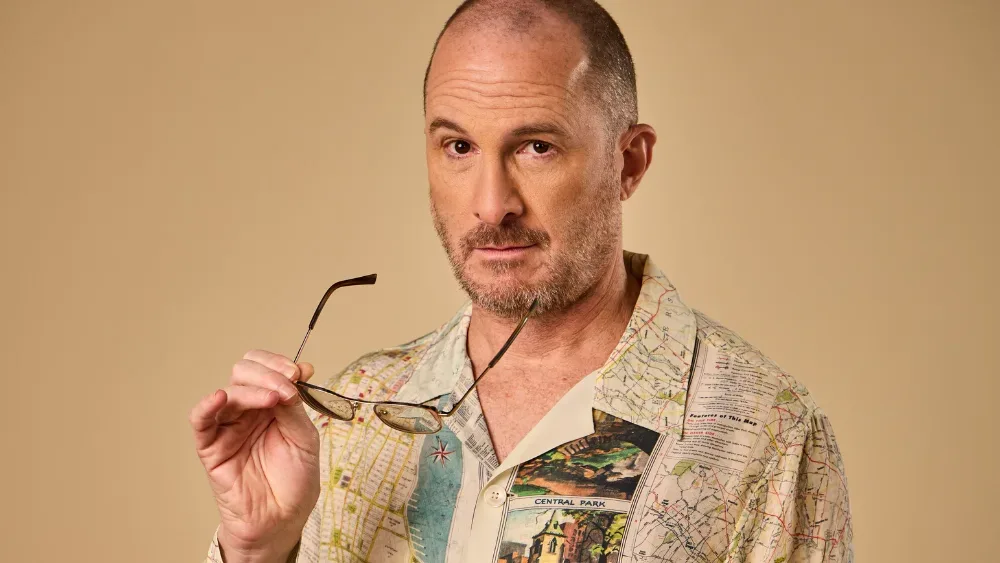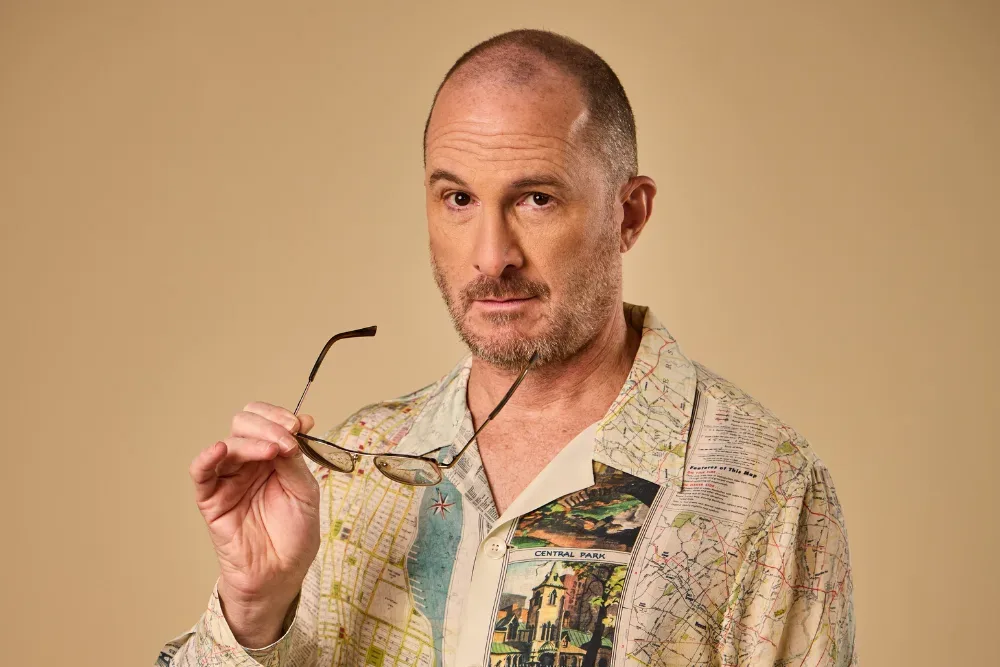
Darren Aronofsky will receive the Award for Director at the 34th ToruńCamerimage International Film Festival, an event centered on the craft and impact of cinematography. The 2026 festival is scheduled for November 7 through 14 in Toruń, Poland.
The honor recognizes a filmmaking career defined by forceful visual choices and sustained creative partnerships behind the camera, especially Aronofsky’s long-running work with cinematographer Matthew Libatique. It is a particularly fitting distinction from a festival whose main purpose is to spotlight visual storytelling: Camerimage’s principal competition presents the Golden Frog for outstanding cinematography, while its honorary prizes acknowledge major contributions across filmmaking.
A director’s award at a cinematography festival
A cinematography festival is not merely celebrating attractive images. Cinematography encompasses the decisions that shape how a film is seen and felt: camera placement, movement, framing, lighting, lenses, color and the visual relationship between a performer and their environment. A director does not replace the cinematographer’s role, and a cinematographer does not replace the director’s. The distinction is meaningful precisely because filmmaking is collaborative. The director establishes the larger dramatic and stylistic intent; the cinematographer helps translate that intent into an image-based language.
Aronofsky’s award speaks to that connection. Festival organizers pointed to the way form operates as part of the story in his work, rather than as decoration placed on top of it. In practical terms, that means the visual design can carry emotional information alongside dialogue and plot: a frame can make a character feel isolated, camera motion can create instability, and a close perspective can make an audience feel uncomfortably near a character’s experience.
That emphasis helps explain why a festival devoted to cinematography would honor a director. It recognizes the director-cinematographer relationship as a key element of visual authorship, while still preserving the fact that cinematography itself is a specialized craft with its own awards and achievements.
From Pi to a broad feature career
Aronofsky made his feature directorial debut with the 1998 psychological thriller Pi. The film earned him a directing award at Sundance, establishing an early milestone for a filmmaker whose subsequent work would move across psychological drama, fantasy, biblical epic, horror and crime thriller territory.
He followed with 2000’s Requiem for a Dream, starring Jared Leto, Jennifer Connelly, Marlon Wayans and Ellen Burstyn. Burstyn received an Academy Award nomination for her performance. While the supplied record of Aronofsky’s career includes major acting recognition, it also illustrates something relevant to the Camerimage honor: his films have repeatedly paired heightened formal approaches with performance-centered material.
His 2008 drama The Wrestler, starring Mickey Rourke, won the Golden Lion at the Venice Film Festival. Aronofsky then directed 2010’s Black Swan, starring Natalie Portman. That film received five Academy Award nominations, including Best Picture and Best Director, while Portman won Best Actress.
Other Aronofsky directing credits include The Fountain, Noah and mother!. The range of those titles matters less as a checklist than as evidence that the upcoming Camerimage recognition is not tied to one recent film or one narrow genre. It reflects a body of work spanning decades and different scales of filmmaking.
The importance of Matthew Libatique’s collaboration
The festival specifically noted Aronofsky’s enduring collaborations with cinematographers, particularly Matthew Libatique, who has photographed much of the director’s output. In film credits, “photographed by” refers to the cinematographer’s responsibility for the production’s camera and lighting image. That responsibility is extensive, but it is also collaborative: the director and cinematographer establish a shared visual plan, then work with crews and other departments to realize it.
Long-term director-cinematographer partnerships can create a productive shorthand. That does not mean the work becomes automatic or that every project looks the same. Instead, a recurring partnership can allow artists to pursue a clearer common goal, because each participant better understands the other’s instincts, priorities and visual vocabulary.
For viewers, this is a useful way to consider the award beyond the notion of a single filmmaker being celebrated in isolation. Aronofsky is receiving the Director honor, but the context of the festival’s recognition also directs attention to the people and disciplines that make a film’s imagery possible. It is an acknowledgment of directing as a collaborative art where the screen image is inseparable from storytelling.
Recent work and the 2026 festival
Aronofsky’s 2022 drama The Whale marked Brendan Fraser’s return to a leading film role and earned Fraser his first Academy Award. Most recently, Aronofsky directed the 2025 crime thriller Caught Stealing, starring Austin Butler, Zoë Kravitz and Regina King.
The timing gives the 2026 award a contemporary dimension while remaining rooted in the full arc of his career. Aronofsky arrives at the festival after directing films that have generated recognition at Sundance, Venice and the Academy Awards, but Camerimage’s focus makes this honor distinct. It is concerned above all with the relationship between cinematic form and narrative impact.
That focus is also relevant outside traditional film culture. Modern audiences frequently discuss a project’s “look,” but that phrase can flatten a detailed process into a vague compliment. Camerimage’s programming and awards framework puts more useful language around that conversation: visual storytelling is built from deliberate choices, and those choices affect how viewers understand character, tension, space and emotion.
Games regularly invite similar conversations about staging, environmental mood and player perspective. For a current game-side example of horror presentation being foregrounded, see our look at the AGNI: Village of Calamity gameplay trailer. The mediums are different, but the basic question is familiar: how does visual form shape the audience’s encounter with a story?
What Camerimage’s recognition represents
The ToruńCamerimage International Film Festival is among the prominent annual events dedicated to cinematography. Its Golden Frog competition award is specifically for outstanding cinematography, and its additional honorary prizes broaden the celebration to achievements throughout the industry.
Aronofsky’s Award for Director therefore places him in a festival setting built around the artists who turn scripts, performances, sets and locations into images. The distinction does not announce a new project or reveal an additional film credit. Its value is retrospective and craft-focused: it recognizes a director whose films have made visual expression central to dramatic expression.
When the 34th edition convenes in Toruń from November 7 to 14, Aronofsky’s recognition will stand as an acknowledgment of a career that began with Pi in 1998 and has continued through Caught Stealing in 2025. Just as importantly, it highlights the collaborative visual work—particularly his partnership with Libatique—that has helped make those films identifiable on screen.