Drake’s HABIBTI (FOMO) has returned to the upper reaches of the Billboard 200 after the arrival of its deluxe edition, opening at No. 2 with 71,000 album-equivalent units. The result is a dramatic turnaround for the album’s chart position: the tracklist had been sitting at No. 116 before the expanded edition pushed it back near its earlier high point.
The most important detail behind that total is the listening format driving it. Nearly 70,000 of the 71,000 album-equivalent units came through streaming. That makes the deluxe’s performance less a story of a narrowly divided sales total and more a clear measure of renewed on-demand attention across the project.
For Billboard tracking, every version of HABIBTI (FOMO) was combined. In practical terms, the original release and the deluxe configuration contribute to one charting result rather than competing as separate album entries. That distinction matters when assessing the jump from No. 116: the chart movement represents an uplift for the broader album package after additional material gave listeners a reason to revisit it.
What the No. 2 debut says about the deluxe release
An album-equivalent unit is a chart measurement that brings different forms of consumption into a common total. Rather than treating an album’s standing as a physical-sales-only contest, it accounts for listening activity alongside other qualifying album consumption. Here, the streaming share is so large that it explains virtually the entire 71,000-unit opening.
That is also why the deluxe format can have a substantial chart effect even without recasting the original album as a wholly new project. New material can concentrate attention around an existing release, prompting fans to play the additions while also returning to older songs. With all versions counted together, the effect is reflected in the album’s total chart footprint.
The numbers do not establish which individual track generated the largest portion of that activity, nor do they reveal how listeners divided their plays between the standard album and its expansion. They do show, however, that the revised release created enough momentum to move HABIBTI (FOMO) 114 positions from its previous No. 116 placement to No. 2.
The additions to HABIBTI (FOMO)
The deluxe version adds four pieces of material to the conversation around the record: “Quebec,” an expanded version of “Classic” titled “Classic PT2,” and two collaborations with Don Toliver. Those Don Toliver pairings—“Cold Shoulder,” which also features Yebba, and “Solar Eclipse”—mark Drake and Don Toliver’s first collaborations.
“Solar Eclipse” has drawn particular attention for incorporating an interpolation of Ella Langley’s “Choosin’ Texas.” An interpolation is a musical reference recreated within a new recording, rather than simply dropping in the original master recording. The supplied chart information identifies the reference, but does not specify which musical element is reused or how it functions in the arrangement.
Related coverage includes Drake’s ‘HABIBTI (FOMO)’ Deluxe Opens at No. 2 on Billboard 200.
The expansion therefore has a mix of approaches: a newly named track, a continuation or expansion of an existing album cut, a multi-artist collaboration, and a song built around a recognizable musical reference. That range gives the deluxe edition several different entry points for listeners without changing the fact that Billboard aggregates the project’s versions into a single album total.
Why first-time collaborator pairings matter
Collaborations can be commercially meaningful because they place artists’ audiences around the same release. It would be speculation to assign a precise share of HABIBTI (FOMO)’s streaming total to Don Toliver, Yebba, or any one song. Still, the first Drake–Don Toliver pairings are a notable part of the edition’s identity, particularly because there are two of them rather than one.
That creates a clearer event around the deluxe than a single bonus cut might. “Cold Shoulder” connects Drake, Don Toliver, and Yebba, while “Solar Eclipse” pairs Drake and Don Toliver around the “Choosin’ Texas” interpolation. “Quebec” and “Classic PT2,” meanwhile, broaden the update beyond featured-artist appearances.
Taylor Swift holds the top spot
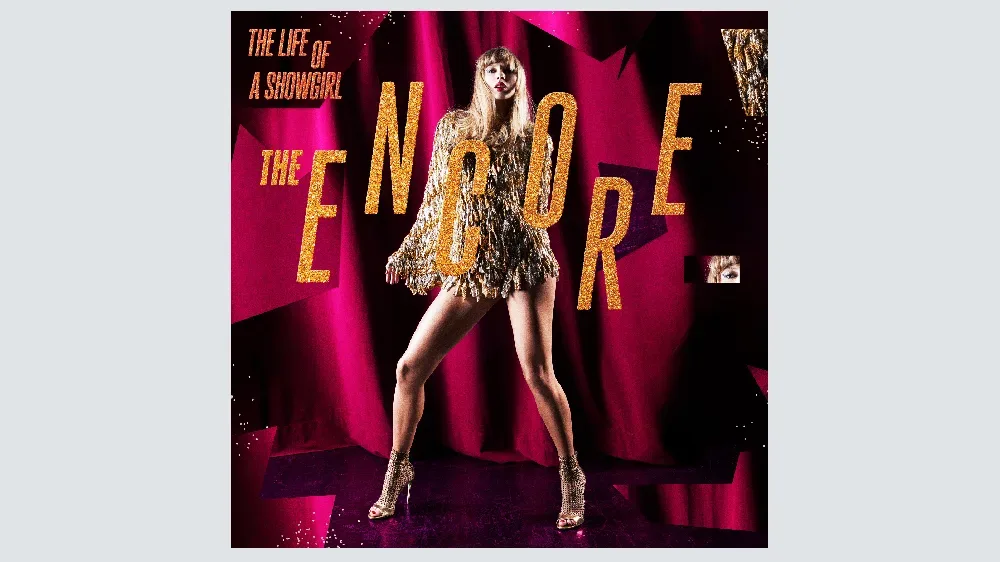
The No. 1 position went to Taylor Swift’s The Life Of A Showgirl, which posted 93,000 units for the week. Its own deluxe edition, containing four new tracks, helped renew its performance. The gap between the two albums was 22,000 units: Swift’s 93,000 compared with Drake’s 71,000.
The week consequently illustrates two high-profile deluxe campaigns influencing the same album chart. Drake’s expanded HABIBTI (FOMO) re-entered the top tier at No. 2, while Swift’s expanded The Life Of A Showgirl retained No. 1. For more context on Swift’s broader chart history, see Joking Joystick’s coverage of her 100 career weeks at No. 1.
Another significant entry was Mac Miller’s tenth-anniversary edition of The Divine Feminine. The reissue debuted at No. 10 with 18,000 units. Its placement alongside the Drake and Swift releases underscores how expanded and anniversary editions can create a new chart moment for an existing body of work, although the projects arrive under very different circumstances and with very different totals.
Hot 100 projections put four additions in play
The album-chart result may be accompanied by a strong singles-chart showing. Each of the deluxe edition’s four new songs is projected to reach the Billboard Hot 100’s top 30. These are projections rather than final positions, so the exact rankings remain unsettled.
If the songs do enter as projected, they would extend Drake’s active record for the most Hot 100 entries in history. The claim at stake is about the number of entries, not necessarily about a No. 1 single or any particular peak. That difference is important: an artist can broaden a record for total chart appearances even when the individual placements vary from song to song.
There is a useful distinction between the two charts involved. The Billboard 200 ranks albums, which is where the 71,000-unit performance places HABIBTI (FOMO) at No. 2. The Hot 100 ranks songs, where the four new tracks are projected to land in the top 30. The same deluxe release can therefore affect both an album’s aggregate consumption and the visibility of its individual additions.
At present, the supported takeaway is straightforward: the expanded album has produced an immediate streaming-led rebound, two first-time Drake and Don Toliver collaborations, and four songs with projected top-30 Hot 100 potential. Whether every projection is realized, and where each song ultimately lands, is still to be determined.
A commercial result apart from awards discussion
The release has also arrived amid continued discussion of Drake’s absence from Grammy submissions and his longstanding distance from the ceremony outside of collaborative projects. The chart outcome offers a separate metric of success: listener consumption. Nearly all of the deluxe edition’s 71,000 album-equivalent units came from streaming, making its No. 2 debut a particularly direct reflection of current listening volume.
That does not make charts and awards interchangeable. They answer different questions. Awards attention concerns an institution’s recognition process; a streaming-heavy album total records how heavily the music was consumed during a defined chart period. HABIBTI (FOMO)’s performance is notable precisely because the latter measure is so pronounced.
For Drake, the immediate scoreboard is clear. HABIBTI (FOMO) has moved from No. 116 back to No. 2, generated 71,000 album-equivalent units with nearly 70,000 attributable to streaming, and positioned four new tracks for potential top-30 Hot 100 debuts. The deluxe edition did not take the week’s top album spot, but it decisively returned the project to the center of the chart conversation.