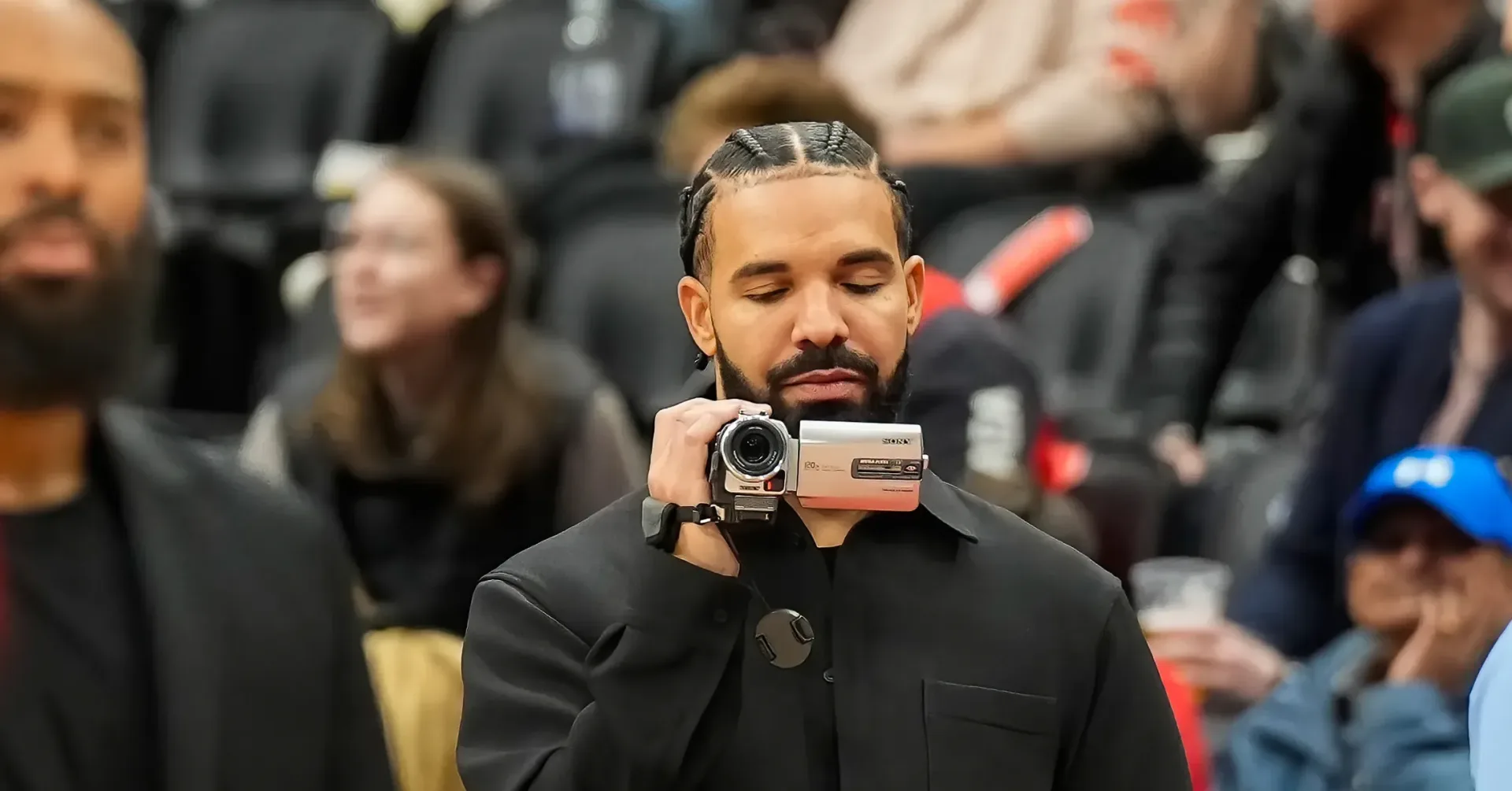
Drake and Don Toliver have given “Solar Eclipse” a life outside the larger FOMO film, releasing a standalone video for the collaboration after initially presenting it as part of the longer project. The move is the latest step in a rollout that has treated a film, an expanded streaming release and individual videos as connected pieces rather than isolated launches.
“Solar Eclipse” reached streaming services on October 2 as part of HABIBTI (FOMO), an expanded edition containing 24 tracks with a total runtime of one hour and 17 minutes. The update added four songs: “Solar Eclipse,” “Quebec,” “Classic PT2” and “Cold Shoulder.” Don Toliver appears on two of them, “Solar Eclipse” and “Cold Shoulder,” while Yebba also joins Drake and Toliver on “Cold Shoulder.”
Both of the Don Toliver-associated additions have received their own visuals after their appearances within FOMO. That makes the new “Solar Eclipse” upload more than a simple repeat of an existing clip: it turns one component of a wider audiovisual presentation into a direct destination for listeners who want that song specifically.
From a film appearance to an individual release
The order of events matters here. “Solar Eclipse” was first embedded in FOMO, then became available as an individual audio track on the expanded HABIBTI (FOMO) set, and now has a separate video. Instead of requiring an audience to return to the full film to find it, the campaign has progressively made the song easier to encounter in the formats people already use.
For more context, explore Apple Home AI Camera Summaries Turn Your Porch Into a $60-a-Month Detective Desk.
A standalone video is exactly what it sounds like: a dedicated upload built around one song, independent of the longer film that introduced it. In practical terms, it separates the track from the viewing commitment of a broader project. Someone can watch “Solar Eclipse” without navigating through the rest of FOMO, while people who found the song on streaming can move straight to its visual counterpart.
That distinction is especially relevant for a release that began as part of a film. A long-form project can establish mood, sequencing and a larger narrative context, but it can also make individual moments less immediately accessible. Breaking selected tracks out afterward preserves their connection to the original project while giving each one its own chance to circulate.
The approach does not position the four new tracks as a wholly separate Drake album. Rather, the expanded title keeps them under the HABIBTI (FOMO) umbrella. The video helps extend that umbrella without changing its label: “Solar Eclipse” remains part of the expanded edition, but it now has a distinct audiovisual presentation that can be found on its own terms.
Related coverage includes Drake and Don Toliver Expand ‘Solar Eclipse’ With Standalone Video.
What “Solar Eclipse” brings into the FOMO release
“Solar Eclipse” is not presented as an unrelated song sharing a similar name with an existing hit. It reworks Ella Langley’s “Choosin’ Texas,” a country record that spent an extended period at No. 1 on the Billboard Hot 100. Drake and Don Toliver’s version reframes that recognizable material as a Hip-Hop release.
In this context, a rework means the new track draws on a pre-existing record rather than simply occupying the same thematic territory. That connection gives “Solar Eclipse” a built-in reference point for listeners familiar with “Choosin’ Texas,” while placing the resulting track inside Drake’s current release campaign and alongside Don Toliver’s appearance.
The available details do not specify the exact musical mechanics of the rework, such as which elements are retained or transformed. What is clear is the release’s stated relationship to Langley’s chart-topping song and its new framing within Hip-Hop. That is an important distinction: the track’s identity is tied both to its place in HABIBTI (FOMO) and to a recognizable contemporary song outside that project.
For the expanded edition, the Don Toliver material also creates a small internal pairing. “Solar Eclipse” and “Cold Shoulder” arrive among the four added songs, both feature Toliver, and both went on to receive standalone visuals. “Cold Shoulder” broadens the lineup further with Yebba, whereas “Solar Eclipse” keeps the focus on the Drake-and-Toliver collaboration.
A three-part release strategy
The FOMO campaign can be understood as working in three stages:
- Film premiere: the longer FOMO project introduced music in a combined audiovisual setting.
- Streaming expansion: the songs became available through the expanded HABIBTI (FOMO) edition, which incorporated four additions into a 24-track, 77-minute set.
- Standalone visuals: individual videos for “Solar Eclipse” and “Cold Shoulder” gave selected tracks separate viewing paths.
This sequencing serves a straightforward audience need. Film viewers can experience songs in their original project context. Streaming listeners can add or revisit the tracks without watching the entire film. Video viewers can engage with a particular song in a focused format. Each stage uses the same material differently rather than asking the audience to start from scratch with a separate release.
There is also a practical discoverability benefit. “Discoverability” refers to how readily a listener or viewer can find a particular piece of work. In a long project, a song can be one memorable section among many. In a dedicated upload, the track title and artist names are the entire proposition. The standalone form gives “Solar Eclipse” another route to viewers after its introduction in FOMO.
That does not diminish the film’s role. The film was the first platform for the collaboration, and the later releases derive their context from it. But the subsequent steps acknowledge that a one-night or long-form audiovisual event does not have to be the only place its music exists. The expanded streaming edition and individual videos convert moments from that larger experience into works that can continue reaching audiences separately.
Why the expanded edition matters
Expanded editions are often discussed as if they are merely longer tracklists. Here, the additional material is also doing structural work. “Solar Eclipse,” “Quebec,” “Classic PT2” and “Cold Shoulder” increase the song count, but “Solar Eclipse” and “Cold Shoulder” additionally connect the streaming release to the visual side of the campaign.
That makes HABIBTI (FOMO) the bridge between the film and the individual uploads. The tracks are not just teased in one place and then promoted in another; they are formally collected within the expanded album edition. For a listener entering through the standalone “Solar Eclipse” video, the album provides the larger body of work. For someone beginning with the expanded album, the video supplies an additional way to experience one song.
The release schedule also continues Drake’s active 2026 output, following the September premiere of FOMO. The precise creative scope of future releases is not established by these details, but this campaign has already demonstrated an interest in revisiting material across several formats rather than limiting it to a single premiere window.
What listeners and viewers can take from the new upload
For fans following the release in chronological order, the standalone “Solar Eclipse” video is an extension of a song first encountered in FOMO. For people who missed the film, it provides a more immediate entry point to the Drake and Don Toliver collaboration. And for listeners who found the song on the expanded streaming edition, it completes another piece of the project’s audiovisual presentation.
The most useful way to view the rollout is not as a string of unrelated drops, but as a layered release model. The film supplies the initial showcase. The expanded edition makes the music broadly accessible in an album setting. The individual visuals keep specific songs visible after the larger premiere has passed.
“Solar Eclipse” is therefore carrying several identities at once: a Drake and Don Toliver collaboration, one of four additions to HABIBTI (FOMO), a Hip-Hop reworking of Ella Langley’s “Choosin’ Texas,” and a track now supported by its own official video. The standalone visual does not replace the film or the album edition. It makes one of their shared moments easier to find, revisit and experience independently.