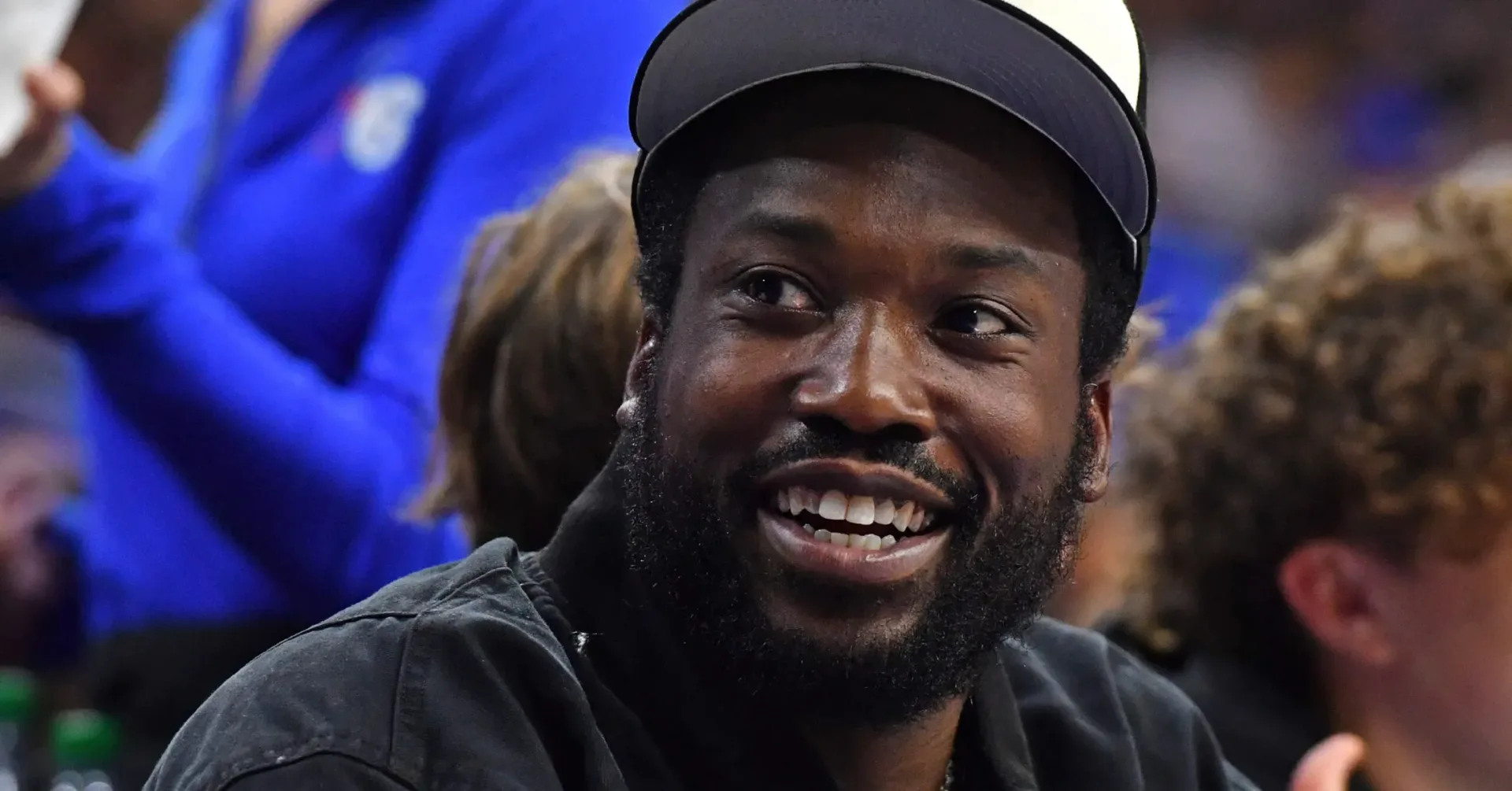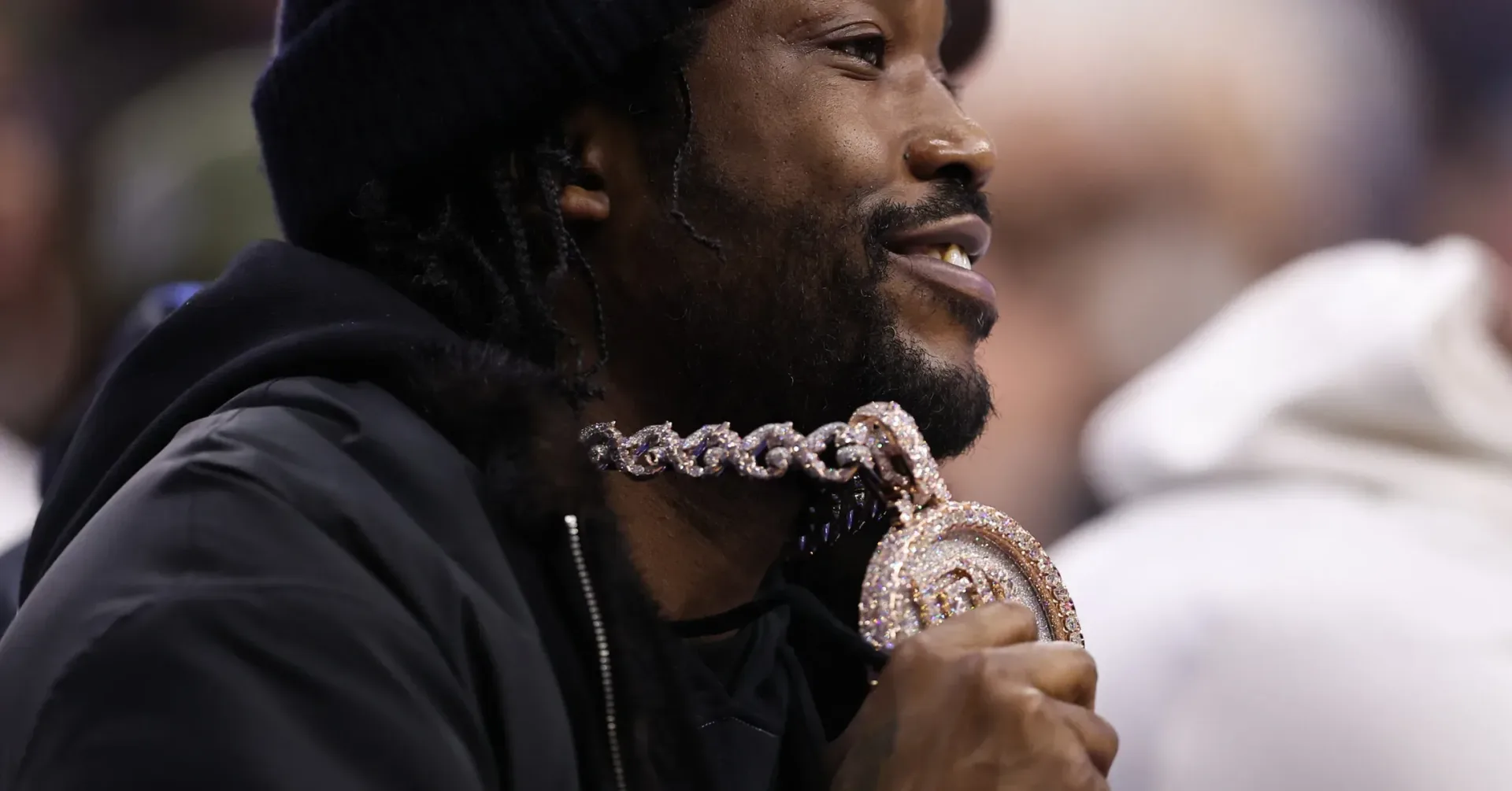
DJ Akademiks has offered a blunt assessment of Meek Mill’s place in the festival market, arguing that the rapper may be pricing himself out of bookings. The key detail is an unverified one: Akademiks claimed to have insider knowledge that Meek Mill is seeking roughly $300,000 for appearances at festivals including Rolling Loud.
Akademiks’ proposed answer was dramatic. He suggested a fee closer to $70,000 could get Meek Mill onto more festival lineups, in a mid-tier slot rather than a headlining position. It is a provocative bit of business advice, especially given the pair’s long-running friction, but the premise matters as much as the conclusion. There is no independently established booking quote in the available information, no published festival budget, and no confirmation from Meek Mill or a representative.
That means the story is not that a $300,000 rate has been proven. It is that Akademiks has publicly framed the alleged rate as a problem—and, in doing so, turned a personal feud into a wider discussion about how artists weigh money, billing and visibility.
What Akademiks is actually arguing
Akademiks’ analysis rests on a simple cost-versus-demand calculation. In his telling, $300,000 is a level of compensation a festival would reserve for a major headline draw. If a promoter does not view Meek Mill as a suitable main attraction at that price, then the artist may be left off the lineup entirely rather than moved lower down the bill.
His suggested $70,000 figure is meant to change that equation. A reduced quote, Akademiks argued, could make Meek Mill a more feasible mid-tier booking: a recognizable name capable of strengthening a poster and attracting fans, without commanding the financial commitment associated with a top-billed act.
Booking rate is the negotiated fee an artist or their representatives seek for a performance. It is not necessarily the amount ultimately paid, since individual deals can be shaped by event scale, billing, timing and other terms. Likewise, a headliner is generally positioned as one of the principal attractions of an event, while a mid-tier performer occupies a lower but still visible place on the lineup.
Those labels are useful shorthand, but they should not be mistaken for fixed rankings. An artist’s fit can change from one event to the next. Akademiks’ point is specifically that the stated price, if accurate, may not match the level at which festivals currently want to deploy Meek Mill.
The major caveat: the central number is an allegation
The strongest version of Akademiks’ argument depends on facts the public has not been shown. His statement was presented as insider information, not as a documented offer sheet or a confirmed agreement. The same goes for the claim that festivals would decline to book Meek Mill because an interest-to-cost balance no longer works.
That does not automatically make the argument wrong. It does mean readers should separate the hypothetical business logic from the underlying allegation. If the assumed $300,000 quote is inaccurate, incomplete, tied to a particular type of appearance, or no longer current, the suggested $70,000 correction is built on unstable ground.
There is also no public evidence here that Meek Mill is actively pursuing any particular festival, that Rolling Loud has rejected him, or that he has received any specific booking offer. Akademiks offered his interpretation of a market situation, not a verified account of negotiations.
That distinction is important because entertainment-business commentary often compresses complicated decisions into one clean number. A fee can become the headline, while the terms, expectations and goals behind it disappear. In this case, there is not enough supplied information to treat the proposed figures as established facts.
Visibility versus value is not a clean trade
Even as a hypothetical, the advice exposes a real strategic tension. A lower rate could mean more appearances and more opportunities for audiences to see an artist live. Akademiks’ position is that repeated festival exposure could help Meek Mill regain momentum and remind crowds of the strength of his catalog.
But frequency is not the only consideration. A booking rate can also communicate how an artist and their team value the performance. Dropping from an alleged $300,000 to $70,000 would not simply mean accepting more shows; it could alter the business framing around the artist. Whether that trade is worthwhile depends on aims that are not public in this case.
For an artist, the relevant question is not necessarily, “Can I get on more posters?” It can be, “Which appearances support the career I want to build?” A larger number of mid-bill bookings may improve visibility, while fewer, higher-paid shows may protect a different perception of value. Neither choice is automatically correct.
Akademiks clearly favors the visibility route. His argument assumes that Meek Mill’s current priority should be renewed festival presence and that a lower rate is the most direct way to achieve it. That is plausible as a theory, but it remains a theory without confirmation of Meek Mill’s actual asking price, his desired volume of live dates or the offers available to him.
A feud frames the advice
The comments also arrive after a notably hostile period between the two men. Their conflict has lasted for more than a decade, and it reportedly became especially intense in recent weeks, with Meek Mill seeking Akademiks’ address while Akademiks displayed his weapons collection. The immediate temperature has since cooled, but that history makes it difficult to view the booking commentary as detached industry analysis.
Adversarial relationships can sharpen commentary, sometimes producing a critique that sounds more definitive than the evidence supports. Akademiks may believe the advice is constructive, and he did present a practical route back to more festival appearances. Yet the long-standing dispute gives the remarks an unavoidable edge. This is not a neutral consultant presenting a confidential market report; it is a commentator addressing the business choices of someone with whom he has repeatedly clashed.
For Meek Mill, that context changes the practical meaning of the exchange. There is no indication that he requested the advice or accepted its assumptions. The debate exists largely because Akademiks chose to make his estimate public.
What can—and cannot—be taken from the debate
The most supportable takeaway is narrow: Akademiks thinks Meek Mill would be booked more often at festivals if he charged substantially less. He believes the alleged $300,000 figure puts Meek Mill in a headliner-priced category without sufficient festival demand at that level, while $70,000 would suit a mid-tier role.
The claims that cannot be established from the available material are equally significant:
- That Meek Mill currently charges $300,000 for festival appearances.
- That any named festival has turned him down because of his price.
- That $70,000 would secure more bookings.
- That festival promoters universally assess his live value in the way Akademiks describes.
Meek Mill’s record is also larger than a debate over one alleged price point. Akademiks himself acknowledged that the rapper has classic records, even while arguing that recent years have been difficult. A lasting catalog may remain meaningful to listeners regardless of whether a promoter sees a particular fee as workable.
That difference is worth keeping in view. Cultural impact and a festival’s budget calculation are related, but they are not identical measurements. One reflects an artist’s connection with audiences and body of work; the other reflects a specific event’s assessment of cost and lineup placement.
Why the conversation resonates beyond one rapper
Part of the appeal of the argument is its gaming-like clarity: adjust one stat, unlock more opportunities. Lower the number, get more festival bookings. But real negotiations are rarely so linear. The public does not have the information needed to see every variable, and the figures at the center of this discussion have not been independently corroborated.
Still, Akademiks has identified a recognizable dilemma for any established artist confronting a shifting live market: is it better to preserve a premium asking price, or take a lower fee in exchange for broader exposure? The answer can depend on goals, timing and the opportunities actually on the table. It cannot be settled solely by an outside commentator’s estimate.
For music fans, festival lineups are only one way artists remain present. Physical releases and collector-focused events remain another part of the wider music ecosystem, as seen in this rundown of Record Store Day Black Friday 2026 exclusives. That is a different market from live booking, but it underlines a broader point: audience attention can be built through more than one channel.
For now, the specific numbers around Meek Mill should be treated as disputed commentary rather than confirmed business reporting. Akademiks has supplied a sharp diagnosis and a clear prescription. What remains unknown is whether the diagnosis begins with an accurate fee, and whether Meek Mill would see more bookings as the right measure of a comeback at all.