Record Store Day Black Friday 2026 has a simple premise and a very complicated shopping list: roughly 185 exclusive releases are scheduled to reach participating independent record stores the morning after Thanksgiving. The roster spans contemporary pop, hip-hop, soundtrack fandom, archive-grade jazz, classic-rock live recordings, anniversary reissues and a meaningful number of CD editions alongside the expected vinyl avalanche.
That makes this event less a single genre moment than a compressed test of how different kinds of music fans collect. Some releases offer music that was previously digital-only. Others unearth concerts or studio sessions, collect hard-to-find material, or finally put older EPs and albums on vinyl. Then there are the elaborate physical editions: colored records, box sets, posters, etchings, randomized photocards and special packaging. The music may be the headline, but format and presentation are a major part of the appeal.
For collectors, the important distinction is that these are not all the same sort of “exclusive.” A previously unreleased live set serves a different purpose from a colored-vinyl first pressing of an existing album, and both differ from an album repackaged with bonus tracks or a soundtrack loaded with inserts. Looking at the specific edition, the stated quantity and the music included is more useful than treating every Record Store Day title as interchangeable.
The contemporary releases likely to draw early attention
Noah Kahan has two Black Friday releases in the lineup. The larger is The Last of the Bugs, a 12-inch EP limited to 10,000 U.S. copies. It gathers four bonus tracks associated with The Great Divide in digital formats: “Orbiter,” “Lighthouse,” “Staying Still” and “A Few of Your Own.” “Orbiter” has also become part of Kahan’s stadium-show repertoire, giving the EP an appeal beyond simply completing a digital bonus-track collection.
Kahan’s other title is a 7-inch single for “Draw You Out,” his song connected with The Hunger Games: Sunrise on the Reaping, pressed on “porcelain powder” vinyl. The split between a four-track EP and a standalone soundtrack-linked single gives fans a practical choice: pursue the bigger release for additional music, the smaller one for the song and format, or both.
Katseye enters the event with KATSEYE: The Dance Breaks, a 5,000-copy yellow-vinyl 12-inch EP. It contains tour-specific live dance-break arrangements of “Debut,” “Gnarly” and “Gabriela” from the Beautiful Chaos tour. One side carries the three arrangements and the reverse features an etching, meaning this is not a conventional full two-sided EP. Each copy also includes two randomly selected photocards from a six-card pool.
That last detail matters for collectors. A randomized insert means copies can differ even when the record itself is identical. It is a format familiar to pop fandom: completion-minded buyers may want specific cards, while listeners who chiefly want the music have no reason to assume every copy contains the same extras.
Sombr’s debut EP, in another life, is set for its vinyl debut as a 7,500-copy silver 12-inch. Benson Boone’s breakout EP Walk Me Home likewise reaches vinyl in a 5,500-copy black-and-white “galaxy” edition with a 12-by-24-inch insert. Both releases exemplify one of the clearest themes in this list: early work that was not part of its artist’s initial vinyl run can later become attractive to fans trying to document a catalog physically.
Victoria Monét’s Life After Love, Part 1 & Act 2 is among the smallest highlighted pressings, at 1,500 copies on brown-and-tan galaxy vinyl. The two EPs had been physically available only separately; this edition joins them as one release. The material is presented as an emotional progression, beginning with the immediate aftermath of a breakup and moving toward renewed confidence and sensuality. In collecting terms, its appeal is not merely color: it combines two related projects in a unified format.
Other current-catalog draws include the first vinyl edition of Playboi Carti’s Music – Sorry 4 Da Wait, a 5,000-copy red double LP, and Zayn’s 18-track KONNAKOL (Deluxe Edition), limited to 3,000 copies on “concrete jungle” vinyl. JID’s 4,000-copy Live From NPR’s Tiny Desk preserves a performance with live band and background singers, with material ranging from “Never” and “Surround Sound” to “Kody Blu 31.” Carly Rae Jepsen’s Day and Night (Continued), meanwhile, puts eight previously digital-only bonus tracks on vinyl, including “Reaching for a Star” and “In Pure Faith.”
Live archives, sessions and historically focused releases
Several of the lineup’s most substantial projects are built around recordings from particular nights or sessions. Bruce Springsteen & the E Street Band’s Live at Tower Theater Philly 1975 documents an 18-song New Year’s Eve show from the group’s Philadelphia run in the period after Born to Run. It will be available as a 14,500-copy four-LP set and a 3,720-copy two-CD edition. The vinyl runs across eight sides, and the cover of “Quarter to Three” occupies one full side by itself.
Prince’s 3121 Las Vegas Live returns to a January 2007 performance during his six-month Las Vegas residency, shortly after the 3121 studio album and days before his Super Bowl halftime appearance. The more than two-hour program arrives in a 9,400-copy, three-LP Crystal Blue Caraçao edition and a 2,700-copy two-CD version. Alongside hits, it includes covers drawing from artists including Chuck Berry, the Beatles, Janet Jackson, Mary J. Blige and Gnarls Barkley, plus a guest appearance by Mavis Staples on “I’ll Take You There.”
Billy Joel’s Billy Joel Tonight is a two-LP black-vinyl release limited to 4,600 copies. It comes from Joel’s December 5, 1976 performance at Connecticut College for his first television special, with “I’ve Loved These Days” and “Souvenir” added from a production session the following day. The release is presented in stereo from a new mix of the original multitracks. A multitrack recording captures instruments and voices on separate tracks, which allows a later mix to balance the elements rather than relying on one fixed live stereo recording.
Joni Mitchell’s Live at Carnegie Hall – 1972 isolates her second solo Carnegie Hall appearance as a standalone 5,000-copy, 180-gram black-vinyl double LP in a gatefold jacket. The performance had previously appeared within the Joni Mitchell Archives, Vol. 3 CD box. “A Case of You” and “The Circle Game” are among the songs included.
For jazz listeners, Art Blakey & The Jazz Messengers’ Blue Moon Over Paris – ORTF Recordings 1963-1968 offers two previously unheard Paris sets across two LPs, with 3,300 copies planned. The 1963 performance features Freddie Hubbard, Curtis Fuller, Wayne Shorter, Cedar Walton, Reggie Workman and Blakey; its program includes “Moon River” and “Caravan.” The 1968 set has Bill Hardman, Julian Priester, Billy Harper, Ronnie Mathews, Lawrence Evans and Blakey. This is the kind of archival release where personnel is a central part of the story: the lineups differ across the two sets, so the package captures distinct versions of the band rather than a single repeated concert formula.
The Doors’ 1966 takes a different archival route. Its 28 tracks center on multiple takes, chatter, false starts and complete performances of just two songs, “Moonlight Drive” and “Indian Summer,” from an August 29, 1966 Sunset Sound session for the band’s debut album. Neither song made the final album. For a listener seeking a conventional hits compilation, this is plainly not it. For those interested in the recording process, however, repeated takes show how a song develops before a final master is selected.
Soundtracks make the physical extras part of the package
Two major soundtrack projects underscore how music releases increasingly overlap with character art and collectable ephemera. Wicked + Wicked: For Good combines the two soundtrack releases in a pink-and-green vinyl boxed set limited to 3,000 copies. Its small stated run stands out in a field where several high-profile titles reach five figures, though availability will still ultimately depend on store allocation and local demand.
KPop Demon Hunters has a larger 10,000-copy pressing on “Derpy Sussie splatter” vinyl. This version adds newly created cover art by production designer Mingjue Helen Chen and visual development artist Marion Bordeyne, holographic art on the front cover and triple gatefold, three of six mini inserts, one of three holographic mini inserts, a sticker sheet and an oversized poster. That is a lot of material around the record itself, and the randomized inserts again mean that not every sealed copy will contain identical paper goods.
The broader list reinforces the soundtrack presence with Wicked: The Complete Soundtrack on four LPs and a The Hunger Games: Sunrise on the Reaping Cruiser record player package with an exclusive 7-inch. These editions are distinct from a normal album reissue because the object can matter as much as the audio: artwork, inserts and franchise affiliation become part of why a buyer seeks a particular physical version.
How to read the formats and quantities
Limited-copy figures are useful information, but they are not a forecast of which release will be hardest to find. A 1,500-copy release may be scarce nationally but have modest local demand; a 10,000-copy release attached to a heavily engaged fandom may be the bigger challenge at a given shop. The stated numbers in this lineup apply to the United States only, which is an important limitation when comparing editions.
Format descriptions also deserve a plain-language read:
- LP: A long-playing record, generally a full album or a substantial program. A double or triple LP spreads the program over more discs.
- EP: An extended play release, usually shorter than an album. In this lineup it can mean a compact collection of bonus tracks, early material or special arrangements.
- 7-inch: A smaller record format commonly used for a single, often with one song per side.
- Gatefold: A sleeve that opens like a book, creating additional space for artwork, notes or photos.
- Etching: Decorative artwork physically cut into a non-playable record side. It looks striking but does not add music.
- Picture disc and zoetrope LP: Editions where visual presentation is a defining feature. The list includes Genesis’ Land of Confusion as a 12-inch picture disc and George Harrison titles George Harrison and Thirty Three & 1/3 as zoetrope LPs.
The 2026 selection is also not vinyl-only. Springsteen, Prince, Frank Black, Go Radio, Pat Metheny, The Music Machine, The Runaways, Tangerine Dream and Bill Withers are among the artists with CD editions listed. That matters for shoppers who want the music but do not collect records, as well as for archive-focused projects where a CD version offers another route to the same performance.
A wide roster beyond the marquee names
The full program reaches far beyond the spotlighted titles. Rock and pop fans can find releases tied to the B-52s, Barenaked Ladies, Cher, Earth, Wind & Fire, Eagles, Florence + the Machine, Genesis, Hootie & the Blowfish, INXS, Joan Jett & the Blackhearts, Mötley Crüe, Stevie Nicks, the Rolling Stones, the Traveling Wilburys and XTC. The archival and live slate includes Miles Davis, Bill Evans Trio, Stan Getz, the Grateful Dead, Jerry Garcia Band, Charlie Parker, Bill Withers and Bobby Womack.
Hip-hop and adjacent releases include 2Pac’s Pac’s Life 20th-anniversary edition, Lil Wayne’s No Ceilings, Rae Sremmurd’s SremmLife2 10th-anniversary edition, Biz Markie’s “Nobody Beats The Biz,” Daryl “DMC” McDaniels’ America, NAV/Metro Boomin’s Perfect Timing and Czarface’s Special Presentation: Silver Age. There are also releases from Coco Jones, Elmiene, PARTYOF2, Poppy, Rainbow Kitten Surprise, Thrice and Royel Otis, among many others.
Some choices are especially tailored to collectors of a band’s catalog: 10,000 Maniacs’ Candy Everybody Wants — The Complete Elektra Studio Albums is a 2,600-copy six-LP box containing the group’s first five studio albums—Hope Chest, The Wishing Chair, In My Tribe, Blind Man’s Zoo and Our Time In Eden—plus a rarities disc. The albums have been remastered under the oversight of former lead singer Natalie Merchant, and a CD edition is also planned.
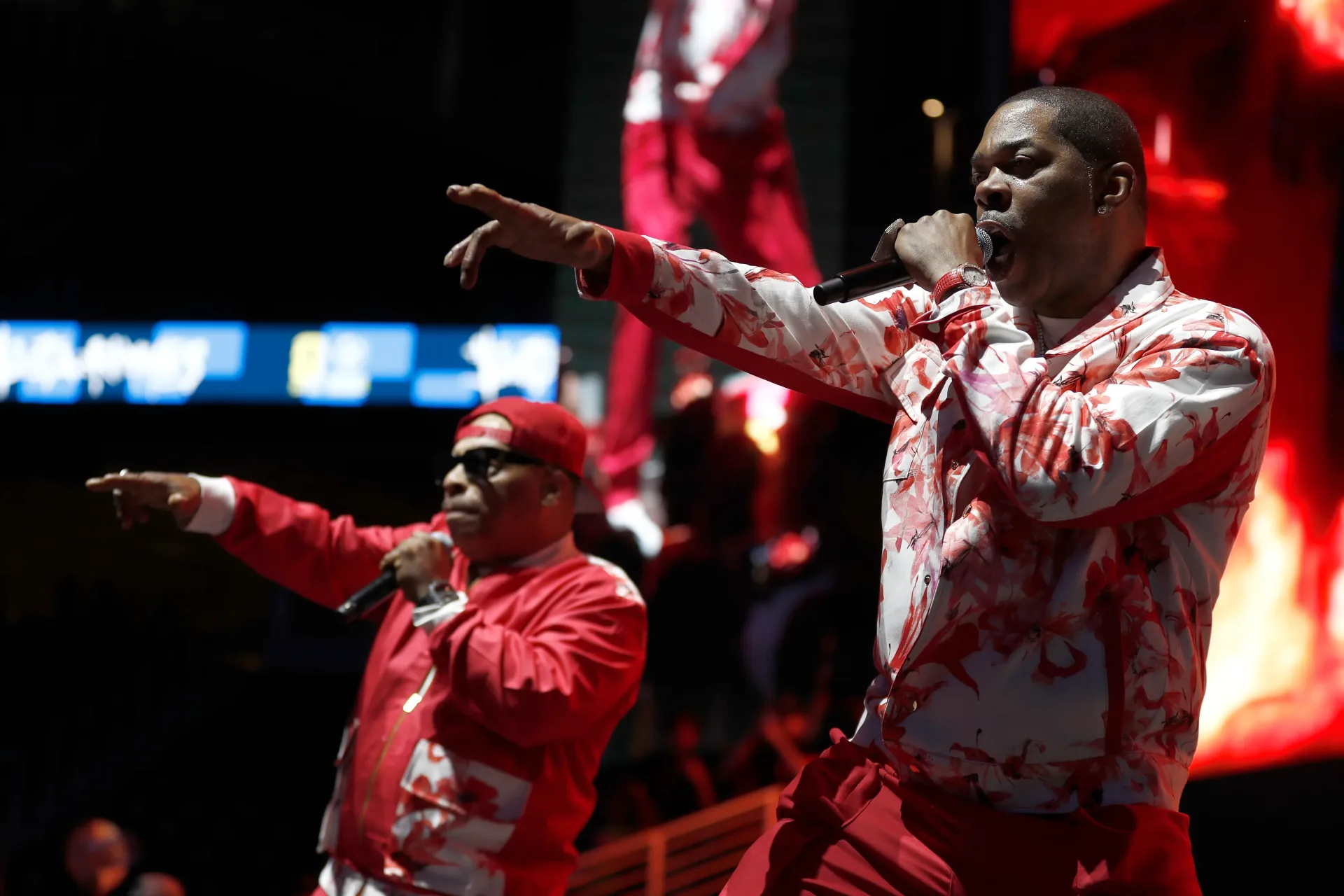
For buyers building a focused list before the bins open, the useful approach is to identify what each item uniquely provides: previously unreleased audio, a vinyl debut, a new configuration, a specific live date, bonus tracks, or physical extras. Shoppers can also keep an eye on wider pop-culture releases connected to music and fandom, such as Busta Rhymes’ discussion of J Dilla’s lasting influence.
Record Store Day Black Friday’s 2026 slate is too broad for any one collector to chase in full, which is probably for the best. Its real strength is range: a Kahan fan can find digital extras on vinyl, a Springsteen listener can choose LP or CD, a Doors devotee can dig into session fragments, and soundtrack collectors can pursue elaborate franchise packages. The colored wax is plentiful, yes—but so are genuine catalog gaps being filled.