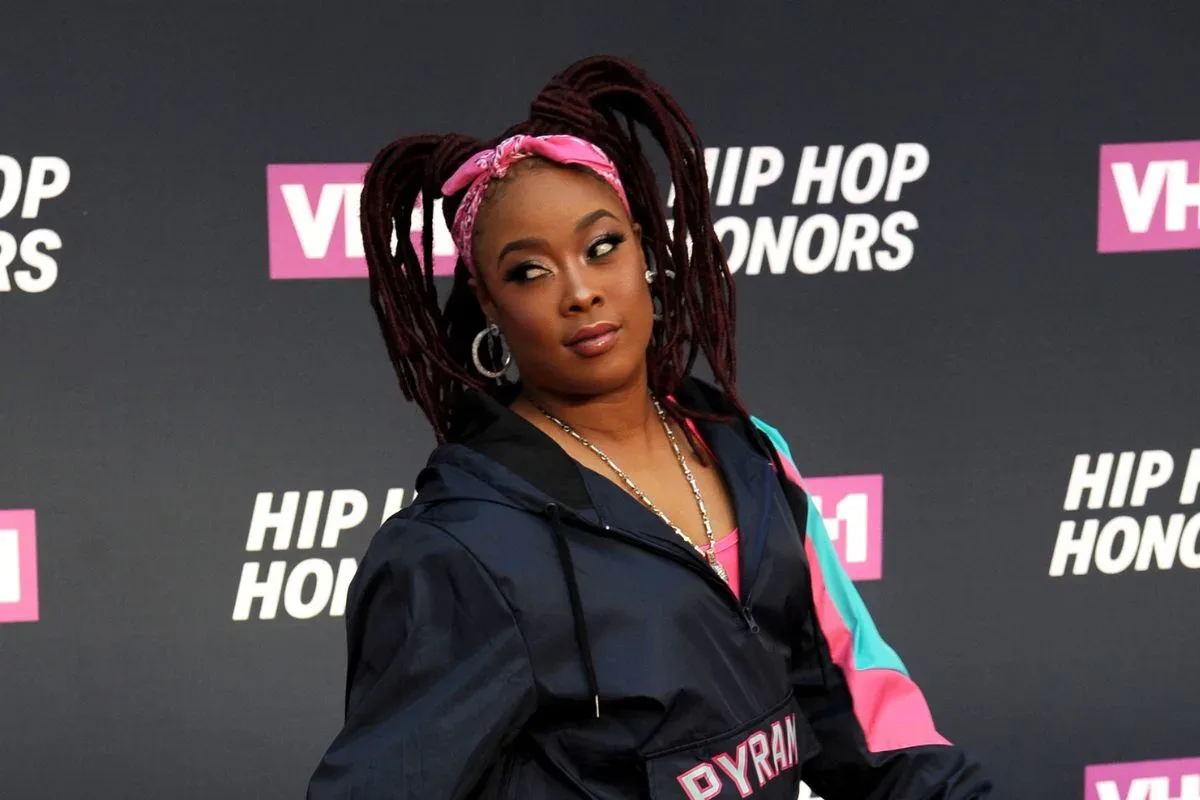
Da Brat has revealed that holiday music she recorded with Mariah Carey and Jennifer Hudson remains unreleased, leaving a particularly intriguing what-if hanging over the season. The Chicago rapper has made recordings with both singers over the years, but none has emerged as a released holiday track under her name.
That distinction matters as Da Brat takes on MC duties for The Hip Hop Nutcracker in her hometown. A Christmas-season production might seem like the ideal setting to debut a festive record, but she is instead relying on the songs audiences already know. Her role begins with a medley of her own material, then returns near the end of the show when she introduces the dancers.
For fans, the immediate practical takeaway is simple: the reported Mariah Carey and Jennifer Hudson collaborations are not being presented as newly available music, and no release date or rollout has been identified. Their existence is notable, but it should not be confused with a confirmed forthcoming single, album, or seasonal reissue.
An unreleased holiday collaboration is not a release plan
Holiday songs occupy a strange space in music. They are designed for a recurring annual moment, yet an artist only has a narrow window in which a new festive track feels timely. A recording can be finished, partially finished, shelved, or simply held back for years; the available information establishes only that Da Brat recorded holiday music with Carey and Hudson and that the songs have not been released.
That is enough to make the pair of collaborations compelling. Carey is closely linked with contemporary holiday pop, while Hudson’s vocal range and roots in R&B and gospel make the prospect of a seasonal recording with Da Brat an especially interesting stylistic match. But the details that would tell listeners what these recordings actually sound like—titles, credits, recording dates, arrangements, and whether Carey and Hudson appear on separate tracks or the same songs—have not been provided.
Da Brat has also said she continues to write gospel and R&B. At the same time, she has expressed caution about releasing music she values without confidence that it will connect with people as it once did. That does not establish why these particular holiday recordings remain unheard, but it does give useful context to her approach: creating music and deciding when to share it are separate decisions.
What Da Brat is doing in The Hip Hop Nutcracker
The Hip Hop Nutcracker does not turn into a Da Brat concert. Her participation is structured around a recognizable opening medley and a late-show return to introduce the dancers. Most of the narrative is handled wordlessly by the dancers themselves.
Da Brat has stressed that the show is not simply choreography attached to a beat. It is a story told through movement. That framing is important because the production adapts the familiar Nutcracker premise rather than treating Tchaikovsky’s music as background for a standalone hip-hop showcase.
Related coverage includes Da Brat’s Mariah Carey and Jennifer Hudson Holiday Songs Remain Unreleased.
The approximately two-hour show, including intermission, combines Tchaikovsky’s score with hip-hop choreography, a DJ, and a violinist. Its setting is contemporary New York City, with digital graffiti used as part of the visual environment. In other words, the production’s remix is theatrical as well as musical: the score remains central, while movement, performers, and setting relocate the story into a modern urban frame.
Technical context: what an MC does here
In hip-hop, “MC” commonly means a rapper or master of ceremonies. Within this production, Da Brat’s work appears to lean into both meanings. She performs portions of her established catalog and serves as a live presence connecting key points in the evening. The dancers carry the plot without spoken dialogue, so her role is additive rather than a replacement for the dance-led storytelling.
That setup also explains why familiar verses are a sensible choice. A theatrical holiday audience may include dedicated hip-hop listeners, fans attending for the seasonal tradition, and people curious about the hybrid format. Well-known material provides an easy point of entry without asking the show to pause and introduce an unfamiliar new song.
Da Brat has said she intends to use recognizable verses and encourage audience participation. It is a deliberately communal approach, suited to a holiday performance that joins a classical score to a live hip-hop atmosphere. The goal is not to present an unreleased collaboration as a surprise centerpiece; it is to bring energy and recognition to a production that has its own story to tell.
A notable role in a long-running production
Kurtis Blow has also served as an MC for The Hip Hop Nutcracker. Da Brat has described herself as the first woman rapper to open the show and noted her excitement at filling a part usually associated with him. The point is not merely a change in billing. It alters the voice greeting the audience at the beginning of the evening while preserving the production’s basic dance-and-story format.
She has already appeared with the show in Washington, D.C., where relatives were able to see her in the production for the first time. The Chicago dates bring that work to her home city, adding a personal dimension without changing the core reason she is onstage: to support the performance with familiar music and a live MC presence.
The Chicago engagement is listed at the Cadillac Palace Theatre from November 24 through November 29. Anyone hoping to hear a Da Brat holiday song alongside Carey or Hudson should keep expectations grounded. The available details point to Da Brat performing catalog material, not unveiling the unreleased recordings.
Why the unreleased songs still matter
It is easy for unreleased music to become a rumor-shaped object: listeners fill the silence with assumptions about a track’s quality, status, or likelihood of arriving. Here, restraint is warranted. The confirmed point is unusually strong—a holiday recording involving Da Brat and two major singers exists—but everything beyond that remains unknown.
Still, the disclosure draws attention to an underappreciated facet of Da Brat’s present-day creative work. She is not limited to performing past rap hits. She is writing in gospel and R&B, weighing how new work might land, and taking a role in a holiday stage production built around artistic translation. Tchaikovsky’s score, hip-hop choreography, digital visuals, a DJ, and violin all occupy the same production.
That blend is also why the decision to use existing verses makes sense. A live theatrical performance needs clarity and momentum. Recognizable songs invite the crowd in quickly, while the dancers, rather than dialogue or an MC’s narration, continue the story. It gives Da Brat room to make the show feel personal without overwhelming its larger ensemble format.
For now, the seasonal wish list remains short and specific: listeners know there are unreleased holiday recordings with Mariah Carey and Jennifer Hudson, but there is no indication of when—or whether—they will be released. Chicago audiences, meanwhile, can expect a different kind of holiday appearance: Da Brat guiding the room with established hits as The Hip Hop Nutcracker brings its modern retelling to the Cadillac Palace Theatre.
Holiday entertainment increasingly spans stage productions, concerts, streaming events, and sports programming; one recent holiday programming move illustrates how crowded that seasonal attention economy can be. Da Brat’s approach is more direct: lean on the music people recognize, let the dancers tell the story, and leave the unreleased tracks as a tantalizing possibility rather than a promise.