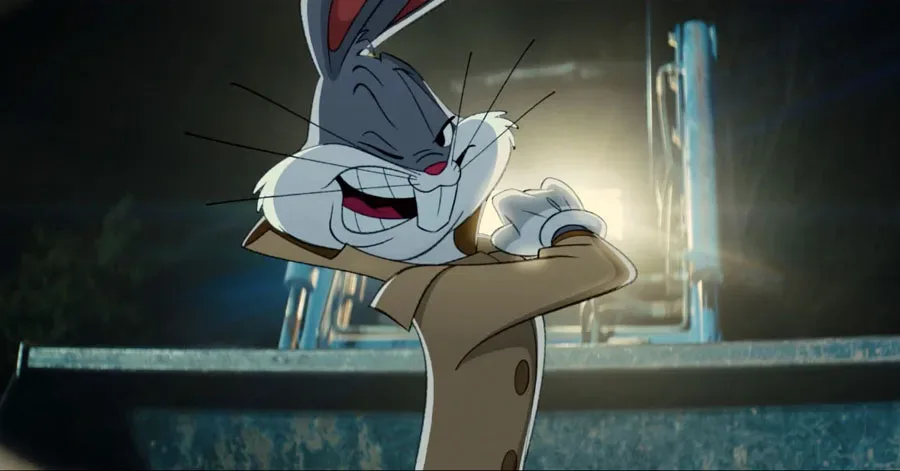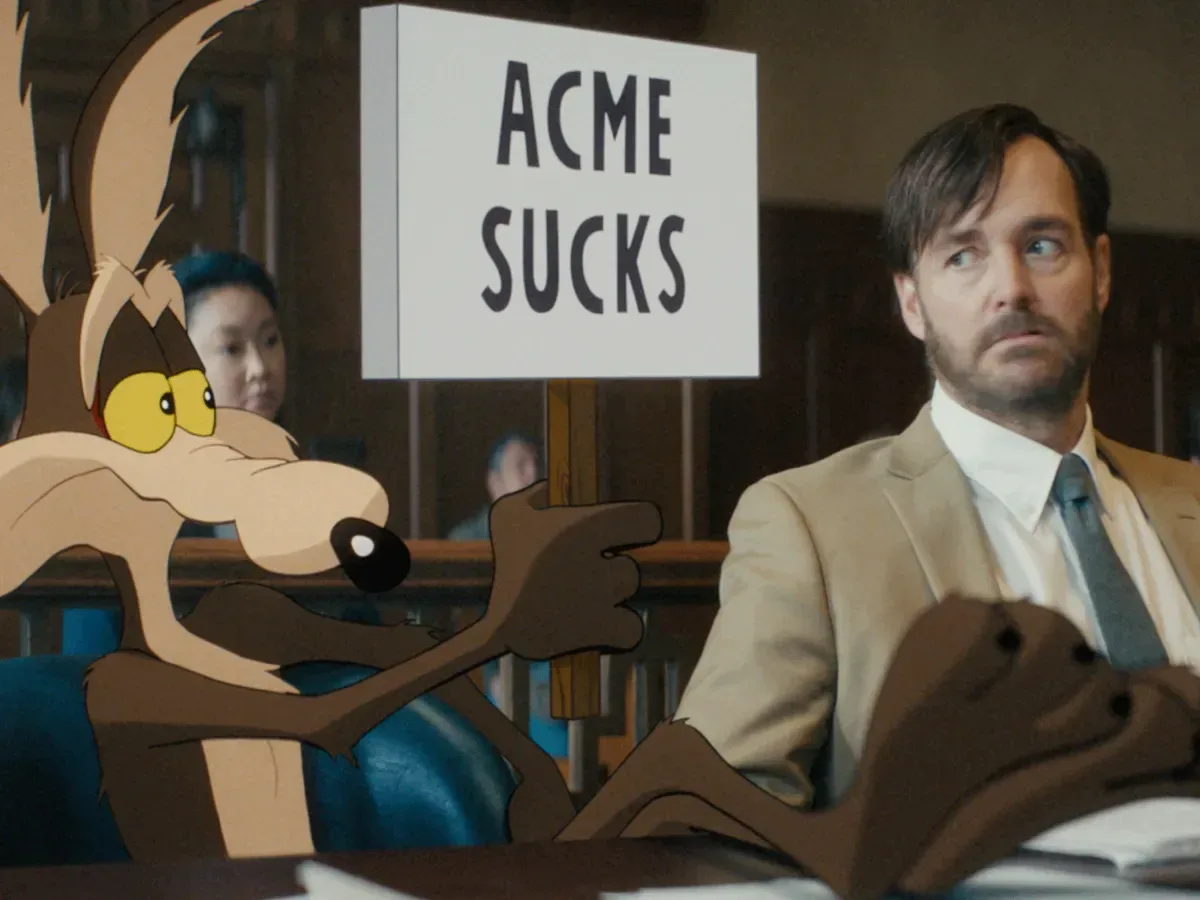
Chris DeFaria, a producer on Coyote vs. Acme and former Warner Bros. animation and innovative technology president, has remembered Eric Bauza as a performer who approached the Looney Tunes catalogue as a responsibility rather than merely a prestigious collection of roles.
DeFaria said Bauza died the previous night and called him a friend and colleague whose work helped carry an important animation legacy forward. Bauza voiced characters including Bugs Bunny, Daffy Duck, Porky Pig and Marvin the Martian, alongside many others. In DeFaria’s account, the performer’s contribution was defined not only by recognizable vocal accuracy, but by an unusually serious commitment to the comic identities and traditions behind each character.
That distinction is central to understanding why long-running cartoon voices matter. A character voice is not simply an accent, a pitch or a catchphrase. It also governs timing, attitude, musicality, emotional shifts and the rhythm of a joke. When audiences recognize Bugs’ cool confidence, Daffy’s frantic indignation, Porky’s hesitant delivery or Marvin’s poised menace, they are hearing a set of performance choices as much as a particular sound.
A stewardship role, not an imitation exercise
DeFaria characterized Bauza as someone who wanted the Looney Tunes characters to be respected, protected and kept vivid for audiences who did not grow up with the earliest cartoons. That is a valuable framing for a body of work built across generations. Iconic animated figures must remain recognizable enough to preserve their identity, while performers and filmmakers still need room for a fresh scene, a contemporary production and a new audience.
For more context, explore Castlevania: Belmont’s Curse Mirror Fast Travel Guide: How to Skip the Ferryman.
In that sense, voice continuation is a balancing act. An overly literal imitation can feel mechanical: technically close in sound but disconnected from the character’s comic instincts. Too much reinvention can leave a familiar character feeling unmoored. DeFaria’s remembrance argues that Bauza found the more difficult middle path. He did not just reproduce vocal surfaces; he understood how each character operated in a gag.
DeFaria described this as learning to think like Bugs, scheme like Daffy, and convey Porky’s nervous stumbles. These are performance objectives rather than a list of vocal tricks. They explain why a multi-character performer needs more than range. Range is the ability to move between distinct sounds. Character acting is the ability to give those sounds motives, reactions and comic logic.
For DeFaria, Bauza treated the characters as a trust placed in his care, and brought both affection and mischief to that work.
The word “stewardship” is particularly apt for an established animation ensemble. Looney Tunes has never depended on one uniform mood. Bugs often wins with patience and audacity. Daffy can turn a minor frustration into a grand catastrophe. Porky’s vulnerability changes the pace around him. Marvin’s formal calm makes the threat or absurdity funnier. A performer switching among them has to preserve those differences clearly, even when a production moves quickly between voices.
Mel Blanc’s shadow—and Bauza’s respect for it
DeFaria also emphasized Bauza’s reverence for Mel Blanc, whose voice work helped establish many of the characters’ best-known identities. Blanc died in 1989, after which the roles he had performed were distributed among multiple actors. The history matters because it underlines that these characters are bigger than any single recording session, while also acknowledging the enormous creative standard set by one of animation’s foundational voice artists.
Bauza reportedly used a memorable metaphor for that inheritance: he saw himself as borrowing Blanc’s Cadillac and promised to give the keys back when he was finished. It is a lighthearted image, but it conveys humility. Rather than presenting the assignment as ownership, Bauza understood the roles as a temporary privilege attached to a much longer tradition.
For viewers, that kind of respect has practical effects. It can mean the performance protects the essential contrast among characters instead of flattening everyone into the same broad cartoon delivery. It can also mean jokes land with the familiar cadence people expect, without turning a production into an exercise in nostalgia. The characters remain accessible because their personalities are legible, not because every line is copied from an earlier era.
DeFaria believed Bauza took on nearly all of the characters Blanc had once carried, an achievement he described as rare since Blanc himself. The claim highlights the scale of Bauza’s versatility. It is one thing to be known for one defining character; it is another to move across an ensemble whose members require sharply different vocal placement, energy and comedy.
What “self-taught” says about the craft
DeFaria said Bauza was largely self-taught, building his ability through curiosity, practice and a love of performance. That background makes the tribute more than a celebration of natural talent. Voice performance often demands sustained technical control: matching a character across takes, delivering dialogue at a particular pace, responding to a director’s adjustment, and preserving clarity while a character becomes excited, flustered or quiet.
It also demands close listening. A successor voice performer has to identify what makes a character specific. That may include tonal qualities, but also pauses, emphasis, breathiness, sentence shape and the relationship between the voice and the character’s physical behavior. DeFaria’s account suggests Bauza did this listening deeply enough to make the roles feel inhabited instead of simply replicated.
For aspiring actors, the broader lesson is not that an impression alone is the endpoint. A recognizable sound may get attention, but a durable performance requires intention. Why is the character speaking this way in this moment? What are they trying to get? Where is the joke turning? Those questions help separate a vocal resemblance from acting.
The tribute also points to the collaborative side of voice work. DeFaria said he spent time with Bauza at Warner Bros. and later worked with him on Coyote vs. Acme. That places Bauza’s Looney Tunes work within an ongoing production environment, not only isolated clips or convention-stage demonstrations. A performer’s contribution includes how reliably and creatively they help a team bring a scene to life.
Readers looking for a related account of DeFaria’s remembrance can find this report on his tribute to Bauza’s Looney Tunes stewardship.
Humor and humanity behind the characters
DeFaria’s recollection did not portray Bauza solely as a careful custodian of a major franchise. He also remembered a “devilish” wit and a mischievous energy that, in his view, made the characters feel renewed while honoring prior performers. That combination helps explain the lasting appeal of Looney Tunes at its best: the material is carefully constructed, yet it needs a sense that the joke could still surprise everyone involved.
He closed with a personal anecdote about Bauza being late, imagining Bugs Bunny waiting impatiently before Bauza arrived with an excuse entertaining enough to earn immediate forgiveness. The joke is affectionate because it connects the man to the characters without confusing the two. It turns a familiar professional quirk into the kind of cartoon scene Bauza spent his career helping audiences believe in.
DeFaria’s tribute ultimately presents Bauza’s legacy as both artistic and custodial. He was praised for extraordinary vocal breadth, but also for recognizing that Bugs, Daffy, Porky and Marvin carry decades of audience memory. His task was not to place himself above that history. It was to keep it animated: responsive, funny, distinct and alive for whoever encountered the characters next.