Coyote vs. Acme has reached digital storefronts after completing the first stage of one of the more unusual release journeys for a major studio feature. The live-action/animation hybrid can now be rented for $19.99 or purchased digitally for $24.99, including through Prime Video. DVD, Blu-ray and 4K Blu-ray editions are also available to preorder, though a streaming-subscription destination has not been identified.
That home-release news matters because the film was once expected never to receive a public release at all. Produced in 2023 on a reported $70 million budget, the Looney Tunes project was scrapped that same year as part of a proposed $30 million tax write-off. Following sustained fan campaigns, its creators were eventually permitted to seek another distributor. Ketchup Entertainment subsequently brought the movie to theaters in August 2026.
The theatrical gamble appears to have given the film a meaningful second life. Its worldwide gross has passed $88 million, while some reporting has placed the total as high as $100 million. Those are notably different figures, so the higher estimate should be treated as an unconfirmed upper range rather than a settled final number. Still, the available totals establish that the movie did make it into theaters and found an audience after its previously uncertain fate.
A Looney Tunes premise built around the bill for every failed gadget
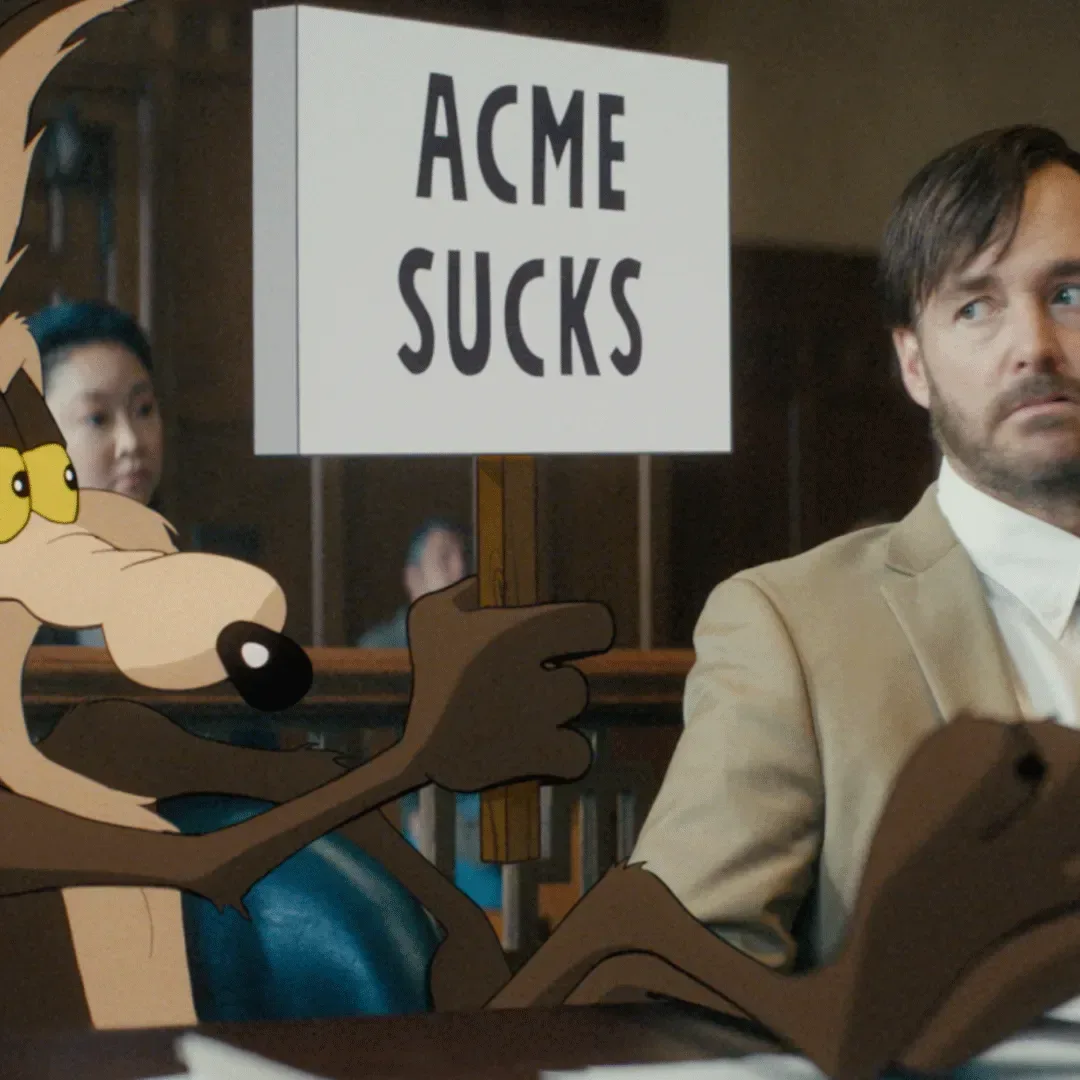
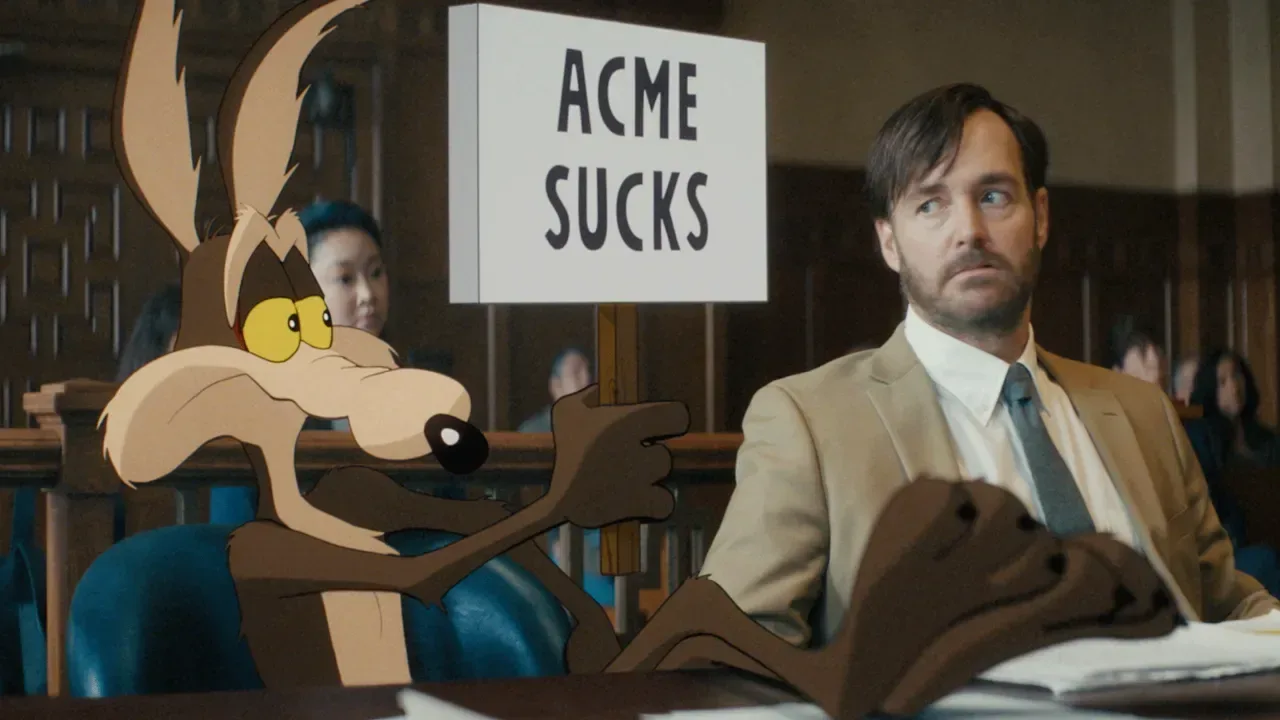
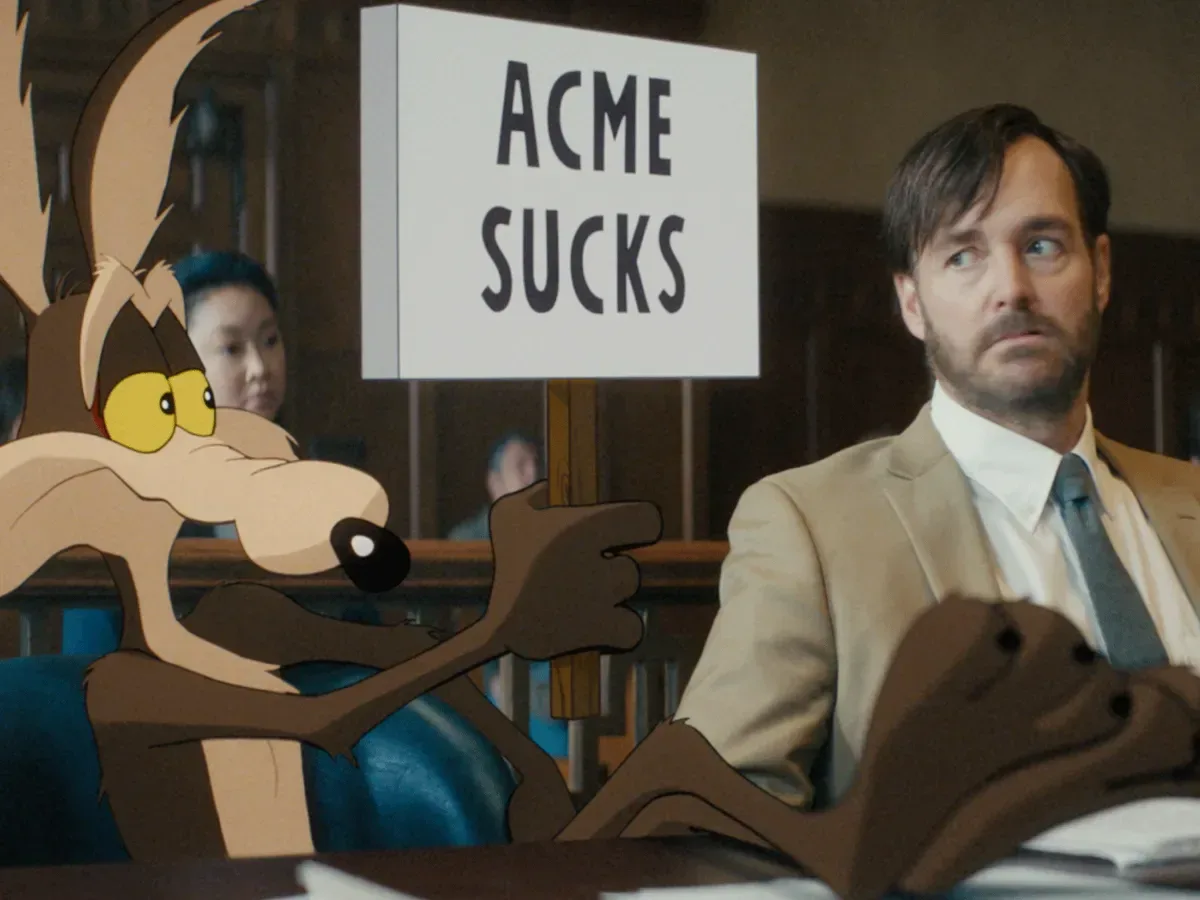
The central joke of Coyote vs. Acme is almost startlingly straightforward: after decades of explosions, falls, crushed limbs and catastrophic product failures, Wile E. Coyote decides to sue ACME Corporation. The famous cartoon pursuer finally treats every malfunctioning rocket, trap and device as evidence in a corporate case.
The film combines animated characters with a live-action setting, placing it in the broad tradition of hybrid productions such as Space Jam. Will Forte plays the struggling attorney who takes Coyote on as a client. John Cena plays Buddy Crane, the lawyer leading ACME’s side. The setup translates the familiar, nearly wordless Coyote-and-Road Runner routine into a legal-comedy framework without abandoning the premise that ACME’s products have an astonishing record of maiming their most loyal customer.
That distinction is important to the pitch. This is not simply a new chase cartoon with recognizable branding attached. The movie turns the long-running visual gag into its narrative engine: Coyote’s catalogue of defeats is both the character history and the basis of the lawsuit. The human lawyer gives that conflict a voice in court, while ACME becomes something more tangible than the convenient name stamped on every unreliable contraption.
What “digital” availability means right now
The current release is a transactional video-on-demand launch, often shortened to TVOD. In practical terms, it means viewers pay individually to rent or buy the title from a digital retailer instead of receiving it through a monthly streaming subscription. The listed prices are $19.99 for a rental and $24.99 for a digital purchase.
There is only a $5 difference between the stated options, but they serve different purposes. A rental is intended for a limited viewing period under the retailer’s terms; a digital purchase gives access through the purchaser’s account and library, subject to the storefront’s platform rules. Anyone deciding between them should check the specific retailer’s playback, device and account conditions before paying, particularly if they expect to rewatch the film rather than watch it once.
The move comes 32 days after the theatrical debut, a window described as relatively standard. A theatrical window is the period in which a movie plays in cinemas before it becomes available in another format. Windows vary from release to release, but the key practical point is simple: the digital edition does not signal a confirmed subscription-streaming arrival. No particular streaming service has been named for the movie at this point.
Physical media is on the way, but preorder details remain limited
For viewers who prefer a disc on the shelf rather than a title tied to a storefront library, Coyote vs. Acme is planned for DVD, Blu-ray and 4K Blu-ray. A 4K Steelbook edition has also been listed for preorder.
“4K” refers to Ultra HD video, a higher-resolution disc format than standard Blu-ray when paired with compatible equipment. A Steelbook is a collectible-style metal case rather than the standard plastic disc case. Neither label, by itself, establishes what bonus features or technical specifications will be included, and no detailed extras list is available here. Shoppers interested in a particular edition should therefore avoid assuming that every format carries identical packaging or supplemental material.
The physical plans are notable in their own right. This is a movie that went from a proposed write-off to a theatrical run, then to digital stores, while also receiving a range of disc editions. The result gives audiences more than one way to see it and gives collectors a route that is separate from the temporary nature of a rental transaction.
Why the release story has become part of the movie’s identity
Fan pressure does not guarantee a rescued movie will be released, much less that it will connect with an audience. In this instance, organized campaigns helped keep attention on a completed production after it was shelved. The eventual ability to shop the film to other studios created the opening for Ketchup Entertainment to acquire it for distribution.
It is worth separating the documented sequence from the broader claim sometimes attached to rescue campaigns. The evidence supports that fan outcry and coordinated efforts preceded the movie’s chance to find a new distributor. It does not prove that any single campaign, post or group alone caused the outcome. A distributor still had to take on the release, and theatrical audiences still had to buy tickets. The box-office performance suggests the film’s history may have created attention, but it cannot tell us precisely how much of each ticket sale came from curiosity, franchise affection, reviews or word of mouth.
Critical reaction was also positive in at least one prominent assessment, which awarded the film a 9 out of 10 and praised its understanding of why the classic Looney Tunes characters have endured. That response aligns with the film’s basic challenge: it has to make a decades-old slapstick formula feel suited to a feature-length story while preserving Coyote’s familiar comic misery.
The wider corporate backdrop remains unsettled. Paramount has emerged as the buyer in the major Warner Bros. deal described around the film’s release, after an antitrust-related pause, and executives have referenced theatrical-release stipulations. It is too early to turn Coyote vs. Acme into a definitive forecast for future animation investment. But the movie’s path does offer a concrete reminder that theatrical distribution, digital ownership and physical media can all still matter for animated projects—especially ones whose prospects once looked finished.
For now, the uncomplicated answer is that the Coyote has made it home: viewers can rent or buy the movie digitally, physical editions can be preordered, and a subscription-streaming date has not been announced. For more entertainment coverage, see our look at what a season finale rather than a series finale can mean for a returning show.