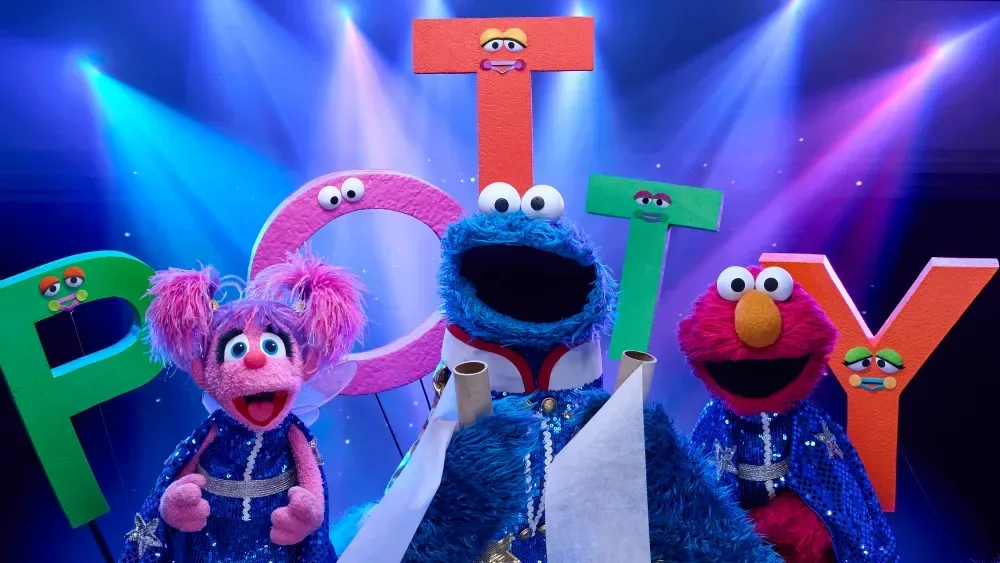
There are few assignments more intimidating than converting a major pop earworm into a calm, memorable lesson about using the bathroom. Yet Sesame Street has taken on precisely that mission with “Got to Go,” a potty-training adaptation of Chappell Roan’s “Hot to Go!” led by Cookie Monster.
The basic joke is immediately clear, but the segment’s purpose is more practical than novelty alone. Cookie Monster sings about noticing physical signals, recognizing that it is time to use the potty, and getting there before an accident. Elmo and Abby Cadabby join the chant section, while animated or singing letters spell P-O-T-T-Y. The video also opens with talking representations of the numbers one and two, leaving no ambiguity about the subject matter.
It is a particularly direct example of the show’s long-running method: take a musical form people can follow, attach it to a useful idea, then repeat the important part until it sticks. In this case, the big hook does not ask preschoolers to memorize an abstract rule. It gives them a short cue: pay attention to what the body is telling you.
A pop-song framework with a preschool-sized objective
“Got to Go” retains the musical shape of “Hot to Go!” closely enough for the connection to be unmistakable. Rather than simply borrowing a phrase or making a passing gag, the segment is presented as a full adaptation, with Cookie Monster handling the lead and Elmo and Abby taking part in the chanted middle passage.
That arrangement matters. A hook is the especially catchy, repeatable part of a song—the section designed to lodge in a listener’s head. For a child-facing educational segment, a hook can also serve as a memory device. Here, the repeated spelling of “POTTY” pairs a word-recognition activity with the routine the song is trying to reinforce.
The lyric concept is similarly simple: a tummy feeling and restless legs are treated as signals that a bathroom trip should happen now rather than later. Cookie Monster’s familiar speaking-and-singing style keeps the material in character, including his distinctive nonstandard grammar. That gives the lesson a comic voice without changing its core message.
For adults helping with potty training, the useful takeaway is not that a song somehow replaces routine, supervision, or patience. It is that the video supplies language that can be repeated consistently: listen to your body; when you feel the signal, head to the potty. A child who enjoys the chorus may have an easier time remembering the cue when the moment actually arrives.
Why this sort of adaptation fits Sesame Street
Musical transformations have been part of Sesame Street’s identity for decades. Its catalog includes original educational songs, visiting performers, character pieces, and rewrites that reshape familiar music around letters, numbers, feelings, or a particular lesson.
Past examples show just how broad that approach can be. Tony Bennett reworked “Fly Me to the Moon” into “Slimy to the Moon,” a piece about the show’s worm character Slimy. The Fugees performed “Just Happy to Be Me,” an inclusion-focused song. B.B. King sang about the letter B, while Smokey Robinson performed “U Really Got a Hold on Me” with the letter U as an active participant in the gag.
The show has also never treated educational music as a reason to keep production small or humor restrained. Marilyn Horne performed an orchestral “C Is for Cookie” in an elaborate Egyptian-themed setting, complete with a tiara featuring a bouncing cookie. In other words, transforming “Hot to Go!” into a toilet-training number is not an abrupt departure from an otherwise solemn curriculum. It is an unusually current entry in a tradition built on cheerful absurdity.
That history explains the balancing act in “Got to Go.” The segment does not merely reference a contemporary song to win recognition from older viewers. It repurposes the rhythm, chant, character voices, wordplay, and visual spelling device toward one specific educational objective. The reference gets an adult’s attention; the repetition is what gives the younger audience something usable.
The letters are doing more than dancing
The most visible change to the original song’s famous title-focused gesture is also one of the smartest choices for the setting. Rather than recreating that routine, the adaptation puts the word POTTY on screen through singing letters.
For children still developing early literacy, spelling a relevant word creates a second route into the idea. They can understand the bathroom lesson through the situation and the music even if they cannot read yet. Children who are beginning to recognize letters get an added layer: the word is broken into five distinct sounds and symbols, then presented repeatedly in a playful context.
This is not a claim that a single music video teaches reading or makes toilet training automatic. It is simply a clear example of layered educational design. The same moment can be funny to one viewer, a sing-along cue to another, and a letter-recognition prompt to someone else.
The opening appearance by one and two works the same way. The numerical joke is obvious to adults, but the segment also keeps numbers inside the vocabulary of the scene. Sesame Street has long built lessons by placing basic concepts in contexts that are a little silly and very easy to recall. Here, the context is about as unavoidable as it gets.
What the segment says—and what it does not
“Got to Go” makes a narrow, age-appropriate suggestion: body awareness can prompt a trip to the potty. The lyric emphasizes noticing the feeling in one’s stomach and moving before there is a mess. It does not present a detailed training program, medical advice, or a universal timeline for children.
That restraint is useful. Potty training is often discussed as though every child will respond to the same schedule, words, or reward system. The segment instead focuses on one basic behavior that can make sense across many routines: notice the need, communicate it or act on it, and go to the bathroom.
Parents and caregivers who use the clip as part of a routine can keep the application equally straightforward:
- Use the chorus as a friendly reminder before transitions such as leaving home or starting an activity.
- Point out the letters in “POTTY” for children who enjoy naming or spotting letters.
- Keep the tone light if a child has an accident; the song frames urgency as something ordinary rather than shameful.
- Let the video remain a prompt, not a pressure tool. The value is its memorable language and humor, not turning a catchy tune into a demand.
Those are practical implications of the segment’s content rather than instructions supplied by the song itself. Its actual lesson remains pleasingly uncomplicated: when your body says you need to go, listen.
A contemporary reference with a durable format
The Chappell Roan connection gives “Got to Go” an obvious present-day spark, particularly for adults who know the original. But its chances of working for children do not depend on anyone recognizing the reference. Cookie Monster, Elmo, Abby, dancing letters, a spelled-out word, and a repeatable chorus are all self-contained tools.
That is the advantage of adapting pop music for educational television rather than merely dropping in a celebrity nod. The cultural reference may bring parents or older siblings to the screen, while the construction of the segment gives young viewers a reason to participate. It functions even after the novelty of identifying the tune has worn off.
The adaptation uses a song credited to Roan and her co-writer and producer Dan Nigro. A representative for Roan offered no comment. There is no need to treat silence as a statement beyond the fact that the finished, officially released adaptation exists; the segment itself is the relevant public artifact.
For viewers interested in how familiar entertainment formats get reshaped for different audiences, that process is part of a broader creator-storytelling conversation. Creator-focused storytelling continues to find new forms across entertainment, though Sesame Street’s particular trick is making the form do educational work without losing the punchline.
Cookie Monster has a new kind of urgent craving
Cookie Monster is normally associated with a very different call of nature: an immediate need for cookies. Putting him at the center of a potty-training anthem is therefore a character-based joke as much as a musical one. His urgency has been redirected from snack pursuit to responsible bathroom timing, and his enthusiastic delivery makes the instruction feel less like instruction.
That is the small but effective comedy engine beneath “Got to Go.” The segment trusts that preschool material can be silly, that adult viewers can enjoy the pop-reference transformation, and that a topic children may find awkward can be approached plainly. It turns bodily signals into a sing-along rather than a lecture.
There is no need for the song to be more complicated than that. “Got to Go” takes a major pop chorus, hands it to Cookie Monster, spells out the destination, and gives children a cue they can carry away from the screen. For a bathroom break, that is a remarkably efficient piece of show business.