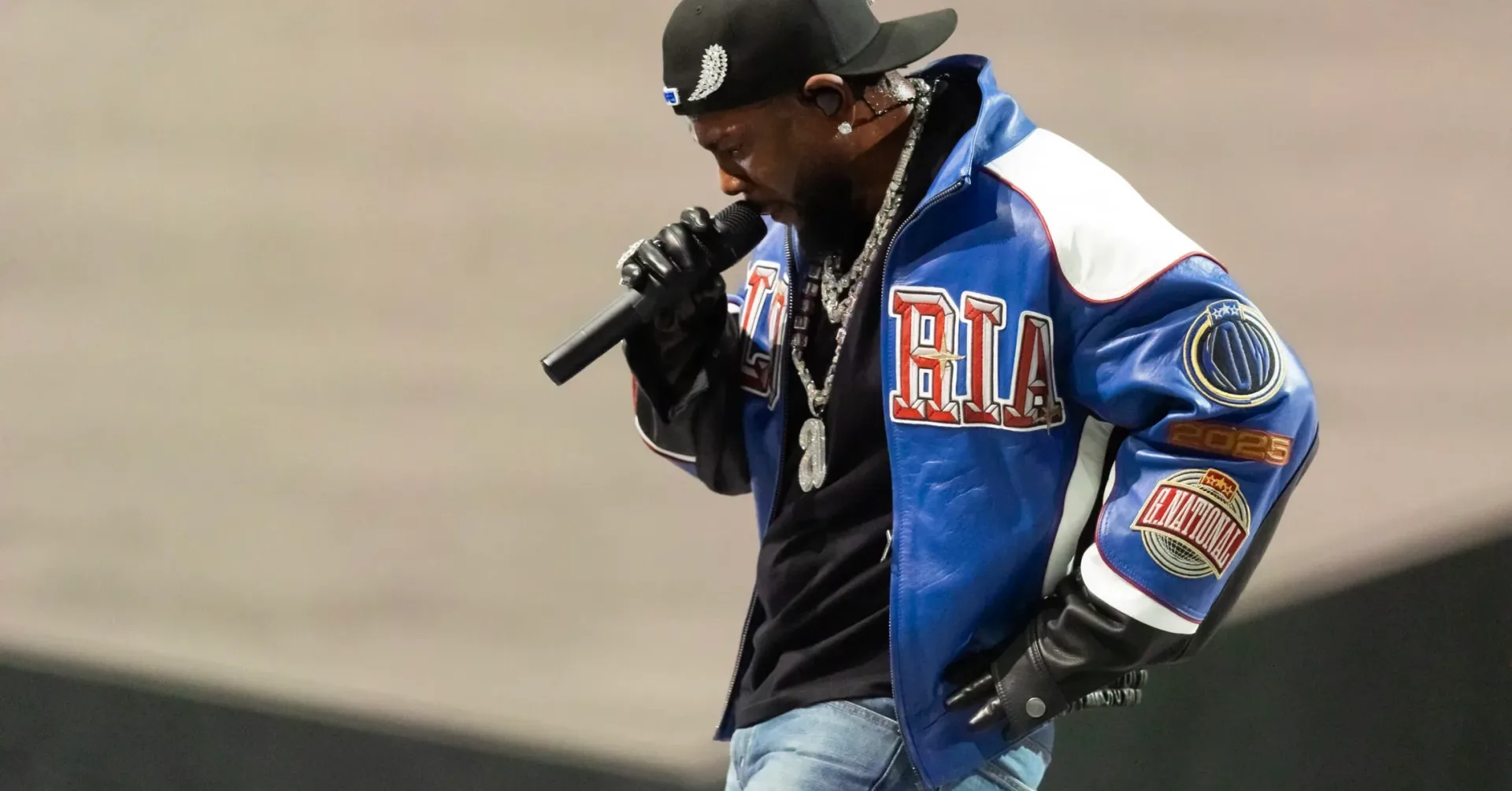
AZ Chike’s No Rest For The Wicked has arrived with Tyler, The Creator among its collaborators, but one anticipated name is absent from the album’s guest list: Kendrick Lamar. Studio images had led some listeners to expect a Lamar appearance. Chike has now clarified that Lamar’s contribution was not a verse or another credited performance. Instead, Chike describes a behind-the-scenes role focused on the record’s construction, especially its song selection, sequencing and artistic intent.
That distinction matters. In music coverage, a “feature” usually means an audible, credited appearance by another artist: a verse, chorus, vocal passage or comparable performance. Chike’s account points to a different kind of participation. He says Lamar and producer Sounwave helped arrange and curate the album, supplied feedback on its overall shape, and encouraged him to be more deliberate about what made the final tracklist.
No Kendrick Lamar feature, but a meaningful creative connection
Chike did not frame the missing collaboration as a falling-out or a rejected song. He spoke warmly about Lamar and said he was keeping his fingers crossed about what might happen in the future. His comments also make clear that he did not know whether an appearance would ultimately materialize when the conversation was recorded.
That uncertainty helps explain the gap between the studio photos and the finished album. A picture from a recording environment can indicate a working relationship, a listening session or a broader creative exchange; it does not automatically confirm a completed, approved feature. In this case, the available account suggests the photos reflected genuine involvement, just not the kind that turns into a Kendrick Lamar credit beside a track title.
“That’s my boy,” Chike said of Lamar, adding that he was still hopeful about the possibility of future work. He characterized the circle around Lamar as spontaneous but highly intentional about the music.
Chike also said Sounwave had been involved from the start of the album-making process. Sounwave is the name most directly tied to the practical work Chike describes: listening to the project as a whole, being strict about the material, and helping identify where cuts or changes were necessary. Lamar’s role, as relayed by Chike, appears closely connected to that larger editorial process rather than limited to one isolated song.
What “curating” an album means here
Album curation is often less visible than a feature, but it can substantially change how a project lands. It can involve narrowing a larger pool of recordings to the songs that best express an artist’s point of view. It can also mean deciding the order in which listeners encounter those songs, so the record builds momentum, makes its themes clearer or gets to a particularly accessible track before attention drifts.
Chike said songs were removed from No Rest For The Wicked to consolidate the project. Consolidation, in this setting, means reducing material in service of a stronger whole. It is not necessarily a judgement that every omitted song was weak. A track can work on its own but interrupt an album’s pacing, overlap too closely with another selection, or dilute the purpose of the final sequence.
The approach Chike attributes to Lamar and Sounwave is therefore an album-first one. Rather than treating a tracklist as a storage place for every promising recording, it asks what each song accomplishes for the project. That can be a demanding process for an artist, particularly when songs with clear potential are set aside. Chike said the pair were strict with the music, while also saying that strictness was warranted.
‘God’s Favorite’ reportedly moved up the tracklist
Chike offered one concrete example of the feedback he received. He sent Lamar a song called “God’s Favorite,” originally positioned further back in the sequence. Chike says Lamar argued that the song needed to move, and it was placed at track three. The reasoning, as Chike recounts it, was that listeners would be looking for that kind of record from him.
Sequencing is the term for arranging an album’s songs in order. A move from the back half of a tracklist to track three is significant because the opening stretch carries unusual weight. It establishes a project’s personality, supplies early momentum and can determine whether a listener stays engaged long enough to reach deeper cuts. Moving “God’s Favorite” forward suggests that Lamar saw it as a strong early statement of what Chike does best.
That is also a more precise insight than the broad claim that someone “helped on the album.” The reported note was not merely praise. It was a recommendation about placement, listener expectation and how the project should introduce itself. Whether fans agree with the final running order is a matter of taste, but Chike’s explanation gives the decision a clear artistic rationale.
The lesson Chike says Lamar shared
Chike recalled Lamar making a point about his own editing process, invoking “Money Trees” and “Cartoons & Cereal” as examples of songs that had, in Lamar’s telling, been taken off an album. Chike presented the remark as encouragement to accept difficult omissions. The message was that leaving a song out can be part of protecting a project’s focus, even when the song is valuable or beloved.
It is a useful distinction for listeners tempted to read every unreleased or removed collaboration as a missed opportunity. The account does not establish that a Lamar verse was completed and discarded, and Chike did not claim one was. What it does establish is that the album underwent selection and reorganization with input from people Chike trusts. That is a different story from an absent celebrity cameo, but arguably a more revealing one about how No Rest For The Wicked was assembled.
There is a wider practical implication, too: credited appearances are only one visible part of the collaborative machinery behind a record. Producers, writers, engineers, managers and trusted peers can influence a release without becoming the headline name on a streaming service. Chike’s description puts Lamar and Sounwave in a trusted-listener and high-level editorial lane, with Sounwave’s involvement described as extending across the album’s development.
Why the clarification is important
Expectation can become its own narrative when a major artist is seen in the studio with another musician. For Chike, the connection to Lamar carried additional attention because of their prior GNX association. Yet the finished release does not list Lamar as a guest, and Chike’s comments correct the assumption that it does.
That correction should not minimize Chike’s own authorship. He released the album, chose to share the advice he received, and ultimately put out the resulting sequence under his name. The more accurate takeaway is not that Lamar secretly made the album, nor that the studio connection meant nothing. It is that Chike says an accomplished peer and Sounwave helped him pressure-test the record’s direction while he remained the artist responsible for the final release.
For fans, the immediate answer is straightforward: do not expect an uncredited Kendrick Lamar feature to be confirmed by this account. The more interesting answer is in the construction of the LP. Chike says its final form was shaped by careful pruning, a reordered “God’s Favorite,” and advice to prioritize intention over simply retaining every strong song.
That kind of precise creative involvement rarely produces the instant excitement of a surprise verse. It can, however, affect the experience of an entire album from its first tracks onward. As Chike sees it, that was the value of the collaboration. And while he left the door open to a future on-record link-up with Lamar, No Rest For The Wicked should be understood on its actual terms: a new AZ Chike album whose tracklist was sharpened with outside counsel, not a Lamar guest feature that failed to make the credits.
For another look at how creative work can intersect with entertainment-business disputes, see our coverage of a producer’s trademark lawsuit involving Amazon’s Off Campus.