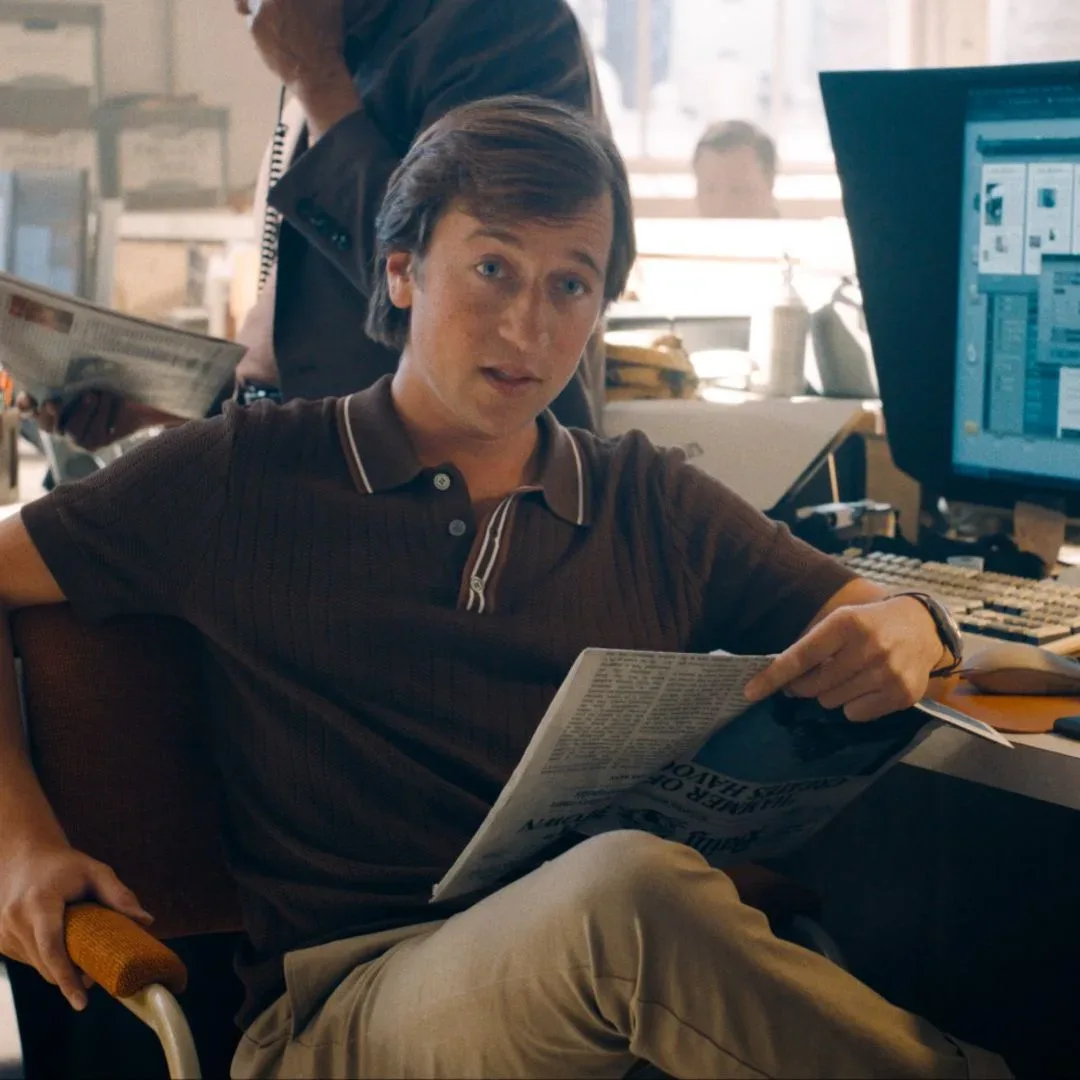
The DC Universe has apparently wasted very little time putting The People v. Gorilla Grodd in front of the cameras. The eight-part HBO series, built around Skyler Gisondo’s Jimmy Olsen and framed as a true-crime mockumentary, was confirmed as moving forward on August 21. Now, set imagery circulating from the Georgia Institute of Technology in Atlanta points to production activity at the university campus.
The most immediately recognizable evidence is a set of blue-and-purple banners identifying the location as Metropolis University. It is a wonderfully specific bit of fictional civic branding: the kind of background detail that says Jimmy Olsen is not merely making a documentary about a super-intelligent telepathic gorilla, but doing the serious academic legwork required when the alleged criminal in question has a complicated relationship with space rocks, mind control, and primate royalty.
For fans who initially wondered whether the Atlanta shoot belonged to Man of Tomorrow, the timing matters. That DC production had reportedly finished filming in August, making the Metropolis University signage a much stronger fit for Olsen’s new project. Still, as with any material seen from an active set, the banners and a period newspaper are clues rather than a complete explanation of plot, episode order, or the exact role the location will play onscreen.
A campus case file for Jimmy Olsen
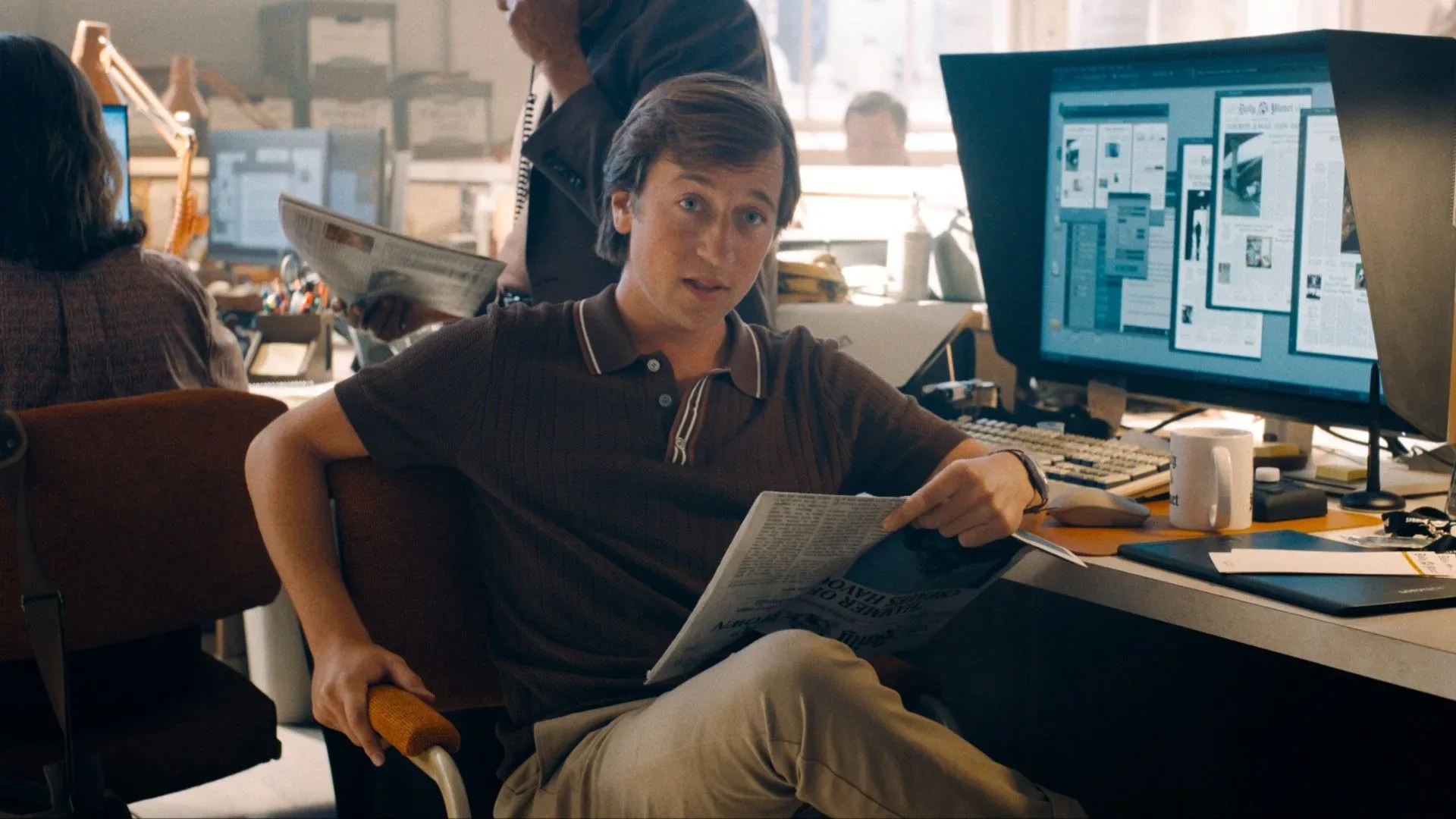
The People v. Gorilla Grodd is not being positioned as a standard superhero procedural. Its premise puts the camera in the hands of Daily Planet photographer and reporter Jimmy Olsen, who is creating a documentary about Gorilla Grodd’s case. The fictional Daily Planet material tied to the project describes the show as a fresh examination of the matter, intended to show an angle on Grodd that audiences have not previously seen.
That approach gives the series room to have fun with a premise that is already gloriously excessive. Grodd has been imprisoned over the killing and brain consumption of his father, King Grodd. Rather than treating that detail as an excuse for another anonymous CGI villain rumble, the mockumentary framework suggests the show will consider testimony, evidence, public perception, media spectacle, and the strange legal logistics of prosecuting a mind-controlling ape.
The stated plan includes interviews with witnesses and specialists on both Grodd’s side and the side of the Metropolis District Attorney. A university setting makes immediate narrative sense under those terms. Professors, researchers, historians, behavioral experts, alien-technology analysts, and anyone who somehow earned tenure while studying psychic simians could plausibly be part of Jimmy’s research trail.
It also creates the potential for a very DC-specific kind of comedy. Most true-crime productions treat a carefully labeled archive box like sacred treasure. Jimmy Olsen may instead find a professor who calmly points to a chalkboard diagram explaining why an irradiated space object can elevate a gorilla’s intelligence while also producing the ability to commandeer human thought. That is not a normal dissertation defense. It is, however, exactly the kind of deadpan collision of documentary language and comic-book absurdity that this concept seems built to exploit.
The 1989 newspaper clue
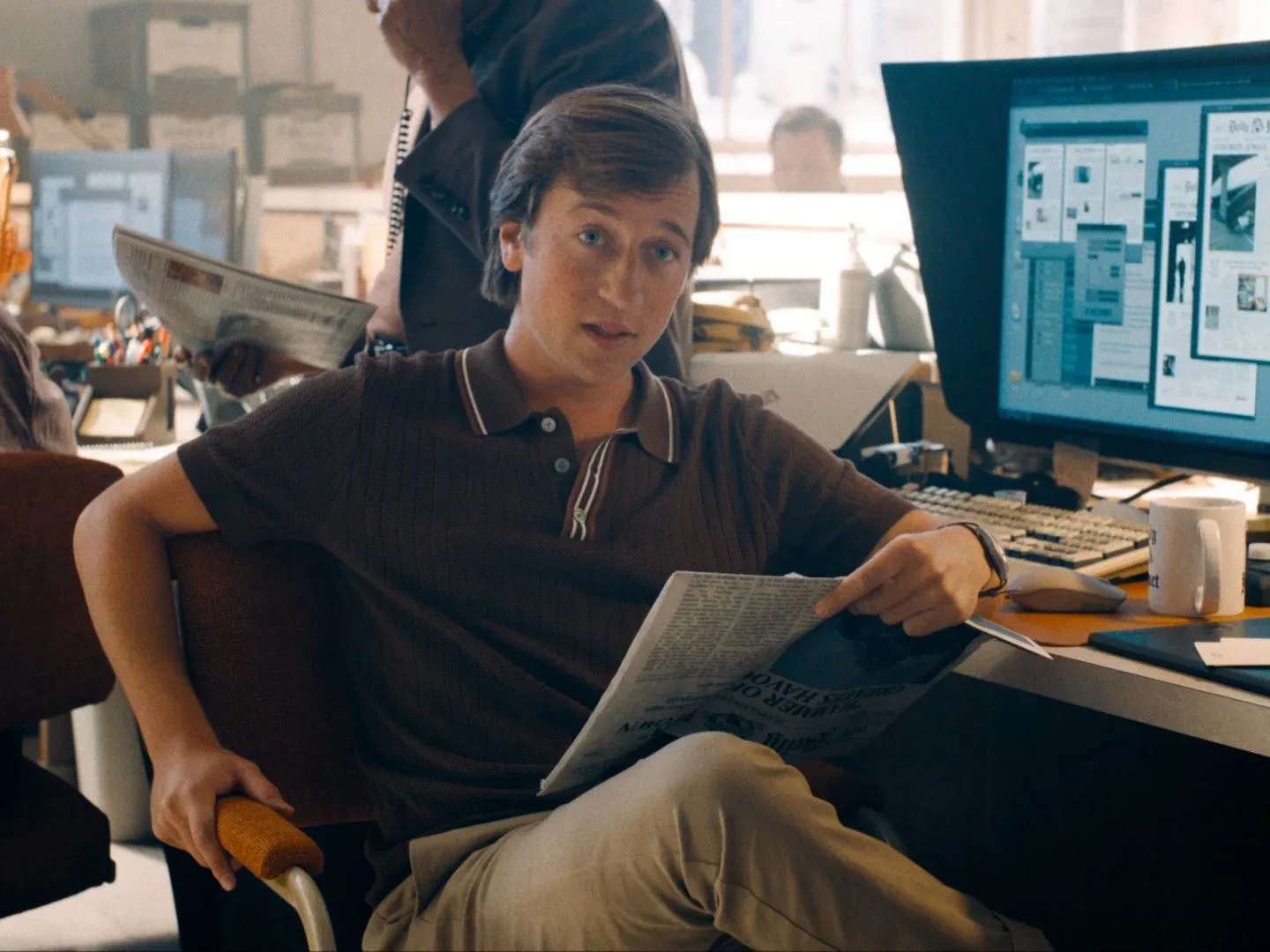
One image from the reported campus shoot includes a newspaper dated Friday, November 3, 1989. The prop’s presence does not confirm that the whole series takes place in 1989, nor does it establish how the date relates to Grodd’s prosecution. It could be a document being researched by Olsen, a recreation of an old event, an interview-room visual aid, or simply one slice of a longer chronology.
But the date does reinforce the idea that Jimmy’s documentary will be investigative rather than purely observational. A mockumentary about a current case can still rewind through old headlines, public records, prior incidents, and decades of disputed mythology. For a character whose comic-book history reaches back generations, archival material is an especially useful way to turn lore into story texture without asking every viewer to arrive with a filing cabinet full of DC continuity notes.
The possible academic setting and archival newspaper also fit a format where the truth is always being curated. A prosecutor may present a fact as proof of monstrous intent; a defense-friendly expert could frame the same fact as a consequence of traumatic alien influence or an unreliable public narrative. Meanwhile, Jimmy has to decide whether he is a neutral reporter, a participant in the story, or the guy who has accidentally put a murder case on television because the footage looked great under a dramatic lower-third graphic.
Why Gorilla Grodd is such an unusual fit—and why that is the point
Gorilla Grodd first appeared in DC Comics in 1959 as an adversary for the Flash. The character’s origin centers on exposure to a space rock, an event that gave him towering intelligence and telepathic control over humans. Those powers have made him one of the more memorable Flash villains, even though the core pitch still sounds like something invented during a meeting where nobody was permitted to reject any idea.
That tonal weirdness is precisely why a mockumentary may be a smart vehicle. The format can take Grodd’s outlandish elements seriously enough to make the stakes matter while allowing the surrounding world to react with disbelief, bureaucratic fatigue, fascination, or opportunism. A town, a university, a police department, and a newsroom would all have different ways of processing a famous telepathic gorilla accused of killing a king.
There is a useful genre precedent in stories that let fantastical creatures become inconveniently real within mundane institutions. Courts need records. Journalists need corroboration. Experts need to explain themselves. A campus needs to keep students from wandering into a closed building because a documentary crew is shooting a scene about psychic primate jurisprudence. The contrast is where a premise like this can find both laughs and intrigue.
In that sense, Grodd is a cousin to other beloved pop-culture animals whose chaos is treated as a legitimate world-ending administrative problem. For a game-side example of the appeal of intentionally preserved creature weirdness, see The Witcher 3 remaster’s decision to retain legacy Roach behavior. Grodd is, of course, operating on a rather different scale: Roach may appear where she should not, whereas Grodd can potentially persuade everyone nearby that he belongs there.
The returning Daily Planet orbit
Gisondo is set to lead the show as Jimmy Olsen. The announced supporting cast includes Jimmy Tatro as Gorilla Grodd, Beck Bennett as Steve Lombard, Mikaela Hoover as Cat Grant, and Wendell Pierce as Perry White. That collection of Daily Planet-adjacent figures indicates that the project will have a meaningful newsroom dimension rather than existing entirely apart from Metropolis’ media ecosystem.
Perry White’s involvement is particularly suited to a documentary story, since the Daily Planet is inseparable from the question of what counts as publishable truth in Metropolis. Cat Grant and Steve Lombard offer additional possibilities for the show to play with on-air commentary, tabloid instincts, broadcast bravado, or the messy public conversation surrounding a sensational case. None of that establishes the precise size of their roles, but their presence supports the idea that Olsen’s work will be shaped by colleagues as well as sources.
Tatro’s casting as Grodd should also be read through the deliberately heightened premise. The show is not simply adapting a villain for another action showcase; it is building an entire purported media event around the villain’s point of view and the arguments around him. Whether Grodd appears as an interview subject, through reconstructed events, in archival material, or in other forms remains unknown. The concept, though, makes the character’s voice central even before viewers know how literally the series will present him.
What is confirmed, and what remains a mystery
The key confirmed pieces are substantial: HBO is developing The People v. Gorilla Grodd as an eight-episode mockumentary, Jimmy Olsen is directing the in-universe documentary, and the story concerns the case against Grodd. The announced cast connects the project to familiar Metropolis figures. Recent imagery from Georgia Tech further suggests that a university location will be part of the show’s visual world.
Plenty remains undisclosed. There is no release date. There is no confirmed episode schedule, premiere window, detailed character breakdown, or official explanation for the November 1989 newspaper seen on set. The campus banners make Metropolis University visible, but they do not prove whether it will function as a recurring location, a single interview site, or a flashback destination.
That uncertainty is part of the fun right now. DC projects have long visited laboratories, newsrooms, city halls, fortresses, and ruined planets. Sending Jimmy Olsen to a university to gather evidence in a case involving Gorilla Grodd promises a different kind of world-building: less laser fire, more lecture notes; fewer multiversal portals, more uncomfortable expert interviews; and, ideally, at least one scholar realizing too late that the subject of their research can hear every uncharitable thought in the room.