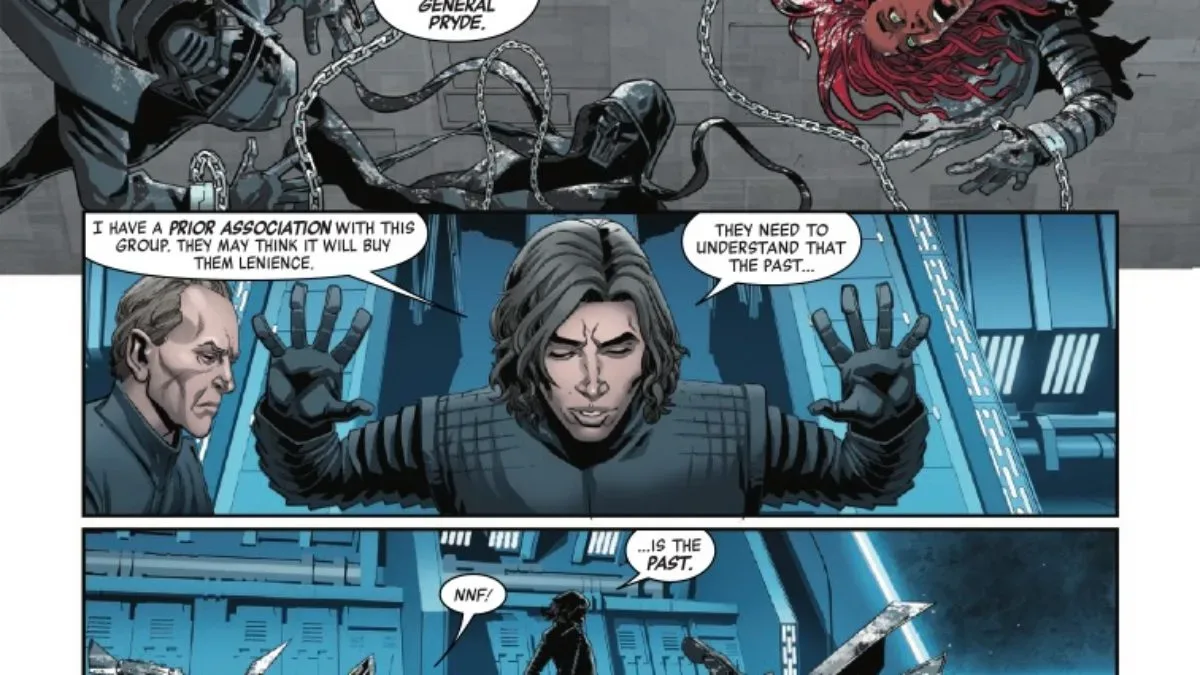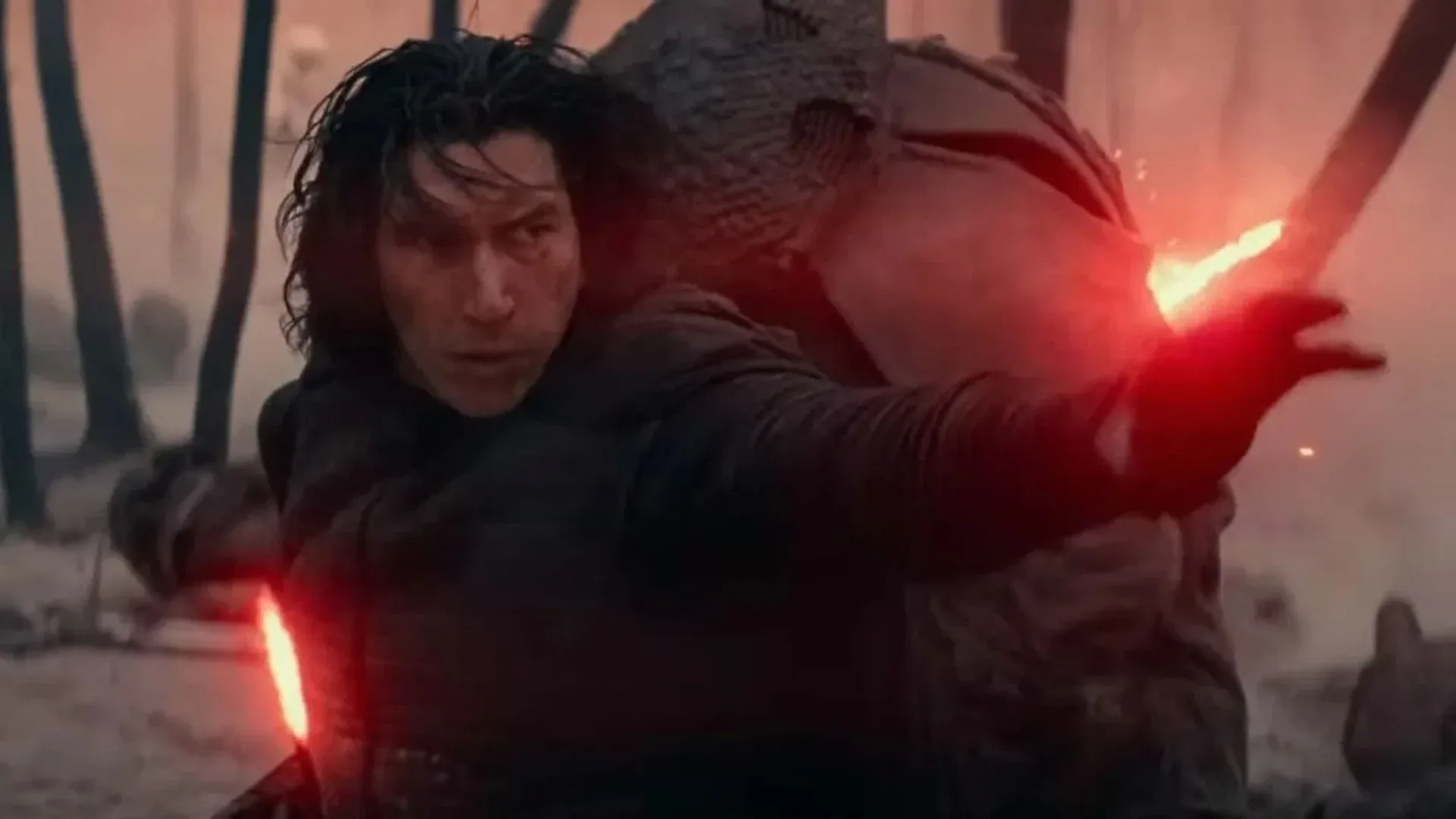
Star Wars has added a new, distinctly Knights of Ren-flavoured vocabulary to one of its oldest ideas. In The Fall of Kylo Ren, the comic series from Charles Soule and Will Sliney, the group’s language for the Force draws a clean image-based contrast: the dark side is “the Shadow,” while the light side is “the Shine.” Issue #3 also has Tava Ren describe somebody as potentially “radiant,” a term that may point to Force sensitivity.
Those words do not replace the familiar Jedi and Sith language used across the wider saga. What they do is give a particular faction its own lens on the Force—and that distinction matters. The Force has always been a source of power, philosophy, conflict, faith and personal identity in Star Wars. Calling its opposing currents the Shadow and the Shine makes the Knights of Ren sound less like students of a formal doctrine and more like people who understand the galaxy through their own mythology.
The Shadow and the Shine are the Knights of Ren’s terms
The key point is one of perspective. “The Shadow” had already been established as the Knights of Ren’s name for the dark side. The Fall of Kylo Ren now supplies its counterpart: “the Shine” for the light side. The terminology is revealed through Tava Ren, who led the Knights after Kylo Ren aligned himself with the First Order.
“Dark side” and “light side” are broad, instantly understandable descriptions, but Shadow and Shine carry a different texture. A shadow is not merely darkness; it is darkness cast by something blocking light. Shine, meanwhile, implies visible illumination rather than an institutional creed or a fixed set of rules. That makes the terms feel suited to a group operating apart from Jedi tradition, even as its members and allies are deeply entangled with the Force.
It is also worth separating what the comic establishes from what readers can reasonably infer. The provided material supports that the Knights use these labels. It does not establish that every Force tradition, character or institution in the galaxy uses them, nor does it lay out a new universal system of Force classification. At this stage, they are faction-specific terms with potentially broader storytelling value.
What does “radiant” mean?
Issue #3 introduces another intriguing word when Tava Ren refers to a person as potentially “radiant.” The immediate possibility is that “radiant” is Knights of Ren terminology for someone who is Force-sensitive: a person capable of perceiving or using the Force to some degree.
That reading remains tentative. “Potentially” is important here, because the available information does not confirm a formal definition. The word could become a straightforward label for Force sensitivity, or it could prove to be more specific—a description of an affinity, an observed quality, or a status recognized by the Knights. Until further material explains it, treating “radiant” as a confirmed synonym for every Force-sensitive person would go beyond what is known.
Even with that uncertainty, the choice is revealing. If the light side is the Shine, someone connected to it being “radiant” follows the group’s imagery naturally. It suggests that the Knights’ terminology may be more than a pair of directional names. They may possess a wider symbolic vocabulary for interpreting people and power.
A useful distinction: Force-sensitive versus light-side aligned
These concepts should not automatically be treated as identical. “Force-sensitive” describes an ability or connection: the capacity to sense or interact with the Force. Light-side or dark-side alignment, by contrast, concerns how a person relates to that power, including their choices and the values attached to its use. The suggested meaning of “radiant” may overlap with either idea, but the comic detail currently leaves the exact boundary unresolved.
That ambiguity is productive for a story tied to Kylo Ren. His character is defined by conflict over identity, loyalty and the use of power. A vocabulary that frames the Force in visual, almost elemental language offers another way to depict that conflict without simply repeating the familiar Jedi-versus-Sith framework.
Why new Force language can make a large setting feel larger
Long-running fictional universes often become smaller when every character explains the world in exactly the same words. Different groups having different names for the same phenomenon is one of the simplest ways to make a setting feel inhabited. It implies that cultures, factions and individuals have developed separate stories around experiences they may all share.
For the Knights of Ren, Shadow and Shine are especially effective because they are immediately legible without demanding that readers learn a dense new glossary. The contrast remains clear, while the vocabulary signals that the group is not merely repeating Jedi terminology with a different costume. It has its own way of framing the moral and spiritual terrain around it.
There is a practical benefit for stories, too. Distinct language can establish point of view quickly. A character who says “the Shadow” is conveying more than an awareness of the dark side; they are invoking the Knights’ own worldview. In a scene involving Kylo Ren, Tava Ren or the wider group, that kind of word choice can reinforce allegiance, tension and distance from other Force traditions before anyone needs to spell it out.
It should not be mistaken for proof of an imminent overhaul of Star Wars lore. New terminology can stay closely tied to the characters and publication that introduce it. But it can also spread if later writers find it useful. The present development is best understood as an expansion of the galaxy’s cultural texture, with its larger significance still open.
The timing is notable as Star Wars returns to Force questions
The new comic terminology arrives while Ahsoka season 2 is positioned to revisit major Force-related ideas of its own. The coming season is set to include the Mortis gods and the World Between Worlds, two concepts associated with unusually abstract questions about the Force and its meaning.
Dave Filoni has said the gods will factor into the second season: “It’s definitely a thing.” He has also described the Mortis figures as archetypal god characters and connected their role to questions of power—what power means, what people do with it, and how they wield it. For a Jedi, he said, those questions make for a natural path of storytelling.
“A lot of it is about power, and what you do with power, and how you wield power. For a Jedi, I think it’s a natural story path to get into these questions.”
The comic’s Shadow-and-Shine terminology and the television series’ Mortis material are not presented as one unified development. Still, they point in a similar broad direction: Star Wars remains interested in finding fresh language and new narrative angles for a concept at the center of the franchise. One approach is intimate and factional, rooted in the Knights of Ren. The other is more mythic, using archetypal figures and the World Between Worlds to examine power on a larger scale.
That variety is likely more useful than forcing every story into a single, exhaustive explanation. The Force has room for Jedi philosophy, Sith ambition, the Knights of Ren’s imagery, and the stranger symbolic questions raised by Mortis. The important detail is whether each perspective serves the characters using it.
What readers should watch for next
Future issues of The Fall of Kylo Ren may clarify whether “radiant” is an established Knights of Ren classification or simply a descriptive phrase used by Tava Ren. They could also show whether the Shine is treated as a genuine opposing path, a threat, an object of contempt, or something more complicated in the group’s worldview.
For now, the facts are compact but compelling: the Knights call the dark side the Shadow, call the light side the Shine, and may use “radiant” in connection with Force sensitivity. Those additions give a Kylo Ren-era story its own voice without requiring the familiar language of the Force to disappear.
Ahsoka season 2 is scheduled to arrive on January 20. Elsewhere in franchise entertainment, the wider relationship between screen projects and major entertainment brands remains a live topic, as seen in Nintendo’s discussion of its screen and theme-park work. For Star Wars, however, the immediate question is smaller and more character-specific: whether the Shadow, the Shine and “radiant” remain evocative Knights of Ren expressions or become terms with a life beyond this comic.