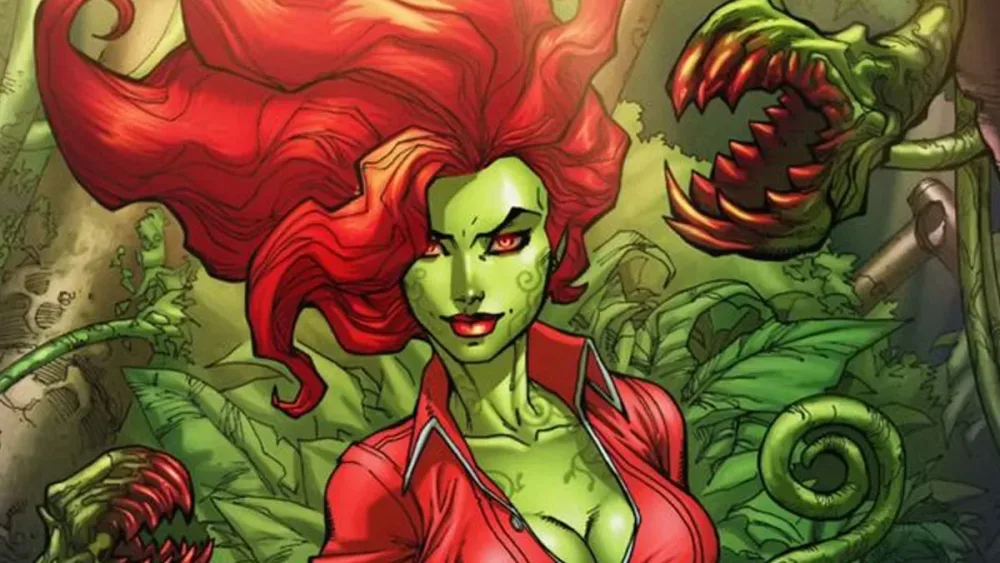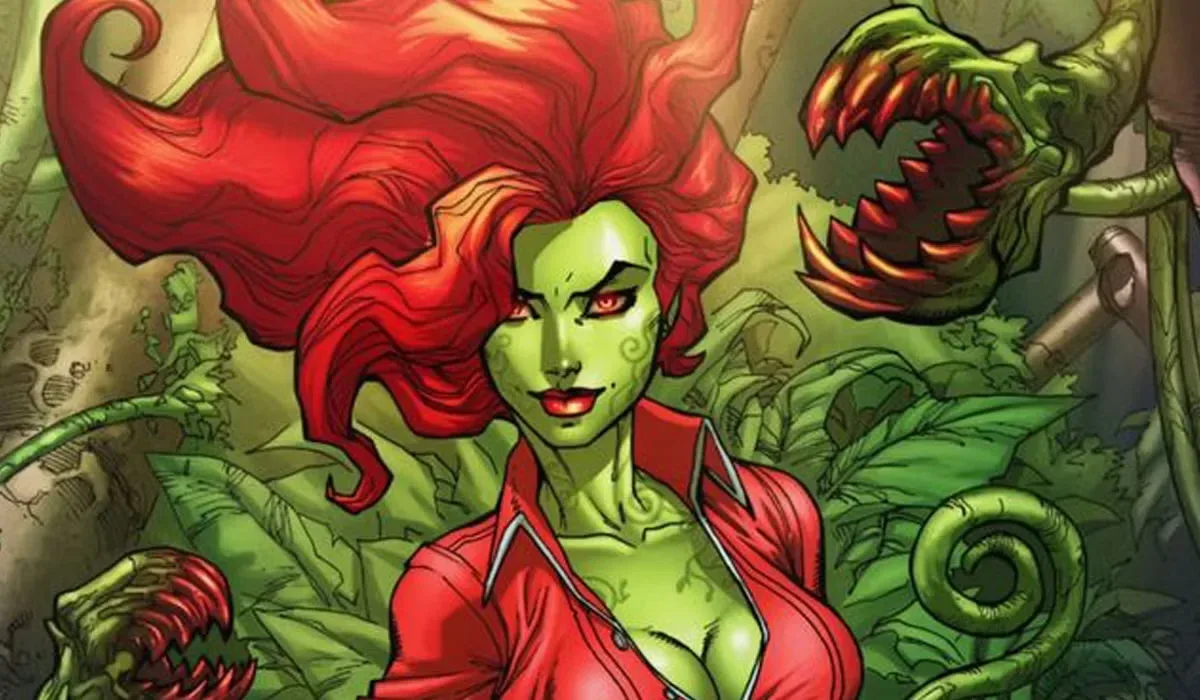
Poison Ivy may be the next Gotham rogue to put down roots at HBO. A television series centered on the Batman character is in the works, with The Penguin showrunner Lauren LeFranc attached as a producer.
The project is an early development story rather than a full production reveal. There is no announced actor for Pamela Isley/Poison Ivy, no release window, no stated episode count, and no disclosed writer, director or plot. It is also not yet clear whether the series would be tied to the continuity established by Matt Reeves’ The Batman and The Penguin, or take place in another corner of DC’s screen universe.
That lack of detail matters. “In the works” establishes that HBO is pursuing the project, but it does not tell viewers which version of Poison Ivy they will meet—or whether the show will ultimately reach cameras. For now, LeFranc’s involvement is the firmest creative indicator attached to the series.
Why LeFranc’s involvement is notable
LeFranc ran The Penguin, HBO’s live-action follow-up to Reeves’ 2022 film The Batman. Colin Farrell had first played Oswald Cobb in the film before leading the series, which turned its attention toward a gritty gangster conflict rather than treating Gotham’s criminal underworld as mere scenery around a Batman story.
That series made a strong case for the basic idea behind villain-led DC television: a familiar antagonist can carry a narrative when the creative approach gives them their own ambitions, relationships and pressures instead of simply waiting for a hero to arrive. Farrell’s lead performance earned both Emmy and Golden Globe wins, while the series also received several best limited series nominations.
LeFranc is listed as a producer on the Poison Ivy project, not as its showrunner. Those jobs can overlap, but they are not automatically the same thing. A showrunner is generally the lead creative and managerial force guiding a television series’ writing and production. A producer credit can cover a range of responsibilities and does not, on its own, confirm who will write the pilot or make day-to-day creative decisions. That distinction leaves a great deal of the new show’s identity open.
Still, her connection gives HBO’s Poison Ivy effort a meaningful link to a recent Gotham-focused success. It suggests that the network sees room to keep exploring character-first stories from Batman’s world, while avoiding any assumption that this series will necessarily copy The Penguin’s tone or structure.
A character with a long screen history, but no solo live-action lead
Poison Ivy has appeared across live-action and animation for decades, yet she has not previously been the sole focus of a film or television series. That makes the proposed HBO show a potentially significant shift for the character.
In the comics-derived version outlined so far, Ivy is known for controlling plant life and using pheromones to influence people’s minds. Pheromones, in this fictional context, are chemical signals she uses as a form of seduction and coercion. Alongside her plant-based abilities, that combination has traditionally positioned Ivy as both a physical threat and a manipulator—an antagonist whose power can operate through environment, intimacy and control.
Her big-screen debut came in 1997’s Batman & Robin, where Uma Thurman played her. She later appeared in live-action television through Gotham and Batwoman. Animated appearances include Batman: The Brave and the Bold, The New Batman Adventures and Young Justice.
More recently, Lake Bell voiced Ivy in Harley Quinn, where the character was also Harley Quinn’s girlfriend. That portrayal is important context for audiences who know Poison Ivy primarily through recent animation: it demonstrates the flexibility of a character who can function as a comic foil, a partner, an antihero or a danger depending on the story being told.
A solo show would need to decide which aspects of that broad history are central. The available information does not answer whether this Ivy will be framed chiefly as a villain, an antihero, a romantic lead, an activist figure, a horror-tinged metahuman presence, or something else entirely. Nor does it establish how closely the show might adapt any particular comic-book run.
What a Poison Ivy-led format could change
A Batman villain project has a built-in storytelling challenge: audiences know the character through opposition to Batman, but a lead needs motivations and conflicts that remain compelling when Batman is offscreen or absent. The Penguin solved that problem by making its central figure the engine of a Gotham crime story. Poison Ivy’s abilities and history offer a different set of potential story engines, but none has been announced.
Her plant control could make the setting itself an active part of a show. Her mind-influencing pheromones could raise questions of consent, autonomy and trust. Her relationships could also become central, particularly given the character’s varied history in animation and comics-adjacent media. Those are possibilities inherent to the character, not confirmed plot points for the HBO project.
The main practical implication for fans is simple: expectations should stay measured until HBO identifies the creative team beyond LeFranc’s producer role, announces a lead actor and clarifies the series’ continuity. Development news is meaningful, especially with a producer who helped steer a successful Gotham spin-off, but it is not a trailer, a greenlight date or a release promise.
DC’s villain-focused screen plans are widening
The Poison Ivy development arrives as DC continues to build projects around characters who are not its traditional headline heroes. Clayface, focused on the shape-shifting Batman villain, is expanding the DC screen slate, while The Batman Part 2 is set to continue Reeves’ Robert Pattinson-led world in 2028.
HBO also has The People vs. Gorilla Grodd on its slate for sometime in 2027. That project is described as a comedic, villain-focused spinoff from James Gunn’s Superman. Taken together, the projects point to a wider willingness to let DC villains anchor stories in different genres: crime drama in The Penguin, comedy in the Gorilla Grodd spinoff, and an as-yet undefined approach for Poison Ivy.
That does not automatically mean these productions share one setting. The information available explicitly separates the Pattinson/Reeves world from the developing DC Universe material around Superman, while the continuity of Poison Ivy’s series has not been announced. “Connected universe” is a specific production choice, not something that should be inferred solely because two shows feature Batman-adjacent characters or air under the HBO banner.
For viewers following television development beyond DC, the early-stage uncertainty around casting and creative direction is familiar; a reported Glee return has prompted a similarly speculative response. Poison Ivy, however, has a clearer currently stated attachment: LeFranc is producing the HBO project.
For now, Poison Ivy’s series is a promising but deliberately incomplete picture. HBO has a character with a substantial on-screen legacy, a producer associated with a well-received Gotham spinoff, and plenty of room to define a new interpretation. The next announcements—especially a showrunner, cast and continuity—will reveal whether this is a crime-world cousin to The Penguin, a sharply different DC experiment, or something built on an entirely new patch of Gotham soil.