Glee may be preparing for an encore, and the internet’s reaction is exactly as unruly as its subject demands. A reported return for the musical comedy-drama as a Disney+ and Hulu project has reignited an unusually complicated kind of fandom: one built from genuine affection, sharp criticism, endlessly repeated musical moments, and a shared understanding that the series could veer from heartfelt to utterly unhinged with startling speed.
The available details remain limited. Lea Michele, Heather Morris and Chord Overstreet are the only original cast members identified as returning so far. It is not yet clear whether the project is a continuation, reboot, revival, or some hybrid of those labels, nor is it known how extensively it would revisit the original characters. Chris Colfer has expressed hesitation about returning while also leaving open the possibility. That uncertainty is central to why the response has been so intense: Glee ended with an epilogue that ostensibly showed where many characters landed, so a new installment has to answer a basic creative question before it can even pick its first song. What story is left to tell?
Why Glee still occupies so much cultural real estate
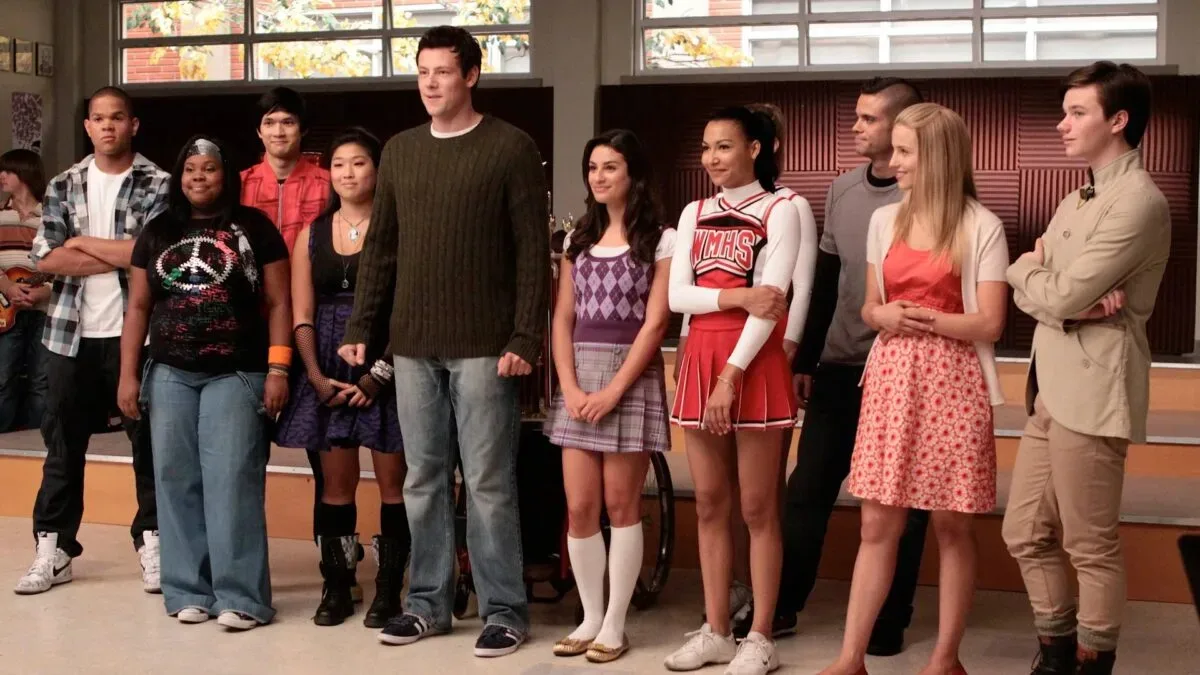
The original series aired from 2009 to 2015. On paper, its pitch was clean: a high-school show choir performs songs audiences know. In practice, it was a volatile blend of musical fantasy, teen drama, broad satire, comedy and social-issue storytelling. That collision is the reason it remains easy to recognize and difficult to summarize.
Its approach to current pop music gave it a built-in sense of immediacy. A song choice could function as plot movement, a gag, a character statement, a bid for relevance, or all of those things at once. The show also pursued topical subjects with an energy that could be earnest one moment and defiantly tongue-in-cheek the next. For some viewers, that mix made the series formative and affirming. For others, it made the show feel wildly inconsistent, especially when jokes, melodrama and serious issues shared the same episode.
Both responses can coexist. Glee’s long afterlife has not depended on a tidy consensus that it was simply good or bad. It has depended on the fact that it was conspicuous. Its biggest swings, questionable choices and sincere highs are all part of the memory. Fans can celebrate the performances while sending up the plot lines; critics can mock the chaos while remembering precisely why they watched.
That is why the reported return has prompted a torrent of jokes alongside real curiosity. The series has become unusually compatible with online meme culture because viewers do not have to pretend its excesses were accidents. The excess was often the point—or, at minimum, the show’s most memorable feature.
Revival, reboot and continuation are not interchangeable
At this stage, calling the project a “reboot” is convenient shorthand, but it may obscure more than it explains. A reboot generally starts a property over with a new version of its premise or characters. A revival ordinarily returns to an existing continuity after time away. A continuation picks up stories already established by the prior series, whether through returning leads, new leads, or both.
The difference matters here because Glee’s original ending included an epilogue set in 2020. That means a new project could acknowledge the characters’ known destinations and build from them, or it could shift attention to a new group of performers while using familiar faces as connective tissue. Those are very different tonal propositions. A full reset could seek a fresh audience, while a continuation would inherit the emotional obligations—and the contradictions—of the original.
The involvement of Michele, Morris and Overstreet points toward some relationship with the prior ensemble, but it does not establish how large that relationship will be. Their returns could mean anything from central roles to more limited appearances. Until the format, setting and cast scope are specified, firm assumptions would be premature.
The modernity problem
A new Glee would face a challenge that is easy to underestimate: the original series was designed to feel close to the moment. Its musical selections and comic targets were tied to the cultural present of its run. A streaming production has a different rhythm. If episodes are completed well before audiences see them, references and songs intended as timely can age quickly.
That does not automatically make a streaming-era musical series less current. It simply changes the calculation. A song that has already proved durable may serve character or story more effectively than a track selected solely because it is new. Likewise, topical comedy has to be precise enough to remain funny after the immediate conversation has moved on. The reported project will need to decide whether it is chasing the sensation of the original show’s weekly relevance or using distance from that model as an advantage.
There is also a tonal question. The original was remembered for taking major swings, including humor that was deliberately provocative and not always politically polished. Its attempts to address social issues were significant to many viewers, but they were also flawed and frequently filtered through the series’ exaggerated sensibility. Recreating only the sweetness would not capture the show’s identity; recreating only the provocation would miss why its characters and performances connected in the first place.
That balance is not merely a nostalgia issue. It is a writing issue. Musical television asks viewers to accept heightened emotion as part of its language. Satire asks them to recognize what is being exaggerated and why. Issue-driven drama asks them to take stakes seriously. Glee tried to do all three at once. Any successor attempting the same trick needs a clearer command of when a scene is asking for laughter, empathy or both.
What the reaction actually says
The immediate wave of online posting should not be mistaken for a simple demand that the show return unchanged. The jokes are evidence that the series remains legible to people who watched it, disliked it, loved it, or absorbed it through the cultural noise around it. Glee is still a recognizable shared reference point more than a decade after its finale.
That recognizable identity can be a strength, but it also creates an unusually high bar. A new version cannot rely only on familiar songs, hallway choreography and old catchphrases. Viewers will expect it to know what made the original so singularly chaotic, while also expecting it not to repeat every weakness that chaos produced. That is a narrow path, particularly when the exact premise remains under wraps.
The broader television landscape has room for reunion projects when they have a reason to exist beyond recognition. Recent reunion-minded television can work best when it treats familiarity as a foundation rather than the entire premise, as seen in the appeal of stories that bring beloved ensembles back while still giving the return a fresh angle. For Glee, the question will be whether a new project finds a similarly concrete purpose: a new group, a new setting, an older perspective on former students, or another reason for music and melodrama to collide.
What is confirmed—and what remains open
For now, the most useful response is cautious anticipation. The reported Disney+ and Hulu collaboration and the named returning performers offer a direction, not a finished picture. There is no supplied detail on release timing, the number of episodes, the creative team, which characters will appear, or whether the show will follow directly from the epilogue.
That uncertainty has not stopped the memes, and it should not. Glee’s audience has always been equipped to meet its most implausible developments with a mixture of disbelief and a perfectly timed reaction image. But the real test will arrive later, when there is enough information to judge whether this is a meaningful new chapter or merely an attempt to replay a cultural phenomenon.
Until then, the most accurate description is also the least glamorous: a Glee return has been reported, a small group of original cast members is attached, and nearly every important creative detail is still unknown. For a show built on songs about wanting to be heard, that silence is doing a remarkable amount of work.