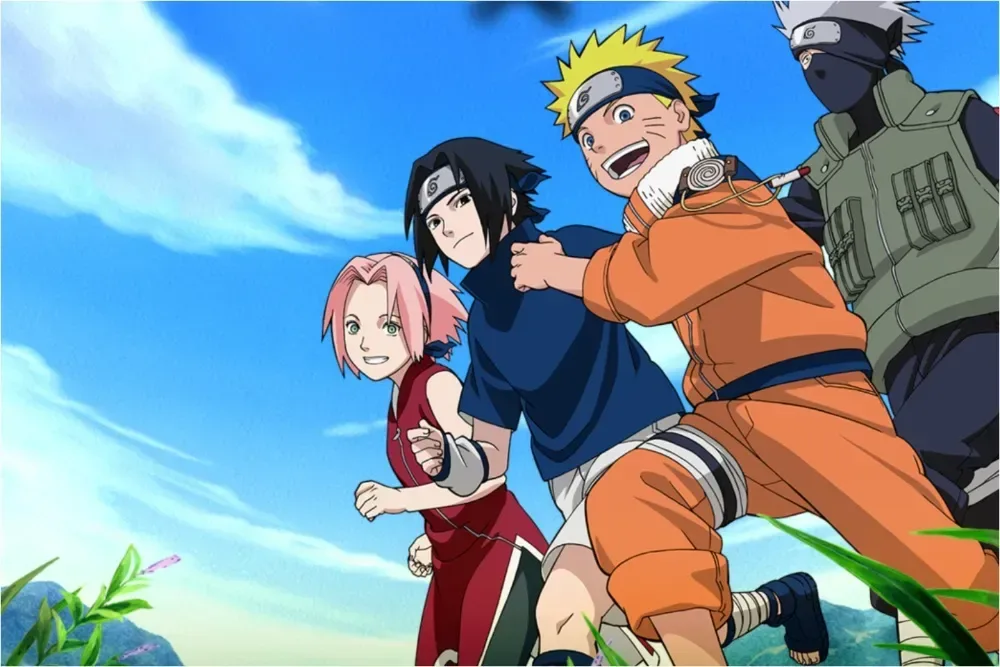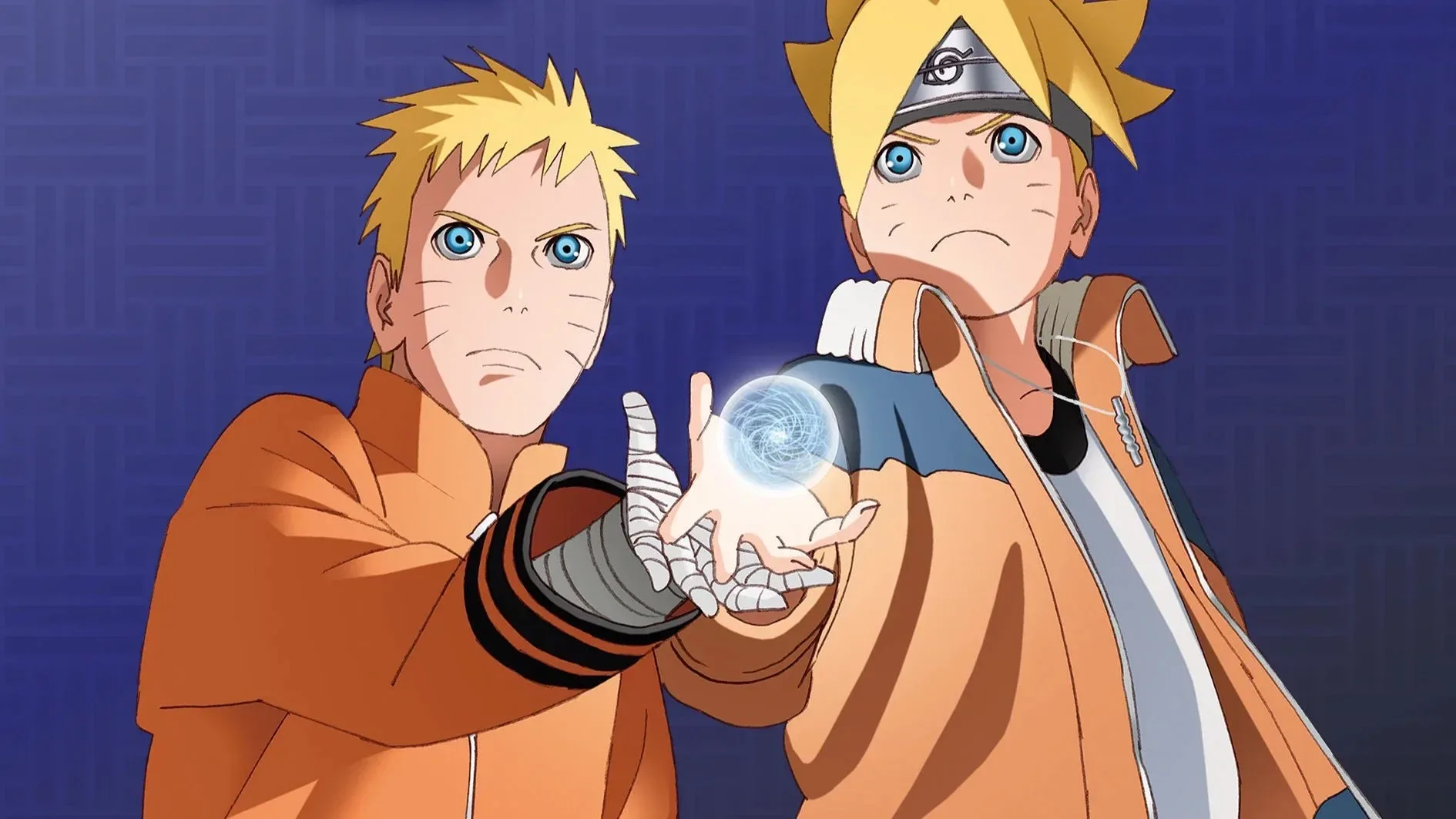
The announcement of Naruto: Shadow Rising has given Naruto fans a new manga to anticipate in 2027—and given a familiar kind of online rumor an enormous boost. Posts circulating across social platforms have claimed that the project means Boruto is no longer canon, sometimes presenting older comments and video clips as proof that Masashi Kishimoto formally placed the sequel in an alternate universe.
That claim is not supported by the information available. Naruto: Shadow Rising was presented as a new canon manga, but no stated announcement says that it erases, replaces, or reclassifies Mikio Ikemoto’s ongoing Boruto manga. The rumor has grown beyond ordinary fan speculation, with a post from October 14 approaching 5 million views while asserting that Kishimoto had called Boruto an alternate universe in a 2024 interview. Another widely shared post used footage from 2017 to claim an official confirmation that Boruto had been removed from continuity.
The material being used for those assertions has been taken out of context. That distinction matters. Fans can dislike a sequel, prefer the original series, or hope a forthcoming story takes the franchise in a different direction. None of those reactions establishes a canon change.
What has actually been announced
On October 10, the original Naruto creator and illustrator revealed Naruto: Shadow Rising, a canon manga planned for release sometime in 2027. Its promotional art appears to place the story in the period after the end of Naruto and before the start of Boruto. Sarada, who is 11 at the beginning of Boruto, is depicted as a baby in that art.
That apparent placement explains why some fans see a possibility for major continuity consequences. A story set in a gap between two existing works can introduce developments that later stories have not covered. In theory, it can also become a point where a creator chooses to redirect a franchise. But “there is room for a change” is not the same statement as “a change has happened.”
At present, the defensible reading is narrower: Shadow Rising appears to explore an earlier period of the Naruto timeline. Its announcement alone does not establish that the sequel has been invalidated.
Canon, continuity, and alternate universes are not interchangeable terms
The debate has moved so quickly in part because fandom discussions often use several related terms as if they mean exactly the same thing. They do not.
- Canon generally refers to material recognized as part of a franchise’s official narrative continuity.
- Continuity is the chain of events, characters, and rules that fit together within that narrative.
- An alternate universe is a separate version of the setting or characters that does not necessarily share the same sequence of events as the main story.
- A retcon, short for retroactive continuity, is a later work revising, reframing, or contradicting an earlier story element.
Those definitions make the missing step in the rumor especially clear. Calling a new manga canon does not automatically remove a different manga from canon. A prequel does not automatically become a retcon. And an old creator comment, especially when excerpted from its original setting, cannot carry the weight of a formal continuity decision without clear context.
Related coverage includes Naruto: Shadow Rising Reveal Sparks False Claims That Boruto Is No Longer Canon.
Nor does the fan nickname “Boruto GT” demonstrate anything about official status. The comparison invokes Dragon Ball GT, which is commonly treated as non-canon in discussions of that franchise, but a community label cannot decide the standing of another series. It is commentary, not documentation.
Why this particular claim has traveled so far
One straightforward reason is that a portion of the Naruto audience strongly dislikes Boruto. That creates ideal conditions for a rumor that promises a clean reversal: people who want a claim to be true can be more inclined to share it before checking its basis. Short-form clips, screenshots, and emphatic captions make that process even easier, particularly when they frame a complicated continuity question as a decisive victory.
The second reason is more understandable, even if it still does not validate the conclusion. The time period suggested by Shadow Rising invites questions about where the Naruto franchise might go next. Because Sarada is a baby in the promotional material, readers can reasonably infer that the manga occupies narrative space before Boruto. It is legitimate to ask whether new material could reshape how the franchise is organized later. It is not legitimate to report that outcome as settled when no confirmation has been provided.
The current moment is an example of how a real announcement can become the foundation for a false headline. There is a genuine new manga. It has a stated canon designation. It appears to be set in a significant gap in the timeline. From there, online posts added an unsupported claim of decanonization, then reinforced it with clips and quotations detached from their contexts.
This is also why corrections can struggle to catch up. “No official statement says this” is less flashy than “Everything has been rebooted.” Yet the quieter statement is the one that fits the evidence. Similar pressures around attribution, authenticity, and confident-sounding claims have become a broader concern in entertainment and games, as explored in the debate around AI copycats and originality in games.
The sales discussion adds context, not confirmation
Arguments about Boruto’s sales are also being folded into speculation about its future. As of October 2025, Shueisha had confirmed 10 million copies of the Boruto manga in total circulation in Japan. For comparison, by 2023, the first 72 Naruto volumes had sold more than 250 million copies worldwide, with roughly 150 million of those sales attributed to Japan. The important qualifier is that the 72-volume Naruto figure excludes Boruto: Naruto Next Generations, which began publication in 2016.
Those figures establish that the original manga achieved vastly larger reported sales totals than the sequel’s Japanese circulation figure. They do not, however, establish a publisher’s future continuity plans. They also should not be read as a complete measure of modern readership: manga consumption includes online reading, and circulation is not identical to a direct count of individual readers or sales across every market.
There is room for analysis here. A publisher may consider many commercial and creative factors when deciding how to develop a long-running property. But the leap from “the numbers are different” to “the sequel will be decanonized” remains speculation. No official statement cited in the current discussion connects Shadow Rising to a plan to remove Boruto from canon.
What fans should watch for next
The most useful approach is to separate confirmed information from future possibilities. Confirmed information is limited: Naruto: Shadow Rising is a canon manga planned for 2027, and its revealed art suggests a setting between the conclusion of Naruto and the beginning of Boruto. The claim that Boruto is officially non-canon is not confirmed.
Fans looking at posts about the subject should be cautious when they encounter any of the following:
- A quote presented without the complete interview, date, or surrounding question.
- An older video captioned as if it were a new declaration.
- A claim that uses “officially confirmed” but does not identify the actual formal statement.
- A fan interpretation of promotional art treated as a publishing decision.
- Sales comparisons used as proof of a continuity change rather than market context.
There has already been organized pushback. A “Boruto Canonicity Megathread” appeared on the r/Boruto subreddit, while other creators have worked to correct the out-of-context claims. That response does not itself settle canon; it does demonstrate that fans have recognized the difference between evidence and a viral narrative.
Until a clear statement addresses the relationship between Naruto: Shadow Rising and Boruto, the accurate position is simple: the new manga’s announcement is exciting franchise news, but it is not proof that Boruto has been written out of the story.