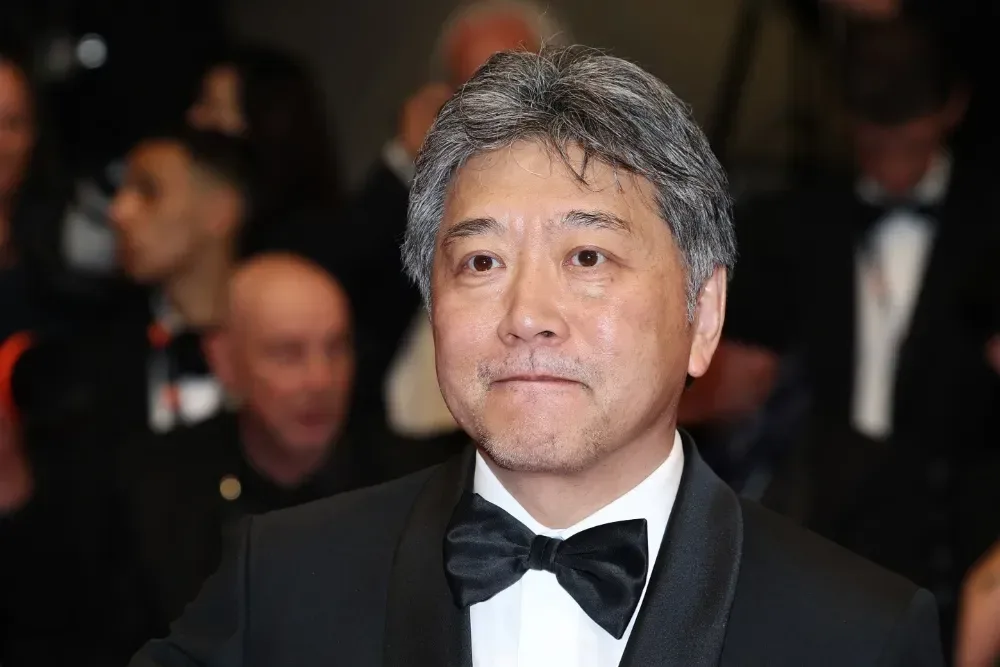
Hirokazu Kore-eda’s Look Back approaches Tatsuki Fujimoto’s celebrated manga from inside the intense, often sealed-off emotional universe of childhood. The film is a Japanese, 100-minute live-action adaptation, written, directed and edited by Kore-eda, and it premiered in Competition at the Venice Film Festival on September 6, 2026. Its focus is deliberately narrow: two aspiring manga artists, Fujino and Kyomoto, and the friendship that grows from competition, admiration and a shared need to create.
That limited scope is both the film’s initial obstacle and eventually its strength. Adults are present mostly at the edges of the girls’ lives, with few granted much interiority. The early passages can lean hard into an idealized view of school-age creativity and innocence, which may feel overly precious to viewers who do not immediately connect with its youthful perspective. Yet the film gradually earns its emotional reach. Kore-eda turns what begins as a story of classroom rivalry into something more searching: an examination of how artistic work can connect people, wound them, and preserve the shape of a relationship after life pulls them apart.
Fujino’s need to be the best drives the opening
Fujino is introduced as a fourth-grade star. Her manga strips are admired by classmates and affirmed by Mr. Tamai, her teacher. Played as a child by Furi Nanase, Fujino has a real talent, but also a hunger to be recognized as exceptional. She likes being the student everyone associates with the school’s manga page. That status is challenged when the school begins receiving strips by Kyomoto, a classmate so withdrawn that nobody has actually seen her.
Kyomoto’s work is immediately formidable. Instead of accepting the new artist as a peer, Fujino responds as a rival would: she pushes herself harder, allowing practice and perfectionism to crowd out friends and family. The premise understands a particular kind of young creative ego. Fujino is not simply jealous; she has built her identity around being skilled, and Kyomoto’s existence makes that identity feel unstable.
Two years later, at elementary-school graduation, Mr. Tamai asks Fujino to take Kyomoto’s diploma to her home. Fujino’s trip down a hallway stacked with notebooks becomes the first real crossing between their private worlds. A strip from Fujino slips beneath a door marked with a warning not to enter. Kyomoto, played at this age by Rokka Okada, rushes out after recognizing the artist behind the school’s popular comics. To Kyomoto, Fujino is a master: someone worthy of the honorific “sensei.”
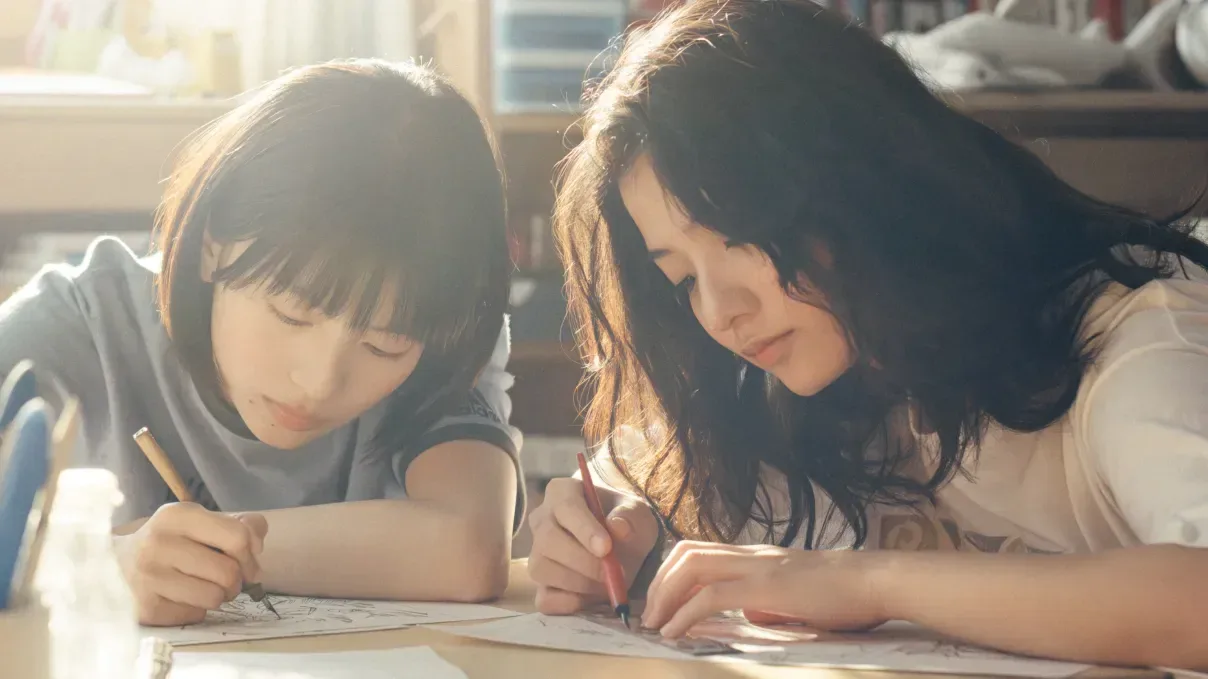
For Fujino, that praise is irresistible. But what might have remained a self-serving victory turns into a genuine collaboration. The pair begin making manga together, splitting duties in a complementary way: Fujino handles stories and character figures, while Kyomoto makes the backgrounds. Their separate abilities become a shared visual language, and their professional arrangement becomes a close friendship.
A two-person creative partnership
The film works best when it stays alert to the imbalance inside that partnership. Fujino may be energetic, outward-looking and fiercely determined, but her sunny manner conceals a tendency toward possessiveness. She wants success, wants control, and can lash out when plans stop matching the version she has imagined. Kyomoto’s reserve makes a revealing counterpoint. She has extraordinary ability, but she inhabits the world more cautiously, initially appearing so remote that the story briefly encourages uncertainty about how fully she occupies Fujino’s everyday reality.
As the girls become teenagers, Natsuki Deguchi takes over the role of Fujino and Aju Makita plays Kyomoto. Their manga catches the attention of an editor at Shueisha, portrayed by Masaki Suda, and their first story is published after they enter a competition. The success comes quickly. Their division of artistic labor stays intact, and for Fujino that continuity is comforting: the partnership is working, their work is reaching readers, and the future seems settled.
But the story’s central fracture emerges after high school. An editor offers the duo a series, while Kyomoto wants to attend art school. Fujino reads that choice as abandonment and decides she can become a manga star without her collaborator. It is a painfully recognizable conflict because neither ambition nor independence is inherently wrong. The hurt comes from the way Fujino treats Kyomoto’s separate aspiration as an offense against their bond.
That material places Look Back within a larger tradition of stories about comics and the lives of people who make them. Manga creation is not treated as a decorative hobby here; drawing is work, communication, competition and self-definition all at once. Readers interested in how sequential art can carry character drama may also find a different superhero-facing angle in the continuing mystery around Lanterns and its comic-book roots. Kore-eda’s film, however, keeps its attention firmly on ordinary materials: sheets of paper, pencils, notebooks, screens and the exhausting desire to improve.
Sentimentality gives way to something more affecting
There is a purposeful risk in presenting the girls’ early lives with such warmth. Schoolyard encouragement, briskly blooming camaraderie and unguarded enthusiasm can initially create emotional distance rather than intimacy. The film asks viewers to accept that almost everyone beyond the two leads will remain lightly sketched. Fujino’s mother is mostly defined by domestic tasks. Kyomoto’s mother is barely visible. Mr. Tamai and the Shueisha editor have important practical functions in the plot, but neither displaces the central relationship.
Seen strictly as social realism, that lack of fuller supporting characters may feel like a limitation. Seen as a two-hander, it makes more sense. Fujino and Kyomoto experience the world through drawing and through each other. Other people become background figures in a story about the way a friendship can fill nearly the entire frame. That framing also creates the conditions for the film’s later emotional turn. Events may initially appear to endorse the bleak idea that withdrawal can spare a person from life’s suffering, but the larger humanistic direction points elsewhere. Achievement is not the real refuge. Connection is.
That distinction is vital to the story’s impact. Look Back does not simply celebrate the isolated artist suffering nobly for the work. It treats creative drive as meaningful, even necessary, but refuses to separate it from the people who encourage, challenge and change us. Fujino’s arc gains force precisely because her talent cannot resolve every emotional problem on its own.
Sound, seasons and the physical act of drawing
Senzo Ueno’s camera and Kore-eda’s seasonal sensibility give the film an atmosphere that shifts between sunlit summer, autumnal color and winter snow. The visual palette is generally pale and diffused rather than aggressively vivid. That choice can make the early world appear softened, perhaps even idealized, but it also creates room for the later artwork and a manga-animation insert to register with greater intensity.
Sound is equally important. The scrape of graphite against paper is treated almost musically, working alongside Yuta Bandoh’s score. Later, more mechanical sounds from digital pencils and computer screens underline a transition in tools and process. These are not incidental production details. For a film about artists, the repeated noises of making art supply rhythm and tactility. The audience is asked not only to watch Fujino and Kyomoto’s ambitions but to feel the persistence behind them: the mark of pencil, the accumulation of pages, the steady conversion of imagination into panels.
The animated material has an especially important place near the end, linking the adaptation back to Fujimoto’s manga and to the 2024 animated film version. Rather than making live action and drawn imagery feel opposed, Kore-eda uses the change in form to help deliver a bittersweet but satisfying emotional resolution. It is a fitting device for a story where manga is the bond, language and legacy shared by two people.
Key production details
- Title: Look Back
- Director, screenwriter and editor: Hirokazu Kore-eda
- Based on: Tatsuki Fujimoto’s manga
- Camera: Senzo Ueno
- Music: Yuta Bandoh
- Producer: Daiju Koide
- Executive producer: Muneyuki Kii
- Featured cast: Natsuki Deguchi, Aju Makita, Furi Nanase, Rokka Okada, Masaki Suda and Kankuro Kudo
- Language: Japanese
- Running time: 100 minutes
By the time Look Back reaches its closing movement, the gentleness that once risked feeling too polished has acquired a different weight. Kore-eda makes room for grief, regret and the difficult recognition that no accomplishment replaces the person with whom one first learned to make something. Fujino and Kyomoto’s story is ultimately less interested in who draws better than in what collaboration gives them: a way to see themselves, and a reason to keep looking back.