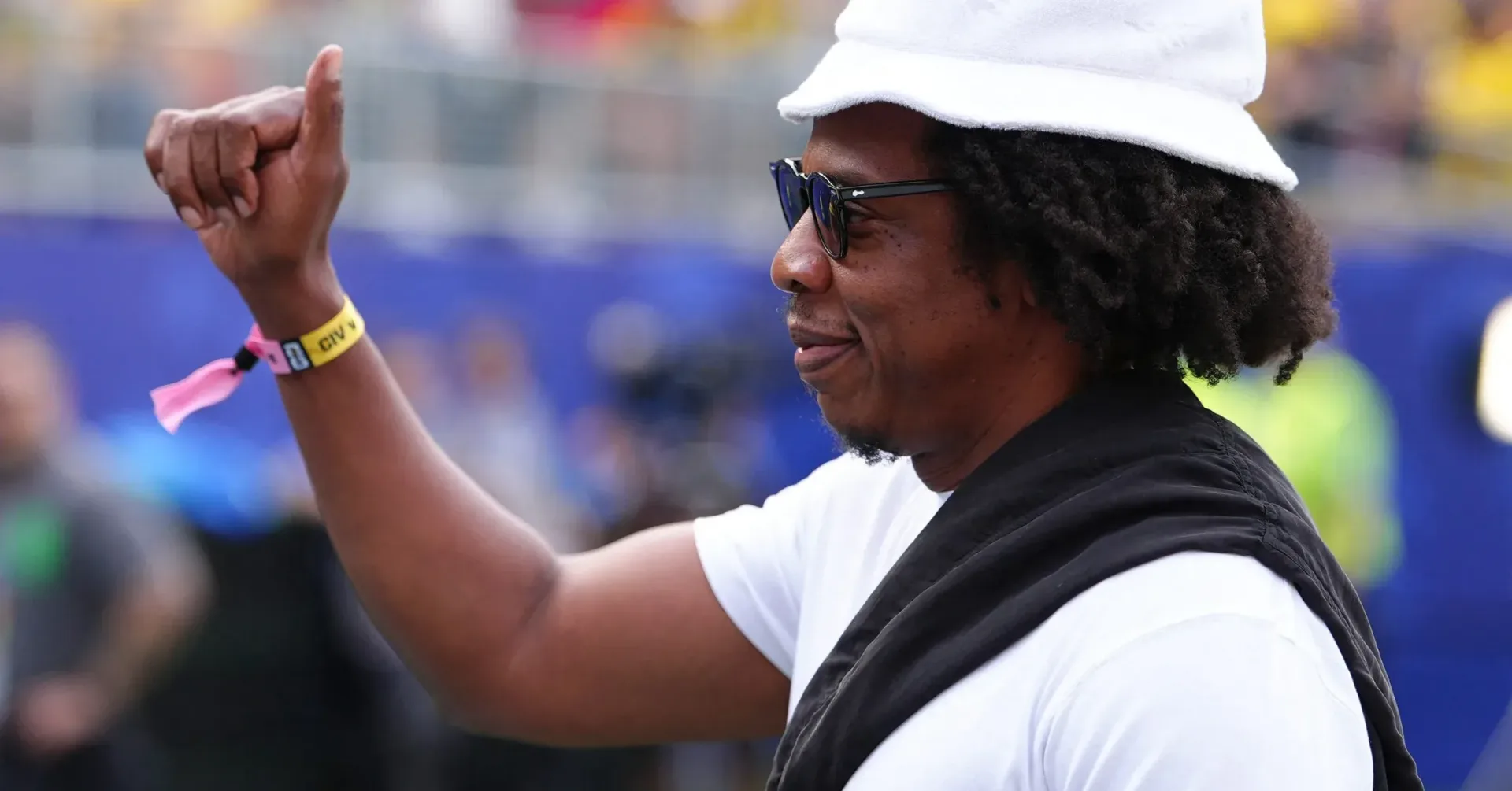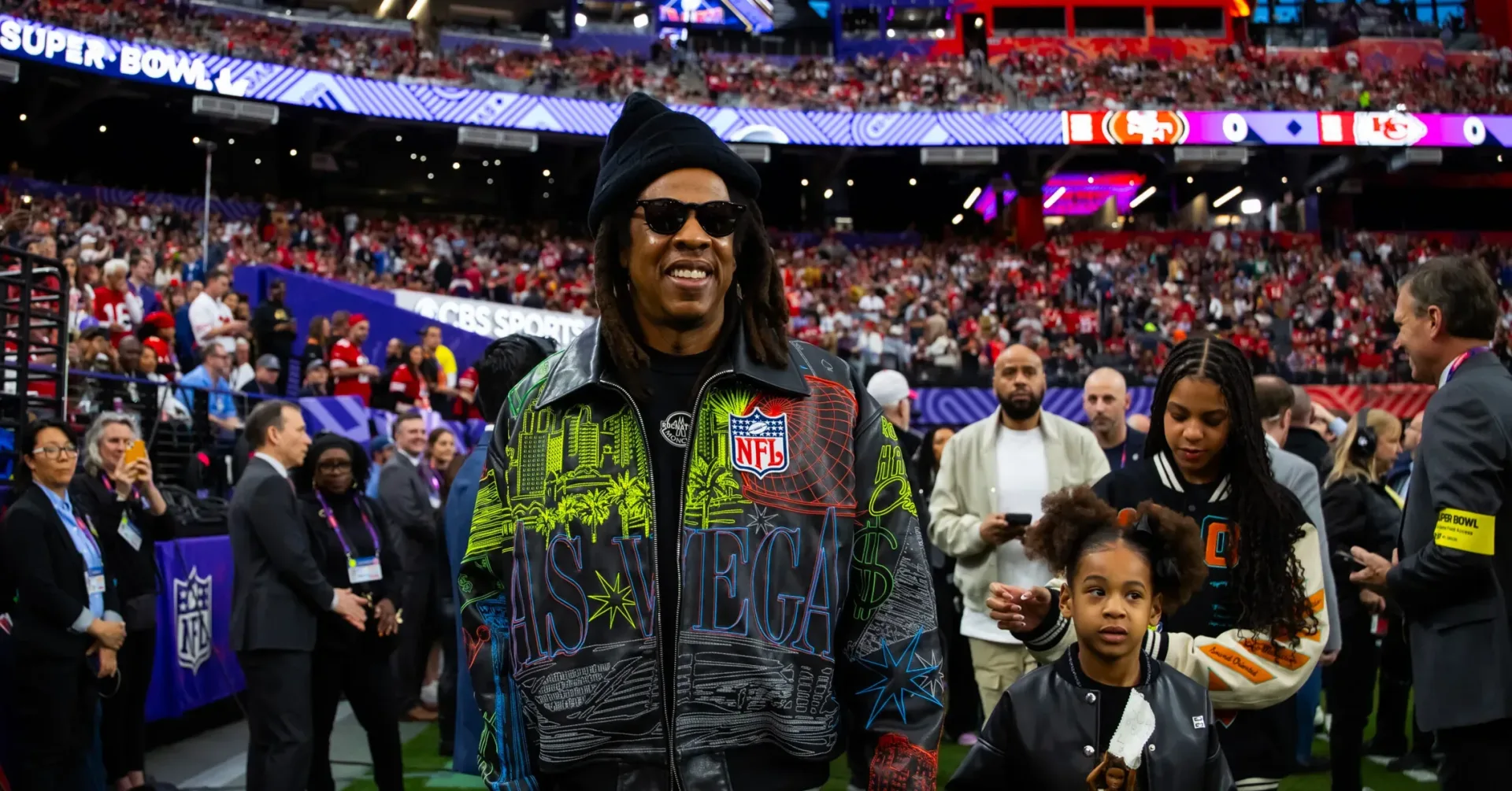
Colin Kaepernick has offered a fuller response to Jay-Z after the rapper revisited their long-running disagreement during a freestyle at Yankee Stadium. Speaking in Detroit on Saturday, September 12, Kaepernick questioned why the issue resurfaced seven years after Roc Nation’s agreement with the NFL and rejected the suggestion that his own legal resolution could be treated as equivalent to Jay-Z’s business relationship with the league.
The comments came during the National Black Footwear Forum, held by Pensole Lewis College of Business and Design. Jemele Hill interviewed Kaepernick in a conversation that also covered his forthcoming book, The Perilous Fight. When the discussion turned to Jay-Z’s performance, Kaepernick said he had been surprised that the subject was still prominent enough to be raised during an anniversary tour built around Jay-Z’s celebrated catalog.
For people catching up on a dispute that has moved between football, music, activism and public perception, the key point is that this is not merely a disagreement over one rhyme. It is a debate about what meaningful action looks like when a large institution faces criticism, who has the power to negotiate with that institution, and whether protest can be advanced from inside a corporate partnership without diluting the protest itself.
Why Kaepernick and Jay-Z’s positions diverged
Kaepernick became a defining figure in the national conversation around racial injustice after kneeling during the national anthem at NFL games. His activism and subsequent absence from the league became central to debates about player expression, the NFL’s responsibility, and the consequences faced by athletes who challenge powerful organizations.
Jay-Z had previously supported Kaepernick publicly. The relationship between their positions became more complicated after Roc Nation reached an agreement with the NFL involving social-justice work and entertainment, including halftime-show efforts. Jay-Z’s position has been that engagement with the league could create a more substantial route to impact than protest alone. Kaepernick and many critics saw the arrangement differently, arguing that it risked neutralizing a movement that had placed meaningful pressure on the NFL.
That divide is essential context for the latest exchange. The conflict is not best understood as a simple celebrity feud or an argument over who won a rap battle. Both men have become symbols of sharply different approaches to institutional change. One approach emphasizes confrontation and sustained pressure from outside the system; the other argues that working with influential institutions can produce outcomes that are otherwise unavailable.
Neither framework is uncomplicated. Partnerships can potentially direct attention and resources toward important causes, but they can also trigger questions about independence, accountability and the cost of compromise. Protest can force institutions to reckon with issues they would prefer to avoid, while protesters may endure professional and personal consequences that are rarely shared equally by better-connected participants.
The Yankee Stadium reference and the disputed claim
Jay-Z’s Yankee Stadium freestyle brought Kaepernick back into the conversation by referring to the former quarterback’s settlement and suggesting it involved a non-disparagement provision. The performance also addressed criticism tied to Jay-Z’s Target relationship, including backlash surrounding a boycott in the Black community, and pushed back against online detractors.
People described as close to Kaepernick subsequently disputed the assertion that he signed a non-disparagement clause. They also stressed that the terms of the deal connected to litigation and allegations of blackballing remain private. That distinction matters: the public has competing claims about an agreement whose details have not been publicly laid out in full. It would be irresponsible to turn an unverified characterization of confidential terms into settled fact.
Kaepernick’s own response added a broader critique. He interpreted Jay-Z’s reference as evidence of lingering discomfort over the Roc Nation-NFL deal and the negative response it received. In Detroit, he argued that comparing their situations overlooks a major imbalance in leverage and context.
Kaepernick’s argument, in essence, is that an athlete he says was blackballed by the NFL cannot be meaningfully compared with a business figure entering into a high-profile partnership with that same league.
That is the heart of his position. A settlement reached amid legal claims, particularly for a player who says he was excluded from work in the league, is not the same type of choice as making a commercial agreement with the NFL. Kaepernick also said he had been offered a deal by the league, though the available remarks do not provide further details about that alleged offer.
“We’re past kneeling” remains a flashpoint
Kaepernick connected the latest dispute to Jay-Z’s past statement that society was “past kneeling,” a phrase that remains controversial because it has been understood in radically different ways. To critics, it seemed to dismiss the method of protest that made Kaepernick’s activism visible and that carried real professional risk. To defenders of a partnership-oriented strategy, it reflected an argument for expanding the work beyond symbolic gestures.
The disagreement illustrates why language around activism can become so charged. Saying a movement has moved beyond one tactic can sound like an invitation to build on it. But if the original tactic has not received redress—and if the person associated with it remains outside the institution—those same words can sound like an attempt to move past the problem before it has been resolved.
That tension has only increased with time. NFL halftime entertainment is a massive cultural stage, while the Kaepernick controversy remains inseparable from questions about speech, employment and racial justice in professional sports. The league’s ability to feature major artists and social initiatives does not erase public scrutiny over the history that made such initiatives necessary in the first place.
Why the setting in Detroit is notable
Kaepernick did not make these remarks through a stray social-media post. He discussed them at a forum centered on Black footwear, design and business, in an interview that was also meant to address The Perilous Fight. That setting placed the argument in a wider conversation about ownership, opportunity and the relationship between cultural influence and major industries.
Those questions extend beyond football and music. Athletes, performers and creators routinely face decisions about whether to challenge institutions publicly, negotiate for a place within them, or attempt both at once. The answers differ depending on a person’s resources, bargaining power and willingness to accept risk. Kaepernick’s comments put the uneven distribution of that risk at the center of the Jay-Z comparison.
For collectors who follow sports history, the episode is also a reminder that an athlete’s cultural footprint cannot be captured only through statistics or memorabilia values. Kaepernick’s place in the modern sports story involves his NFL career, certainly, but also the public movement around him and the ongoing arguments his protest continues to provoke. That makes football collectibles connected to this era part of a much larger cultural record. Readers tracking the collecting side of the sport can also follow developments in sports-card release news.
What is clear, and what remains private
Several points are clear from the current exchange: Jay-Z used his Yankee Stadium freestyle to address criticism involving Kaepernick and his NFL-related choices; people said to be close to Kaepernick disputed the non-disparagement-clause claim; and Kaepernick has personally criticized the comparison between his settlement and Jay-Z’s deal with the league.
Other details remain uncertain because the agreement tied to Kaepernick’s legal claims is private. The public can assess the arguments each side is making, but it cannot responsibly fill confidential gaps with assumptions. Kaepernick’s Detroit remarks do not disclose those terms; instead, they challenge the framing that treats the outcomes as interchangeable.
His latest comments ensure the conversation will remain focused on that framing. Jay-Z’s freestyle may have reopened an old wound in a very public setting, but Kaepernick’s response makes clear that he sees the issue as part of an unresolved argument about protest, power and who gets asked to bear the cost of change.