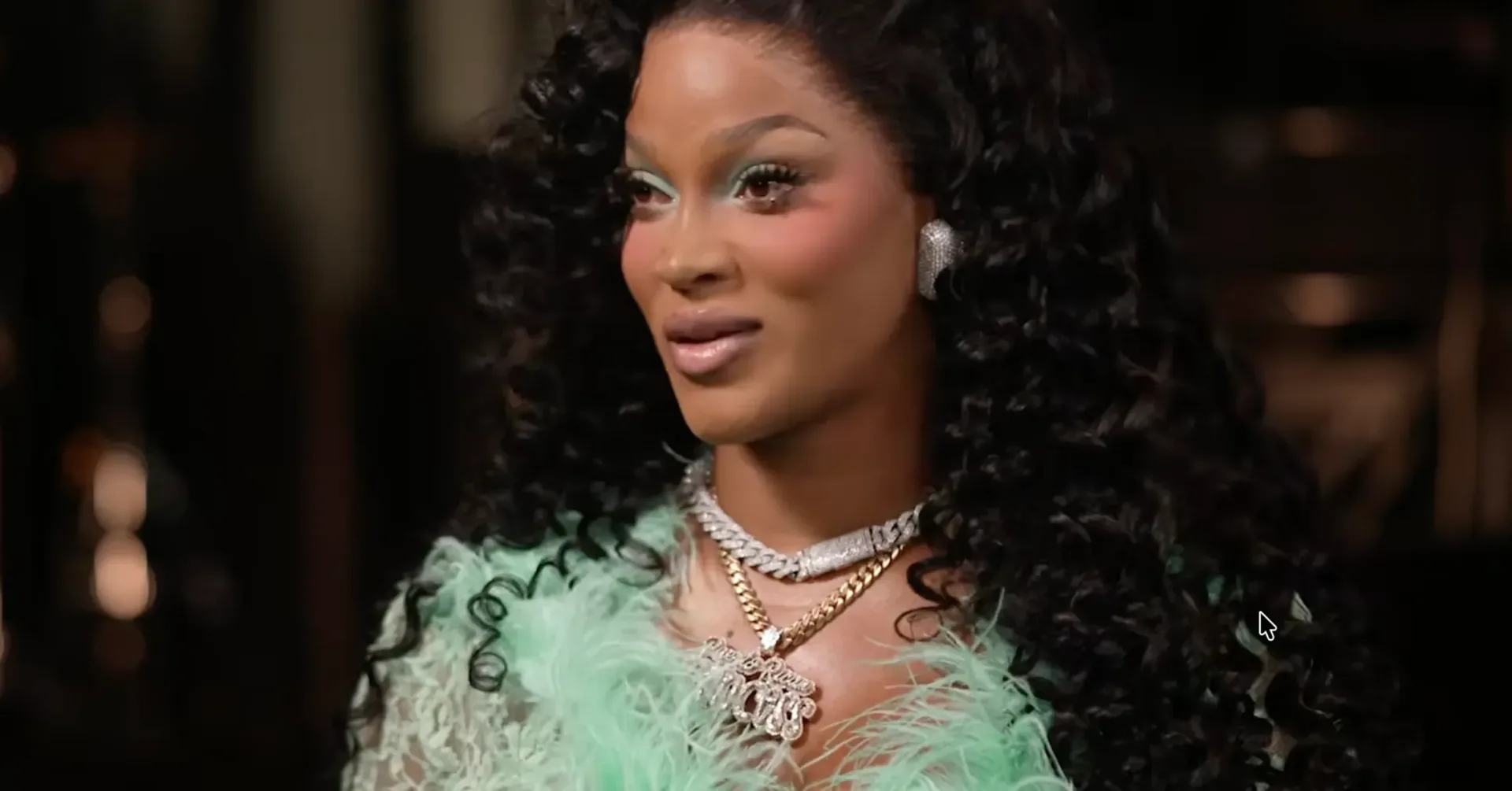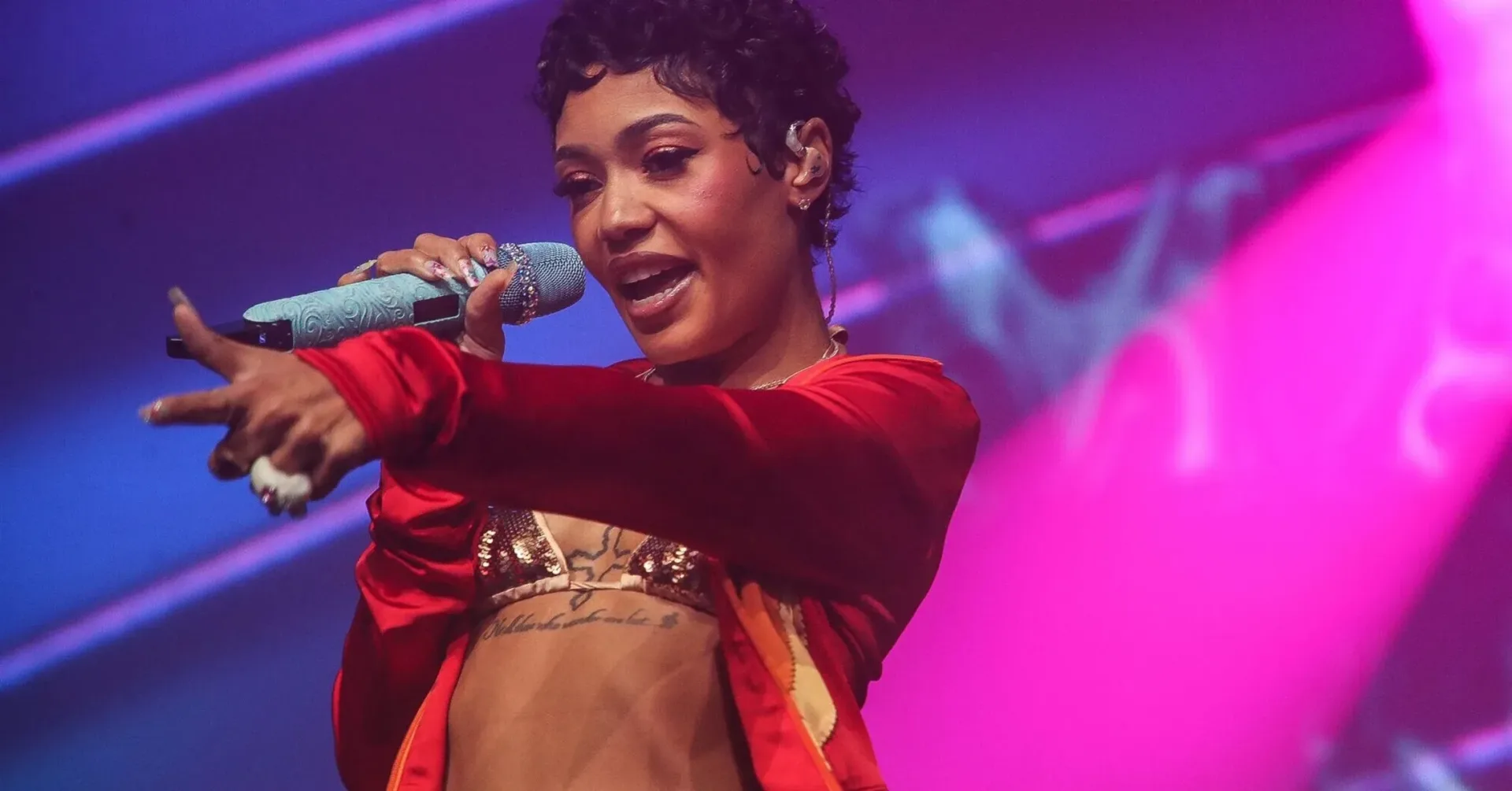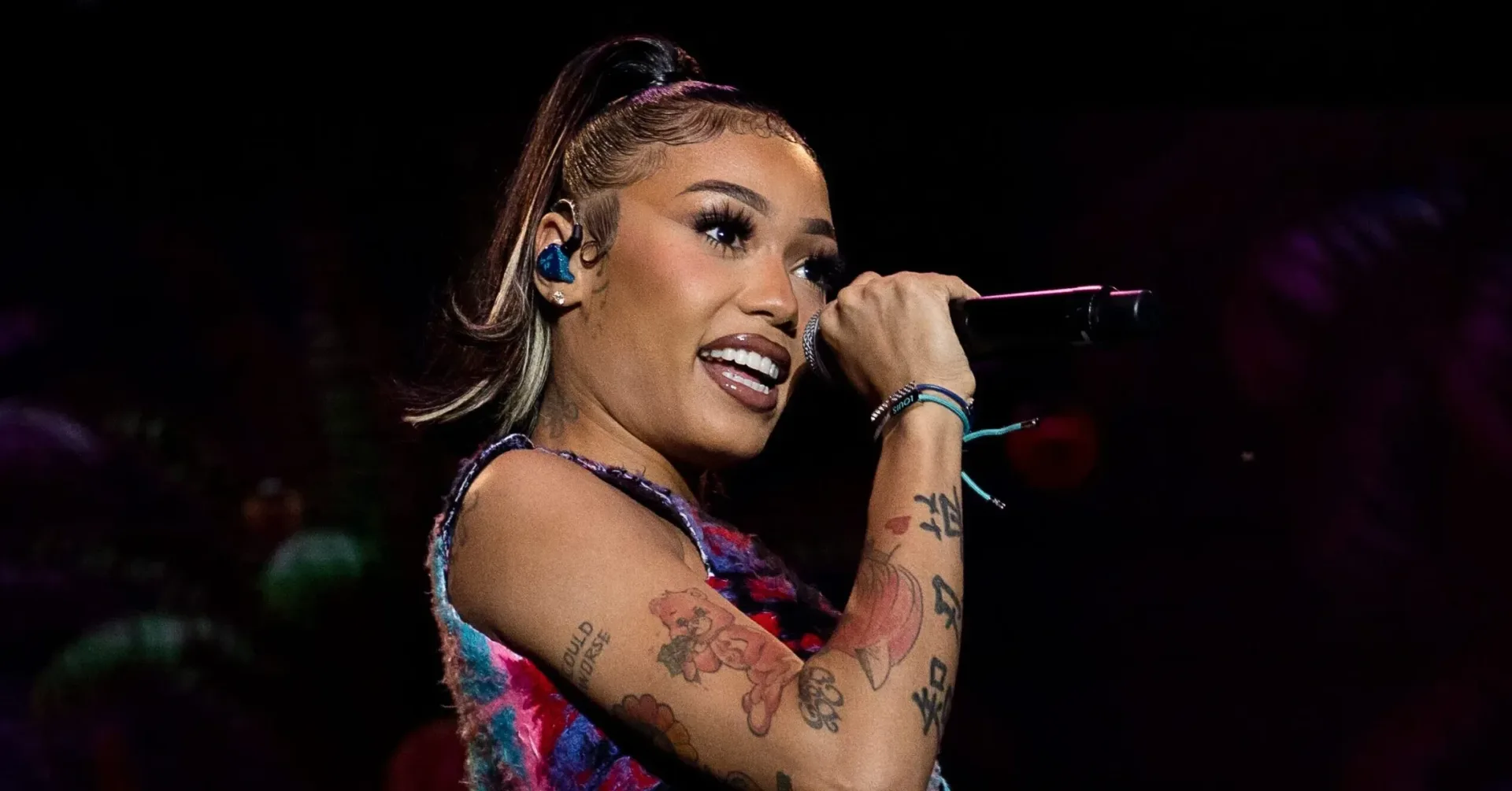
Coi Leray says she and her father, Benzino, have reached a markedly better place after years in which their disagreements played out publicly. Speaking on The Jason Lee Show, Leray described a relationship that is now rooted in regular contact, a new shared role in her family, and a direct agreement not to turn private conflict into public content.
The change is meaningful precisely because Leray did not frame it as a clean rewrite of the past. She said she loves her father and that they are “really cool now,” but also summed up the limits of reconciliation plainly: “We forgive, we just don’t forget.” It is a distinction that keeps the update grounded. Repair, in this account, is not denial of earlier hurt; it is an effort to handle the relationship differently in the present.
Miyoco has become the center of their renewed contact
Much of the renewed connection revolves around Leray’s daughter, Miyoco. Leray said Benzino FaceTimes frequently to see his granddaughter, who calls him “pop pop.” She also said that watching him become a grandfather has landed differently for her because she did not grow up with that kind of relationship with her own grandparents.
That does not make Miyoco responsible for fixing an adult relationship. Rather, Leray’s comments suggest that motherhood has shifted her perspective on what a relationship with Benzino can look like now. She said she is able to have conversations with him that she could not have navigated in the same way years ago. The new family dynamic appears to have created both a reason for contact and a clearer sense of what needs protecting.
Leray also said becoming the primary provider for her own family helped her view parts of Benzino’s story with more complexity. She described seeing him as a man in his 60s who built himself up, lost much of what he had, and experienced both success and failure. That is empathy, but it is not presented as absolution. Her comments hold both ideas at once: understanding someone’s circumstances can change the way a conversation happens without eliminating the effects of past decisions.
The key change is a boundary around public discussion
The practical centerpiece of the reconciliation is an agreement about where their problems will be handled. Leray said she asked Benzino to stop speaking publicly about their relationship. She recalled that he apologized and that they agreed to keep future matters between themselves rather than allowing them to become another social-media argument.
In ordinary terms, a boundary is a rule someone sets around what they will and will not accept in a relationship. In this case, the boundary is not merely about avoiding an awkward topic. It addresses the medium through which much of the strain became visible: interviews, posts, and public commentary. For a family relationship involving well-known figures, keeping a dispute offline can matter because the audience does not just observe the conflict; it can amplify, reinterpret, and prolong it.
That makes their arrangement less about pretending the past did not happen and more about changing the conditions of future conversations. Leray’s description of Benzino’s apology is significant in that context. An apology is not, by itself, evidence that every disagreement has been solved. But acknowledging the request and agreeing to a different approach gives the relationship a specific operating rule rather than an undefined promise to “do better.”
Why the history made this update notable
Leray and Benzino’s relationship had already been discussed in public long before this new interview. On her 2021 song “No More Parties,” Leray referenced feeling let down by her father. Later, tensions rose again when Benzino revealed Nicki Minaj’s involvement on “Blick Blick” before Leray had done so herself.
By May 2024, Leray wrote that she had not spoken with Benzino for more than a year and did not want to be connected to his interviews or his public choices. Those statements made the divide seem especially firm at the time. The current update therefore is not simply a father-and-daughter catch-up; it represents a substantial shift from a period in which Leray was explicitly seeking distance from public association with him.
It is also important not to overread the update. Leray did not say that all of the pair’s history has been erased, nor did she offer a sweeping claim that every issue between them is resolved forever. What she did describe is more concrete: they talk regularly, Benzino is now interacting with Miyoco, he apologized after she asked him not to discuss their relationship publicly, and they agreed to keep future issues private.
From public feud to private family matter
Late last year, Benzino said publicly that he had not yet met Miyoco. Leray now says that has changed. She described seeing her daughter brighten up when her grandfather calls, a small but revealing detail in an update otherwise defined by big emotions and a long public history.
The contrast highlights why the offline agreement matters. A statement that one family member has or has not met a child can quickly become a headline, an argument, or a referendum on a relationship. Leray’s account indicates that the family is now trying to make room for the grandparent-grandchild bond without feeding another cycle of public commentary.
That distinction is useful when discussing celebrity-family news broadly. Public visibility can make people assume that every personal development must be treated as a permanent verdict: estranged or reconciled, close or cut off. Real relationships rarely move so neatly. Leray’s “forgive, don’t forget” formulation instead describes something more conditional: affection and contact can exist alongside memory, caution, and firm limits.
It also underlines the difference between a public narrative and a private relationship. The public record includes songs, interviews, posts, and moments of conflict that audiences can revisit indefinitely. The relationship itself, however, is lived through phone calls, apologies, boundaries, and family interactions that do not need an audience. That tension is familiar across entertainment news, including situations where public figures move to clarify claims about personal connections, as in a recent clarification involving Joseline Hernandez and Tory Lanez.
What Leray’s comments do—and do not—say
Leray’s comments offer a clear update on the present state of the relationship: she says she loves Benzino, they are speaking consistently, and his role as a grandfather has become part of their shared family life. Her comments also identify a key condition for that progress: no more airing their issues online.
They do not provide a detailed account of every conversation that led to the repair, and they do not establish that difficult moments cannot return. Nor do they require an audience to choose between treating their previous conflict as meaningless or treating reconciliation as impossible. Leray’s account leaves room for both the seriousness of the past and the reality of a changed present.
For now, the most concrete measure is simple. Benzino, who previously had not met Miyoco, is now in contact with her. Leray sees joy in that connection, while remaining clear that any problems between her and her father belong between them. After a history of public friction, that privacy is not a minor detail. It is the rule Leray says is helping make the renewed relationship possible.