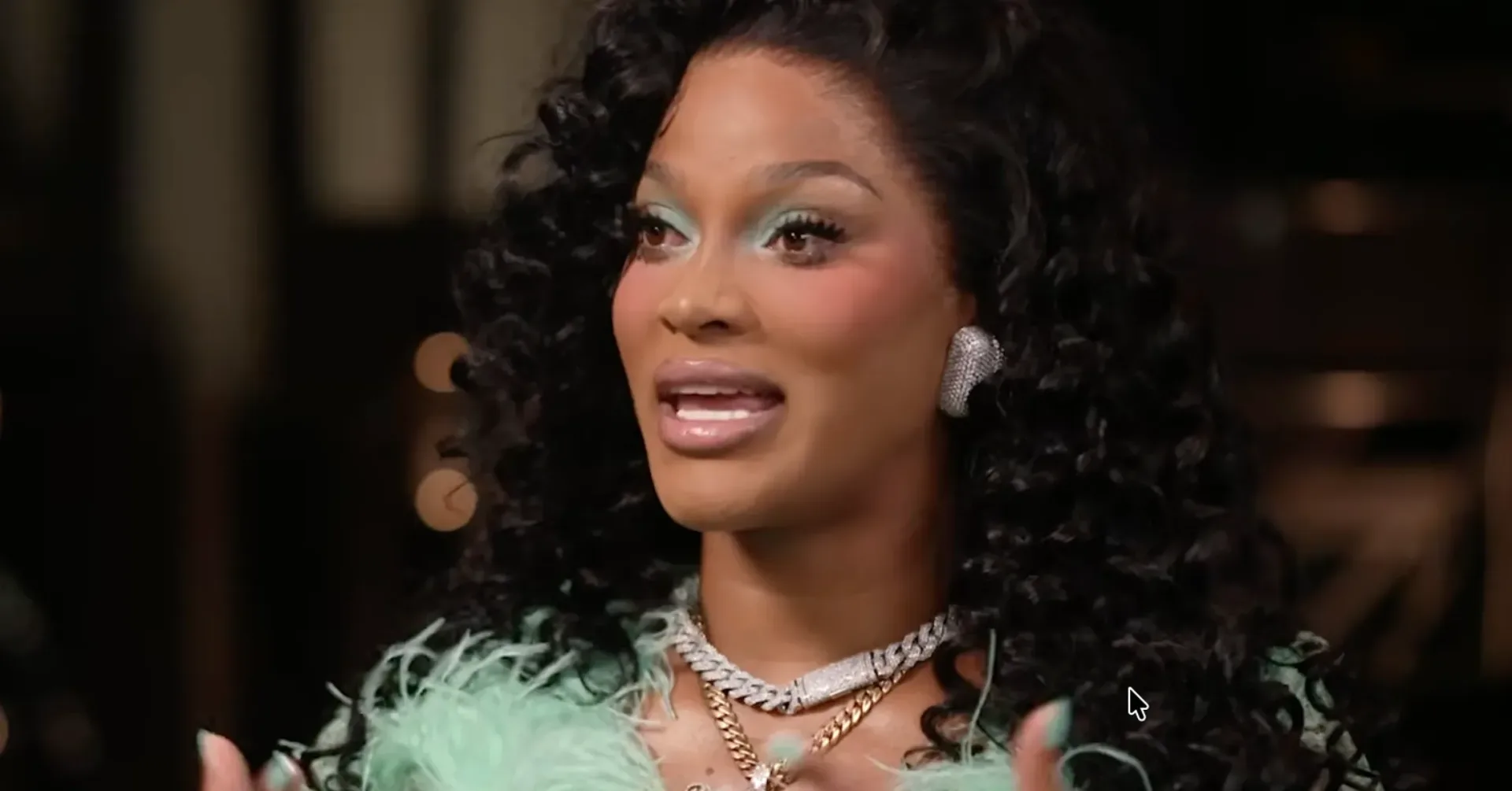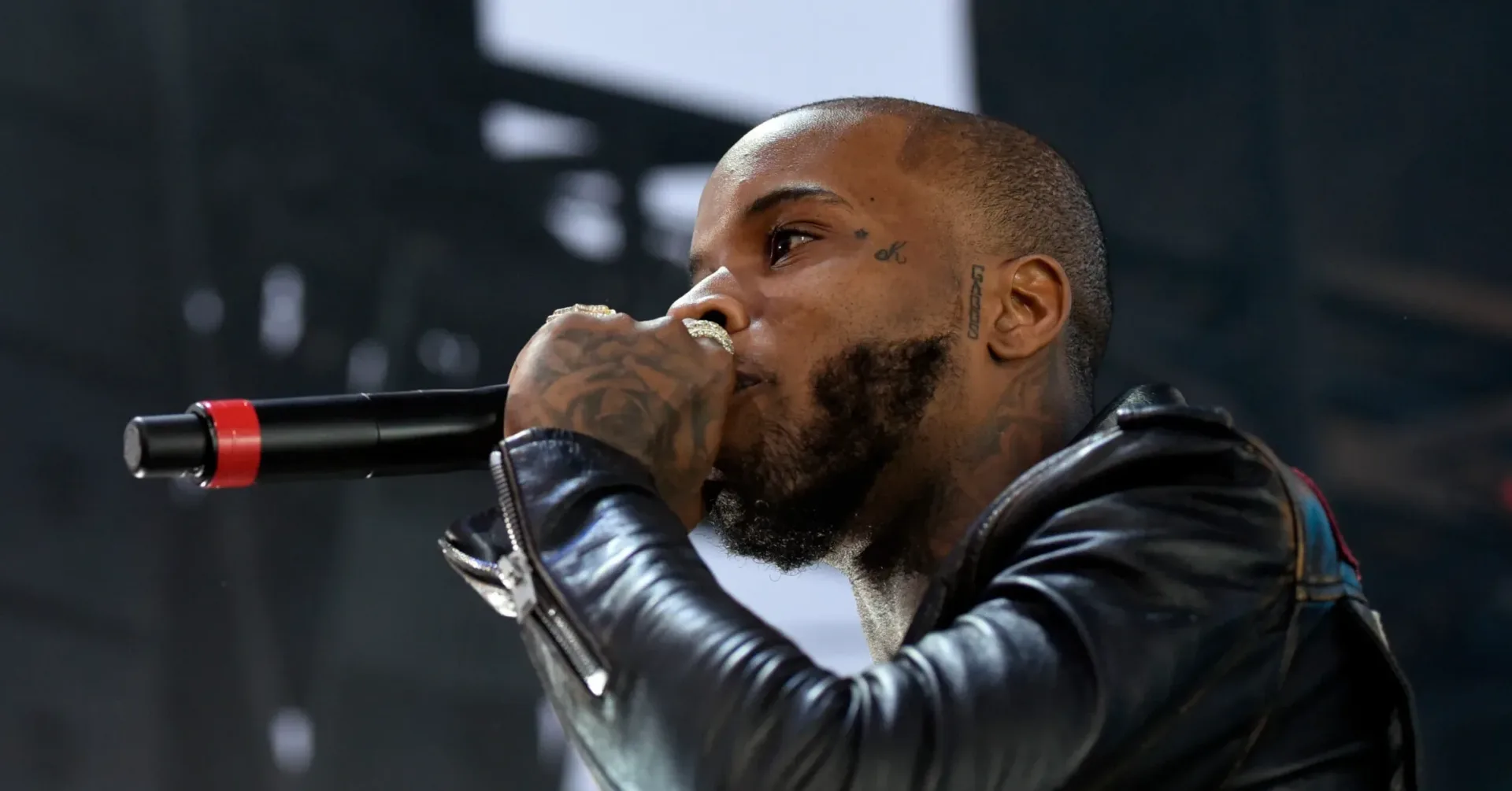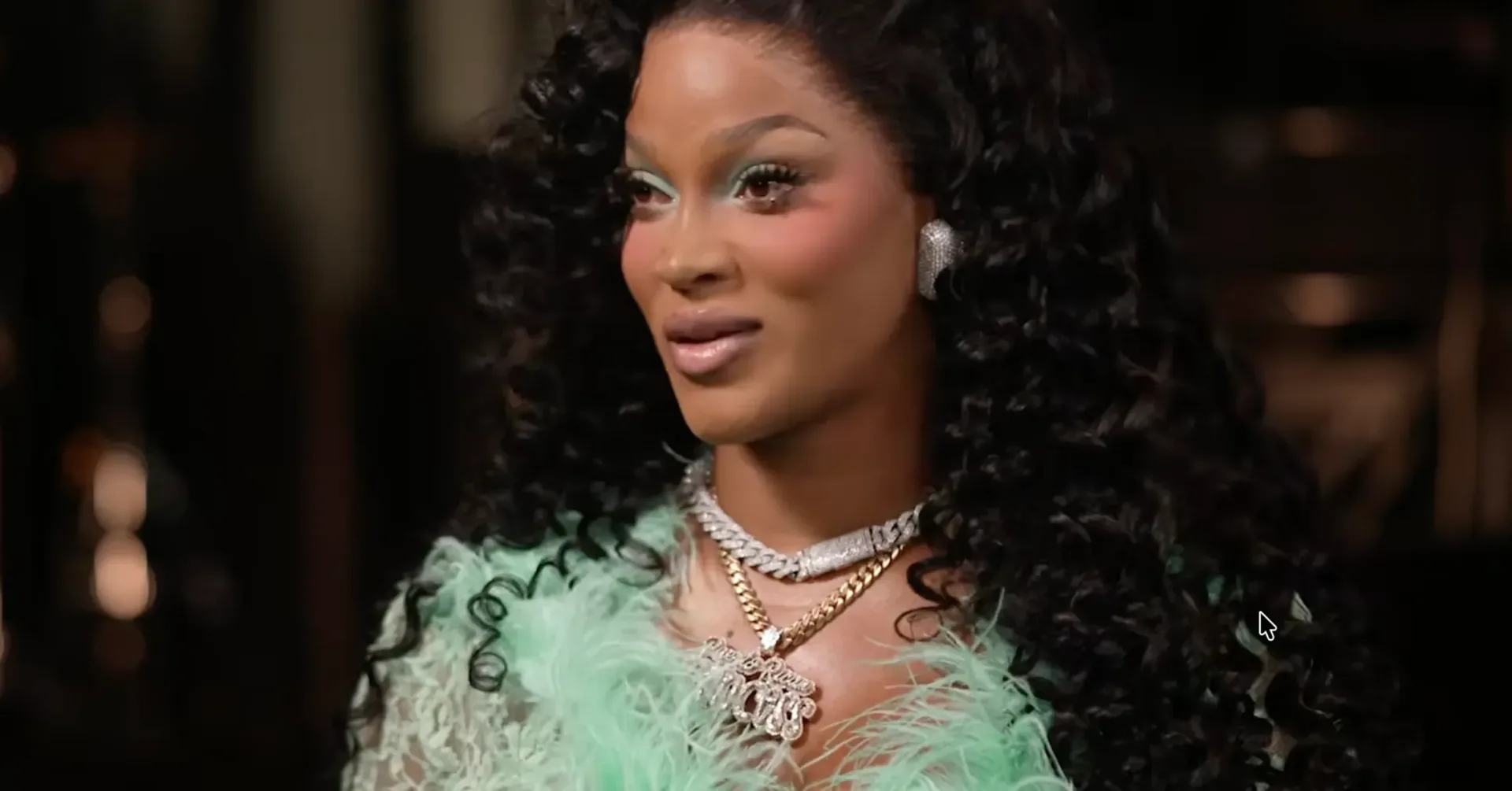
Joseline Hernandez has drawn a firm line around the nature of her connection with Tory Lanez. During an appearance on Club Shay Shay, Hernandez rejected the suggestion that she and Lanez were close friends and said there was never a romantic relationship between them.
The exchange began when Shannon Sharpe raised the premise that Hernandez and Lanez had been friends. Hernandez immediately disputed that characterization, responding that she was not “cool” with him. She later added an important distinction: she does not say she has a personal feud with Lanez, but she also does not recognize the idea that the two shared a meaningful relationship.
Her clearest summary was straightforward: “We never had a relationship like that.” Hernandez did acknowledge what may have fueled assumptions about them, saying Lanez “was liking on the Princess,” a reference to her longtime Puerto Rican Princess persona. That describes possible interest on his side, not a mutual romance, friendship, or serious past connection.
A correction, not a revelation about a relationship
Much of the exchange is notable because of what Hernandez did not claim. She did not describe dating Lanez. She did not say they were close friends. And she did not offer a detailed account of an off-camera relationship that would transform a casual public assumption into confirmed history.
Instead, Hernandez’s comments functioned as a correction to the premise of the question. In celebrity coverage, a perceived association can turn into a much bigger narrative with remarkable speed. People may be connected through overlapping entertainment circles, public appearances, industry acquaintances, social media, or reports of one person’s interest in another. None of those things, on their own, establish a friendship or a romantic relationship.
Hernandez separated those categories clearly. There can be no “beef,” in her telling, without there being friendship. And there can be reported or perceived attraction without there being a relationship. Her wording does not invite the public to fill in the gaps; it narrows the claim to the facts she was willing to state.
What “liking on” means in this context
“Liking on” is informal language that generally signals flirtation or interest. It does not necessarily mean the interest was returned, that anyone dated, or that a relationship developed. Hernandez’s use of the phrase is therefore materially different from confirming that she and Lanez were together.
That distinction matters because the interview moved from a broad label—whether they were “cool” or friends—to a much more limited description. Hernandez did not deny that Lanez may have been interested. She denied the larger conclusion that there was a relationship to explain.
For readers encountering snippets from the discussion, the most accurate takeaway is not that Hernandez revealed a past romance. It is that she rejected one. The one detail she supplied about Lanez’s apparent interest was framed as an explanation for why others might have interpreted the situation differently.
Hernandez declines to address the shooting case
The conversation also touched on the criminal case involving Megan Thee Stallion, though Hernandez made clear that she did not want to speak as if she had personal knowledge of what happened. She said she was aware of the matter but did not know enough about it to offer an informed view.
Sharpe clarified that his question was not asking Hernandez to weigh in on the 2020 shooting itself. He was asking about her relationship, if any, with Lanez before his incarceration. Hernandez’s response kept those topics separate: she would not speculate about the shooting, and she said there was no substantive personal relationship with Lanez to recount.
That is a responsible boundary in a high-profile legal matter. Knowing someone socially, hearing about a case, or being asked about a public figure does not make a person a witness or an authority on underlying events. Hernandez did not present herself as any of those things.
Her comments also should not be read as a defense of Lanez, an accusation against anyone else, or an alternate theory of the case. They were expressly limited to her own lack of firsthand knowledge and to correcting the characterization of her connection to him.
The legal context remains separate from Hernandez’s comments
Lanez, whose legal name is Daystar Peterson, is serving a 10-year prison sentence following his 2022 convictions for assault with a semiautomatic firearm, carrying an unregistered loaded firearm in a vehicle, and discharging a firearm with gross negligence. The convictions arose from the 2020 shooting of Megan Thee Stallion.
An appeal of the conviction was rejected in November 2025. Those court outcomes are the relevant legal context, but they are separate from Hernandez’s account of her personal history with Lanez. Her appearance did not add testimony, legal evidence, or a challenge to those proceedings.
That separation is especially important when interview clips travel online. A short segment can be interpreted as an intervention in a major case merely because it includes the names of people associated with that case. Here, Hernandez’s position was the opposite: she said she was not in a place to comment on facts she did not personally know.
The distinction between commentary and firsthand knowledge is also central to public discussions involving criminal cases. A commentator offers an opinion; a witness provides information based on direct observation; and a court record reflects formal legal proceedings and decisions. Hernandez did not claim either witness status or legal expertise. Her remarks concerned her own relationship—or lack of one—with Lanez.
Why the interview answer is easy to misread
There are several layers to Hernandez’s answer, and flattening them into a single headline can obscure the point. The interview establishes the following:
- Hernandez rejected the assertion that she and Lanez were close friends.
- She said she has no personal “beef” with him.
- She said there was no romantic relationship between them.
- She suggested he may have shown interest in her.
- She declined to make claims about the shooting involving Megan Thee Stallion because she did not know the underlying facts personally.
Each of those statements can coexist. The absence of a feud is not confirmation of friendship. Someone expressing interest is not confirmation of dating. And declining to discuss a legal case is not an endorsement of any party’s position.
Hernandez’s phrasing has another practical implication for the way celebrity relationships are discussed. A public figure may be asked to either validate or deny a preexisting storyline, but the most accurate answer may be more limited than either option. In this case, Hernandez did not turn the exchange into a story about a secret relationship, a falling-out, or a legal-case commentary. She rejected all three directions.
A narrow answer in a wide public conversation
The larger public attention around Lanez means even small references to him can be treated as potentially significant. But significance should not be confused with new information about the case. Hernandez’s account is personal and narrow: she says she was not his friend, had no romantic relationship with him, and does not know enough about the shooting to discuss it.
Her “Princess” comment adds color, but not confirmation of a deeper connection. It may explain a rumor or an assumption. It does not substantiate the idea that there was a relationship before Lanez’s incarceration.
For a useful example of how legal disputes and public narratives can develop on different tracks, readers can also see this coverage of separate criminal, civil, and supervision issues involving Boosie Badazz. Different claims and proceedings carry different evidentiary weight, and public discussion does not merge them into one verified account.
Ultimately, Hernandez’s interview response is best understood as a correction of labels. She did not describe herself as Lanez’s confidante, former partner, or source of inside information. She said there was no relationship “like that,” while allowing only that he had shown interest. The rest of the story belongs neither to her personal experience nor to the claims she chose to make.