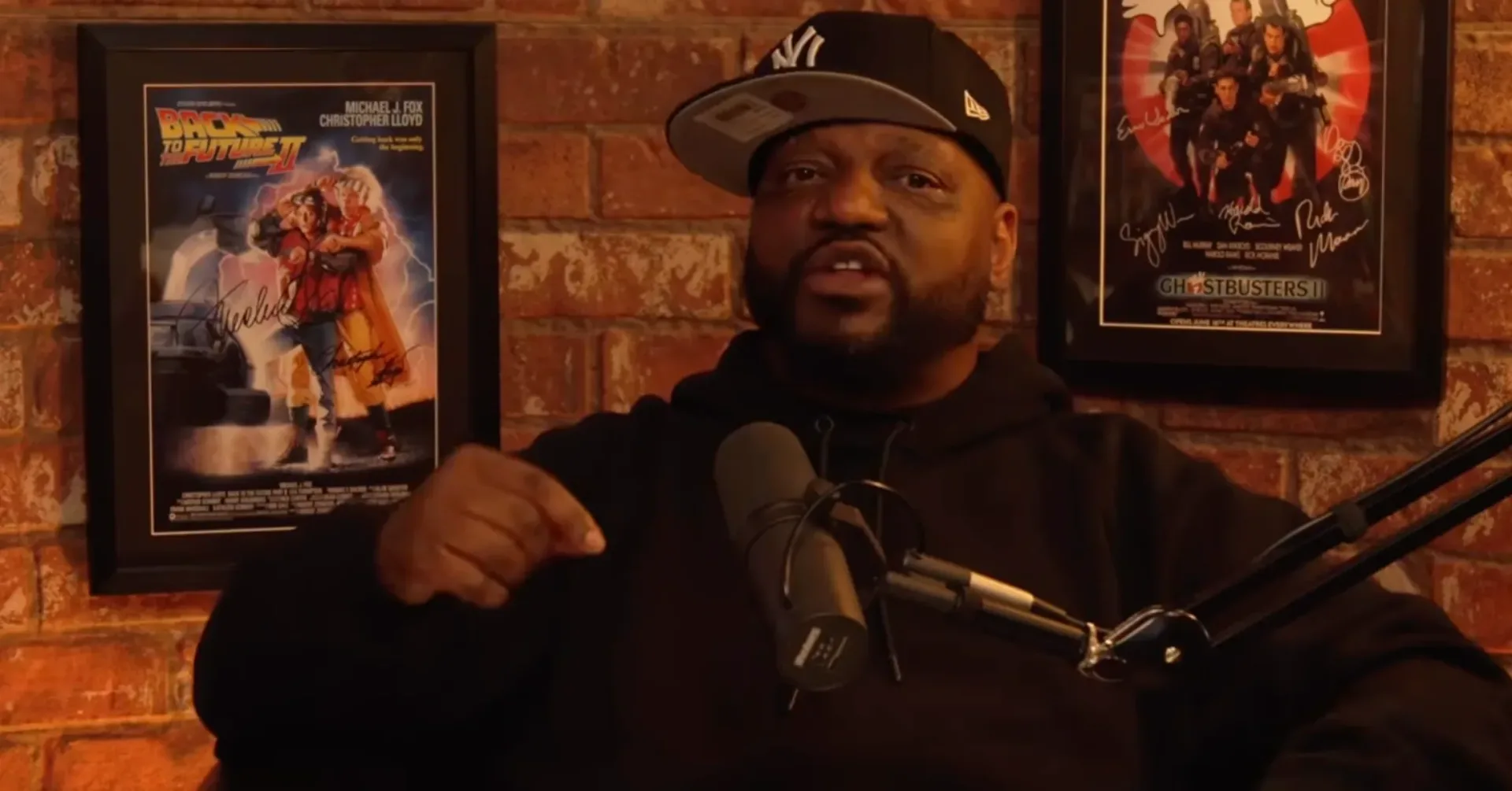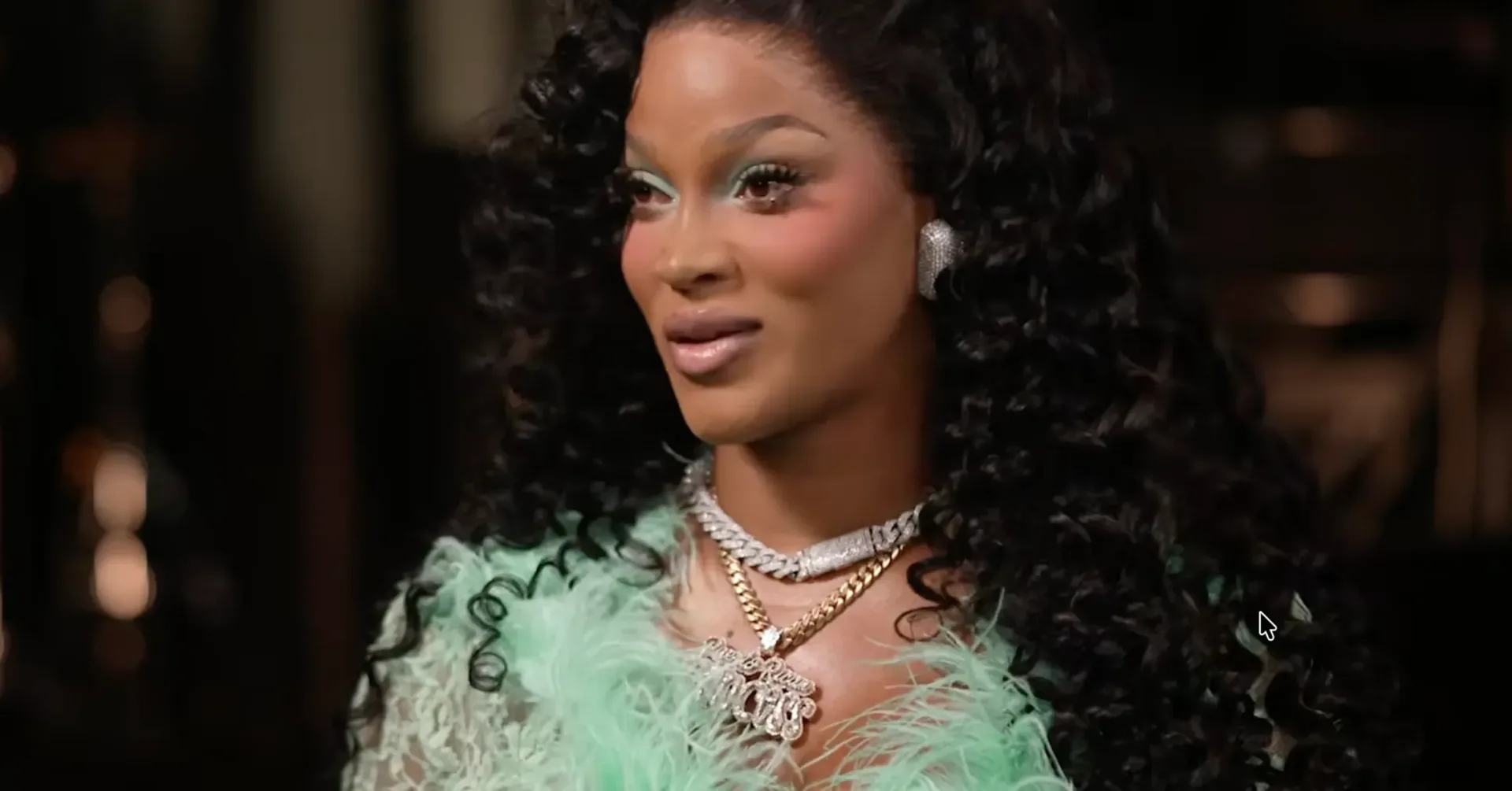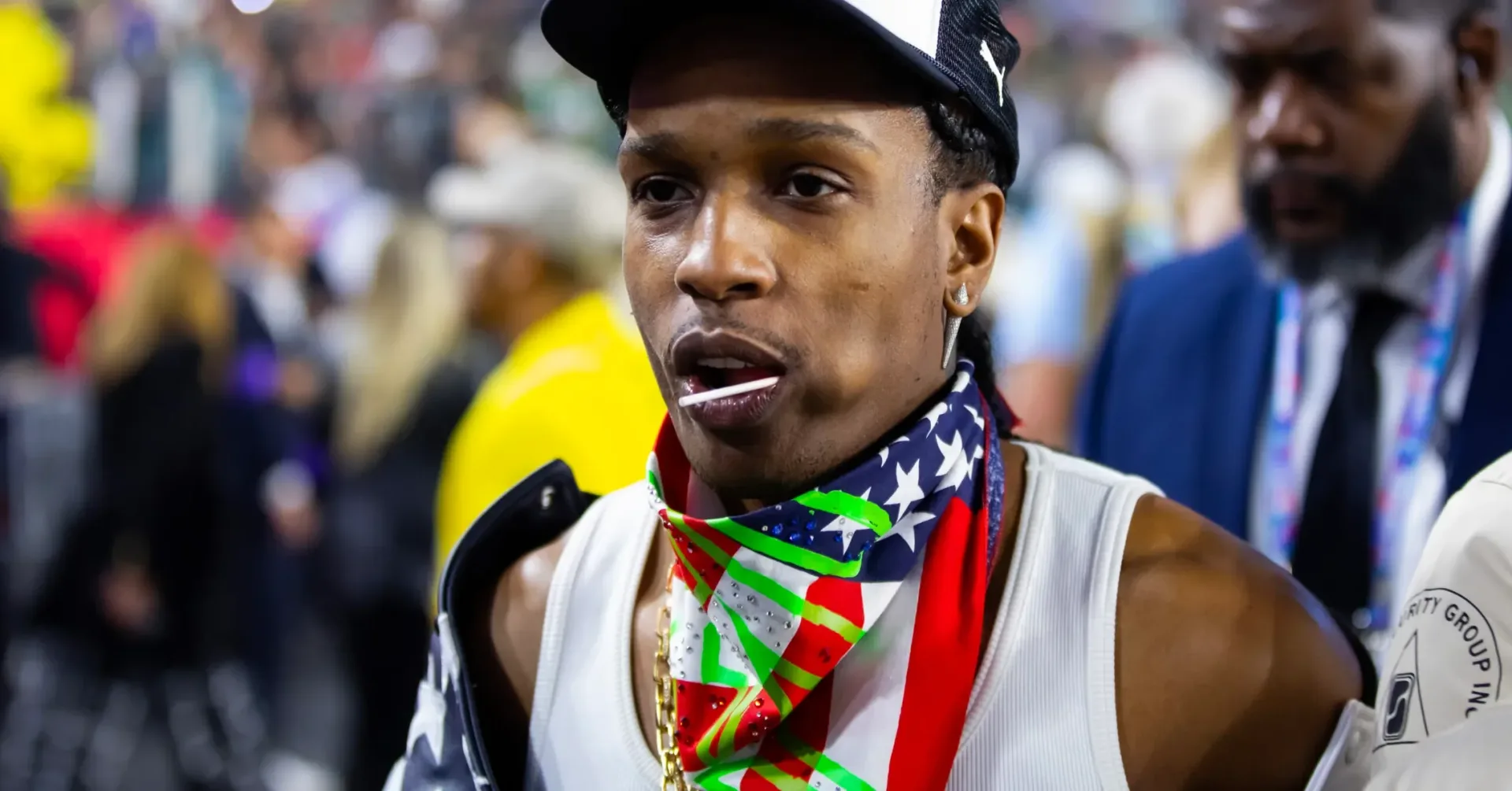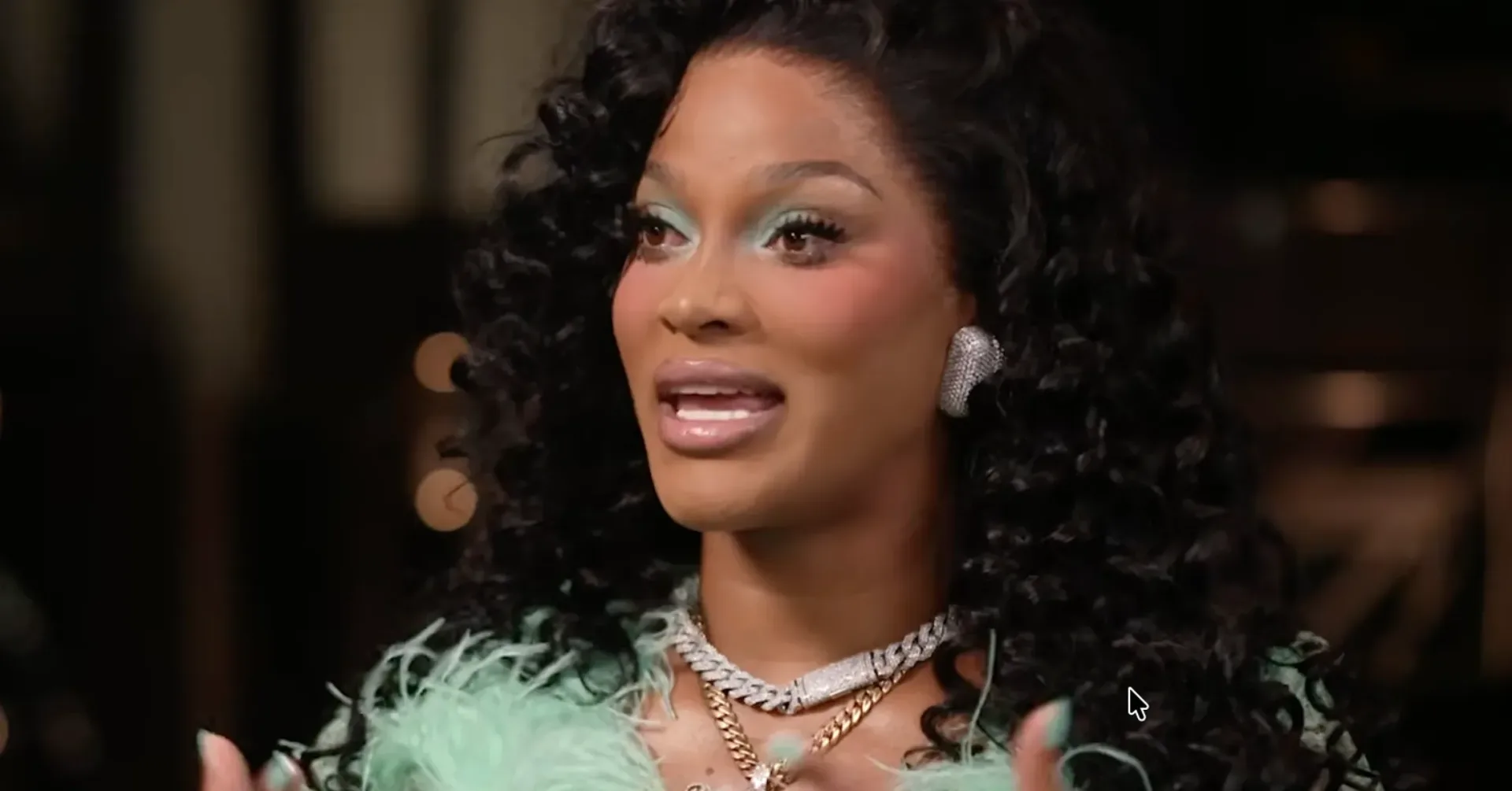
Joseline Hernandez has heard the Rihanna comparisons before. What she apparently did not expect was for A$AP Rocky to give the resemblance a comic-book-style twist.
During an appearance on Club Shay Shay, Hernandez said she and her husband, Balistic Beats, ran into Rocky at a hotel in Paris around Paris Fashion Week the previous year. Hernandez was in the city for a performance, she explained, when Rocky greeted her with an unexpected assessment: “You’re Rihanna’s evil twin.”
Her response, by her own telling, was less offended than amused. “Me?! Why I gotta be the evil twin!” Hernandez recalled saying. She returned to the joke more than once, laughing at the idea that a flattering comparison also came with an assigned villain role.
The anecdote works because it contains two different kinds of celebrity recognition at once. There is the visual comparison fans have made between Hernandez and Rihanna, and there is the more personal suggestion that Rihanna knows of Hernandez and Balistic. Hernandez said Rocky told her that Rihanna has love for the couple.
A playful label, not a serious feud
Nothing in Hernandez’s account suggests the “evil twin” remark was meant as an insult or the start of a dispute. She presented it as a humorous exchange in an unexpected hotel encounter, with the phrase functioning like friendly teasing rather than a statement about either woman.
That distinction matters in celebrity-news shorthand. A headline-friendly nickname can travel quickly without the tone that originally surrounded it. Here, Hernandez’s laughter and her repeated question of why she got the “evil” designation provide the important context: she found the remark funny.
There also is no indication from Hernandez that she was claiming a close personal friendship with Rihanna. Her account is narrower. She said Rocky conveyed that Rihanna likes Hernandez and Balistic, and she left the conversation with the impression that the singer was familiar with them. That is separate from saying the two women regularly know or spend time with one another.
“People do say I look like her,” Hernandez said. “I think she’s gorgeous. We give some of the same vibes.”
That response makes clear that Hernandez is not pushing back against every comparison. She acknowledged that people see a resemblance and praised Rihanna, while also framing the connection in terms of shared “vibes” rather than insisting on an exact lookalike claim.
Why “lookalike” comparisons keep becoming the story
Celebrity lookalike discourse is an especially durable part of online pop culture because it combines an easy visual observation with personality. It rarely stays at the level of facial features. Audiences tend to attach larger ideas to the comparison: style, confidence, public persona, glamour or the energy someone projects.
Hernandez’s phrase “same vibes” is useful in that respect. A lookalike comparison does not have to mean two people are identical in appearance. It can describe an overall impression created by styling, expressions, attitude and how viewers interpret someone’s public image. Those impressions are subjective, which helps explain why one person may see a close match while another sees little resemblance at all.
Rocky’s “evil twin” add-on turns that familiar format into a joke built on contrast. In fiction, a twin counterpart is often a device for exaggerating qualities or setting up opposites. Applied casually in conversation, it can be a playful way to say two people share a surface resemblance but have different energy. Hernandez’s retelling did not supply a literal reason for the label, and Rocky’s reasoning remains unknown.
That unanswered detail is arguably why the story lands. Hernandez accepts the broad compliment, questions the mischievous modifier and laughs at the lack of an explanation. It is a compact celebrity encounter, not a sweeping declaration about rivalries, affiliations or relationships.
The Paris setting adds a believable collision point
Hernandez placed the meeting around Paris Fashion Week, an environment where performers, artists, designers and entertainment figures can pass through the same hotels and events. In this case, the useful factual point is simply that Hernandez said she was there to perform and that she and Balistic encountered Rocky at their hotel.
The setting helps explain why the exchange was unexpected but not implausible. It also places Balistic directly in the story rather than treating him as an afterthought: Hernandez said Rocky’s positive message concerned both of them.
For readers, the practical takeaway is to keep the layers of the anecdote separate. Hernandez reported that Rocky made the “evil twin” joke. She reported that he said Rihanna likes her and Balistic. Hernandez herself said she sees why people make the Rihanna comparison and called Rihanna gorgeous. Those are the supported elements. The reason behind the “evil twin” wording was not provided, and it should stay a joke rather than become evidence of a hidden conflict.
Interview clips reward context over reaction
Short entertainment clips often circulate around one sharp line. That can make a playful moment appear harsher, or make a passing compliment seem more definitive, once its setup is stripped away. Hernandez’s complete account gives the line its proper frame: a chance meeting, a laugh, a compliment, and an anecdote shared in response to a question about a comparison audiences already make.
That is also why it is worth distinguishing a firsthand recollection from an independently detailed public exchange. Hernandez is describing what she says happened and what Rocky told her. The available account does not include a separate explanation from Rocky or Rihanna, so claims beyond Hernandez’s retelling would overstate what is known.
Celebrity interviews often produce these small, memorable pieces of social-world texture. A similarly tense interview setting can produce an entirely different outcome, as seen in this on-camera studio walkout. Hernandez’s story went the other direction: she made the punchline the point, then stressed the warmth she believed accompanied it.
So, for now, the Rihanna “evil twin” title belongs to a brief Paris interaction and Hernandez’s amused reaction to it. She agrees that the Rihanna resemblance is a thing people notice. She does not agree that she has been given a satisfying explanation for the villain casting.