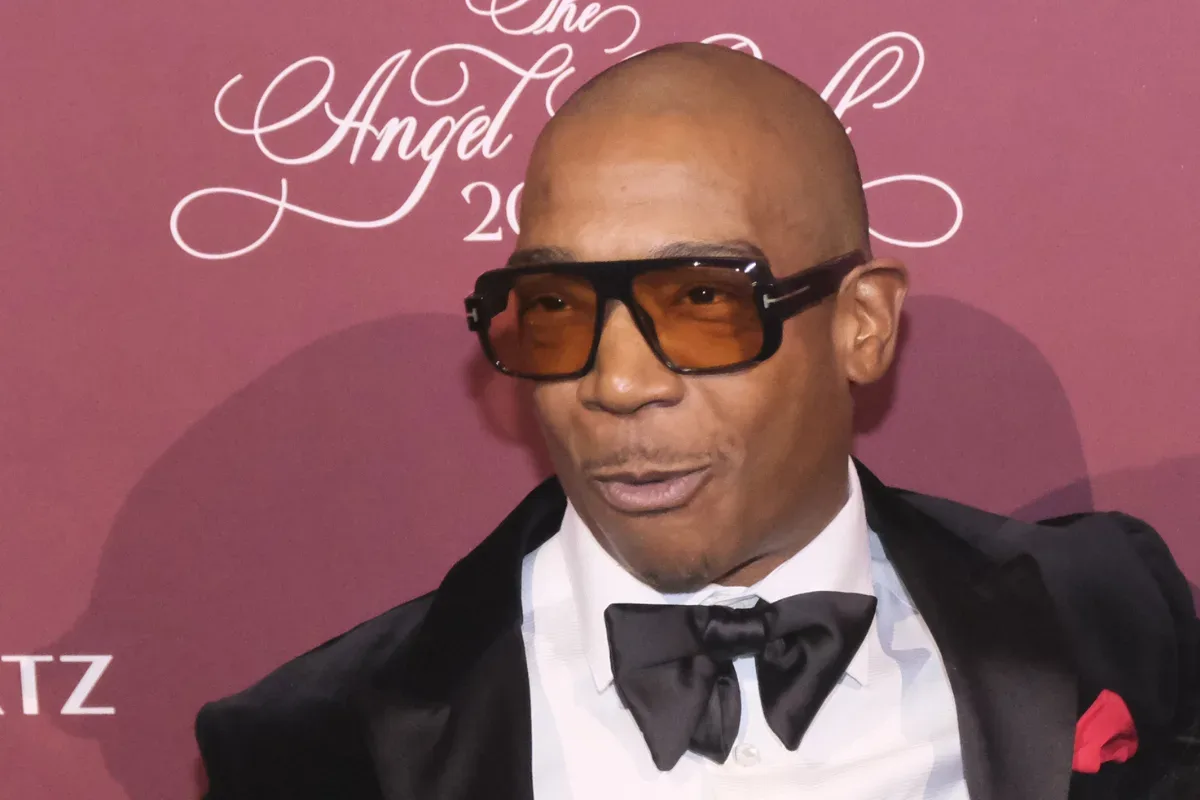
Ja Rule says he has reconsidered the idea of slowing down professionally after hearing Alicia Keys speak about Clive Davis at the music executive’s funeral. The rapper, now 50, had been thinking seriously about devoting more time to his children and granddaughter Bella after a career pace that, by his own account, kept him working through much of his children’s childhoods.
But the tribute gave him a different framework for thinking about age, opportunity and what a later chapter can look like. Keys described Davis beginning again at 67, a detail that landed with particular force for Ja Rule. “And at that moment, I realized I wasn’t done yet,” he said while reflecting on the service.
That does not necessarily mean abandoning his concern for family time. Rather, the remarks point to a more complicated calculation: continuing to pursue a career while trying to be more intentional about the people closest to him. For an artist who has described his priorities in terms of being the best grandfather he can be, the distinction matters. Slowing down and stepping away altogether are not the same decision.
A tribute that changed the question
Clive Davis’ funeral was held June 29 at Central Synagogue in Manhattan. Ja Rule was among the artists who gathered to honor Davis, whose work connected performers from many musical styles. Alicia Keys, Dionne Warwick, Barry Manilow and Stevie Wonder attended. Bruce Springsteen spoke, and Jennifer Hudson performed at the private service, which was also streamed publicly.
Ja Rule said he left having learned a great deal and feeling inspired. The impact, in his telling, came less from a broad instruction to keep working forever than from a specific example of a person beginning a new phase later in life. That distinction helps explain why Keys’ comments stayed with him.
In career language, a “next chapter” can be a vague phrase, often used to imply either retirement or reinvention. Ja Rule’s comments suggest neither conclusion is fixed. What changed was his sense of the available timeline. At 50, he had been considering a shift toward family; hearing about a fresh start at 67 made continued creative or professional activity feel compatible with a meaningful future.
It is also a reminder that a public career does not always move in one straight line. A performer may tour, record, appear at events, explore business opportunities or take breaks in different combinations. The information available here does not establish what form Ja Rule’s renewed plans will take, nor does it confirm any particular project. It does make clear that he no longer views this moment as an automatic endpoint.
Family remains central to his thinking
His reflections are rooted in family as much as career. Ja Rule has spoken about the pull of spending time with his children and granddaughter Bella, particularly in light of years when work took him away. He also connected his desire to show up for family to growing up without his father, an absence that shaped how he approaches fatherhood and grandfatherhood.
When asked what he wanted to achieve in the latter role, his answer was direct: “Being the best grandfather that I could be.” That goal supplies important context for the decision he was weighing. The issue was not simply whether he still had the energy or desire to perform. It was whether the demands of a working life could coexist with the kind of presence he wants to offer at home.
His public introduction to being a grandfather also showed the lighter, imperfect side of navigating a growing family in public. He revealed a pregnancy during an appearance on Sherri before recognizing that he may have spoken before his family had intended to share the news. “Big mouth, big papa. Spilled all the beans,” he joked.
That episode and his more reflective remarks point to the same larger reality: becoming a grandparent can alter how someone measures time. For Ja Rule, it appears to have prompted both an urge to be more available and a reassessment of what he can still do professionally. Those impulses may seem contradictory on the surface, but they can also lead to a different definition of success—one that is less about constant motion and more about choosing the moments that matter.
The family angle has become a familiar subject in celebrity coverage more broadly, including discussions around parenting choices and public scrutiny such as Ice-T’s response to criticism of his family’s public posts. Ja Rule’s comments are notably less about outside reaction, however, and more about his own internal accounting of time, work and responsibility.
Back in front of an audience
The trip that included the funeral also put Ja Rule back in a live-performance setting. He played Hangar 11 on October 29, with a set that included “Mesmerize” and “New York.” The appearance offers a concrete sign that live music remains part of his present, even as he thinks through what the years ahead should hold.
It would be a stretch to treat one concert as proof of a major career relaunch. No new release, tour plan, partnership or retirement timetable is established by his comments. Still, the combination of an October performance and his stated feeling that he is not finished creates a clear, if limited, picture: Ja Rule remains engaged with performing and is reconsidering the pace and purpose of his work rather than simply closing the book on it.
That measured reading is important because “not done yet” can mean many things. It may refer to the desire to keep performing familiar songs for audiences, seek out new creative work, or maintain a public-facing career while putting family first in ways he feels were not possible earlier. Without further detail, those possibilities remain open.
Why Davis’ example resonated
The force of Keys’ story lies in its challenge to a common assumption that professional ambition has an expiration date. Davis’ experience, as recounted in the tribute, provided Ja Rule with a counterexample: a person can face a major change and still build again. For someone deciding how to divide time between legacy, work and family, that can transform the choice from “continue or stop” into “what should continuing look like now?”
Ja Rule’s response also avoids the idea that inspiration erases practical trade-offs. He had already acknowledged the cost of a demanding career on family time. A renewed sense of possibility does not undo that history. What it can do is encourage a more deliberate path—one in which he does not assume that becoming more present as a grandfather requires giving up every professional goal.
There is a quiet difference between chasing the same schedule and choosing a sustainable one. His remarks do not spell out where he will land, but they show him thinking in those terms. The lesson he took from the funeral was not merely to stay busy; it was that there can be room for another beginning.
For now, the clearest facts are straightforward. Ja Rule is 50, he is thinking deeply about family and grandfatherhood, he recently performed songs including “Mesmerize” and “New York,” and he says Alicia Keys’ tribute changed how he sees the possibility of what comes next. Any fuller answer about the shape of that chapter will have to come from the artist himself.