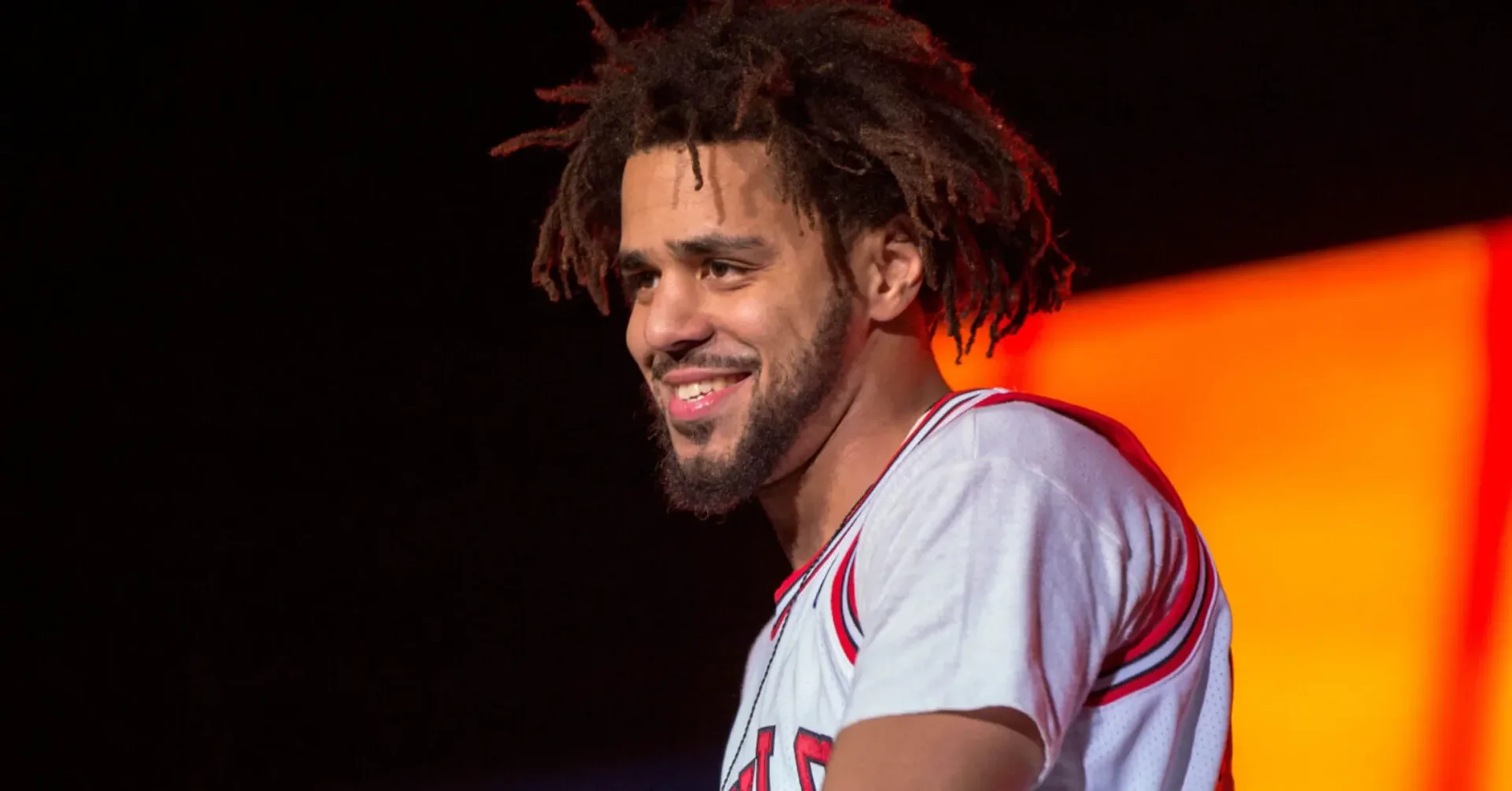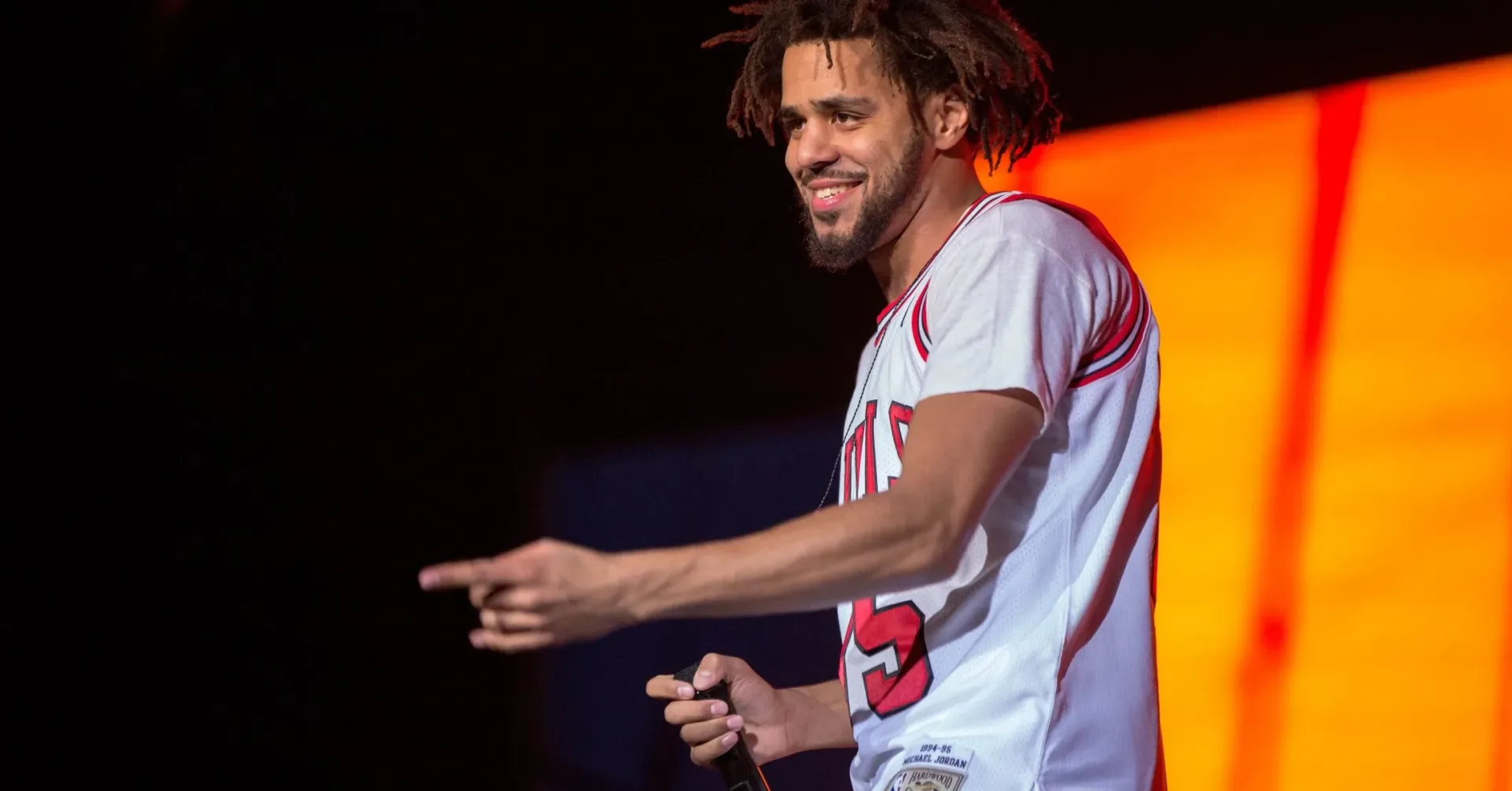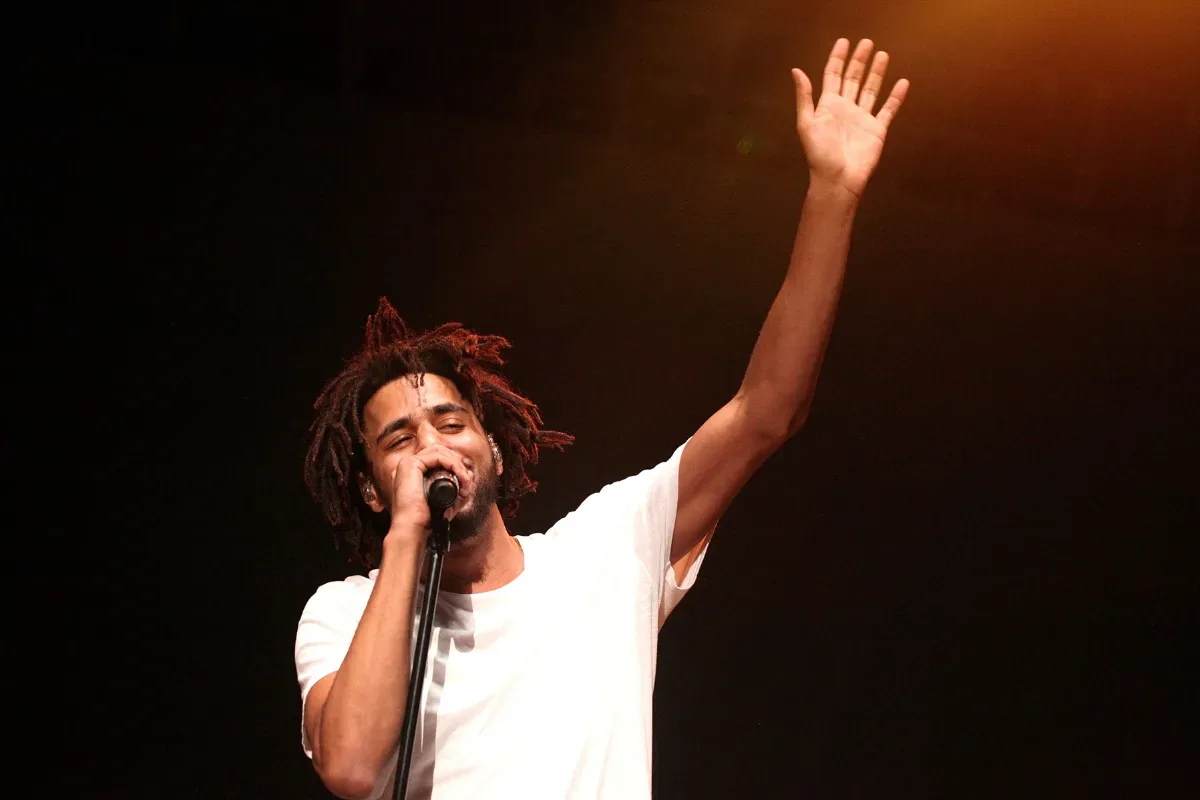
J. Cole made the audience part of the performance at his October 25 stop at Utilita Arena Birmingham, selecting four fans to rap “Johnny P’s Caddy” with him on camera. Signs in the crowd had asked for the chance to trade bars, and the show gave those requests a rare, high-visibility answer: an arena-scale rap performance briefly handed to people who had come hoping to participate rather than simply watch.
The Birmingham concert was a date on The Fall-Off Tour, supporting Cole’s seventh studio album, The Fall-Off, released February 6. It was also a notable UK return. The venue described the run as Cole’s first UK headline dates since 2017, placing a nine-year gap between his UK headline tours.
A fan moment with stakes beyond a singalong
Audience participation is a standard part of a major live show, but inviting fans to rap a song’s verses is a more demanding form of it. A singalong lets a crowd share an established hook; trading bars asks people to step into the rhythmic and lyrical structure of the performance. The four selected fans were not merely shown reacting to the song. They were put in position to deliver part of it.
That distinction matters particularly with “Johnny P’s Caddy,” a track associated with technical rapping and a high bar for vocal control. Footage from Birmingham showed that the fans’ invitations were intentional, with signs clearly requesting the opportunity. Rather than letting the signs remain background texture, Cole turned them into the basis for a segment of the set.
The crowd also supported an almost a cappella rendition of “Nobody’s Perfect.” A cappella means the vocal is performed without instrumental accompaniment, or with the backing reduced enough that the voice is exposed as the main musical element. In a large arena, that kind of moment shifts responsibility toward both performer and audience: the room has to carry the song’s communal energy without a full production doing the work.
It made Birmingham’s role feel more active than decorative. The show was built around Cole’s material, but its most immediately memorable details involved the people in the room—fans trying to rap, a crowd lending its voice, and one attendee unexpectedly connected to the performer’s hometown.
Fayetteville appears far from home
Cole also noticed a fan from Fayetteville, the North Carolina city closely tied to his own story. That encounter fitted a larger thread running through the Birmingham show and the album behind it: home is not presented only as a physical location. It can be a point of identity that turns up in a distant arena, connecting artist and audience through a place neither is currently standing.
Home is central to The Fall-Off in a specific narrative sense. The album is divided into two discs, each organized around a return home at a different age: 29 and 39. Those two ages frame separate stages in Cole’s pursuit of rap greatness. The concept had been foreshadowed years earlier on 2018’s KOD, through “1985 (Intro to the ‘The Fall Off’).”
That long setup gives the title more meaning than a simple tour label. A “fall-off” can imply decline or a loss of relevance, but the project’s stated structure instead examines perspective across time. Returning home at 29 does not mean the same thing as returning at 39. The Birmingham production translated that idea into visual staging rather than leaving it solely in the album’s two-disc arrangement.
A house, a car and a stage built around return
The two-hour set began with Cole performing “39 Intro” under a spotlight among the audience. He moved through fans, clasping hands before a car and house appeared onstage. Later, he performed “Poor Thang” from the roof, and “Quik Stop” closed the night.
The car-and-house imagery gave a concrete form to the project’s homeward-looking premise. A stage house is not automatically a literal recreation of an artist’s past, and there is no need to treat it as one. But within an album explicitly structured around returns home, the visual language is clear: domestic space, travel and personal history become part of how the songs are presented live.
Starting among standing fans served the same design from a different angle. The spotlight positioned Cole in the audience before the larger set pieces arrived, making proximity the opening statement. The later roof performance expanded the scale without abandoning the story’s residential imagery. It is a useful example of how a tour can make an album concept legible even to concertgoers who may not have studied every detail of its narrative setup.
Birmingham also received its own local acknowledgment. Cole praised the city and referenced Black Sabbath, one of its most famous musical exports. During “Old Dog,” fans waved white towels, adding another crowd-led visual to a performance already shaped by participation and regional recognition.
Where Birmingham fits on The Fall-Off Tour
The tour is Cole’s first solo headline trek since 2021’s The Off-Season Tour and his first full world tour since the 2017 4 Your Eyez Only World Tour. The announced itinerary contains more than 50 dates across North America, Europe, Australia, New Zealand and South Africa, spanning more than 15 countries.
The original routing opened in Charlotte and is scheduled to conclude December 12 in Johannesburg. Around the UK run, the itinerary connects Birmingham with European dates in Paris, Hamburg, Copenhagen, Stockholm and Oslo, before moving on to Australia in late November, then New Zealand and South Africa.
Glasgow was next after Birmingham. OVO Hydro listed an October 26 performance, the night after the Birmingham date, with tickets still shown as available on Monday morning. For those watching the tour’s developing identity, the key question is not whether every stop will replicate Birmingham beat for beat. It is whether the elements that stood out there—fans being brought directly into a rap performance, an emphasis on place, and the house-and-car visual framework—will remain consistent as the itinerary moves across continents.
Why the Birmingham set stands out
A major tour can be measured in dates, cities and production scale, but Birmingham supplied a more human measure: an arena audience was given multiple ways to become part of the night’s story. Four fans got a chance to rap. The room reinforced “Nobody’s Perfect” with near-unaccompanied vocals. White towels moved during “Old Dog.” And a Fayetteville connection appeared thousands of miles from the city that anchors the album’s themes.
Those details help explain why the show’s concept does not depend only on stage architecture. Cole’s album may be split between ages 29 and 39, and the production may use a home and vehicle to express that journey, but the live version gains force when the crowd supplies its own history, ambition and voice. The same emphasis on MC craft remains visible elsewhere in rap culture, including a recent freestyle response from Papoose, but Birmingham’s twist was to put that craft challenge directly in the hands of audience members.
For a tour returning Cole to UK headline stages after nine years, the Birmingham stop did more than revisit a market. It made the return feel reciprocal: the artist arrived with a long-developed album narrative, and the fans answered by stepping into the performance itself.