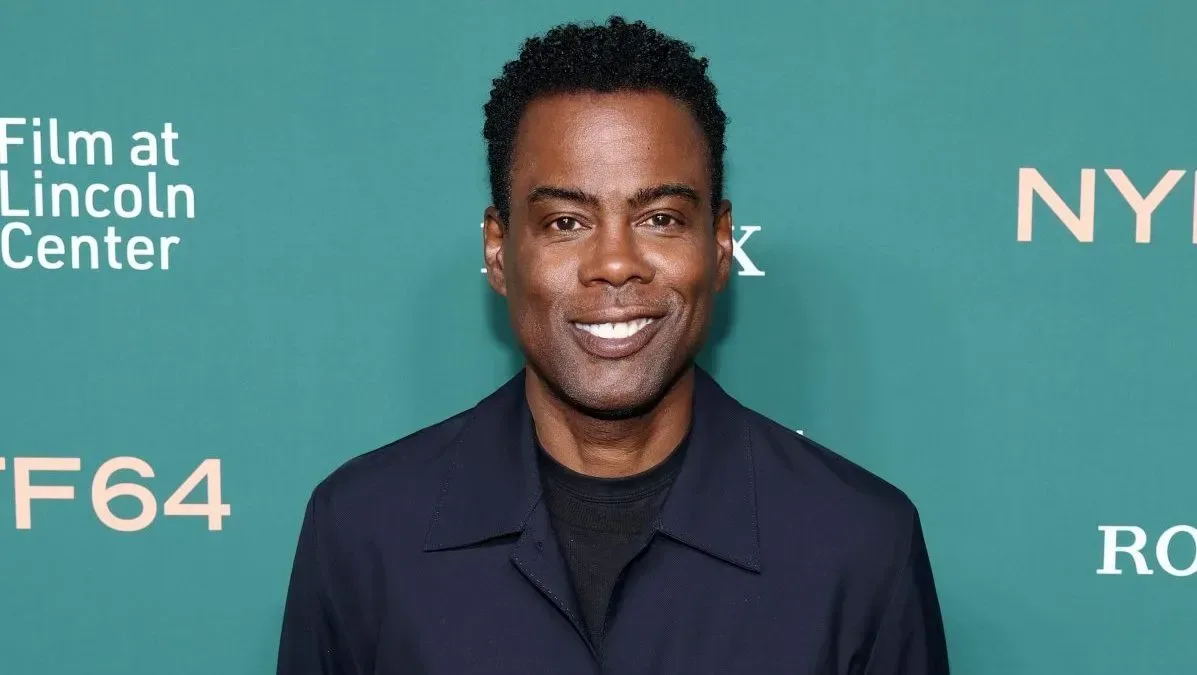
Chris Rock has spoken candidly about the personal work he says continues long after the public milestones of divorce, treatment and career success. In a recent interview, the comedian and filmmaker said he stopped watching pornography five or six years ago, placing that change within a broader effort to confront the behavior that hurt his marriage to Malaak Compton-Rock.
Rock did not present the admission as a tidy redemption narrative or as an explanation that dissolves responsibility. His comments instead centered on accountability. “I was not a great husband,” he said, while discussing a period of his life that he connected to choices that damaged the relationship.
Rock and Malaak Compton-Rock married in 1996, and their divorce was finalized in 2016 after roughly two decades together. Rock has previously acknowledged infidelity during the marriage. His newer remarks do not attempt to dispute that history; they describe a continuing attempt to understand his own habits and conduct.
A change described as part of larger work
Rock’s statement that he has not watched pornography in “five, six years” is specific about the length of time but limited in what it claims. He did not portray quitting as a cure-all, nor did he suggest that one behavioral change repaired the consequences of earlier actions. The emphasis was on examining patterns rather than claiming a final victory.
That distinction matters in the way Rock frames recovery. Public discussions about self-improvement can often reduce difficult personal histories to a clean before-and-after story: identify a problem, remove it, and declare the matter closed. Rock’s account is less conclusive. It recognizes that stopping a behavior and accepting the effects of past choices are separate processes.
For readers, the practical implication is simple but important: acknowledgment is not the same thing as absolution. Rock’s comments describe personal responsibility, not an invitation to turn his private history into a scorecard or a diagnosis from a distance.
What Rock means by therapy being “ongoing”
Therapy has become a recurring part of Rock’s public account of his life. He has previously discussed intensive treatment and said he was spending seven hours a week in therapy while working through childhood trauma, relationships and the way he interacted with other people.
He has also previously spoken about being diagnosed with nonverbal learning disorder. The term refers to a condition that can affect a person’s ability to interpret information that is not spoken directly, including social cues and nonverbal signals. That context may help explain why Rock describes gaining language for some of his struggles, but it should not be mistaken for an excuse for infidelity or other harmful decisions. Rock himself did not make that claim.
Related coverage includes Chris Rock Discusses Therapy, Marriage Failures and ‘Misty Green’.
“You never come out. It’s an ongoing thing,” Rock said of therapy.
That line is the clearest expression of the interview’s larger theme. In Rock’s description, therapy is not a finite program with a graduation ceremony. It is a continuing practice of reflection, learning and responsibility. Having words for a difficulty, a diagnosis or a past pattern does not automatically resolve its effects on other people.
It is also a notably restrained way to discuss progress. Rather than presenting therapy as evidence that he has solved himself, Rock characterizes it as continuing work. The distinction is especially relevant when a well-known entertainer is discussing intimate failures in public: an admission can provide context, but it cannot rewrite what occurred.
From personal reflection to a new directing project
Rock’s comments arrive as he returns to filmmaking with Misty Green, a comedy he wrote and directed. The film centers on a troubled actress whose former mentor casts her in a role that could save her career. That setup forces both characters to confront an older relationship and years of unresolved tension.
The available description makes the project a natural companion, thematically, to Rock’s current remarks without proving any direct autobiographical connection. Both involve relationships shaped by history, damaged trust and difficult conversations. Still, it would be a mistake to read the plot as a literal statement about Rock’s life. The confirmed facts are that he wrote and directed the movie, and that its characters are drawn into confronting unresolved tension.
Rock’s move behind the camera also places him among performers taking a more expansive role in shaping their screen work. For a recent example of how filmmaking processes themselves can become part of the entertainment conversation, see Robert Pattinson’s comments on the massive practical sandworm model used for Dune: Part Three. Rock’s film is a very different kind of project, but both illustrate that the work behind a movie can be as revealing as its premise.
Why the framing matters
There is an understandable temptation to treat celebrity disclosures as either confession-as-content or a carefully polished public-relations exercise. Rock’s comments resist an easy version of either reading. He spoke plainly about watching pornography, said he quit years ago, acknowledged he had not been a good husband, and described treatment as unfinished. Those are meaningful statements. They are not, however, a full account of a marriage known only to the people who lived it.
The most grounded reading is also the least sensational: Rock is talking about change as maintenance rather than completion. He is not claiming that therapy erased the harm from the past. He is describing an effort to remain engaged with the causes, behaviors and communication problems he believes affected his life.
That approach gives his comments more weight than a generic promise to “do better.” It identifies a timeframe for one change, recognizes a marriage that ended, and treats therapeutic work as active rather than ceremonial. At the same time, Rock’s own framing preserves an essential boundary. Personal growth can be real without becoming a request for applause.
As Misty Green puts Rock back in the director’s chair, the overlap between his professional return and personal reflections is clear in one limited sense: both point toward an artist still willing to engage with complicated relationships and unresolved emotional material. The interview does not establish whether the film draws on his experiences. What it does establish is that Rock sees no clean endpoint to the work of examining his conduct.