Chris Rock’s Misty Green is built around a familiar entertainment-industry pressure point: the comeback. Rosalind Eleazar plays the fictional actress Misty Green, whose career has faded before she attempts to reclaim a place in Hollywood. But the film’s reported setup suggests its target is broader than the simple question of whether its protagonist can land another major role.
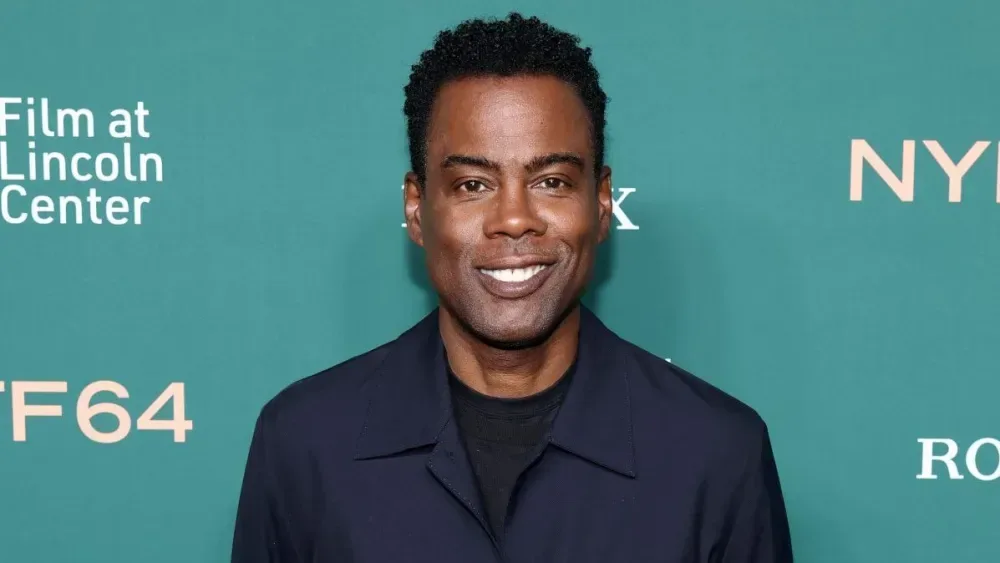
At a New York Film Festival premiere, Rock described a definition of success that deliberately moves away from the career ladder the movie is set to examine. In his view, professional achievement is still work, while love and family are the measures that make a life feel truly successful.
“Making it is, to me, where I’m at right now: my daughter having great kids. Having love in your life,” Rock said. “All this other stuff, it’s just a job at the end of the day.”
That outlook gives the premise of Misty Green a potentially sharper edge. A comeback story often invites the audience to treat renewed visibility as a complete victory: the lead role, the industry attention, the restored reputation. Rock’s comments instead frame those things as limited professional milestones. They may matter deeply to Misty, but they do not automatically settle the larger questions of belonging, connection or self-worth.
It is a distinction that is especially useful for a film about show business, where “making it” is often used as shorthand without much precision. The phrase can mean earning a living, getting a break, becoming famous, achieving creative control, surviving a long dry spell, or simply receiving validation from people in the same business. Those are not identical outcomes. Misty Green appears interested in the gaps between them.
A comeback story with failure built into its premise
Misty’s attempt to return comes after years of career decline, placing her in the precarious territory between public memory and professional opportunity. The supplied details do not establish exactly what form her comeback takes or whether it succeeds. What is clear is that the character’s situation lets the film poke at the rituals, humiliations and ambitions attached to chasing an entertainment-industry breakthrough.
Eleazar has connected that struggle to a reality many performers recognize. She said she has experienced periods without work and knows actors who have endured lengthy stretches of rejection before trying again. Her description broadens the stakes beyond one character’s Hollywood storyline: people in many fields can be knocked down professionally, then face the decision of whether they can summon the energy to start over.
That is the universal element in a comeback narrative. Hollywood supplies a heightened backdrop because its victories and disappointments are unusually visible. Yet the core experience is not exclusive to performers. An interrupted career, a lost opportunity and the fear of no longer being wanted are problems that can follow anyone whose work depends on gatekeepers, reputation or scarce openings.
Related coverage includes Chris Rock’s ‘Misty Green’ Frames Hollywood Ambition as Only Part of Making It.
In storytelling terms, the comeback is powerful because it turns an external goal into an internal test. Getting another job is one objective. Deciding what the job is worth—and whether the character can retain a sense of self while pursuing it—is the more difficult one. That tension also helps explain why career pressure can make fertile material for ensemble drama; it gives every relationship a potential cost. For another look at how selection, pressure and interpersonal stakes can shape a narrative, see this examination of crew selection as a storytelling tool.
Rock’s director character shares Misty’s flaws
Rock also appears in Misty Green as a director with a difficult history with Eleazar’s character. The two reunite after he previously had her removed from a Cinderella remake. That prior rupture means their connection is not a straightforward mentor-and-comeback pairing. The director is tied to one of the setbacks that helped define Misty’s professional situation.
The characters also bond over their respective infidelities. Rock has pushed back on the idea that unfaithfulness is uniquely a Hollywood trait, characterizing it instead as something rooted in life more generally. That framing matters because it resists reducing the film’s relationship conflict to celebrity-world excess.
Hollywood is often treated as an easy symbol for bad behavior: fame, travel, money, proximity to other stars and a culture that can reward image-making over stability. Those elements can make the setting dramatically useful, but Rock’s point is that setting does not create every human failing from scratch. In the film, infidelity seems positioned as shared baggage between two complicated people, not as a novelty that only makes sense because they work in movies.
That choice may also complicate audience sympathy. Misty is a performer fighting for another chance, an inherently underdog position, but the supplied description does not present her as spotless. Likewise, the director is someone who harmed her career prospects, but he is not described solely through that act. Two characters acknowledging their own betrayals can create intimacy, but it can also make that intimacy unstable. The story’s interest seems to lie in that instability rather than in a clean redemption formula.
Rosalind Eleazar leads a high-profile ensemble
Misty Green is Eleazar’s first feature film at the top of the call sheet. That is a meaningful real-world parallel to the character she plays, although the two situations should not be treated as the same. Misty is a fictional actress rebuilding after decline; Eleazar is leading a feature for the first time. Still, the film’s focus on perseverance gives her position additional resonance.
The cast also includes Adam Driver, Daniel Kaluuya, Anna Kendrick and Topher Grace. Rock said the production’s Los Angeles location helped make that ensemble possible. The movie was made on a reported $5 million budget, a figure that underscores why location was not merely a backdrop decision.
A production budget is the total pool of money available to make a movie, not simply performer salaries. It must cover a wide range of costs, including crew, equipment, sets or locations, transport and many other practical demands. On a comparatively restrained budget, filming where desired actors are already based can reduce logistical friction and make short commitments more workable. Rock’s account indicates that being in Los Angeles offered precisely that kind of advantage.
He also said he would like to make more films in Los Angeles and pointed to tax incentives as an important financial factor. In this context, tax incentives are policies intended to encourage production in a particular place by lowering some of the effective cost of filming there. Rock’s remarks do not provide details of any specific program, but they identify the basic issue: a local cast pool can be appealing creatively and logistically, while the economics of where a film is made can still determine whether local production is viable.
What ‘making it’ means when the credits roll
The central irony around Misty Green is that it takes place in an industry obsessed with arrival while its creator questions whether arrival is the right destination. A public comeback can be emotionally satisfying, especially for someone who has been dismissed or sidelined. Yet Rock’s comments argue that career victory alone is an incomplete scoreboard.
That does not make ambition meaningless. Eleazar’s remarks about performers returning after periods without work make clear that persistence is worthy of respect. Rather, the film’s surrounding conversation leaves room for two truths at once: professional recovery can be important, and it may not be enough to build a fulfilling life by itself.
For Misty Green, that leaves the most interesting question open. The character may be chasing a renewed career, but the film’s emotional stakes appear to be larger than a single booking or a fresh round of attention. In a business that regularly turns livelihoods into public measures of worth, Misty Green looks set to ask whether success can be recognized without letting it become the only thing that counts.