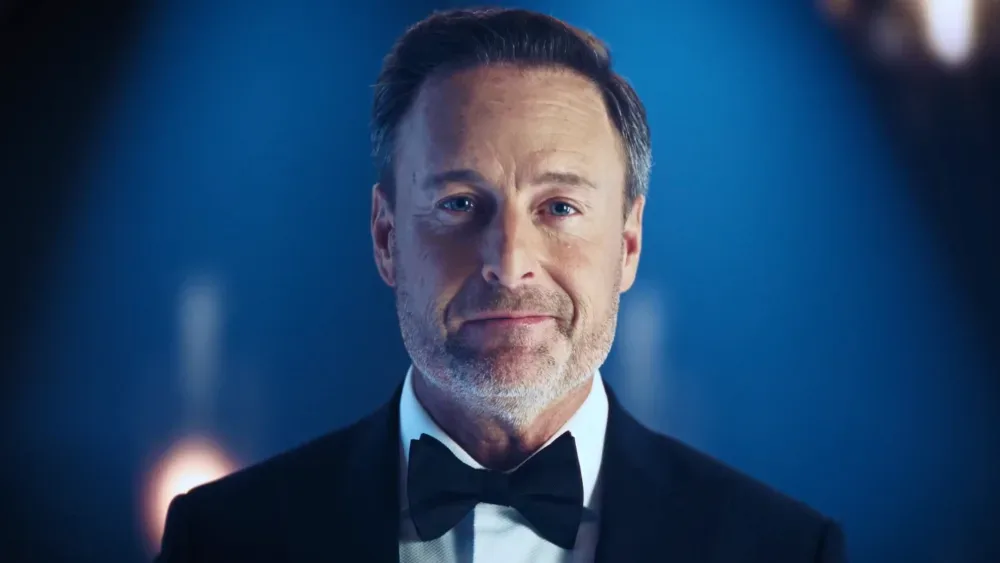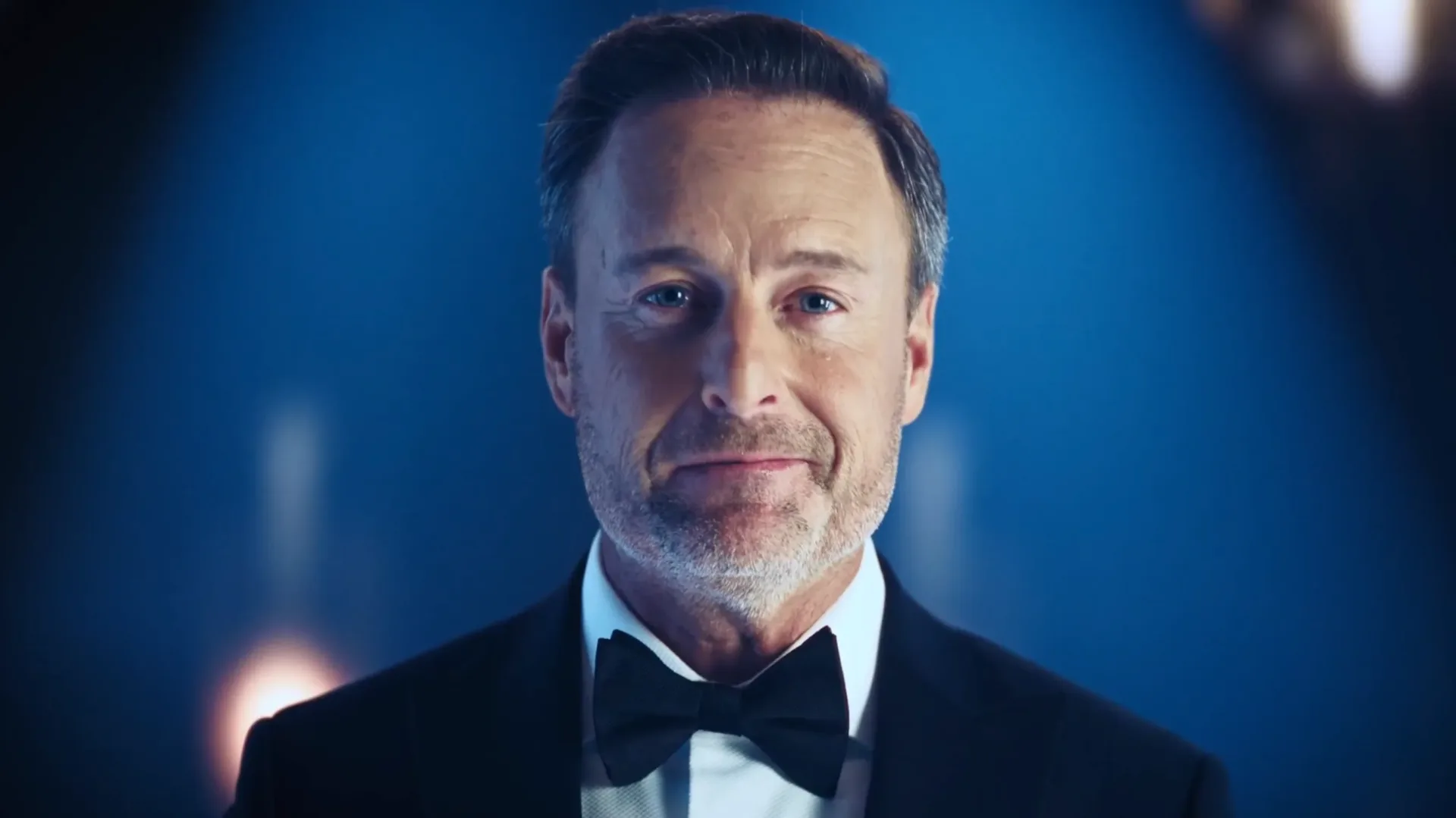
Chris Harrison will return to reality dating television this fall with The Vow, a six-episode series set to premiere on Fox Nation on Nov. 11. The show follows 30-year-old Jace Cates, its sole eligible bachelor, as he meets 10 women who are looking for commitment and marriage rather than a fleeting television romance.
New episodes are scheduled to arrive weekly, leading to a Dec. 9 series finale. Harrison, who hosted The Bachelor and its spinoffs from the franchise’s 2002 launch until his 2021 departure, serves as the central on-screen figure for a dating format that explicitly positions itself around relationships that endure after production ends.
The basic setup will be familiar to viewers of modern relationship reality TV: one bachelor, a group of potential partners, and a compressed environment where major emotional decisions are made in front of cameras. But the stated emphasis is notably different. The Vow is built around shared values, faith, communication and long-term goals, with the stated objective of considering whether those things can support a durable partnership.
A six-week relationship format with one central match
The series has a clear, compact release plan:
For more context, explore Nano-daw Puts a Six-Track, MIDI-Style Music Sequencer on Game Boy Advance.
- Platform: Fox Nation
- Premiere: Nov. 11
- Episodes: Six, released weekly
- Finale: Dec. 9
- Lead: Jace Cates, 30
- Participants: Cates and 10 women seeking a lasting commitment and marriage
That weekly structure gives the program six installments to establish Cates’s connections, introduce the women’s individual priorities and move toward the final decision. A “relationship journey” is the conventional term for this type of reality-TV arc: the show documents a sequence of dates, conversations and choices designed to narrow a large field of possible matches to one serious relationship. In The Vow, the advertised criteria go beyond initial chemistry. The program says it will make room for conversations about belief, communication habits and the practical goals partners bring to a shared future.
Those are substantial topics for any couple, but they can be especially difficult to explore in the accelerated timetable of an unscripted series. The show’s premise does not guarantee that viewers will see every answer or that a relationship will succeed. Instead, it establishes the standard by which the series wants to be judged: not simply whether a compelling finale happens, but whether the people involved are discussing what could make a relationship function when the production schedule is over.
Harrison’s return is part of the story
Harrison’s presence makes The Vow more than a new entrant in the dating-show category. He spent nearly two decades as the host most closely associated with The Bachelor franchise, from its inception in 2002 through its various spinoffs. His return comes five years after he left that franchise following controversy surrounding comments he made while defending former contestant Rachael Kirkconnell.
Related coverage includes Chris Harrison’s ‘The Vow’ Sets Nov. 11 Premiere on Fox Nation.
Kirkconnell faced criticism after photos circulated online showing her at an antebellum plantation-themed college party. Harrison’s comments in her defense drew sharp backlash and were viewed by some as racially insensitive. He later apologized and initially stepped away from the franchise before negotiating his exit. He has largely remained off television in the intervening years, making The Vow a high-profile on-screen comeback.
The promotional material is not trying to hide the comparison to Harrison’s former television home. In the teaser, Harrison handles a red rose, the long-standing visual symbol of The Bachelor, then throws it down and suggests he might step on it. It is a deliberately broad image: a red rose is instantly legible to audiences familiar with his earlier work, while the gesture signals that this production wants to define itself as a new start rather than a quiet continuation.
“Roses fade. True love lasts forever,” Harrison says in the teaser.
That line is cheeky, but it also captures the marketing distinction the series is making. A rose has traditionally represented a weekly elimination and the immediate drama of selection. A vow, by contrast, implies a promise meant to survive beyond a single episode. Whether the show’s actual structure breaks significantly from other televised dating competitions remains to be seen, but its language is clearly aimed at viewers who want the eventual relationship to matter more than the elimination ritual.
Faith and values are the program’s declared focus
The Vow frames itself as an alternative to what it characterizes as dating culture driven by short-lived connections and social-media attention. Its focus on “shared values” deserves a straightforward explanation: in the context of the show, it means the principles and priorities that participants say should guide a long-term relationship. Faith, communication and life goals are all identified as part of that conversation.
Faith-driven does not, from the information available, describe a detailed rulebook, denomination-specific format or set of contestant requirements. It does establish faith as one of the subjects the program intends to examine. That distinction matters. Viewers should not assume specifics that have not been announced, but they can reasonably expect faith and value alignment to be treated as relevant to compatibility.
“Compatibility” is another useful term here. It is often reduced to attraction or shared hobbies in dating-show shorthand. The premise of The Vow uses it in a broader sense: whether people communicate well, want similar things from marriage and can reconcile their important beliefs and ambitions. Those may not always produce the fastest or flashiest television moments, but they are the issues the series says it wants to prioritize.
Harrison has described the production as inspired by a faith-driven renaissance in America and said it asks whether genuine, lasting love remains possible in the modern world. Fox Nation president Lauren Petterson similarly presented the show as a fresh take on a genre Harrison helped shape, stressing conversations, values and real-life moments that retain importance when filming ends.
Familiar franchise experience behind a differently branded show
Although The Vow is a separate show, several people with experience in the broader Bachelor ecosystem are involved. Louis Caris is an executive producer. Elan Gale is a consulting producer, Lindsay Liles is the casting director and Michael Shea directs. Harrison’s wife, Lauren Zima, is also an executive producer, alongside Lionsgate Alternative Television executives Nicholas Caprio and Tom Huffman.
This staff list suggests the show has people who understand the logistics and storytelling demands of relationship reality television: casting a group of participants, shaping a season-long narrative and filming emotionally consequential conversations in a format viewers can follow from week to week. That is production experience, not proof of a particular outcome for Cates or any participant. Still, it explains why the series can openly invoke the visual grammar of Harrison’s past without claiming to be part of the old franchise.
There is also a direct connection on camera. Sean and Catherine Lowe will appear on The Vow. Their relationship began when Sean Lowe led Season 17 of The Bachelor in 2013, and they have since married. Their inclusion gives the new series an example of the outcome it is promoting: a relationship that began in reality television and continued well beyond it.
For viewers, their appearance is likely to function less as a promise that the new cast will duplicate their story and more as an illustration of the show’s stated ambition. Reality dating programs are often remembered for twists, arguments and final selections; bringing in a still-married couple foregrounds longevity as the benchmark The Vow wants to discuss.
What to watch for when the episodes begin
The most meaningful test for The Vow will be how specifically it turns its commitment-first language into television. “Long-term goals” can be a vague phrase unless participants are allowed to explain what those goals mean to them. The same is true of communication and faith. The series has identified the themes; the episodes will determine whether they become substantive conversations or simply promotional vocabulary.
Viewers interested in the show’s approach may want to pay attention to a few practical questions:
- How are values discussed? The premise identifies values and faith as central, but the important detail will be whether Cates and the women can address differences as well as similarities.
- How does the format handle future planning? Marriage-minded dating involves more than choosing a person at the end of a season. It also involves expectations around everyday life and future priorities.
- What does communication look like under pressure? A reality-show environment is unusual by design. The program’s claim that it focuses on life after filming will be most convincing if it makes space for candid discussion rather than only grand romantic gestures.
- How much does the weekly rollout shape the narrative? With six episodes, the show has a limited run to develop its central relationships. The pace will be a defining part of how much depth the audience gets to see.
There is an inherent tension in any series seeking to portray long-lasting love: television can capture the beginning of a relationship, but it cannot compress years of partnership into a finale. The Vow acknowledges that tension by making the post-camera future part of its own premise. It is selling a process oriented toward commitment, even though viewers will only see a short period within that process.
For Harrison, the series is also a chance to establish an identity outside the franchise with which he was synonymous for years. The teaser’s rose moment makes that history impossible to miss, while the show’s stated values make clear that the new production wants to present a different priority. Beginning Nov. 11, audiences will be able to see whether that promise is reflected in the conversations between Cates and the 10 women hoping to build a relationship that lasts.