Brandi Carlile will receive the annual Visionary Award for Humanitarian Work at the National Arts and Entertainment Journalism Awards Gala in Los Angeles on Dec. 6. The honor places the singer-songwriter’s charitable work alongside a demanding period of recording, touring and collaborative performance, with the award specifically focused on the infrastructure behind that work rather than treating advocacy as a decorative footnote to a music career.
The ceremony is scheduled for the Millennium Biltmore’s Crystal Ballroom in downtown Los Angeles. The wider gala recognizes reporting, criticism and photography covering the arts, while also presenting select career and lifetime honors. Madeleine Brand, host of Press Play since 2014 and a public-radio veteran of more than three decades, is also set to receive the Luminary Award for Career Achievement in Media that evening.
What the humanitarian honor recognizes
A humanitarian award generally acknowledges sustained work directed at public benefit: fundraising, support for nonprofit groups, awareness-building, or direct engagement with communities facing hardship. In Carlile’s case, the publicly described efforts combine several routes for moving money and attention toward causes, including a grassroots organization, a percentage of ticket revenue, a wine club that contributes proceeds, and a benefit livestream.
Central to those efforts is the Looking Out Foundation, which has granted more than $10 million to community-based nonprofit organizations supporting humanitarian causes around the world. Community-based nonprofits are organizations rooted in, and often accountable to, the communities they serve. That emphasis matters because a fundraising campaign and the local groups delivering aid do different jobs: one can gather resources at scale, while the other usually has the relationships and local knowledge needed to put support to work.
Carlile has also dedicated part of her ticket sales to the foundation. Touring can become an ongoing fundraising channel when a portion of each ticket supports a designated organization, linking a commercial event to a continuing philanthropic program. It does not turn every concertgoer into an activist by default, but it gives the artist a way to direct a share of activity already happening around a tour toward nonprofit work.
XOBC Cellars, Carlile’s wine club, was created in part to send proceeds to the Looking Out Foundation. Its stated focus includes helping defend the rights and joys of refugees, immigrants and the LGBTQIA2S+ community, among others. Taken together, the ticket and wine-club models show a practical approach to celebrity philanthropy: recurring fan-facing businesses can create a steadier source of support than a one-off fundraiser alone.
A Minneapolis benefit with a defined beneficiary
Early in the Human Tour, Carlile livestreamed Be Human: A Concert for Minneapolis, which raised more than $750,000 for The Advocates for Human Rights. The funds were intended to assist families and individuals affected by ICE. The stream remains available on YouTube.
The total is notable not simply as a large fundraising figure, but because the beneficiary and intended purpose were identified. Clear designation gives audiences a better sense of where a benefit is meant to lead, even though a public fundraising total is not itself a complete accounting of how a nonprofit will allocate every dollar over time. The key point supported here is narrower: the concert connected Carlile’s platform to a named human-rights organization and to people affected by immigration enforcement.
That mix of work helps explain why the honor is framed around humanitarian impact rather than solely socially conscious songwriting. Music can communicate a point of view; organized giving can help fund groups working on material needs and rights. The two can reinforce each other, but they are not interchangeable.
Music, collaboration and an explicit social lens
The award arrives as Carlile’s latest album cycle continues. Her eighth studio album, Returning to Myself, recently reached its one-year mark. Earlier in October, she appeared at the Grammy Museum for a conversation with Cameron Crowe and a full-band performance tied to that anniversary.
She has since issued Returning to Myself (Sad Gay Version), a deluxe companion release that reworks the original album’s tracks into stripped-down arrangements. A stripped-down arrangement usually means reducing the instrumental and production layers around a song, putting greater focus on the voice, lyrics, melody or a smaller accompaniment. It is a reimagining of existing material, not a separate album of newly identified songs.
The songs cited in the award announcement—The Joke, Human and Church & State—were highlighted as expressions of Carlile’s social-justice vision. Her collaborations with Elton John and Joni Mitchell were also cited, alongside an emphasis on her compassion for people described as society’s underdogs. Those partnerships provide context for the reach of Carlile’s artistic network, but the humanitarian recognition is grounded in the charitable activity attached to her own platform.
For readers following entertainment stories where public figures turn visibility into fundraising, Carlile’s example underscores the difference between an endorsement and an established giving structure. An endorsement can bring attention quickly. An organization such as the Looking Out Foundation can receive and grant funds over time, allowing support to extend beyond one performance, one post or one news cycle.
The Human Tour moves from arenas to theaters, then Europe
Carlile and longtime band members Phil and Tim Hanseroth recently completed their first headlining run in U.S. arenas, the Human Tour, named for a key song from the latest album. The scale of an arena tour is significant in straightforward logistical terms: it creates a larger live audience and, where ticket-linked giving is in place, potentially a broader recurring base for fundraising.
In November, the group will shift briefly back to theaters for Burn the Setlist (The All-Request Tour). The theater run is already sold out. The title indicates an all-request format, although no further details about how requests will be selected or which songs will be performed have been provided. The Human Tour is then set to resume in Europe in early 2027.
The alternating venue sizes also illustrate that a successful arena run does not eliminate the artistic appeal of a theater show. Arenas and theaters support different kinds of live presentation, even when the same artists and catalog are involved. What is confirmed here is the itinerary change, not any claim about the performances’ atmosphere or set lists.
A growing award tradition
The Visionary Award was first presented in 2012, when Jane Fonda received it with Robert Redford presenting. More recent recipients include Seth Rogen and Lauren Miller Rogen, recognized last year for their charitable work. Quincy Jones, Tiffany Haddish, Diane Warren and Forest Whitaker are among the other past honorees.
That history situates Carlile within an award that has repeatedly recognized entertainment figures whose public contributions extend beyond their core creative fields. It is not a competitive music prize or an assessment of a single release. Its purpose is broader, focused on an individual or team’s humanitarian activity and cultural influence.
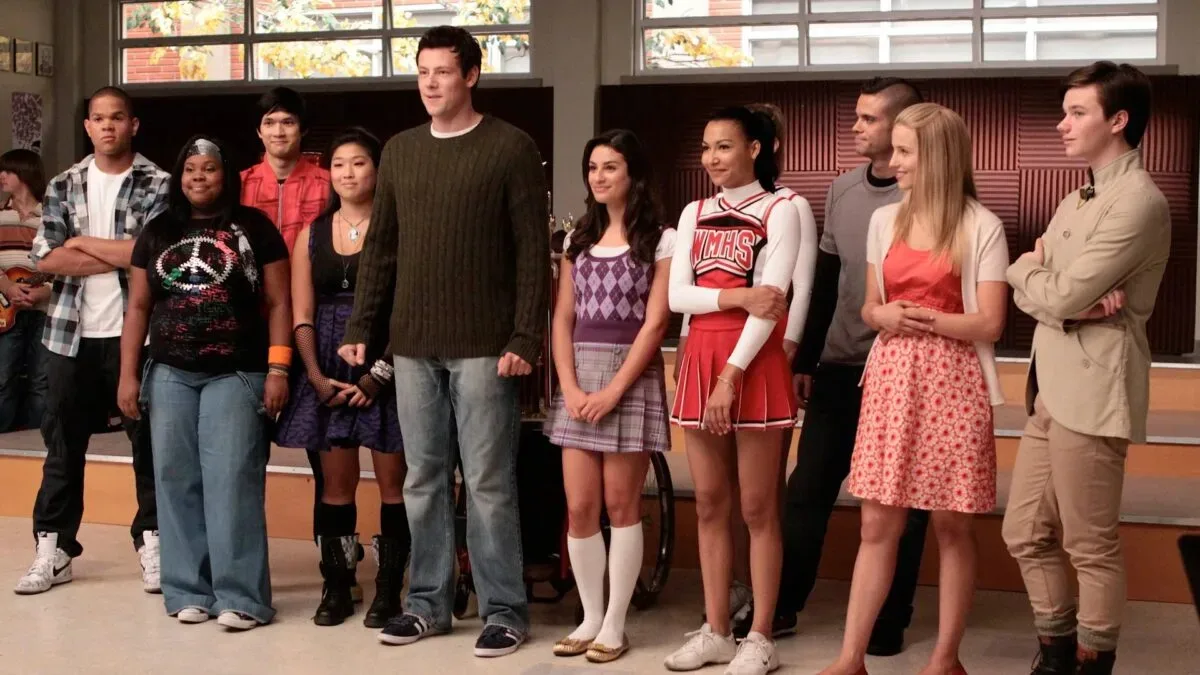
For pop-culture readers, this is a useful reminder that the arts world’s biggest stories are not always about a new trailer, a chart position or a revival rumor—though there is never a shortage of those, as seen in coverage of a reported Glee return. Carlile’s forthcoming recognition instead points to the less flashy work of building fundraising channels, choosing nonprofit partners and attaching long-running charitable commitments to a career with a large and active audience.
The Dec. 6 gala will formally recognize that work in Los Angeles, while Carlile’s touring and album activities continue into the next phase. Based on the details announced so far, the clearest measure behind the accolade is not a single moment: it is the combination of more than $10 million granted through the Looking Out Foundation, ongoing revenue-directed support, and targeted fundraising such as the Minneapolis livestream.