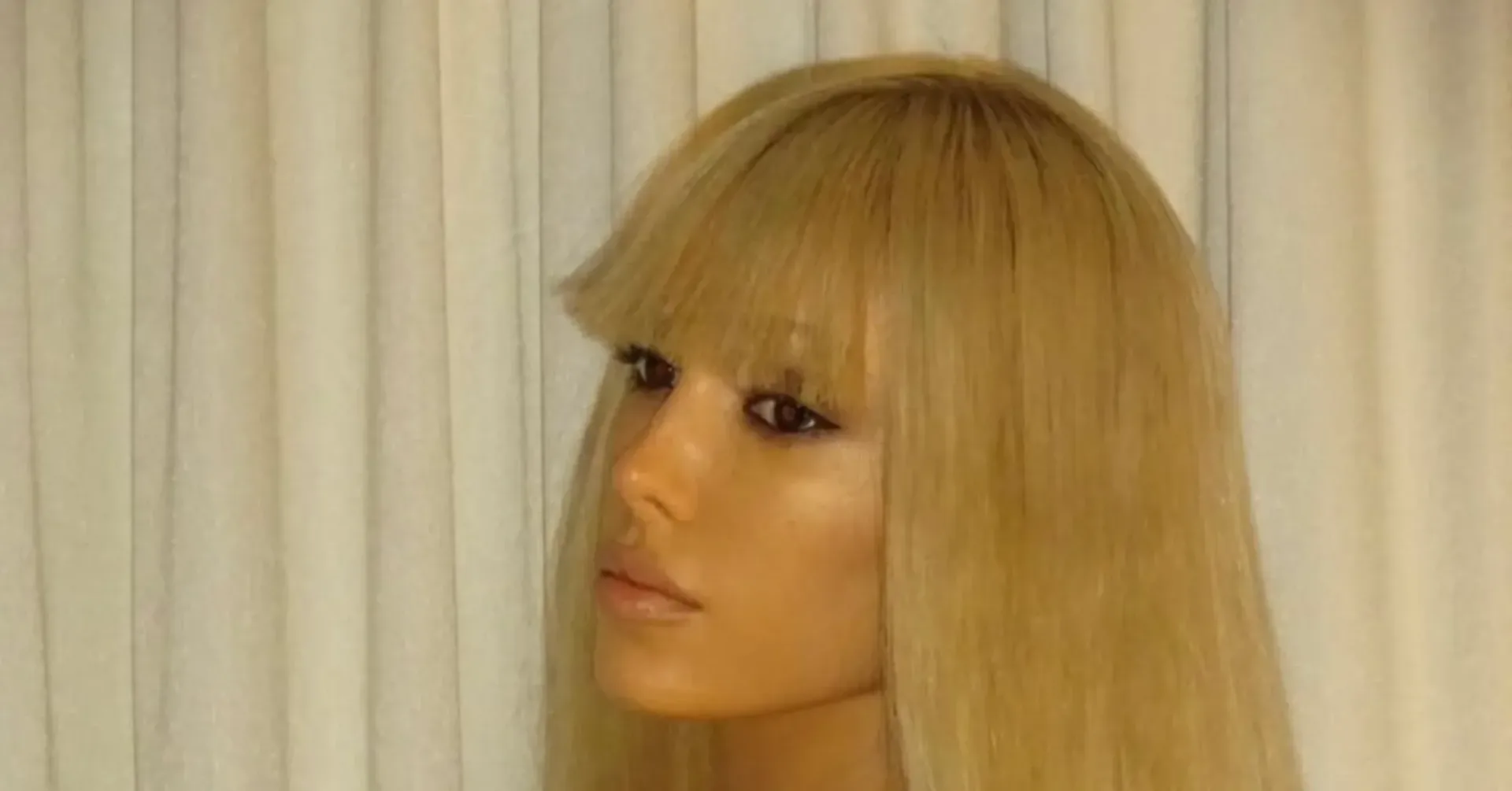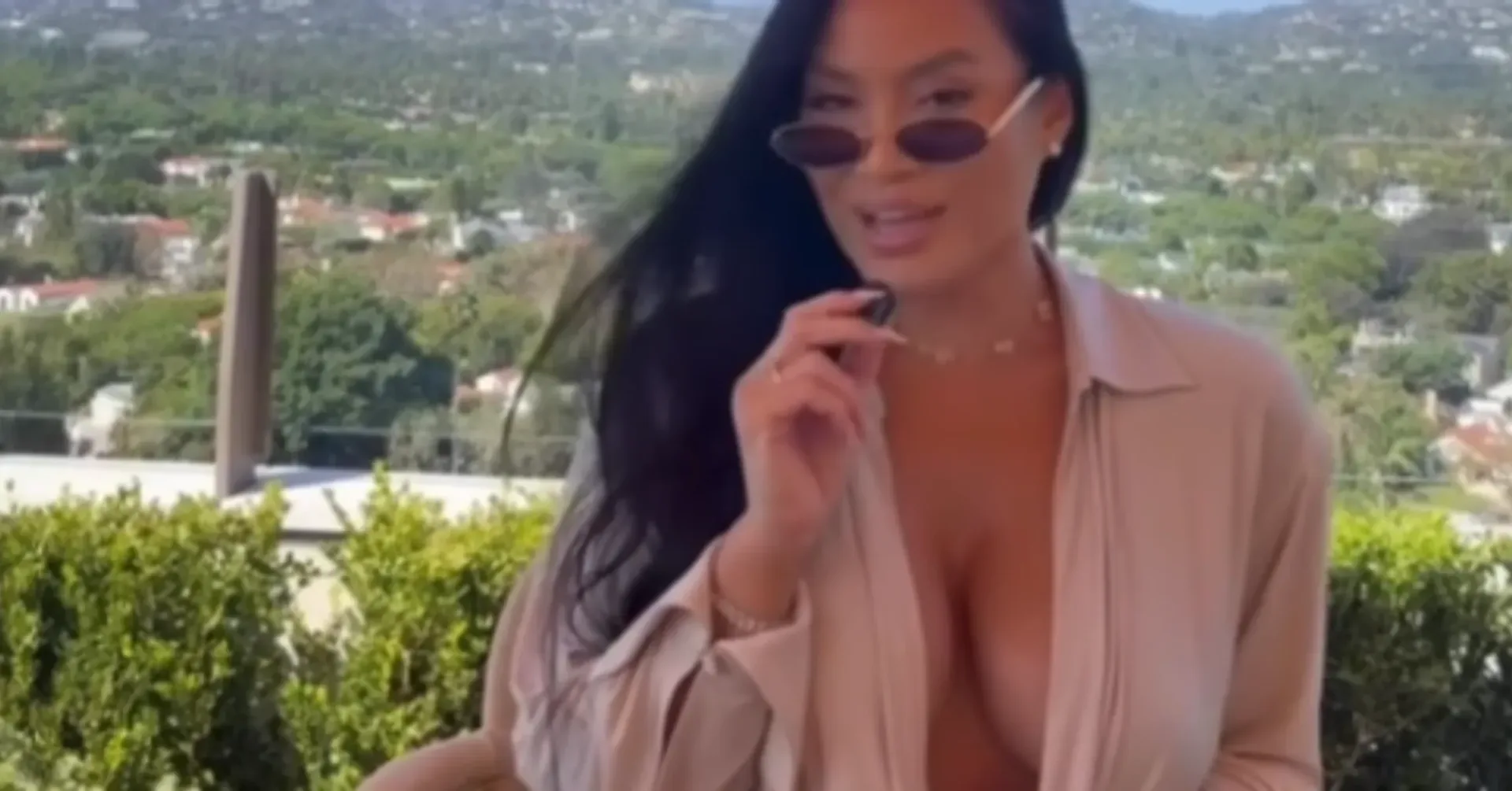
Bianca Censori and Ye were photographed leaving Los Angeles’ Living Room Club on Saturday, October 17, after reportedly spending time with friends. Censori wore a red fishnet top without a bra, paired with a red silk skirt and simple heels, while Ye wore a washed-out denim outfit with beige boots.
The coordinated red palette made Censori’s outfit the immediate visual focal point of the outing. In photographs from the moment, she covered her chest with an arm as cameras captured the pair leaving the venue. It was the latest in a long line of closely watched Censori appearances, where a personal style decision becomes an instant public talking point.
That attention is not especially surprising. Censori’s fashion has repeatedly prompted reactions ranging from praise to discomfort, as well as debates about the boundary between self-expression, provocation and public spectacle. But the tenor around these looks appears to have shifted. There is still considerable attention, yet the response is less likely to become the same all-consuming argument each time she and Ye step out.
A look built around exposure and color
There is a difference between an outfit that is revealing and an outfit deliberately designed to make visibility its central element. The reported look falls into the latter category: fishnet is an open construction, and wearing it as a top without a bra creates an intentionally exposed silhouette. The silk skirt and matching heels did not reduce that contrast; they made the ensemble feel more styled and color-coordinated rather than accidental.
Fashion coverage often uses words such as provocative or barely there as shorthand, but those labels can flatten the visual choices involved. Here, the red color story, sheer textile and comparatively simple accessories are the details that defined the appearance. The result was a high-visibility look constructed from a limited set of components.
Ye’s denim-and-beige outfit, by comparison, was much more muted. That contrast naturally concentrated photographers’ attention on Censori. In celebrity street-style coverage, a paired appearance can still read as two separate images: one person becomes the story’s visual center, while the other establishes context. This outing worked that way.
Why the discussion has changed
Censori’s looks have generated recurring commentary since her relationship with Ye became a subject of major public interest. Earlier reactions often centered on shock, and on speculation over what the outfits meant within the couple’s relationship. Over time, regular exposure has changed the baseline. A style that initially appears unprecedented can become recognizable as part of an individual’s ongoing public presentation.
That does not mean the debate has disappeared. It means the response has become more fragmented. Some observers celebrate the confidence and visual boldness. Others disapprove, often without engaging in a sustained public discussion. And plenty of people now see these appearances as part of a familiar fashion language from Censori rather than a new development requiring a fresh explanation every time.
This is worth separating from endorsement. Recognizing a pattern is not the same as approving of it, nor does it settle disagreements about taste, modesty or celebrity culture. It simply describes how repetition changes the public’s reaction. Once audiences expect a particular kind of appearance, the surprise factor loses some force even when the images remain attention-grabbing.
That broader dynamic is common in the wider music-news conversation, where personal lives, creative partnerships and public images are frequently discussed side by side. With Censori and Ye, however, the visual element is particularly prominent because clothing is often treated as a central part of the public narrative.
Agency, speculation and the limits of reading photographs
The most sensitive part of the conversation has involved speculation that Ye dictates Censori’s clothing. It is important to describe that carefully: this has been public gossip, not an established fact in the material available here, and the pair have pushed back against it in the past.
Photographs alone cannot explain a relationship dynamic, a creative process or a person’s intentions. They record a narrowly framed moment—someone arriving or leaving a venue, a pose, a garment, a reaction to cameras. They do not provide reliable access to private decision-making. Treating a single image as proof of control, consent, coercion or artistic authorship is an interpretive leap.
That limitation matters especially when a woman’s appearance is analyzed at scale. There can be a tendency to replace attention to the clothing itself with assumptions about the person wearing it: why she chose it, who approved it, whether it is a statement, or whether it must represent someone else’s preferences. Those questions may be understandable in a heavily scrutinized celebrity relationship, but they should not be answered as certainties without evidence.
Censori addressed the feeling of being misunderstood in a personal essay published in early September. She did not set out specific reasons in the material described here, so it would be wrong to claim that the essay was directly about any one outfit or bout of fashion criticism. Still, its existence adds useful context to a public conversation that often reduces her to a single image.
There is also a basic distinction between public visibility and public ownership. A celebrity can knowingly make a striking appearance while still being entitled to complexity, privacy and an interpretation of her own actions that is not overwhelmed by outside projection. High-profile fashion invites commentary; it does not turn speculation into fact.
Fashion as part of a broader creative partnership
The couple’s public image is not limited to night-out photography. Censori has also worked with Ye creatively, directing music videos associated with his BULLY era this year. That credit provides a more concrete basis for discussing her artistic role than assumptions drawn from paparazzi images.
Direction is the work of shaping a filmed piece’s visual presentation. Depending on the production, it can involve decisions about framing, performance, locations, styling, mood and pacing. The available information does not provide a complete account of Censori’s process on those videos, so it would be inappropriate to invent one. But her directing role does establish that her contribution to the couple’s visible creative world extends beyond being photographed in it.
That context does not require every outfit to be interpreted as a music-video concept or an extension of an album campaign. It does, however, complicate the idea that Censori is merely a passive subject of public imagery. Her work behind the camera is part of the available picture, and it is a useful corrective to coverage that focuses solely on her clothes.
What this appearance actually tells us
The clearest facts are straightforward: Censori and Ye left a Los Angeles club after a reported gathering with friends; she wore a red fishnet top, red silk skirt and heels; he wore faded-looking denim and beige boots; cameras were present. Everything beyond that—whether the outfit was meant as a challenge, a private preference, an aesthetic exercise or simply what she wanted to wear—requires caution.
Public figures can create images that are unmistakably designed to be seen, while viewers can still resist the urge to turn every image into a definitive verdict on their lives. That approach leaves room for criticism of the style, admiration for the styling, or no interest at all, without pretending that a brief celebrity sighting answers larger questions.
For now, the October 17 outing is another example of the Censori-and-Ye public dynamic: a relatively ordinary social appearance made extraordinary by a fashion choice that guarantees visibility. The clothes will continue to draw eyes. The more useful conversation is whether the attention can stay grounded in what is actually known rather than what observers assume from a photograph.