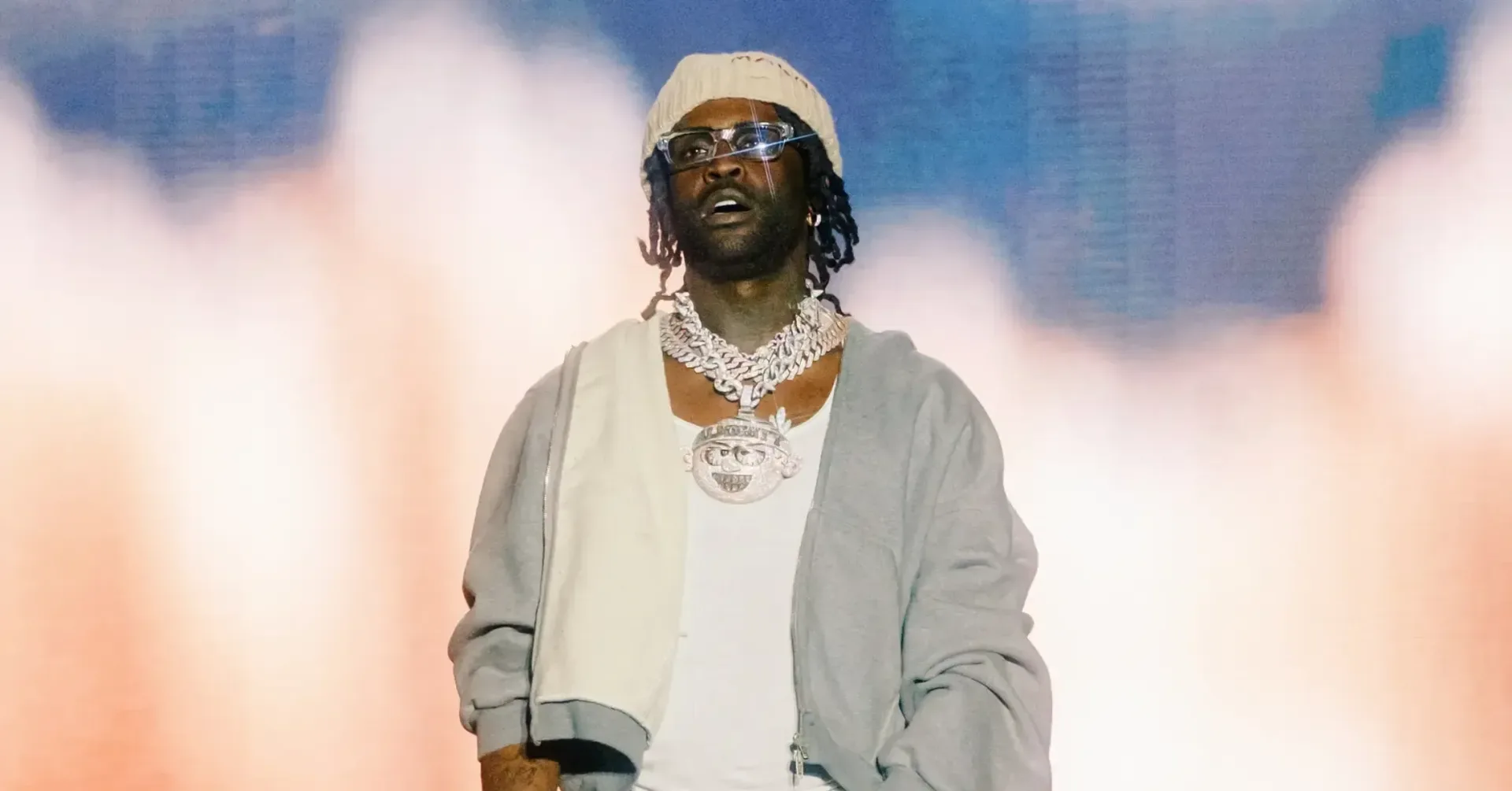
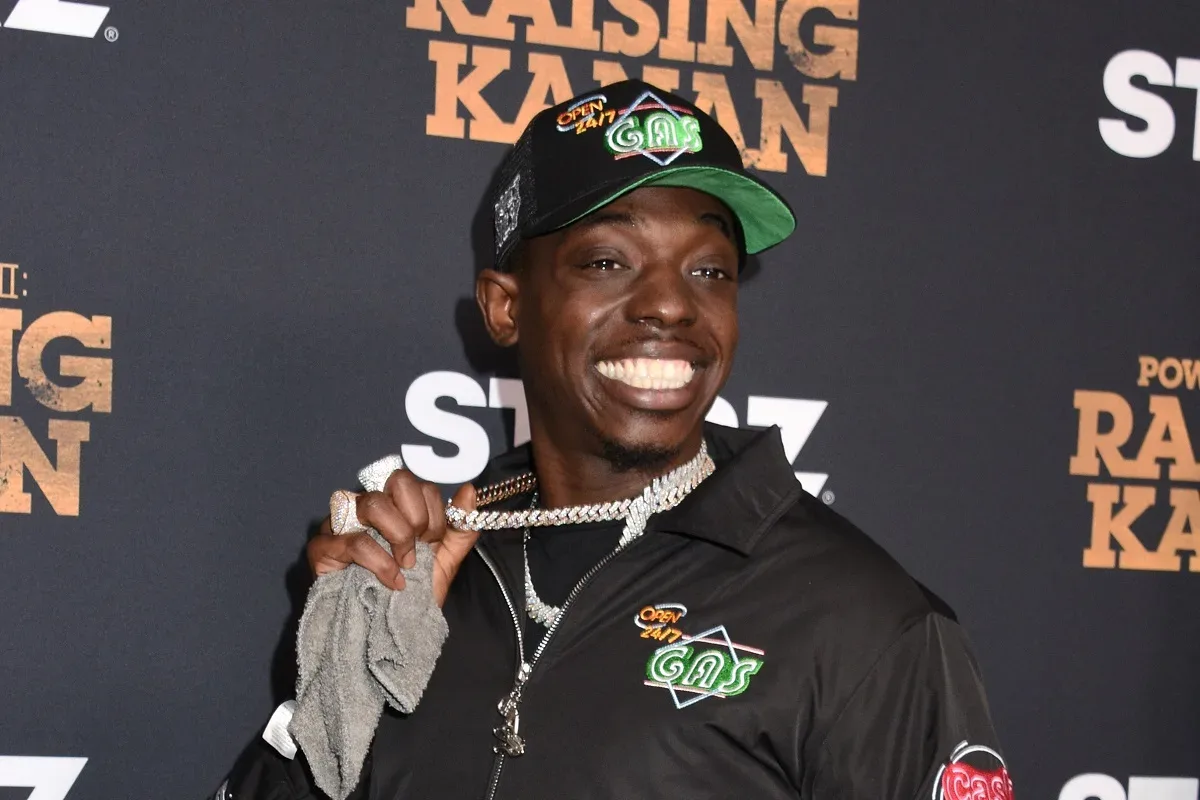
Bobby Shmurda has become an honorary patron of Trinity College Dublin’s University Philosophical Society, using an appearance before students to talk about creative ambition, self-reliance and the artists who made a music career feel possible to him.
The Brooklyn rapper’s recognition came from the University Philosophical Society, a student debating society at Trinity, rather than from Trinity College Dublin itself as an academic honor. That distinction matters: Shmurda has not received an honorary degree from the college. Instead, he was awarded an honorary patronage, a title the society says its council grants to people outside the organization who have made exceptional contributions in their fields.
About 80 people were waiting in the Graduate Memorial Building for Shmurda’s appearance. A transportation delay pushed back his arrival, but students greeted him by chanting his name when he entered the room.
The visit placed an artist widely associated with a hugely influential viral rap moment in front of students focused on very different paths of study. Shmurda’s central message was not that everyone should pursue music. It was that students should commit to whatever path they have chosen and build a degree of independence through sustained work.
For more context, explore Witness Point #4 Sets Its Murder Mystery Against the Baraboo Harvest Festival.
“Whatever you’re majoring in, whatever you’re doing, lock in, work hard, so by the time you’re 30, you’re 20 times ahead of me,” Shmurda told the audience.
What the honorary patron title means
An honorary patronage is recognition from the University Philosophical Society, not a university qualification. The society’s process allows it to honor notable people from outside its membership for their accomplishments, while also inviting them into its wider program of talks and debates.
Its history of guests and honorees includes figures from film and entertainment such as Whoopi Goldberg and Martin Scorsese. That context helps explain the nature of Shmurda’s invitation: the appearance was part of a public-facing student society tradition, with a rapper discussing his career, outlook and experiences rather than taking part in a formal academic ceremony.
The difference is more than semantic. Honorary degrees are awards conferred by a university, typically through the institution’s own formal governance. An honorary patronage is a society-level distinction. Both can signal esteem, but they come from different bodies and carry different meanings.
Chief Keef’s role in Shmurda’s creative outlook
Asked what motivated him to make music, Shmurda pointed to Chief Keef. Rather than framing his own breakout as the beginning of his story, he identified seeing another artist from a similar environment succeed as a key factor in making a future in music seem attainable.
“[Chief Keef] made me think it was possible for people like us from the streets to actually make it,” Shmurda said.
That observation gets at a broader idea behind representation in popular culture: an artist’s impact is not limited to records sold or songs streamed. Visibility can alter what younger listeners and creators see as realistic for themselves. For Shmurda, Chief Keef represented proof that an artist from his circumstances could reach a broad audience.
Shmurda has also been careful not to collapse his own musical identity into a broad genre label. Although Chief Keef is frequently associated with drill, Shmurda has differentiated his work from that classification, describing it as “Shmurda Music” and emphasizing music made for audiences to dance to.
Drill is a rap style often associated with hard-edged, street-focused lyrics and production that developed through regional scenes, including Chicago. Shmurda’s distinction is therefore about artistic framing as much as genre terminology. He acknowledges an influence while maintaining that his own records and public identity should not simply be treated as an extension of another artist’s movement.
From “Hot Boy” to a viral dance moment
Shmurda broke through in 2014 with “Hot Boy,” a song tied closely to the dance that became known as the Shmoney Dance. The dance spread on Vine, the short-form video platform that was a major driver of internet culture at the time.
That combination of a track and an easily recognizable dance was central to the song’s cultural reach. The record was not just something listeners played; it was something people performed, repeated and shared. In that sense, “Hot Boy” became an early example of how a song’s movement, visual shorthand and social circulation can become inseparable from its popularity.
The Recording Industry Association of America certified “Hot Boy” platinum in December 2014, months after Shmurda signed with Epic Records. A platinum certification represents a major commercial milestone, and the single’s recognition reinforced how quickly the song had moved beyond a local breakout.
Vine’s role is also worth separating from the song’s music-business success. The platform helped accelerate circulation of the dance and the track’s public recognition, while the certification marked the scale of the song’s commercial performance. They are related parts of the same breakthrough, but they measure different things: one describes cultural momentum, the other records industry-certified consumption.
A discussion that included policing and personal experience
University Philosophical Society president Matilda Brewe raised Shmurda’s previous public comments on over-policing in the United States during the discussion. The conversation also necessarily sat against a difficult chapter of the rapper’s own life and career.
In 2016, Shmurda pleaded guilty to conspiracy and a weapons charge and received a seven-year sentence. He was released on parole in 2021.
Those facts give additional context to why his advice to students focused so directly on discipline, work and getting ahead early. The remarks should not be turned into a simple redemption-story formula, particularly when the event itself was a wide-ranging discussion rather than a speech devoted to one subject. But his comments did make clear that he views time, autonomy and financial independence as significant measures of progress.
When asked how he assesses success now, Shmurda said that it means making his own money and not having to answer to anyone else. That definition is notably practical. It is not centered on chart position, celebrity status or an institution’s recognition. It is centered on control over one’s work and livelihood.
Why the student audience mattered
Shmurda specifically addressed students who had traveled from outside Ireland to study at Trinity, encouraging them to stay focused on the plans that brought them there. The advice was broad enough to apply beyond music: study with purpose, keep working, and use present opportunities to create more freedom later.
For a student audience, that may be the clearest takeaway from the appearance. The story was not simply a collision between rap celebrity and a prestigious university setting. It was a conversation about how people develop confidence in a future that might initially appear distant from their own circumstances.
Shmurda’s answer was rooted in example. Chief Keef’s success helped him imagine a route into music. Shmurda’s own “Hot Boy” breakthrough showed the power of a track, a dance and internet-driven participation arriving at the same moment. At Trinity, he translated that experience into a message for people pursuing disciplines far beyond rap: commit to the work, keep sight of the goal, and aim to build an independent life.