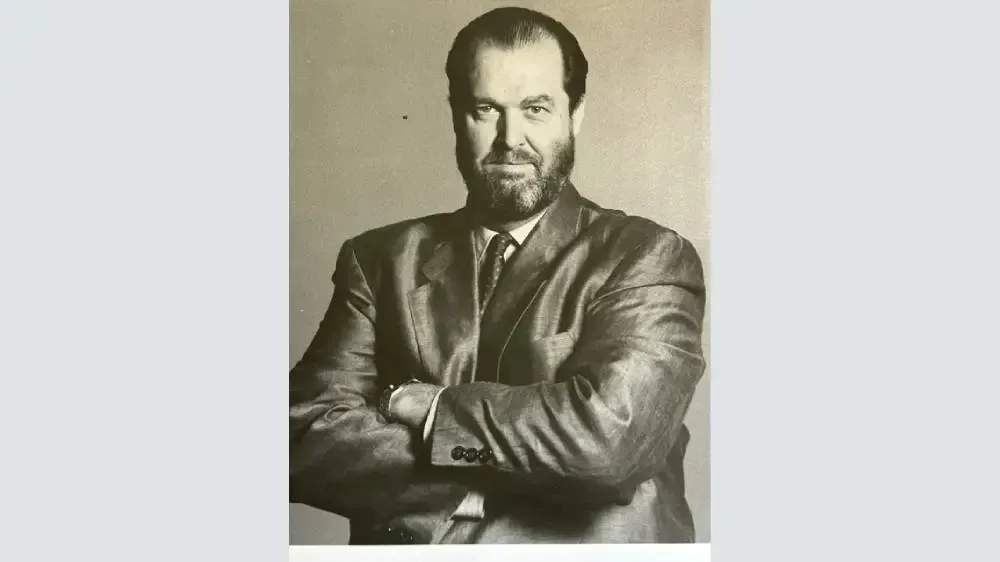
Bob Buziak, a music executive who led RCA Records during a pivotal stretch of the 1980s and later served as president of Sony’s TriStar Music Group, has died at 83. His death was confirmed on October 19. No cause of death was announced.
Buziak’s career spanned label promotion, artist and repertoire work, distribution partnerships and later consulting and venture activity. But his most visible legacy rests with RCA, where he became president in 1986 and helped restore momentum to a major label through a mixture of established hitmakers, soundtrack success and agreements that widened the company’s musical reach.
His tenure is associated with successful releases by Bruce Hornsby, Eurythmics and Love and Rockets, as well as the enormously successful soundtracks connected to the Dirty Dancing films. Those releases included Eric Carmen’s No. 1 single “Hungry Eyes” and Bill Medley and Jennifer Warnes’ “(I’ve Had) The Time of My Life,” a song that received both Oscar and Grammy recognition.
A label career built from promotion to executive leadership
Buziak entered the music business in 1968 after leaving a job at the Ford Motor Company. His early work included distribution and promotion roles in Detroit and San Francisco, a foundation that matters when considering how his later leadership operated.
Promotion, in record-company terms, is the work of bringing a release to the attention of the marketplace—particularly the people and organizations capable of exposing it to an audience. Distribution is the system that gets recordings into the channels through which listeners can obtain them. The two functions are distinct, but closely linked: a release cannot build momentum if audiences cannot find it, and availability alone does little without a persuasive campaign behind it.
From there, Buziak joined Capitol/EMI Records in Los Angeles. He held jobs in promotion and A&R before moving to Arista Records. A&R, short for artists and repertoire, generally encompasses the label work surrounding artist development and recording choices. It places an executive close to both creative decisions and the practical question of which artists and material a company will support.
At Arista, Buziak became head of West Coast operations and later managing director in the United Kingdom. His performance there led to RCA appointing him president in 1986. The sequence shows a career that moved from regional, market-facing responsibilities into a role responsible for the direction of a global-facing label operation.
Why the RCA years stand out
RCA’s 1980s recovery under Buziak was not tied to a single kind of release. Its profile encompassed hit albums from major artists, material connected to independent labels, and music attached to widely seen films. That range is significant because it reduced reliance on one audience or one route to attention.
The Dirty Dancing soundtrack successes illustrate the commercial potential of music tied to a film. A soundtrack can function as more than accompaniment: when a song breaks through on its own, it can keep a film’s emotional association in circulation while reaching listeners outside the theater. In this case, the songs named among the era’s defining RCA achievements carried especially prominent recognition, including a No. 1 single and major awards.
Buziak also made distribution deals with independent labels including Beggars Banquet and Jive. Those relationships expanded and updated RCA’s roster. Beggars Banquet brought Love and Rockets and other artists into the picture, while the Jive arrangement likewise broadened what RCA could offer.
It is worth separating a distribution agreement from an outright acquisition. The supplied record describes deals that enabled RCA to distribute independent-label music; it does not say that RCA purchased those labels. The practical importance is that a major label can broaden its catalogue and its market presence by working with independent partners while those partners remain distinct operations.
That strategy is part of why Buziak’s work can be read as modernization rather than merely expansion. An older label catalogue and a familiar roster can be commercially valuable, but distribution partnerships create a pathway for additional scenes, artists and audiences without treating every release as though it came from the same internal pipeline.
From RCA to TriStar, then consulting
Buziak left RCA in 1990 and became president of Sony’s TriStar Music Group. He later founded Chameleon Entertainment as a joint venture with Time Warner. A joint venture is a business created or operated by two parties together, combining participation around a shared enterprise rather than describing a standard internal division of only one company.
In 1995, he launched Buziak & Company LLC. The company consulted for telecommunications and cable businesses, extending his work beyond the conventional record-label structure. He also played a key role in the sale of Paradigm Music Entertainment to Liberty Media.
His later business roles included serving on the board of inVentures, a United Kingdom investment group. He also initiated a merger with Redwood Partners, a U.S. corporate search firm, to form a multi-platform international consulting and venture group. Taken together, those posts suggest that his professional focus developed from music-specific executive work toward business development across media-adjacent and corporate sectors.
What Buziak’s record says about executive influence
The public often experiences a record label through artists and songs, while the executive work behind the release cycle can be less visible. Buziak’s career provides a clear example of how that work can shape outcomes without placing the executive at the center of the performance itself.
His background included promotion, A&R, distribution, regional management and leadership across the U.S. and U.K. His RCA period brought together those strands: artists with hit records, soundtracks capable of crossing into the singles market, and independent-label deals that added range to the company’s roster. Each is a different business lever, and the supplied history credits his leadership with helping revive RCA’s fortunes in that decade.
There is also a broader entertainment lesson in the soundtrack portion of that history. Film music is often remembered as part of a movie’s cultural footprint, but its commercial life can be separate and durable. A standout song can travel through radio, album sales and awards recognition while still carrying its cinematic origin with it. The named Dirty Dancing releases demonstrate that overlap between screen culture and the recording business.
Buziak’s death follows other recent losses across entertainment, including the passing of character actor Richard Riehle. Buziak’s own career, however, was principally one of behind-the-scenes leadership: identifying opportunities, supporting artist and catalogue growth, and using partnerships to give a major label a broader contemporary profile.
He leaves a professional history defined by an unusual breadth of roles—from a 1968 transition into music to RCA’s presidency, the TriStar Music Group post and later consulting and investment work. For listeners, the most immediate markers remain the artists and soundtrack songs associated with RCA’s resurgence. For the industry, his path underscores how promotion, repertoire, distribution and partnership strategy can converge in the work of a label president.