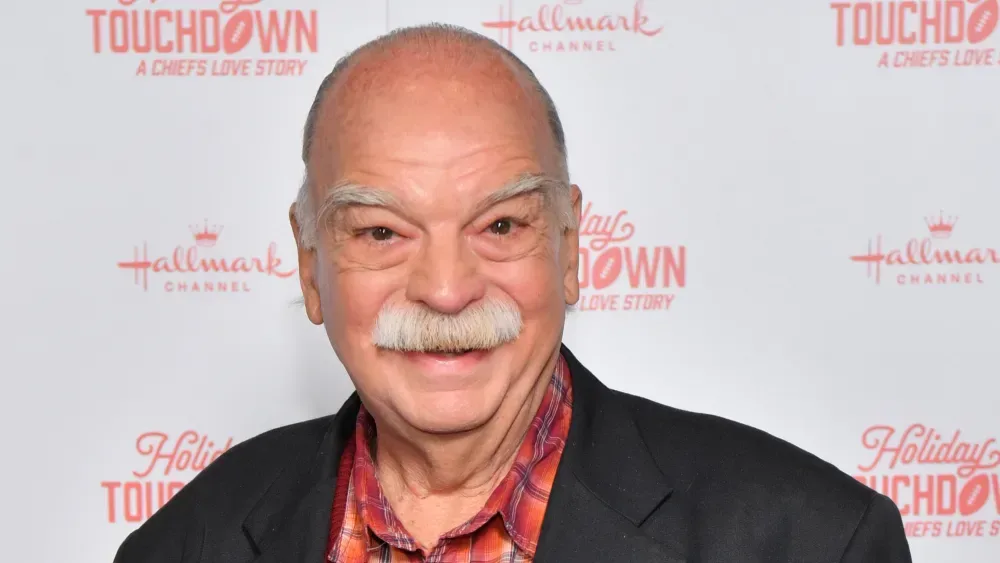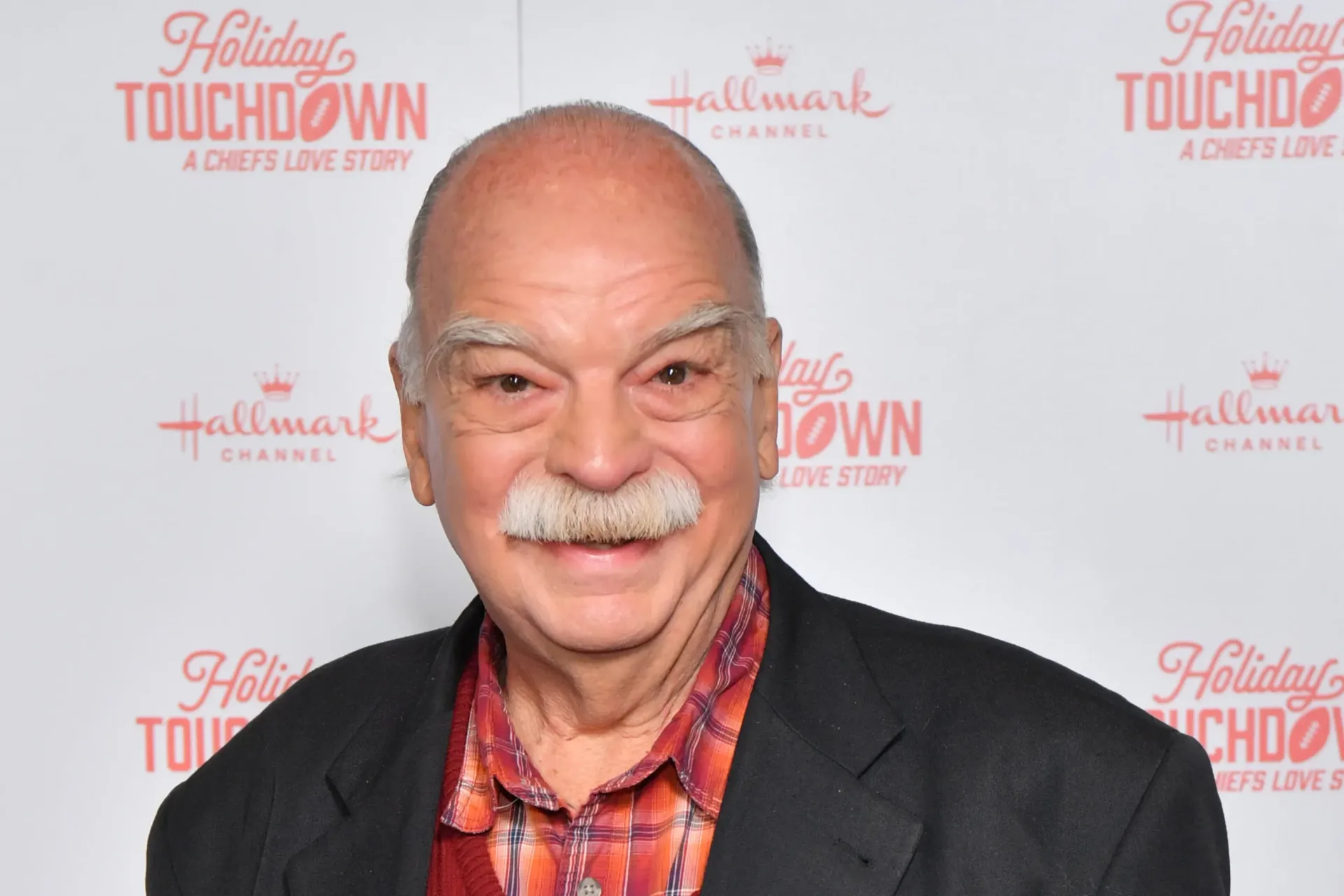
Richard Riehle, a character actor whose unmistakable presence connected workplace comedy, drama, network television and science fiction across more than 400 credited projects, has died. He was 78.
Riehle died of natural causes on Oct. 15 in Los Angeles. He is survived by his wife, Jane Latham, and their four children.
For many viewers, Riehle will be permanently associated with Tom Smykowski, the Initech product manager in Office Space. It is a role with relatively limited screen time, but it has endured because the character captures the film’s deadpan comic view of corporate frustration. Tom is laid off, survives a hit-and-run accident, receives a major settlement and pursues an invention called the “Jump to Conclusions” mat.
The joke is deliberately simple: the mat directs people to leap to a prewritten conclusion. But Riehle makes Tom more than a punch line. His performance gives the character a particular mix of wounded confidence, salesman-like conviction and improbable optimism. In a movie packed with quotable characters, that specificity is why the scene remains memorable.
A career built on recognizability, not repetition
“Character actor” can sometimes be used as shorthand for a performer who is familiar without being top-billed. In practice, it describes a difficult kind of screen work. The actor must establish a complete person quickly, often in a few scenes, while supporting the tone and momentum set by the lead performers. Riehle did that across comedy, thrillers, dramas and television.
His credits included the ranch hand Carlson in Of Mice and Men, a guard who helps Harrison Ford’s character escape custody in The Fugitive, and Principal Beasely in Jury Duty. His film work also included Executive Decision, Mercury Rising, Deuce Bigalow: Male Gigolo, Wedding Crashers and Bridesmaids.
The variety matters. Riehle was not defined by one genre or one screen persona. A viewer could encounter him in a suspense film, then later recognize him in a broad comedy or a domestic sitcom. That kind of career is less about repeating a single role than about making distinct supporting parts land with clarity.
His work offers a useful reminder of why ensemble casts matter. A film or series may be remembered for its stars, premise or major plot turns, yet it often becomes believable through the people at the edges: the administrator, colleague, neighbor, official, employee or relative who supplies texture. Riehle’s long list of appearances shows how central that craft can be to the viewing experience.
From Wisconsin and regional theatre to a long screen career
Riehle was born May 12, 1948, in Menomonee Falls, Wisconsin. He attended the University of Notre Dame and later earned a master’s degree from the University of Minnesota.
His route into acting included work at the Meadow Brook Theatre in Rochester, Michigan, followed by regional theatre in the Pacific Northwest. During that period, he appeared in Rooster Cogburn, a John Wayne film.
Regional theatre is significant context for a performer with Riehle’s range. Stage work requires actors to develop a role through rehearsal, sustain a performance in front of live audiences and work closely within an ensemble. It does not automatically translate into a particular screen style, but it can build the flexibility needed for a career made up of sharply different assignments. Riehle’s eventual body of work, stretching across hundreds of productions, reflects that adaptability.
Star Trek’s Batai and the power of one episode
Science-fiction audiences also knew Riehle through multiple appearances across the Star Trek franchise. His most prominent connection came as Batai in “The Inner Light,” an episode of Star Trek: The Next Generation.
That role is especially notable because it demonstrates another dimension of supporting performance. In an episodic television series, a guest character may arrive with no long-term presence before or after a single story. The challenge is to create emotional weight within the episode’s self-contained structure. Batai is part of the life and community at the center of “The Inner Light,” helping give the story its human scale.
For fans, that makes Riehle’s work easy to remember even among a large franchise cast. His contribution was not dependent on recurring for seasons or driving a franchise-spanning plot. It was about serving a specific story with enough groundedness that the episode’s relationships feel lived in.
That durability helps explain why audiences hold onto character actors’ work so closely. Fans do not necessarily remember every title in an actor’s filmography, but they remember the exact feeling of a scene: a peculiar office pitch, a quiet moment in a far-future drama, or a supporting character who makes a fictional environment feel inhabited. The appeal of revisiting familiar screen worlds can take many forms, from cherished episodes to inventive fan projects such as a LEGO build that reimagined a Disney character as the Millennium Falcon.
Television work across sitcoms and dramas
Riehle’s television credits extended well beyond Star Trek. He played Walt Finnerty on Grounded for Life and made guest appearances on NCIS, The Middle and The West Wing.
Those titles point to another practical reality of a prolific acting career: television can demand quick adjustments in tone. A family sitcom, a procedural, a political drama and a science-fiction series ask for different pacing and different levels of realism. A guest performer has to understand the established world of each show while still giving the new character enough definition to be noticed.
Riehle’s presence in both film and television also made him part of the shared visual memory of several generations of viewers. Someone may know him first from Office Space; another may think first of Grounded for Life; another may know him from The Next Generation, Bridesmaids or one of his many single-episode appearances. The common thread is not one franchise but a long-running reliability.
Eight turns as Santa Claus
Among the more unusual details of Riehle’s career is that he played Santa Claus in eight projects: five films, two television shows and one television movie.
It is a small statistic with a larger point behind it. Santa is one of the most recognizable figures in popular culture, which means the part carries instant audience expectations: warmth, authority, comic potential and a sense of ritual. Playing the role repeatedly does not mean playing it identically. Different projects can treat Santa as sentimental, comic, fantastical or simply a familiar figure within a larger story.
Riehle’s repeated casting as Santa also fits his wider body of work. He could communicate a character’s purpose quickly. Whether a production needed a bureaucrat, a family figure, a colleague, an authority figure or a holiday icon, he brought a sense that the person had a life beyond the immediate scene.
Why Tom Smykowski remains so quotable
Office Space endures partly because its comedy identifies the strange language and rituals of office culture: management speak, arbitrary procedures, dehumanizing work and the fantasies people build around escape. Tom embodies a version of that escape fantasy. His settlement frees him from Initech, and his plan is to bring an absurdly literal motivational device into the world.
Riehle’s approach is key to the humor. Tom does not appear to know that the idea is absurd. He treats it as a viable prototype, and that sincerity lets the audience do the work of recognizing the gap between his confidence and the invention’s obvious nonsense. This is deadpan performance at its most useful: the actor plays the stakes honestly, which makes the surrounding absurdity funnier.
That comic precision is part of why a supporting role can become culturally sticky. Viewers may quote one line or describe the device years later, but the material only works because the actor gives it a credible owner. Riehle did not need to overstate Tom’s eccentricity; he made the belief in the product feel real enough to sell the joke.
A legacy of scenes that stayed with audiences
Riehle’s career cannot be reduced to a single role, even if Tom Smykowski remains one of his most celebrated. He moved between major studio films, television series, franchise episodes and comedy ensembles while compiling more than 400 screen and other projects.
That volume is meaningful not merely as a number, but as evidence of a career sustained by usefulness, versatility and audience recognition. Screen acting depends on performers who can enter a production, understand its tone and leave a vivid mark without pulling focus away from the story. Riehle repeatedly did exactly that.
His work remains available in the scenes that made viewers laugh, the episodes that made them feel something, and the extensive collection of projects that benefited from his distinct, grounded presence.