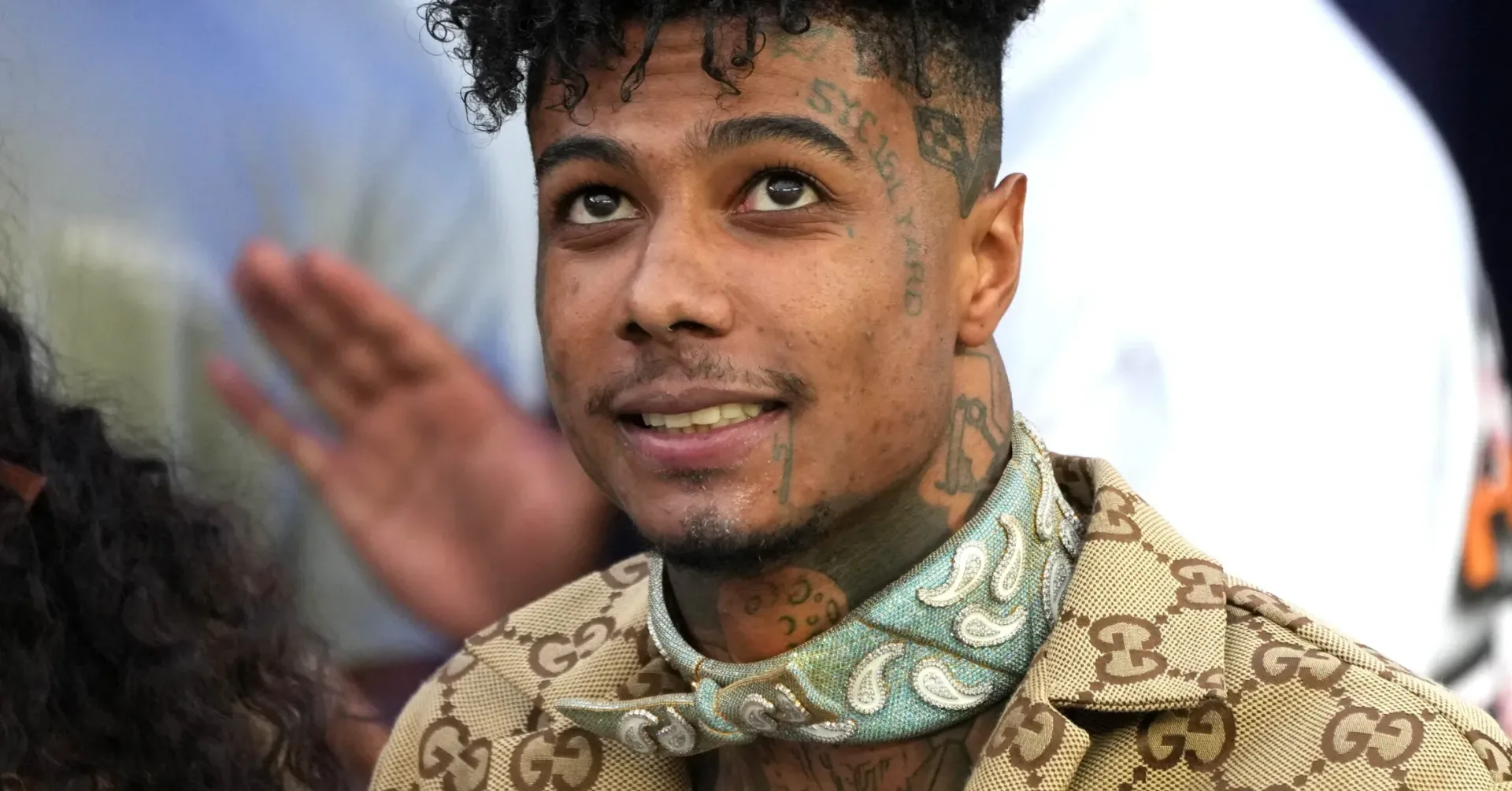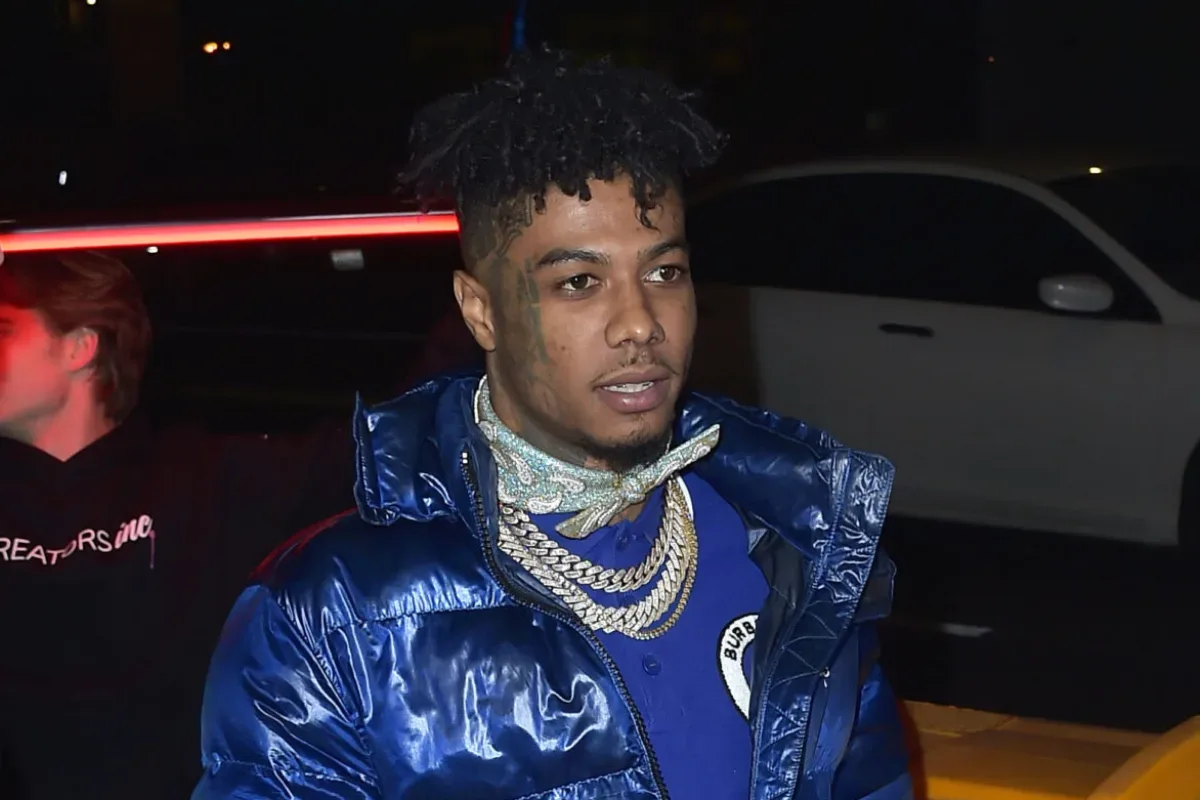
Blueface used a recent Kick livestream to think out loud about a decision that is unusual even by the standards of always-on celebrity streaming: whether viewers should accompany him and Chrisean Rock to church.
The visit was planned for Sunday after the pair received an invitation from a man Blueface said approached them while they were getting corn. Blueface did not identify the man by name and said he was unsure whether he was a pastor or a deacon. What seemed settled was the outing itself. The question was whether it should also become content.
“I’m a little conflicted with bringing you guys though. You guys want to go to church with me? It’s kind of weird,” Blueface told viewers.
That hesitation is the important part of the exchange. Blueface did not frame the stream as confirmed permission to film at the church, nor did he suggest that an online audience was necessary to the visit. He said he believed recording might be allowed because churches record services, but that is an assumption rather than an indication that the specific congregation had approved a livestream.
A planned visit, and an unresolved streaming question
Blueface and Rock discussed practical details while on stream, including getting ready, leaving on time and the length of the drive. Blueface joked about Rock having an occasion to wear her dress. But his concern was not simply logistical.
He said he hoped to arrive after people were already seated, apparently to avoid turning their entrance into an event. He also acknowledged that it had been a long time since he had attended church. Together, those comments suggest he was conscious of the difference between walking into a worship service and making a conspicuous arrival with an audience watching remotely.
A livestream is a real-time broadcast in which viewers can follow events as they happen, often through a chat feature. Kick is the platform Blueface was using for this conversation. The format can make ordinary decisions feel participatory: a creator can ask the chat what it wants, viewers can respond immediately, and the audience may feel included in the next activity. In this case, however, participation has limits that Blueface himself appeared to recognize.
Church services can be recorded for congregants or published by the church, but that does not automatically make independent filming appropriate or permitted. A service may include people who do not wish to appear on camera, and its leadership may have its own policies for guests, recording and distribution. Blueface’s stated uncertainty therefore matters more than any general comparison to a church’s own cameras.
Related coverage includes Blueface Weighs Bringing Kick Viewers to Church With Chrisean Rock.
He told viewers that he and Rock would go regardless of whether the audience joined them through the stream. That distinction leaves the actual plan straightforward: the visit was intended to happen, while the broadcast component was still being considered.
Why the moment stands apart from routine creator content
Public figures routinely share travel, meals, backstage time and conversations with followers. Worship is a different setting. It is communal, but it is also often personal, and it can involve other attendees who never chose to be part of a creator’s content. Blueface’s wish to enter without drawing attention reinforces why he described the prospect of bringing viewers along as “weird.”
There is also a basic gap between a public livestream audience and a physical congregation. Viewers at home are not merely spectators when chat is active; their comments can influence the tone of a stream and become part of the broadcaster’s attention. A person attending a service may want to focus on the service itself rather than managing a camera, reading messages or responding to an audience.
None of that establishes what the church would decide. It simply explains why permission is more than a technical matter of whether cameras exist in the building. Permission can cover where filming is allowed, who may be shown, whether sound may be captured, and what happens if the service contains moments meant to remain within the congregation.
For the audience, the most accurate expectation is therefore a limited one. Blueface raised the possibility and voiced misgivings; he did not establish that a church stream would take place. Treating the discussion as a confirmed broadcast would go beyond what he said.
Faith has already been public in Chrisean Rock’s work
Rock’s association with faith has previously appeared in her public music activity. In March 2025, she performed “Yahweh” at Faith City Central in Maryland, joined by gospel singers Tim Bowman Jr. and Arissa Divyne. The appearance put her faith language directly alongside a musical performance rather than limiting it to a private statement.
She also spoke with church leaders at that appearance about her beliefs, describing faith as a personal commitment and rejecting claims that her public expressions of it were motivated by something other than sincerity. That does not resolve how every viewer will interpret a new church-related livestream conversation. It does provide relevant context for why a planned visit with Blueface is not detached from themes she has already addressed publicly.
The family’s connection to church also predates the 2025 performance. In September 2023, Rock took their son to a dedication service, where his middle name, Jesus, was disclosed. Blueface publicly supported the choice at the time.
Those moments are distinct from one another: a child’s dedication, a performance featuring gospel singers, and a possible visit prompted by an invitation are not interchangeable events. Still, they show that faith has periodically occupied a visible place in Rock’s public life and, at times, in the couple’s family story.
The line between access and spectacle
The broader tension is not complicated: livestreaming rewards access, while a church visit may require restraint. Blueface’s comments exposed that tension rather than pretending it did not exist. He asked whether his viewers wanted to attend virtually, yet worried about bringing them into the setting and about making a noticeable entrance.
That self-awareness does not answer whether filming would be welcomed. It does clarify the competing interests. A creator may want to share an experience with supporters; a congregation may prioritize worship, privacy and its own rules; and a guest may wish to attend without becoming the center of attention. Those interests can align, but only with communication and consent.
The episode also shows the unusual immediacy of livestream culture. In a conventional post, a celebrity can decide what to share after an event. On a stream, the decision itself becomes part of the content. Viewers saw Blueface deliberate before the planned visit, including his uncertainty about the camera and his desire not to create a spectacle.
For Blueface and Rock, the available facts point to a simple conclusion: they intended to go to church, but Blueface had not made up his mind about taking his Kick audience with them. Any recording would remain contingent on the church’s wishes rather than on the assumption that services are sometimes filmed.
The conversation arrives amid a wider culture in which musicians’ personal lives are regularly examined in public, including disputes about loyalty, relationships and image; recent discussion around Big30, Pooh Shiesty and Gucci Mane’s 1017 is another example of how quickly such subjects become public narratives. Blueface’s church-stream question is different in substance, but it raises a similarly modern issue: not every personal moment has to be converted into a live event.