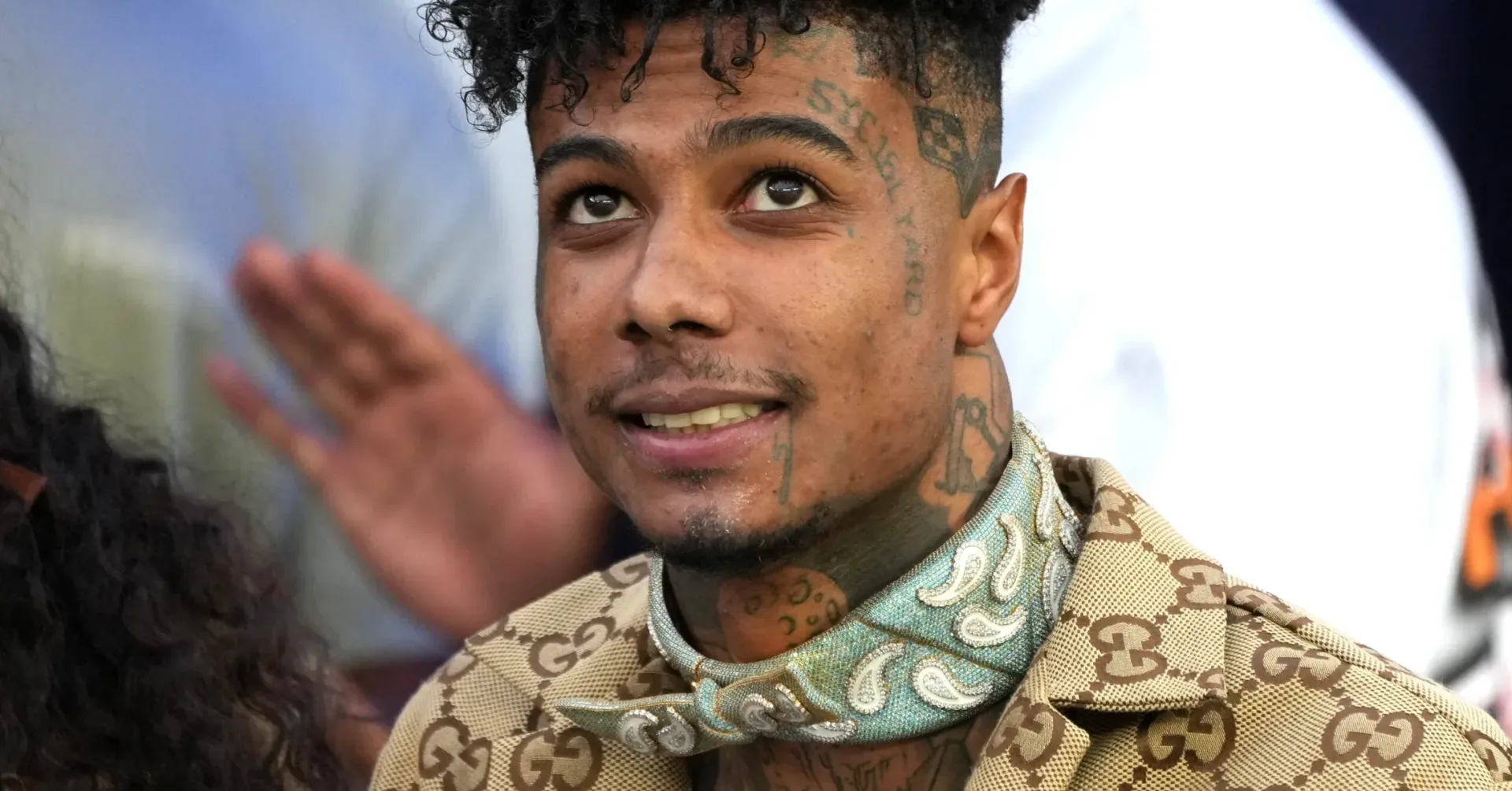
Nevaeh has added another chapter to the ongoing, highly public relationship narrative surrounding her and Blueface on Kick. During a recent discussion, she said she once had a tattoo of NBA YoungBoy’s face on her leg, later covered it up, and had previously told Blueface that the tattoo depicted him instead.
The account matters chiefly because Nevaeh presented it as her own explanation of a situation that has circulated online: her prior connection with NBA YoungBoy and the way it overlapped with her eventual relationship with Blueface. She characterized getting the tattoo as a decision she now regrets, calling it a mistake. The tattoo is no longer visible in its original form because, by her telling, it was covered.
In internet-celebrity terms, it is an extraordinarily high-stakes way to learn that permanent ink and temporary relationship turbulence do not make a particularly compatible loadout.
A personal admission inside a very public streaming storyline
Blueface and Nevaeh have become frequent subjects of conversation during their recent Kick streams. Their broadcasts have put personal arguments, reconciliations and relationship friction in front of an audience rather than behind a closed door. That visibility has helped make their dynamic a centerpiece of attention on the platform, with viewers closely following each new exchange.
Nevaeh has developed a prominent on-camera presence in her own right, while Blueface has continued to draw substantial attention to his streams. The result is a format where the audience is not simply checking in for a scheduled performance, a song rollout or a polished interview. Instead, the appeal is partly the unpredictability of what the next stream may reveal.
That distinction is important. A livestream can turn a private-history conversation into an immediate spectator event. Once a detail is raised on camera, viewers clip it, debate it, repost it and fit it into the larger timeline they believe they have been watching. The tattoo discussion became another piece of material in that broader cycle.
What Nevaeh said about NBA YoungBoy
Nevaeh said she and NBA YoungBoy had a prior connection. NBA YoungBoy had previously indicated there was something between them, and Nevaeh’s comments confirmed that there had been a relationship or involvement of some kind. Her admission went further by identifying the leg tattoo as a portrait of the rapper.
She also pushed back on the idea that she had been removed from NBA YoungBoy’s circle or “roster.” Rather than frame the situation as a dismissal, Nevaeh said there was still mutual respect and that the two went their separate ways. That is her description of the matter, and it does not turn a complicated personal timeline into a tidy, fully documented set of facts.
The central point she made was one of choice: she said that, while Blueface was incarcerated following a parole violation, she chose Blueface and supported him. Within the conversation, that decision was offered as context for where her loyalty ultimately landed and why the NBA YoungBoy episode remains relevant to conversations about her current relationship.
As with many creator-driven disputes, the audience is working from public fragments: remarks on streams, social posts, clips and reactions. Those fragments can create a strong sense of familiarity, but they are not a substitute for full private context. Nevaeh’s own statements establish what she said she did and how she now interprets it; they do not require viewers to treat every online theory surrounding the people involved as settled fact.
The cover-up and the false explanation
The tattoo’s aftermath is where the story shifts from old ink to present-day fallout. Nevaeh said she had the NBA YoungBoy portrait covered up. Before that, however, she said she told Blueface the tattoo was a portrait of him. By her own account, that explanation was untrue.
It is the kind of revelation built for a livestream audience: a physical reminder of a previous relationship, a cover-up, a misleading explanation and an admission delivered after the fact. None of those elements needs additional embellishment to explain why it has become conversation fodder. A tattoo can be hidden or redesigned, but its backstory becomes much harder to erase once it is told in public.
There is also a straightforward lesson beneath the drama. Tattoos are personal, permanent choices, and portrait tattoos in particular can acquire dramatically different meanings as circumstances change. The cover-up is not unusual as a practical response to regret. What makes this instance distinctive is the celebrity context and the fact that the explanation of the tattoo became part of a relationship discussion broadcast to an audience.
Kick turns relationship updates into appointment viewing
Kick has been an essential part of the current Blueface-Nevaeh storyline because it provides a direct channel for long, reactive and often emotionally charged appearances. The platform’s live format lets viewers watch events develop in real time, while the internet’s clip culture allows individual exchanges to travel far beyond the initial broadcast.
That approach differs from the older celebrity-news rhythm, where a statement might arrive after days of speculation and be distributed in a carefully edited form. Livestreaming can place the statement, the response, the interruption and the audience reaction in the same moment. It may feel more immediate, but it can also make an already difficult relationship disagreement feel like a continuing series with no off-season.
Chrisean Rock has also remained part of the wider public conversation around Blueface. Her involvement adds another layer to an audience already accustomed to following the changing dynamics around him. The comparison many viewers draw is understandable: Blueface’s relationships have repeatedly become public-facing stories, and fans are primed to look for familiar patterns whenever a new dispute plays out online.
Still, familiar patterns do not make every situation identical. Nevaeh’s comments are specific to her own past, her own tattoo decision and her own account of choosing to stand by Blueface. Treating a new situation as a rerun can flatten the details that actually distinguish it.
Why audiences keep returning to the saga
The continuing attention is not difficult to understand. Blueface, Nevaeh, NBA YoungBoy and Chrisean Rock each bring established audiences and their own histories of online discussion. When their names overlap in one stream topic, the conversation naturally moves fast. A single admission can generate commentary about loyalty, relationship boundaries, tattoos, credibility and the economics of streaming attention all at once.
There is a platform angle, too. High-interest personal content can keep viewers tuned in, and a recurring cast of recognizable figures can help sustain momentum from one broadcast to the next. Whether that attention remains durable is a separate question. The current interest demonstrates that the streams can command attention; it does not guarantee that the format will thrive indefinitely.
For readers following music-adjacent pop culture, the story also sits beside a wider landscape of artist news, projects and social-media moments. For instance, there is separate reporting that Don Toliver has said Nitrous is planned for 2026 without a release date. That is a very different type of update, but it illustrates how fast-moving music conversations now share space with livestream-driven personal narratives.
What is clear, and what remains personal
What is clear from Nevaeh’s remarks is that she acknowledged the NBA YoungBoy tattoo, said she regretted it, said it was covered, and said she had lied to Blueface about whose face it originally showed. She also rejected the characterization that she had been cast aside by NBA YoungBoy, describing their split as a mutual decision to go separate ways while saying she chose Blueface during his incarceration.
What remains inherently personal is the full history between the people involved and what their relationships look like away from the camera. Their livestreams may invite viewers into the conversation, but viewers are still receiving selected statements in a fast-moving public setting. The most reliable framing is to keep the focus on what Nevaeh actually said rather than expanding her account into assumptions.
For now, the tattoo cover-up has become the latest memorable detail in a Kick-era storyline that continues to generate attention. In a space where clips can turn an admission into a day-long discourse event, Nevaeh’s explanation has given the audience one more moment to parse—and one more reminder that some relationship receipts come with considerably more permanence than a screenshot.