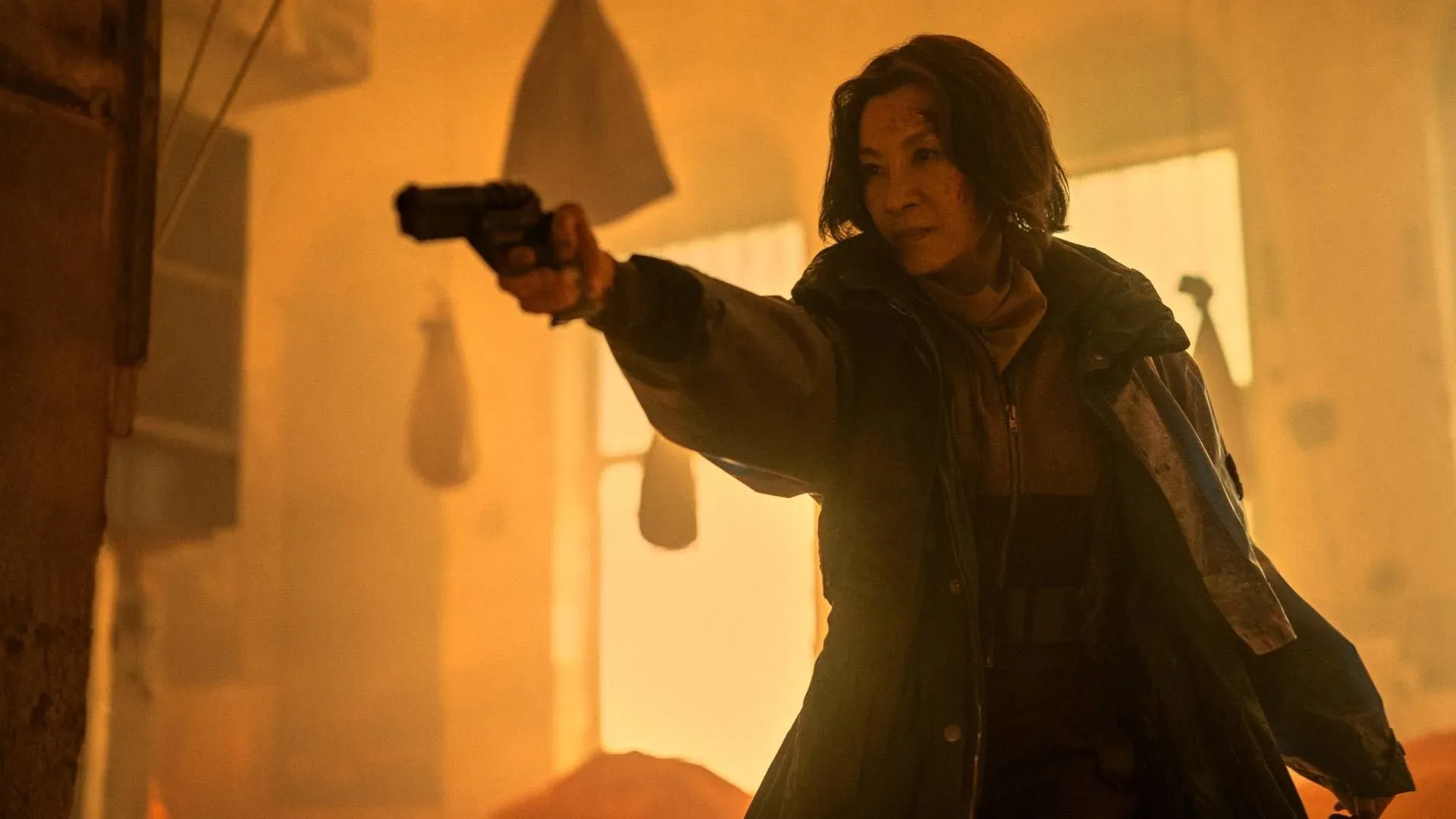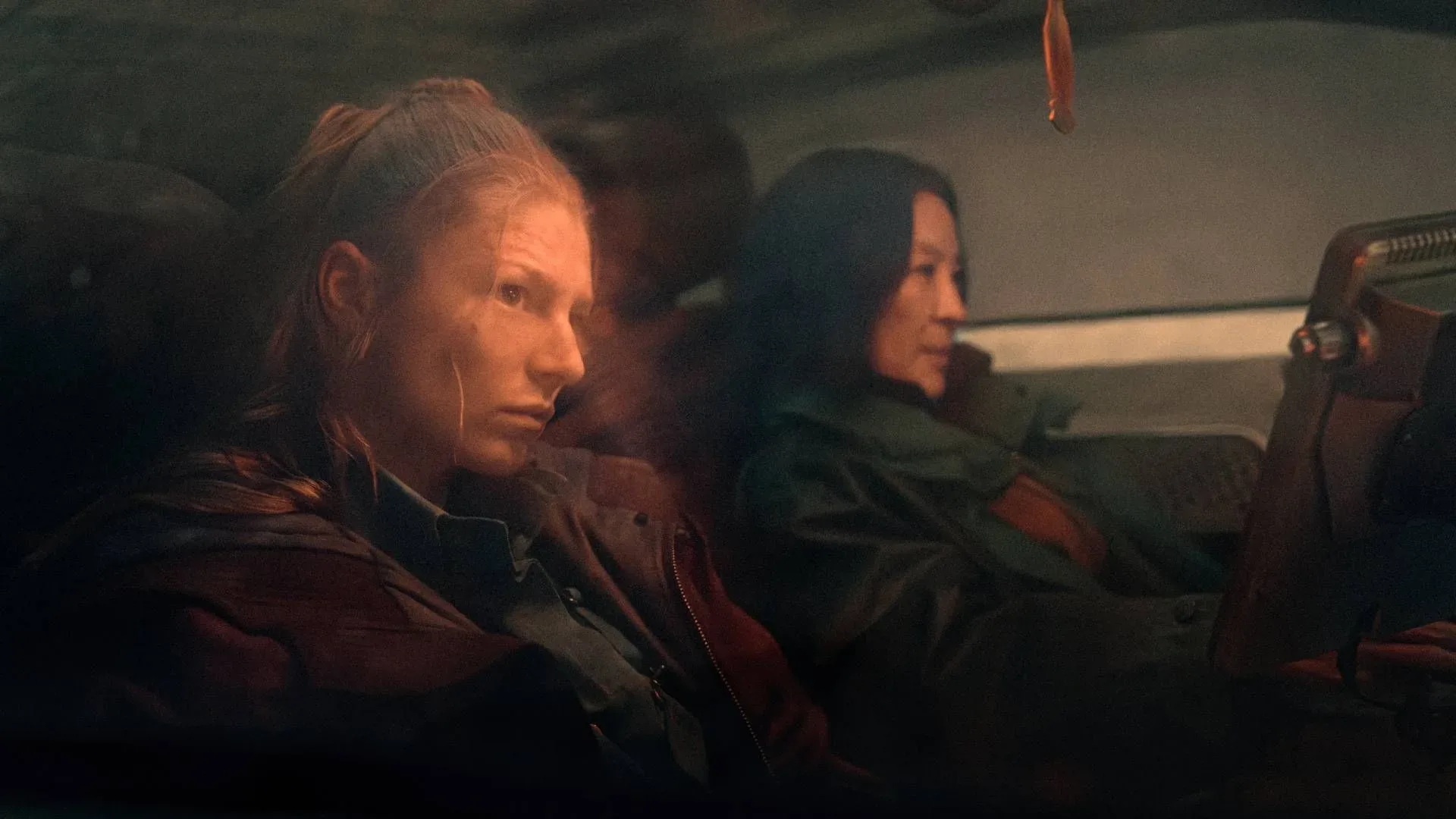
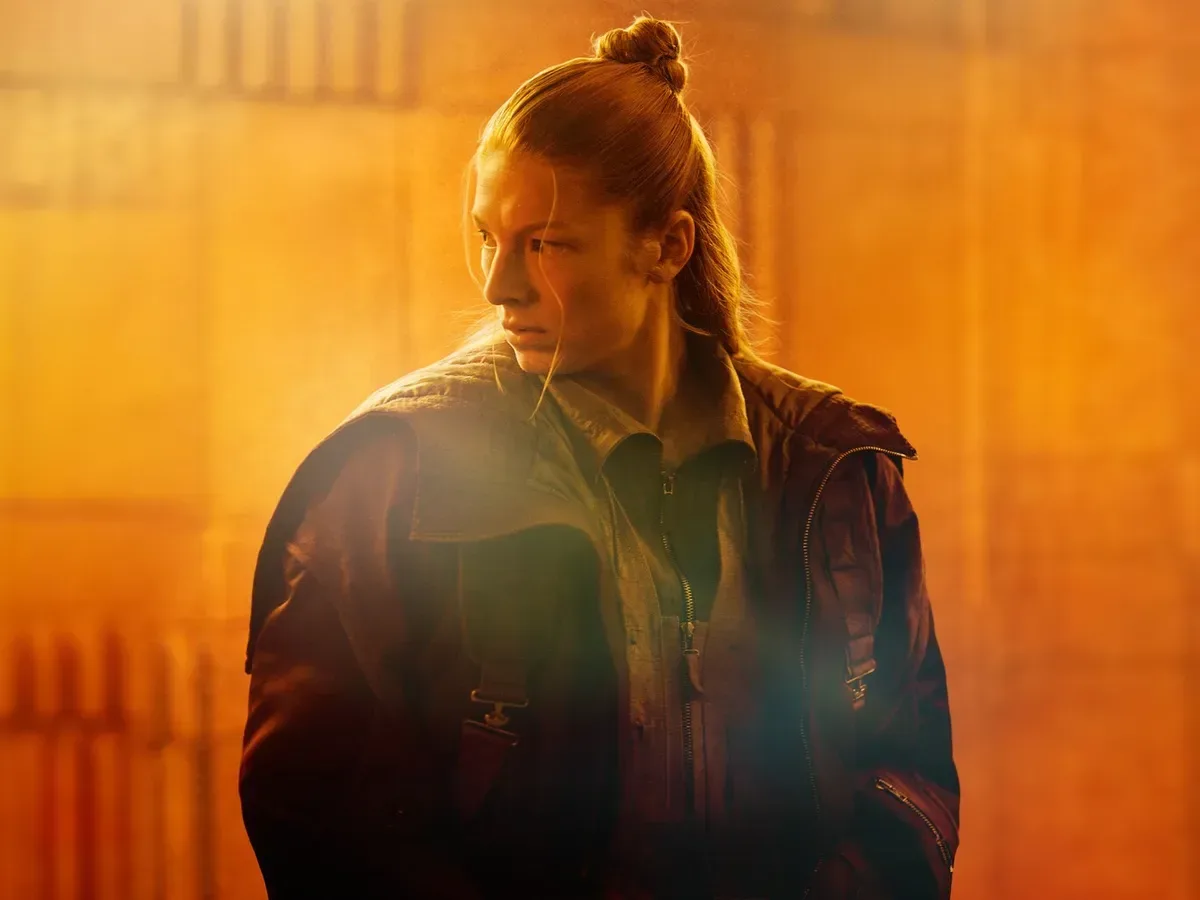
Major spoilers for Blade Runner 2099 follow, including details from its later episodes and Philip K. Dick’s Do Androids Dream of Electric Sheep?.
Blade Runner 2099 is reaching back past the familiar visual language of the films and into a few of the stranger, more intimate ideas in Philip K. Dick’s novel. The series includes a black goat and an empathy box, two elements central to Do Androids Dream of Electric Sheep? that had not previously become major fixtures of the screen franchise.
Showrunner, creator and executive producer Silka Luisa has described Dick’s mix of playful absurdity and troubling ideas as a tonal guide for the series. That perspective helps explain why these references are more than continuity ornaments. Both the goat and the empathy box deal with the same questions that have always sat at the heart of Blade Runner: what makes someone human, what form can empathy take, and what happens when those things are performed, bought, regulated or technologically mediated?
The show’s additions matter because the novel’s world is not simply about hunting artificial people. It is also a story about status, loneliness, ritual and a society trying to reassure itself that it still feels something. By putting those ideas back on screen, Blade Runner 2099 has room to converse with the book rather than merely repeat the framework established by the 1982 film.
The black goat is a direct line to Dick’s story
In the novel, Rick Deckard and his wife own an electric sheep on the roof of their apartment building. Real animals are exceptionally scarce in its post-war setting, where the environment has become hostile to much of life. As a result, possessing a living animal is both emotionally meaningful and an unmistakable marker of social standing.
Deckard becomes consumed by the desire to own the real thing. He purchases a black Nubian goat without consulting his wife, making a costly acquisition that initially provokes anger. The goat is not a casual pet subplot. It represents Deckard’s hunger to prove something to himself and others: that he has achieved a particular kind of humane, respectable life in a culture that measures virtue and prestige through care for living creatures.
That aspiration is later destroyed when Rachael, the replicant with whom Deckard has an affair, kills the goat. The moment is harsh precisely because it collapses the distinction Deckard has been trying to preserve. His attempt to grasp human meaning through possession does not survive contact with the complicated reality of the replicant he has treated as an other.
Blade Runner 2099 brings a black goat to the sea cliffs near the childhood home of Cora and Elias. They grew up there with their adoptive mother, Helena. The visual echo is deliberate, but the series gives it a different dramatic anchor. Cora learns that Helena is a Nexus 1, one of the earliest replicants, and that Helena has no built-in lifespan. In practical terms, she is effectively immortal unless injury or an accident ends her life.
Related coverage includes Blade Runner 2099 Brings Philip K. Dick’s Empathy Box and Goat Into the Story.
That revelation changes Cora’s relationship to the mother who had been a point of human certainty. The goat therefore functions as a parallel to the novel’s animal without recreating Deckard’s plot. Deckard wants a living creature partly to affirm his own humanity and position. Cora has used Helena as an emotional connection to humanity in a world shaped by replicants. Once Helena’s origin becomes known, that certainty fractures.
The comparison is especially pointed because the book’s goat suffers a literal fall after being pushed from a rooftop. The show does not need to replay that event for the reference to land. Its goat sits beside a revelation that destabilizes a character’s assumptions about family, authenticity and identity. In both works, an animal becomes tied to a fragile idea of what it means to be real.
What the empathy box does, and why Mercerism is different
The other major literary restoration is the empathy box, a device associated with Mercerism. In Dick’s novel, Mercerism is a religion centered on Wilbur Mercer, whose perpetual climb up a mountain subjects him to stones hurled from unseen attackers. Users of an empathy box watch the ascent and physically and mentally share in the suffering.
The device is important because it makes empathy into a collective experience. It is not just a screen showing footage, nor simply a virtual-reality headset. An empathy box allows participants to feel what they see. That distinction turns Mercerism into a powerful idea for a Blade Runner story: compassion is no longer only an internal moral quality. It has become a repeatable, technologically delivered ritual.
There is a crucial complication in the novel. Mercer’s broadcast is revealed to have been staged, with Mercer portrayed by actor Al Jarry on a soundstage. The revelation challenges the religion’s factual basis, but it does not automatically settle whether the shared experience has meaning. Dick’s fiction repeatedly makes room for that uncomfortable question: if an experience is artificial, can the feelings it creates still be genuine?
Luisa was drawn to precisely that unexplored territory. The book left her wondering how an empathy box would physically appear, who would use it and what Mercer’s climb might look like when translated from prose to a screen. Those are valuable adaptation questions because the empathy box asks filmmakers to depict a technology whose purpose is not surveillance, combat or convenience, but shared sensation.
Blade Runner 2099 introduces the box in one of its final episodes. A Mercerite compels the dying replicant Olwen to use it. As Olwen watches Mercer’s climb, she experiences the stones striking her. The scene makes the concept immediate rather than theoretical: the ritual is not peaceful background world-building, but an imposed encounter with pain.
Calling the character a Mercerite identifies her as a practitioner of Mercerism, while the scene’s power comes from the tension between religious communion and coercion. A technology intended to bind people through empathy can also be forced on someone who has no ability to opt out. That is a fittingly unsettling inversion for this universe. The box promises connection, but the circumstances show how empathy can be weaponized or demanded.
Why these details fit Blade Runner’s central arguments
The franchise is commonly associated with the question of whether replicants possess human emotions. The novel’s goat and empathy box broaden that question. They suggest that humanity may not be a clean biological category in the first place.
Deckard’s desire for the goat demonstrates that human feeling can be tangled up with vanity, consumer pressure and social performance. His concern is not only about caring for an animal; it is also about what animal ownership says about him. The empathy box, meanwhile, complicates the opposite side of the argument. Feeling someone else’s pain can look like the highest form of compassion, yet the process is delivered by a machine and connected to a myth later revealed as manufactured.
Neither idea gives the audience a tidy test for deciding who counts as human. Instead, each asks whether sincerity is possible in systems built around imitation. That concern naturally carries into Cora’s discovery about Helena and Olwen’s forced participation in Mercerism. Helena may be a replicant, but she has occupied the role of Cora’s mother. Olwen may be artificial, but the empathy box makes her pain viscerally available. The story does not need to argue that biology is irrelevant; it shows why biology alone cannot resolve the emotional stakes.
That approach also distinguishes these references from a simple Easter egg. An Easter egg is usually designed to reward recognition without altering the story for viewers who do not catch it. Here, someone can understand the show’s scenes without having read the novel, but knowledge of Dick’s work adds a layer to the symbols. The goat carries the history of Deckard’s failed purchase of status and authenticity. Mercerism carries a history of communal feeling shadowed by artifice. Both deepen the show’s own conflicts.
A return to the novel’s oddness, not just its iconography
Dick’s book is often remembered through the film adaptation’s rain-soaked future, replicants and pursuit narrative, but its texture is stranger than that short summary suggests. The electric animal, the status anxiety surrounding live animals, and the empathy box’s shared spiritual ordeal all make the world feel socially distorted in specific ways. They are not generic science-fiction furniture.
Luisa has pointed to the author’s ability to hold a zany or playful tone alongside deeply dark subject matter. That contrast is visible in the very premise of a society treating animal ownership as a high-stakes status symbol, or people gathering around a device to endure a figure’s endless rock-strewn climb. These concepts can sound bizarre when reduced to a sentence, but that bizarre quality makes the underlying anxiety sharper rather than softer.
For viewers, the payoff is a version of the future that feels less streamlined. The films established an influential vision of corporate power, urban decay and artificial life. The novel adds messy domestic pressures and bizarre public rituals: people seek moral reassurance in devices, attach social value to rare animals and may confuse the appearance of authenticity with the thing itself. Blade Runner 2099 uses the goat and empathy box to make room for that messiness.
The series also reportedly includes further nods to Dick’s short fiction, including a girl’s toy robot called “My Lord.” That indicates the literary connection is not restricted to two famous novel references, although the goat and Mercerism are the clearest examples of the show adapting ideas with major thematic weight.
This does not make the show a literal rendering of Do Androids Dream of Electric Sheep?, and it is not trying to erase the differences between the novel and the earlier film world. Rather, it treats the source novel as a living reservoir of concepts. The result is an adaptation choice with practical value for longtime fans and newcomers alike: readers can trace how a familiar symbol has changed, while viewers encounter story elements that work inside Cora, Helena and Olwen’s arcs on their own terms.
It is also a timely reminder that major screen universes can grow by returning to the aspects of their source material that initially seemed too unusual to adapt. Other science-fiction continuations are also navigating how to expand imposing literary worlds; for another recent example, see the latest look at Dune: Part Three. In Blade Runner 2099, the willingness to take Mercerism seriously and let a goat bear emotional symbolism gives Dick’s ideas a new route into the franchise.
Blade Runner 2099 is streaming on Prime Video.